Sabitlenmiş Tweet

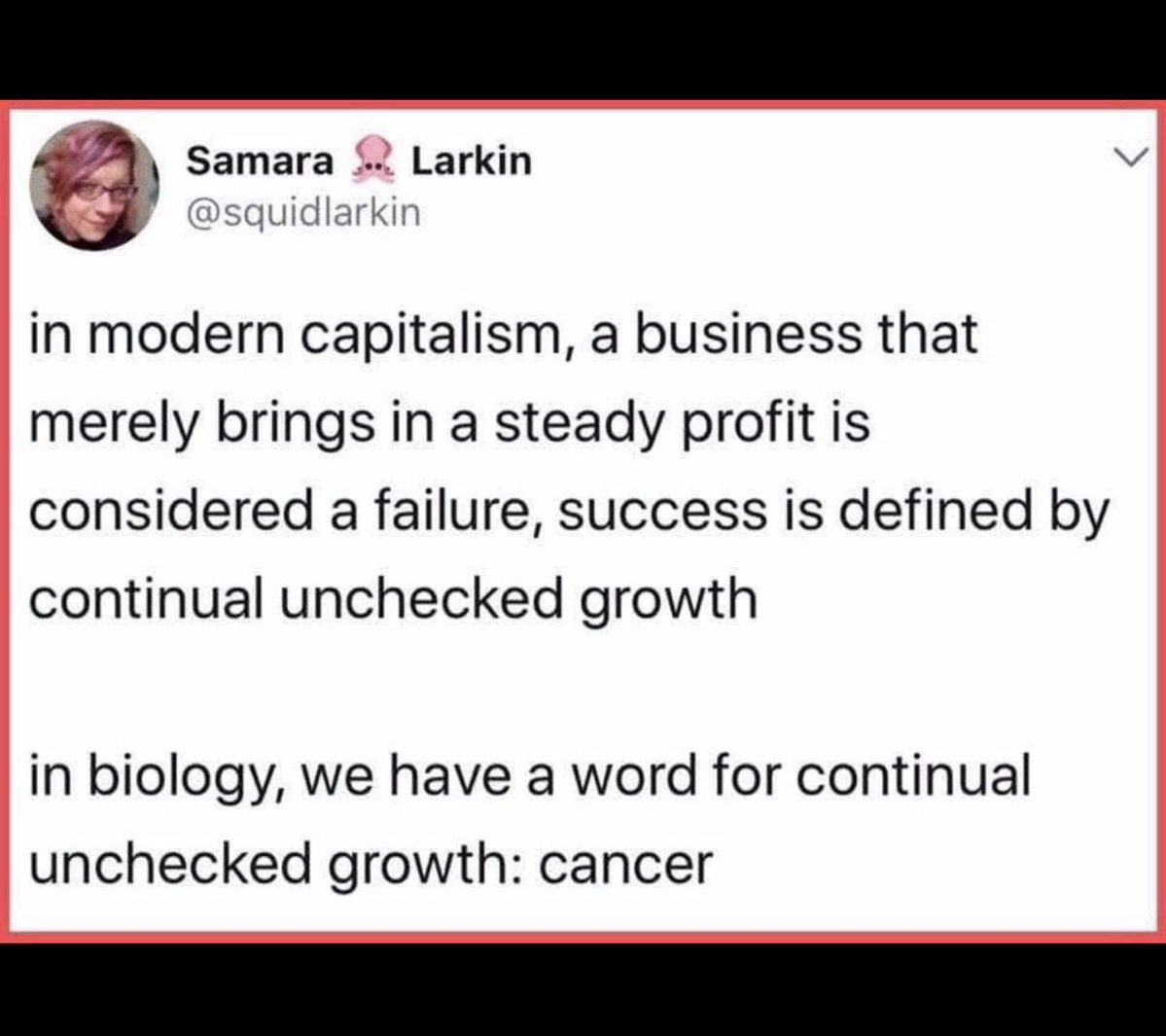
I’ve a Bayesian theory around why “believe in science” and “believe in technocratic progress” are so high, even if the counter-evidences are strong.
Thread 🧵
1/N

English
Truth Signal
20.7K posts

@de_bose
Science | Equal Opportunity | History | Nutrition | Self-Sovereignty | Divinity | Permaculture



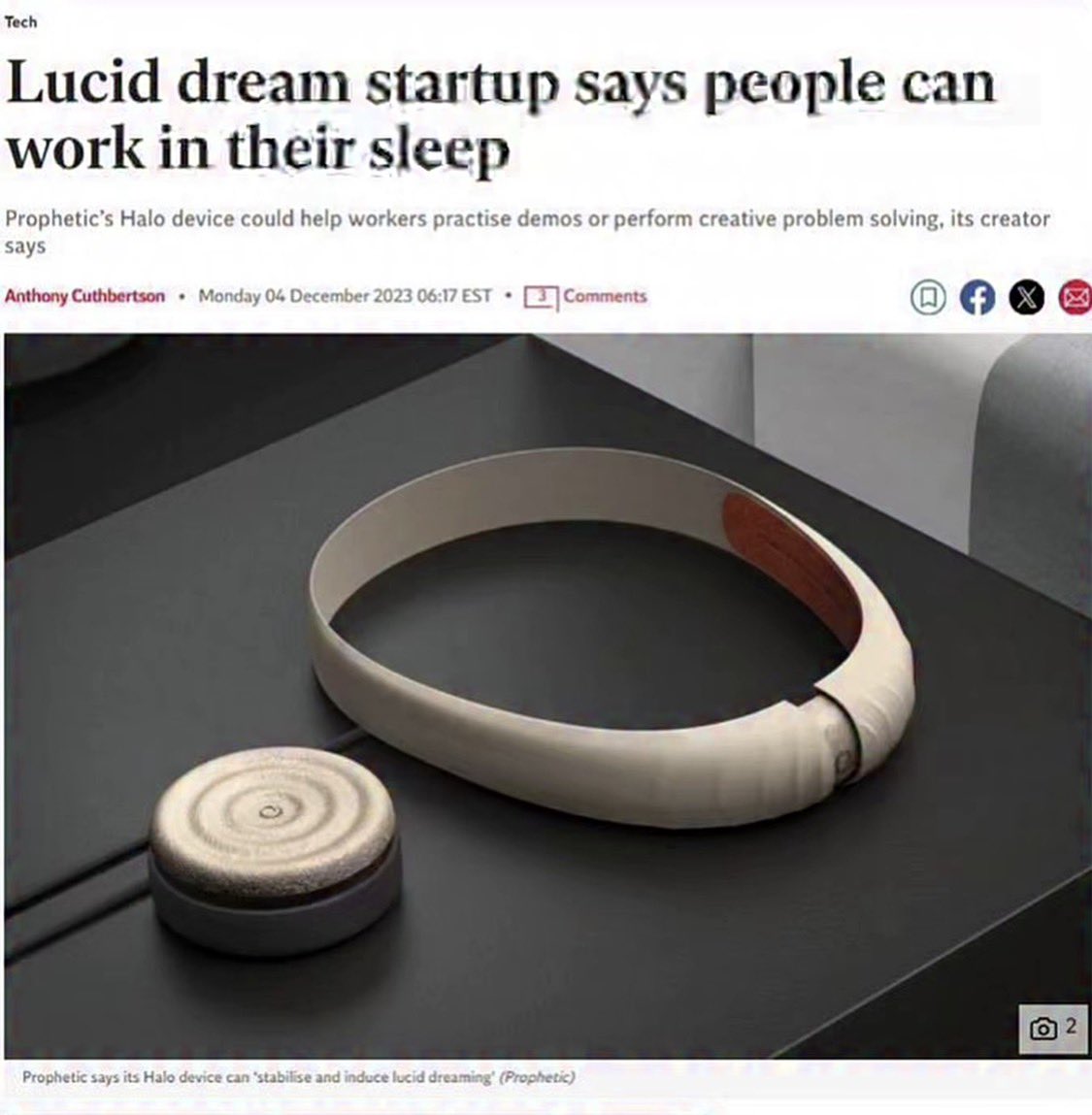
Humans are the only divergent species that would brainwash peers/self-delude/self-bondage oneself against an evolutionarily-hostile place/situation just for “economics” or “social status”. Around 85% of global workers are reported to be dissatisfied or hate their jobs. Yet they have to go to office next morning to bear debt/mortgage/status-linked CoL and maintain “social status”. news.gallup.com/opinion/chairm One of the core reasons of dissatisfaction is “I hate my boss and workload and lack-of-meaning” Given human psychology under hierarchical power dynamics and lack of novelty involved in running a company, it comes down to Authenticity / Having Agency Let’s go back to evolutionary biology. Across 300,000 years of human evolution, 95% of human existence was: - Decentralised - Non-hierarchical (or very flat) - Flexible work rhythms - Shared decision-making - Seasonal, not clock-measured - Autonomy-preserving James C. Scott, Against the Grain — early states reduced autonomy significantly compared to hunter-gatherer life. Marshall Sahlins, “The Original Affluent Society” — hunter-gatherers worked ~15–20 hours/week with high autonomy. Human neuropsychology (and animals alike) evolved for autonomy, self-direction, and distributed decision-making. Not for rigid hierarchies, repetitive labor, or imposed meaninglessness. Sure, there was short-term flight-and-fight stressors, but no long-term self-delusional self-bandage to meaningless work. “Industrial Revolution” (IR) it was not, barring few improvements in ACUTE healthcare/immunotherapy etc) changed that: - Time discipline (E.P. Thompson, “Time, Work Discipline, and Industrial Capitalism”) - Factory discipline - Hierarchical supervision - Fragmented tasks (Adam Smith > Taylorism > Fordism) - Loss of meaning in work - External metrics and surveillance E.P. Thompson shows that the single largest psychological transformation of the Industrial Revolution was: “The subordination of human rhythms to mechanical time.” That is an explicit loss of agency. Unless small-scale agriculture made impossible by mechanisation (so that peasants can go to city to work in factories / tech were the premise of many economists’ BS) and early migrants to cities showed TFR, there was no way we could have self-deluded ourselves into this IR-driven mechanistic & soulless existence. Being Authentic and having Agency is core to life, healing and all animals. It’s the humans who continue to brainwash others (as an example accounts like @kimmonismus who gains agency by running a media business on AI but never worked as engineering/AI) and self-delude to shove a IR-driven mechanistic life through everyone’s throats. PS: There should be studies on “Lack of Authenticity / Meaning / Agency” as the root emotional causal factor behind many chronic diseases including cancer. Agency / Fertility / Health — are real metrics on which modernity is failing. However, a set of billionaires and e/acc accounts are trying to “manufacture consent” for tech accelerationism Let’s keep deluding ourselves for “stock portfolio goes up, shiny tech and cool AI” Kernis, M. H., & Goldman, B. M. (2006). A multicomponent conceptualization of authenticity: Theory and research. In M. P. Zanna (Ed.), Advances in experimental social psychology, Vol. 38, pp. 283–357). Elsevier Academic Press. 40/N







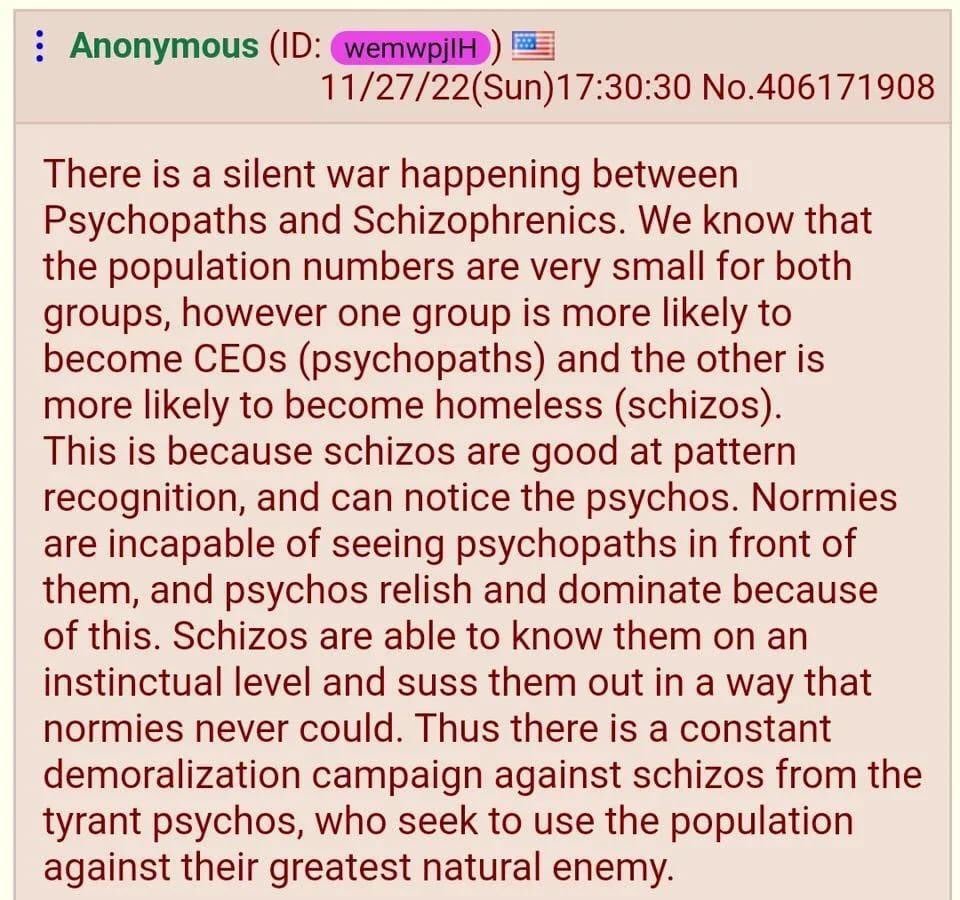
@GavMcCracken @toiletkingcap @taobanker schizos are in control




What thing was ruined because it turned into a rich person's hobby?
The fastest growing economy in the world !!





Origin of the low-trust society of India is deep, and it’s at a point when nothing much can be done. Time for a Japan’s Meiji-like social reform was 60-70Y back, around the time of independence. Funny thing is, I’ve seen more ego-driven arrogance and refusal than self-introspection, once someone tries to point to the root cause. Vedic India lived with social mobility, higher consciousness, marriages across the social strata till 100-200AD. Then some rulers had a wonderful idea to make Varna system (division of society based on roles/work which started based on qualities) based on inheritance/genetic. This had devastating consequences. Genetic research shows Indian society became highly endogamous (marrying strictly within one’s group) ~1,900 years ago (hms.harvard.edu/news/what-dna-…), around the time caste rules were first codified. This entrenched a hierarchical social order that enforced birth-based segregation and discrimination, a system that has endured for millennia (timesofindia.indiatimes.com/india/caste-ba…) Some 70 generations of strict endogamy have made India “an extremely large number of small populations,” with strong trust within jati (caste) communities but very little trust between them (nitinpai.in/2024/12/16/how…). B. R. Ambedkar warned that such caste fragmentation is “anti-national,” undermining social unity and generalized trust needed for a healthy society. Caste-based social stratification erodes the sense of common civic identity. Lacking a feeling of shared community, individuals often prioritize private or in-group gains over the public good. As a result, public spaces suffer – for instance, traffic-choked cities and littered streets – because people feel less responsibility beyond their own group (nitinpai.in/2024/12/16/how…). This weak social cohesion perpetuates a vicious cycle of low civic engagement and neglect of collective well-being. Traditionally cleaning work has been delegated to “lower caste”. Many Indians till day tend to think, keeping public spaces clean is not their “problem”. Shudra (lower in the Varna) or Government would handle that. In 1911 Tagore wrote that India’s problem is not spiritual but social. It’s still the problem. Enduring caste loyalties translate into patronage and nepotism in politics and business. Officials and parties have historically treated castes as “vote banks,” channeling jobs, contracts, and resources to their own caste networks in exchange for support – a practice that undermines meritocracy and fuels corruption. Studies of public programs find, for example, that politicians disproportionately awarded infrastructure contracts to contractors of their own caste, inflating costs and even creating “ghost” projects (paid for but never built). indiaspend.com/how-caste-netw… Despite laws banning caste discrimination, caste still profoundly shapes social attitudes. Nearly two-thirds of Indians today say it’s very important to stop inter-caste marriages (pewresearch.org/religion/2021/…) reflecting a continued emphasis on caste purity. Astonishingly, 27% of Indians admit that they or their family members still practice some form of untouchability – the ostracization of lower castes – even 70+ years after it was legally abolished. These deep-rooted divisions corrode societal trust and hinder collective action, posing an ongoing challenge to India’s civic life and development. The caste/hierarchy consciousness goes all the way to Tech companies. Read the Cisco case. Astonishing aspect is, Vedic spiritual wisdom (Vedas/Upanishads/Vedanta etc.) is deep and egalitarian in nature. Yet the country ended up focusing on the ritualistic aspects of the religion and caste-games.