
Dean Krauss

4.3K posts

Dean Krauss banner
Dean Krauss

Dean Krauss

@deankrauss

Miami, FL Katılım Ekim 2013
3.2K Takip Edilen4K Takipçiler
Dean Krauss retweetledi
Anthony
Anthony@anthonystaj·
i actually love this. the idea of speeding up readout from a regulatory perspective is really great. faster readouts, faster reviews and faster approvals on this basis is great for all stakeholders. I think an underappreciated point is that that would also lock in a trial and prevent funny business. some trials have changed their endpoints only months before the anticipated readout, or after significant delays. FDA getting a constant feed on pre-agreed upon endpoints and markers would insulate the public from the risk of shifting goal posts and enable them to act on early data safety data points (good or bad). and for real advancements in a field, early, meaningful efficacy signals for areas of high unmet medical need could be advanced quickly from idea to AA to CNPV and on the market faster than anywhere in the world
Dr. Marty Makary@DrMakaryFDA

Real-time clinical trials could fundamentally transform the clinical trial landscape.

English
1
3
39
5K
Dean Krauss retweetledi
S A I ™️
S A I ™️@WallStSai·
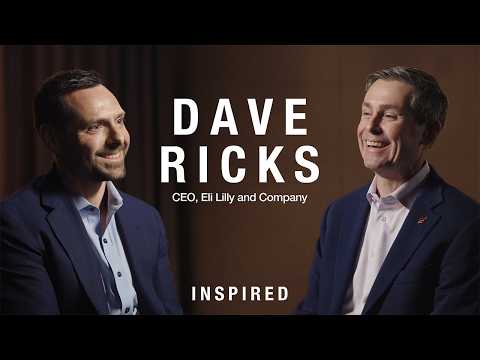
$LLY Eli Lilly CEO Dave Ricks outlines a strategic evolution for the company's Mergers and Acquisitions (M&A) 🔹 Moving Beyond "Cheaper" Deals While the company has historically focused on smaller, earlier-stage acquisitions (with the largest being around $8 billion), Ricks indicates that the size of future deals could increase. He suggests they may look for more mature assets or larger transactions to sustain their growth ambition. 🔹 Increased Deal Volume and Aggressive Capital Allocation In the past year alone, Lilly executed approximately 40 deals, which Ricks notes is more than most of their competitors [48:47]. He emphasizes a willingness to allocate capital more aggressively to maintain their growth trajectory [49:52]. Source: youtu.be/aN-GJTt1y8k?si… $XBI $MDGL $ABVX #MASH
YouTube video
YouTube
English
11
12
101
72.4K
Dean Krauss retweetledi
BiotechTV
BiotechTV@BiotechTV·
𝐎𝐟𝐟-𝐓𝐚𝐫𝐠𝐞𝐭 𝐄𝐟𝐟𝐞𝐜𝐭𝐬: @BridgeBioPharma Founder & CEO Neil Kumar and @Roivant CEO @gline discusses the hub and spoke biotech model and trying to build a sustainable business for the long-term. $BBIO $ROIV Watch the full episode: biotechtv.com/post/off-targe…
English
0
14
59
10.6K
Dean Krauss retweetledi
Patrick OShaughnessy
Patrick OShaughnessy@patrick_oshag·
Alex Karnal (@alex_karnal) is the most talented bio and healthcare investor I've ever met. He's spent 20 years in the industry and says 2025 was the single most exciting year he's seen. The start of a once-in-a-lifetime, trillion-dollar revolution in public health. He explains how few people realize we already have the medicines to prevent our deadliest diseases. The problem is that almost no one takes them. There's a population of people born with a mutation that means their bodies don't produce a protein called PCSK9. Their lifetime risk of cardiovascular disease is 88% lower than yours. Pharma turned that genetic advantage into a drug. It's been approved for years, but the number of people taking it is still vanishingly small. Partly because high cholesterol is a silent killer. You feel nothing, right up until you have a heart attack. And partly because the health system makes it punishingly hard to stay on a preventive drug like a PCSK9 inhibitor. In other words, the medicine works, but the system around it doesn't. That's what's starting to change, and in this episode, Alex explains why. We discuss the "health stack" he believes can add a decade to most lives, why oral GLP-1s are breaking every adoption record in pharma, peptides and citizen pharmacology, and what AI is doing to drug discovery. I wish I had an "Alex" for every interesting topic. We've been having versions of this conversation for over five years, and every single one is as clear and as useful as this one. Enjoy! Timestamps: 0:00 Intro 1:00 The State of Modern Medicine 5:00 Designing the Modern Health Stack 12:17 The GLP-1 Inflection Point 19:18 The Biological Mechanisms of GLP-1 30:36 Overcoming Frictions in Healthcare 34:19 Cardiovascular Disease 44:04 Addressing Alzheimer's 47:04 The Future of Cancer 57:33 Drug Discovery 1:05:25 AI and Scientific Super Intelligence 1:14:40 Citizen Pharmacology and the Peptide Movement 1:18:13 Background and Career Journey 1:31:09 Braidwell's Investment Approach 1:33:30 The Kindest Thing
English
28
69
789
669.6K
Dean Krauss retweetledi
Sally Church
Sally Church@MaverickNY·
@TsuchikamaL @CrossBridgeBio Lilly clearly sees where next gen ADCs are heading. Over the last couple of years we have interviewed and researched many companies in the ADC space. After talking to @Mykalt it was clear this was a key tech winner for me.
English
1
0
4
536
Sally Church
Sally Church@MaverickNY·
Thunderbirds are Go! 🚀 CrossBridge Bio is being acquired by Lilly for up to $300M! Founded 2023, IND filing anticipated 2026 – a remarkable run for a Houston startup built around a university linker technology...
Sally Church tweet media
English
1
7
40
4.5K
Dean Krauss retweetledi
Ash Jogalekar
Ash Jogalekar@curiouswavefn·
Having worked at both of the companies that developed this medicine, I can say that it is a great example of both academic and industrial research being leveraged over a long timeline into benefits for patients in fighting a cruel, untreatable disease. Greg Verdine originally developed the idea at his Harvard lab and then his team developed it further into a proof of concept (“molecular glues”) at Warp Drive Bio in Cambridge. The idea was to take a naturally occurring protein, have a small molecule bind to it, and then use the other face of the molecule to sequester a cancer protein called KRAS which is overexpressed in a variety of cancers, effectively so that the small molecule acted as a glue between the two proteins and took them out of circulation. This was the “discovery” part. Then Revolution Medicines in Redwood City acquired Warp Drive Bio, and took the drug to the finish line by improving its properties like solubility and metabolic stability and making sure it was effective and safe. This was the “development” part and involved a lot of animal and human studies. The whole thing was spread out across two companies which leveraged their unique strengths, hundreds of scientists and employees and more than 15 years of research and development. It makes as strong a case as any for sustained long-term funding of both academic and industrial research.
Anirban Maitra@Aiims1742

🚨🚨🚨 RASOLUTE-302 Ph3 is POSITIVE "Daraxonrasib demonstrated a median OS of 13.2 months versus 6.7 months for chemotherapy, with a hazard ratio of 0.40 (p < 0.0001)".... WOW! AMAZING news for patients with #PancreaticCancer The RAS Revolution is ON!! ir.revmed.com/news-releases/…

English
6
28
223
22.6K
Dean Krauss retweetledi
William Gibson
William Gibson@wgibson·
I was deeply saddened to learn of Leo's passing; I got to know the family during his battle with cancer. Past his own journey, the family quietly spent hundreds of millions to improve the future of cancer treatments for millions of patients like him. He and his family will leave a lasting legacy in cancer research.
English
1
2
49
20.9K
Dean Krauss retweetledi
Eric Lefkofsky
Eric Lefkofsky@lefkofsky·
Just as an LLM predicts the word “run” when it sees “see spot,” models can now be trained to predict what comes next for a patient. But there’s a catch: to predict a patient's journey, you need to have seen it before. You need longitudinal data, outcome responses, and molecular insights at scale. We’ve spent a decade amassing connected data because we believe the "holy grail" of AI isn't just rewriting emails, it's preventing a patient from suffering because they are on the wrong treatment. Read more on my latest blog: lefkofsky.com/see-spot-run/
English
7
12
55
16.3K
Biotech Autist
Biotech Autist@BiotechAutist·
10/ 100% survival is just a marketing slogan. Prasad is grading a rigged equation. Kresladi is a dead drug walking into a March 28 buzzsaw. Follow @BiotechAutist for the teardowns Wall Street is too lazy to write.
English
3
0
12
3.5K
Biotech Autist
Biotech Autist@BiotechAutist·
1/ I’m officially short $RCKT. I found a fatal, rigged equation buried deep in their SAP. Here is the broken math that almost guarantees Prasad issues a CRL 👇🧵
English
35
2
45
27.1K
Dean Krauss retweetledi
Sebastian Caliri
Sebastian Caliri@SebastianCaliri·
Over the past month, we (@AdamMeier20, @JTLonsdale) have been working on a state bill that would permit AI to practice medicine - prescribing, diagnosing, referring, and ordering - with some oversight and guard rails. We want the technology community to be able to solve important problems for society, and there are few matters bigger than access and cost of healthcare. We have sought feedback from different groups, but are eager to hear from more builders: does this let you harness AI for the biggest impact on the US healthcare system? We are eager to hear from states as well: what healthcare problems and patient populations are most in need? Done right, this bill should be a win for patients, taxpayers, physicians, and governments. AI should benefit ordinary Americans. Tell us what we got right, what we got wrong, and where we should go from here. We will still need federal clarity on clinical AI, but states will be important stakeholders in any regulatory regime. Reimbursement will be a topic for future discussion too.
Sebastian Caliri tweet media
Matt Pavelle 🇺🇸@mattpavelle

There's an excellent framework for healthcare AI legislation being developed by @AdamMeier20 and the Cicero Institute. They wrote a model bill that gets the fundamentals right: regulate the practice of medicine, not the code. Their AI Medical Services Act creates a new licensed provider type, requires malpractice insurance, mandates transparency, and more. I like this because the safety decisions related to AI in medicine should be made based on open and accurate data. Interestingly, it builds in a regulatory sandbox with a shot clock: 30 days for completeness, 90 days for a decision, etc. I'm glad to see serious people building things like this. ciceroinstitute.org/wp-content/upl…

English
57
36
285
253.4K
Dean Krauss retweetledi
William Gibson
William Gibson@wgibson·
While a 20% overall response rate, is not the kind of thing that makes a big splash in NEJM, there's reason to be very excited about this. The "impossible" label on TP53 has been ripped off. This is just the first of what I think will be many p53-targeted compounds to come.
NEJM@NEJM

Original Article: Phase 1 Study of Rezatapopt, a p53 Reactivator, in TP53 Y220C–Mutated Tumors (PYNNACLE study) https://nej.md/3OIQC5P Science behind the Study: Restoring Function to a Variant of p53 in Solid Tumors https://nej.md/3N0pQW8 #Oncology #Genetics

English
7
14
70
11.7K
Dean Krauss retweetledi
Jeff Huber 🇺🇸
Jeff Huber 🇺🇸@jhuber·
The NHS-Galleri trial results came out last Friday. 142,000 participants. 3 years. The most ambitious cancer screening trial ever run. The headlines: primary endpoint missed. That's a fact, and it matters. But I believe the headlines are missing the deeper story in these data – one that matters enormously to patients and to the future of cancer screening. Here's what the NHS-Galleri Test study showed: ✅ Stage IV cancer diagnoses – metastatic, typically incurable disease – declined substantially in the screened group, with >20% reductions across the 12 deadliest cancer types ✅ More cancers were found at Stage I & II, when treatment can be curative, in cancers that are typically diagnosed late (pancreatic, ovarian, liver, lung) ✅ 4x higher overall cancer detection rate when Galleri was added to standard screening (i.e., colonoscopy & mammography) ✅ Fewer cancers detected through emergency presentation – the worst possible way to learn you have cancer, and the most lethal and most costly ✅ No serious safety concerns. Test performance consistent with prior studies (with very high 99.5% specificity and very low false positive rate) So why did the 'primary endpoint' miss? See article for more detail & perspective on the study design, and the 'Stage Migration paradox' that masks enormous progress and clinical impact for patients.
Jeff Huber 🇺🇸@jhuber

x.com/i/article/2026…

English
19
39
222
105.2K
Wei Zhao
Wei Zhao@zhaoweiasu·
$BEAM PKU move (BEAM-304) makes the AATD arbitration with $PRME clearer: Beam will likely license prime editing from PRME for non-transition mutations to cover most PKU patients, in exchange for letting PRME keep advancing in AATD. Still speculative.
English
4
4
41
4.2K
Brad Loncar
Brad Loncar@bradloncar·
God bless America, and Go Canes.
Brad Loncar tweet media
English
8
2
21
6.7K
Simone Syed
Simone Syed@SimoneSyed·
I want a new immune system. Who is building that ??
English
5
0
26
1.1K
UNCLE 🏴‍☠️ EDDIE 🫵😹
Finished my bone barrow transplant donation!!! Not everyone is as lucky as my Mom to find a match. THERE IS ONE THING YOU CAN DO TO SUPPORT US! Please sign up to swab your mouth and enter the National Marrow Donor Program. It’s non invasive and free. You can save another human.
English
40
7
317
9.5K
Michael Torres
Michael Torres@Mykalt45·
Not to share too much, but my dad is currently in the ICU so my JPM plans are in the air. Appreciate prayers and good thoughts. Been bombarded about JPM and Happy New Year greetings (rightly so) so felt like I needed to say something.
English
9
0
28
2.8K
Dean Krauss retweetledi
Nello Mainolfi
Nello Mainolfi@NelloMainolfi·
These discussions highlight multiple challenges in the Boston/US biopharma industry, with several great points made. One of the core issues, in my view, is that the sector outsourced basic R&D science and manufacturing over a decade ago, reducing domestic capabilities to mostly managing the process. This shift has resulted in generations of ex-US trained scientists leading drug discovery and manufacturing, while US investment in basic research training has stalled, creating a significant skills and workforce gap. As other countries advance rapidly with state-of-the-art facilities and capabilities, the US lags behind. To address this, renewed investment in basic research capabilities and lab work is needed, along with public-private collaboration and support from emerging tools like AI to reshape our workforce and innovation capacity. The gap is only increasing and the time is now.
John Maraganore 🇺🇸🇬🇷🇺🇦@JMaraganore

Thanks @jrkelly! Startup biotech is coming out of a negative cycle (seen many b4!), mostly due to interest rates, tariffs, MFN, FDA chaos, defunding NIH…. China competition is a small part only IMO, and also represents opportunity. On U.S. leadership, we can win with carrots, not sticks! Let’s accelerate clinical evidence generation in U.S., lower costs, and reward innovation.

English
7
8
60
14.5K
Dean Krauss retweetledi
Elon Musk
Elon Musk@elonmusk·
Correct. My Tesla and SpaceX shares, which are almost all my “wealth”, only go up in value as a function of how much useful product those companies produce and service. This means my “wealth” can only increase due to producing more products and services for the public. Moreover, anyone else who is a shareholder in Tesla and SpaceX, which incudes employees, participates in the upside of stock appreciation. That is because I am a maker, not a taker like the Bernie Sanders type politicians of the world. They take and they’re on the take, because they cannot or will not make.
toly 🇺🇸@toly

🧠🪱 Elons stocks aren’t wealth. If the number of Tesla shares doubled the world isn’t any richer. If the number of Tesla cars doubled, it’s measurably richer. For him to get to $1t in capital, he has to organize labor to set the means of production in motion to produce enough consumer wealth that his companies are worth trillions. Aka he has to ship wealth to consumers. Whoever runs on inequality isn’t a socialist. They aren’t running on “let’s build more houses or more hospitals” because they actually can’t find anyone competent who can organize labor so these things end up being built. The outcome is always just more state debt and inflation.

English
5.7K
12K
114.8K
17.5M