@sexworkceo Facts. I've only subscribed to a creator that took the time to chat with me and answer my questions. It wasn't her content that I was paying for (there is tons of free stuff out there). I was paying for her engagement. It sounds pretty sad when I explain it that way.
A creator I know made $100 from a 15-second voice note. She said his name slowly. That was the whole clip.
He wasn't paying for audio. He was paying for the feeling that she knew him, that she was real, that she was thinking about him specifically. That is what is actually being purchased on the other end of your page.
Lurkers pay to enter your world. Subscribers pay for consistency and familiarity. Whales pay for intimacy, the feeling of access, something that feels like it was built just for them.
When you understand the real transaction, your pricing changes. You stop asking how long is this video and start asking what emotional experience does this create. The creators making serious income in this industry have figured out they are not selling content. They are selling a feeling that fans will keep paying for every time they get to have it.
@ArchRival666@Animemaster51@adamfrancisco_@deck_es37989@AbolitionRising You can disagree with the positions. But turning standard conservative/Christian beliefs into “he was a bad person” is just tribal moralism. Kirk built Turning Point, fought campus leftism, and spoke to millions of young people. That’s a net positive for his side, not evil.
This is apparently the same woman who flashed Charlie Kirk. She reappeared in a video by @AbolitionRising and said something so disgusting about Charlie, I won’t repeat it here but you can skip to 10:06 in the YouTube video linked in the comments to hear it for yourself.
@adamfrancisco_@AbolitionRising You are all on some social media manhunt. You're all soo dumb that you are getting distracted by little things. Focus on the real problems... getting rid of PDF's and NAZ1's.
Feels like a good time to remind you all that about 70% of Gen Z women are just like this girl
The future of America is SCREWED if we don’t take this demonic epidemic seriously
🚨 🚨 KRISTEN WELKER HAS 3 OPTIONS AFTER TRUMP WALKED OFF HER INTERVIEW. ALL 3 ARE CATASTROPHIC FOR THE MEDIA.
This is the moment nobody wants to talk about.
After nine years of rallies, press conferences, and taped sit-downs → the press is now boxed into THREE choices every time Trump sits across from them. And every single one is a nightmare:
⚠️ OPTION 1: KEEP PRESSING FOR EVIDENCE
– Trump says "All I have to do is look. I listen to people"
– Anchor demands court-level sourcing
– Trump calls them crooked and walks off
– The clip goes viral with Trump as the decisive one and the anchor as the aggressor
– Network spent the travel budget to Wisconsin for a segment that ends in 90 seconds
⚠️ OPTION 2: ACCEPT THE FRAME AND MOVE ON
– Don't challenge the California election claims
– Don't push back on "five days and no winner"
– Let "dirty election" stand without a follow-up
– Audience sees the network validating the narrative
– Every future anchor gets the same treatment because it worked
⚠️ OPTION 3: DON'T TAKE THE INTERVIEW
– Refuse the sit-down entirely
– Trump holds rallies, posts on Truth Social, sets the agenda anyway
– Network loses access, loses the clip, loses the audience
– "We travelled all the way to Wisconsin" becomes impossible to say
– The story becomes "media too afraid to interview the president"
Let that sink in.
There is no Option 4. There is no clean exit. There is no "we ask the right question and he answers it."
The media is showing you a president who got "a little bit angry" in the rain and walked off a barn-roof interview in Chippewa Falls.
They're NOT showing you that every path forward for the press leads to the same outcome — Trump controls the frame, the clip, and the story.
This is the most structurally difficult position any White House press corps has faced since the invention of the televised interview.
I'll keep you updated. Turn on notifications. 🚨
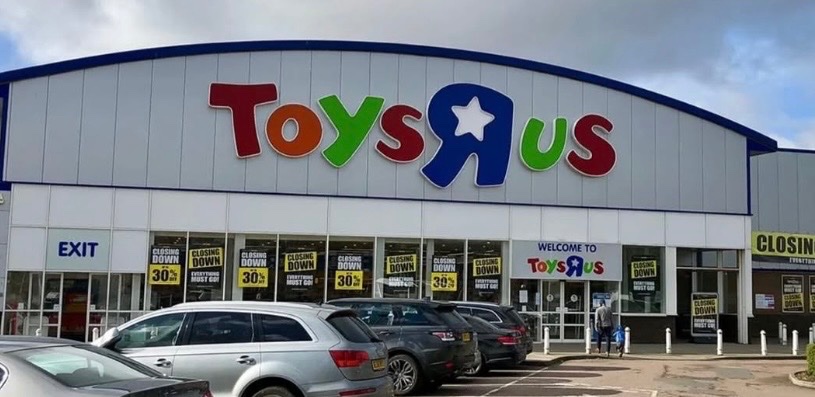
Toys R Us wasn’t destroyed by Amazon alone — after a 2005 leveraged buyout saddled the company with roughly $5 billion in debt while private equity firms collected millions in fees, the retailer eventually collapsed, leaving more than 30,000 workers without jobs and many initially without severance.
Toys R Us was once one of the biggest names in American retail, a store so iconic that for generations of children its aisles felt like a second Christmas morning. But its downfall was not simply about online shopping or Amazon overpowering another legacy retailer.
The company’s real troubles began in 2005, when it was taken private through a leveraged buyout that loaded the business with billions of dollars in debt. Instead of investing heavily in modernizing stores, improving its online presence, or competing with rivals like Walmart, Target, and Amazon, Toys R Us spent enormous amounts of money just paying off what it owed.
By the time the company filed for bankruptcy in 2017, the brand was still widely recognized, but financially cornered. Many stores had become outdated, its digital strategy lagged behind competitors, and thousands of employees were left vulnerable when the retailer finally collapsed.
The human cost was immediate. Roughly 30,000 to 33,000 workers lost their jobs, and many initially received no severance pay. Following public backlash and pressure from organized workers, private equity firms Bain and KKR later contributed to a hardship and severance fund, though it came only after the closures had already devastated employees and their families.
Toys R Us was originally founded in 1948 by Charles Lazarus as a baby furniture store called Children’s Bargain Town.