Nation

39.9K posts

Nation banner
Nation

Nation

@definitely_nah

Featured in @theblogera / @nahright alum. Digital storyteller. Music & tech publicity. Business + brand development ➡️ [email protected]

Katılım Eylül 2008
2.2K Takip Edilen22.9K Takipçiler
Nation retweetledi
Sara
Sara@lostcontext_·
Please be aware while nobody wants war, there is sentiment in Iran for intervention and help because they are trapped by a brutal regime and want regime change. They are re forced to live below the poverty line because of state corruption, and they are massacred for wanting basic rights and regime change. The people of Iran want the regime gone. If you see any social justice movements or activists posting "no war on Iran" content right now, please pause before you re-post. You're not necessarily helping Iranians if you do. The regime has committed one of the worst two day massacres on record. And they're not done killing Iranian people. They never will be. The people of Iran are agreed they want the regime gone. And they need to get rid of the regime and have the chance to determine their own future. Iranians are unarmed and being systematically murdered. Don't speak over calls for external help to stop them being annihilated because of a black and white unnuanced commitment to anti imperialism. Centre Iranians about Iran! #IranRevoIution2026 #IranMassacre#DigitalBlackoutIran
English
0
13
20
759
Nation retweetledi
RKOT
RKOT@RKOTOfficial·
UK in ‘Panic Mode’ Over Threat of Regime Change in Iran as U.S. Pressure Escalates As President Donald Trump increases pressure on the Islamic Republic of Iran, a growing strategic divergence is emerging between Washington and the United Kingdom over how far that pressure should go. While elements of the U.S. administration frame maximum pressure as a potential pathway to regime change, British policymakers appear focused on preventing the collapse of Tehran’s government. Officials in London continue to condemn Iran’s nuclear expansion and human rights abuses, yet they have stopped short of endorsing policies that could topple the Islamic Republic. Analysts say this cautious posture reflects the UK’s desire to maintain stable access to Iran’s energy resources, protect existing weapons and defense contracts, and limit regional instability that could threaten Gulf security and European economic interests. Part of London’s approach is reflected in its refusal to designate Iran’s Islamic Revolutionary Guard Corps (IRGC) as a terrorist organization, a step that Washington has considered. British officials warn that such a move could destabilize diplomatic channels, provoke broader regional conflict, and disrupt energy flows, particularly oil and gas exports critical to global markets. Analysts interpret this as a clear signal that the UK prioritizes containment and risk management over confrontation, while critics argue it may implicitly signal tolerance of the regime in order to safeguard economic and strategic interests. This caution is rooted in history. Britain’s involvement in Persia dates back to imperial competition formalized in the Anglo-Russian Convention, when London and St. Petersburg divided the country into spheres of influence. The legacy of that period still shapes Iranian perceptions of British interference, but it also reflects a long-standing British preference for influence over disruption. For London, a sudden collapse in Tehran could trigger a power vacuum, fragment Iran’s security apparatus, destabilize neighboring states, disrupt Gulf energy flows, and drive refugee movements toward Europe. Analysts argue that maintaining the status quo in Tehran even under an authoritarian government serves British strategic and economic interests more reliably than the uncertainty of a post-regime transition. Within diplomatic circles, discussion has emerged about controlled internal power shifts as a way to recalibrate Tehran’s posture without destabilizing the entire system. Figures such as Ali Larijani, a long-time insider with experience in security and nuclear negotiations, are often cited as pragmatic actors capable of balancing Tehran’s regional behavior with the need for continuity. While there is no verified evidence that London is actively engineering succession, engagement with such insiders is seen as a way to safeguard UK interests while avoiding systemic collapse. Complicating the landscape is China, now Iran’s largest economic partner. Beijing benefits from a sanctioned but stable Iran integrated into its Belt and Road framework. For Britain, the need to manage relations with both Tehran and Beijing adds an additional layer of complexity to decisions on escalation or containment. The emerging divide between Washington and London is therefore structural as much as strategic. The U.S. appears willing to tolerate higher levels of systemic risk in pursuit of regime pressure, while the UK prioritizes stability, incremental leverage, and protection of economic interests. In this context, Britain’s policy reflects a calculated preference for keeping the Islamic Republic intact, not as an ideological endorsement, but as a practical safeguard for energy, trade, and regional stability.
RKOT@RKOTOfficial

Dubbed “British spies” by Mahmoud Ahmadinejad, they became a symbol of the regime’s deepening paranoia. Yet the irony runs deeper: members of Ali Larijani’s family have longstanding ties to the United Kingdom. His father, Grand Ayatollah Mirza Hashem Amoli, maintained religious and institutional links that extended beyond Iran, while several of the Larijani brothers were educated or spent time in the West. Most notably, Ali Larijani’s daughter reportedly pursued higher education in the UK a detail frequently cited by critics who highlight the contrast between the regime’s anti-British rhetoric and the personal trajectories of its elite families. During the political infighting that followed the disputed 2009 presidential vote, Ahmadinejad and his allies accused rivals within the establishment including figures linked to the Larijani family of having connections to Britain and of acting in line with British interests. In Iran’s political lexicon, branding someone a “British agent” or tied to the UK is a serious charge, historically used to suggest foreign interference or disloyalty. While Ahmadinejad did not present public evidence of espionage, the rhetoric was part of a broader power struggle inside the Islamic Republic, where accusations of Western ties are often deployed as political weapons. As the Islamic Republic balances between negotiation and confrontation, such contradictions underscore the widening gap between its public posture and private realities.

English
21
73
227
19.2K
Nation retweetledi
Shahinlooo
Shahinlooo@Shahinlooo·
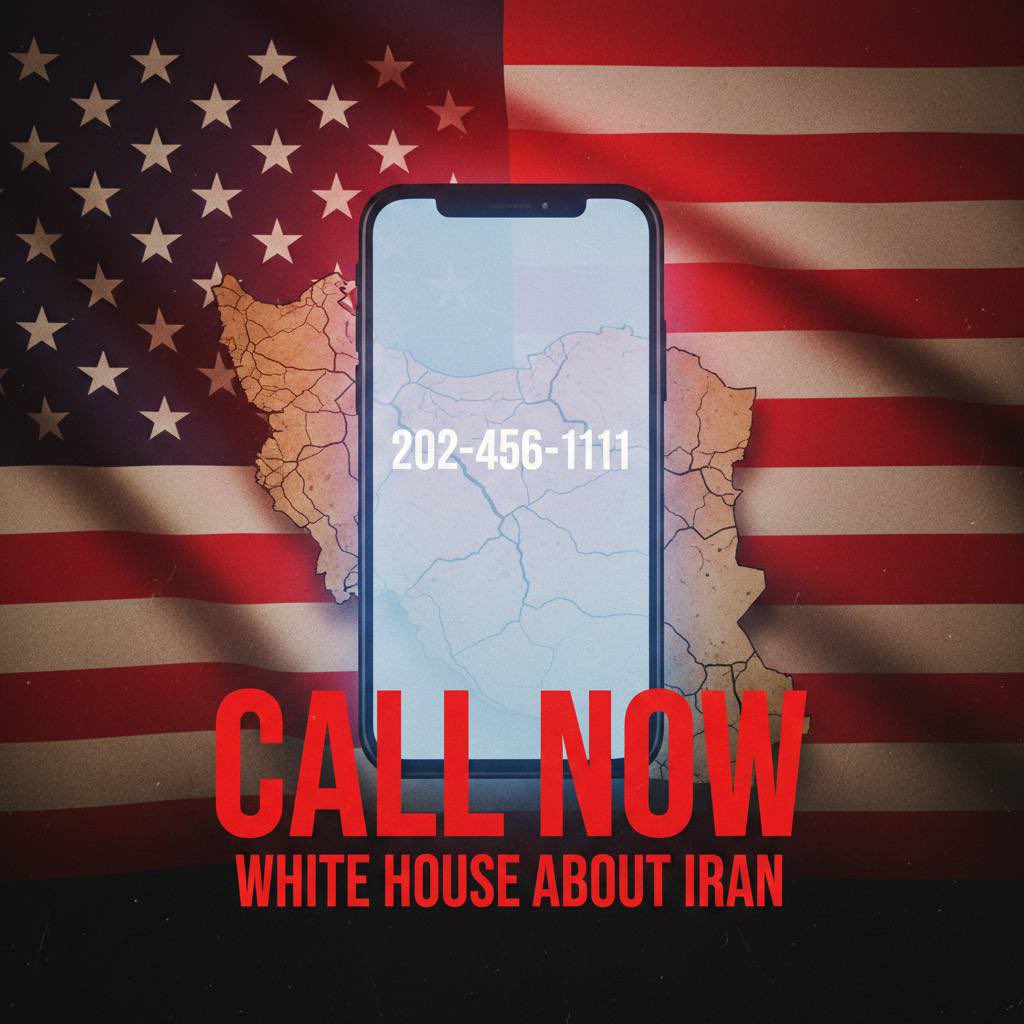
🚨 ACTION ALERT – CALL TODAY Congress is debating the Massie–Khanna Resolution, which would limit the ability to respond quickly to the Islamic Republic. This is the same regime that has massacred protesters and continues to threaten its own people and regional stability. If you live in the U.S., take 2 minutes and call: 📞 White House Comment Line (202) 456-1111 Monday–Thursday | 7:00 AM – 12:00 PM (PT) Suggested message: “I urge President Trump to stand firmly with the Iranian people and oppose any resolution that limits the ability to respond to the Islamic Republic. The regime is a threat to both Iranians and global security.” Also call your Member of Congress and ask them to vote NO on the Massie–Khanna Resolution. 📢 Share this message. Every call matters. #RezaPahlaviForIran #IranMassacre #IranRevolution2026 #KingRezaPahlavi
Shahinlooo tweet media
English
9.5K
616
1.2K
15.6K
Nation retweetledi
DataRepublican (small r)
DataRepublican (small r)@DataRepublican·
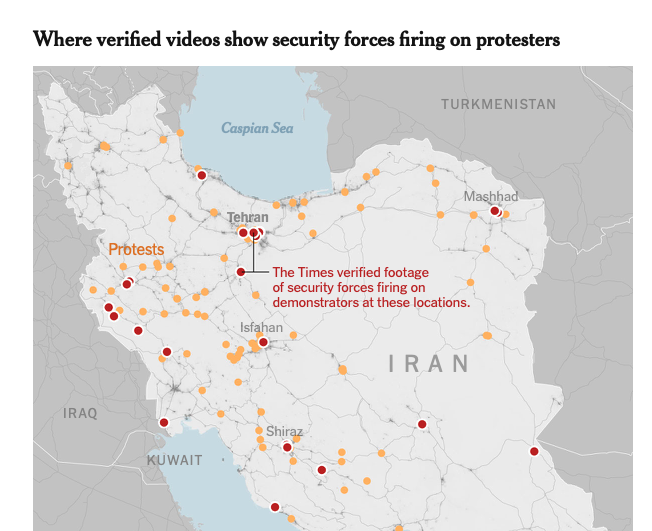
🧵THREAD: All about the foreign-influenced Western media called Grayzone and Iranian protests Last month, 𝕏 celebrated the Iranian protests. Then they ... just disappeared from the headlines, and it came out quietly that hundreds and even thousands of protesters were brutally massacred. So why did the story mostly die? Because an influence operation ran by a foreign-backed media group called Grayzone turned a massacre into a debate about who was really behind the protests. A new report from @ncri_io , published February 19, documents exactly how it worked: the seeding, the laundering, and who did the amplifying. As always, patience as I pull the thread together. 👇
DataRepublican (small r) tweet mediaDataRepublican (small r) tweet media
English
169
2.9K
9.8K
296.6K
Nation retweetledi
ثنا ابراهیمی | Sana Ebrahimi
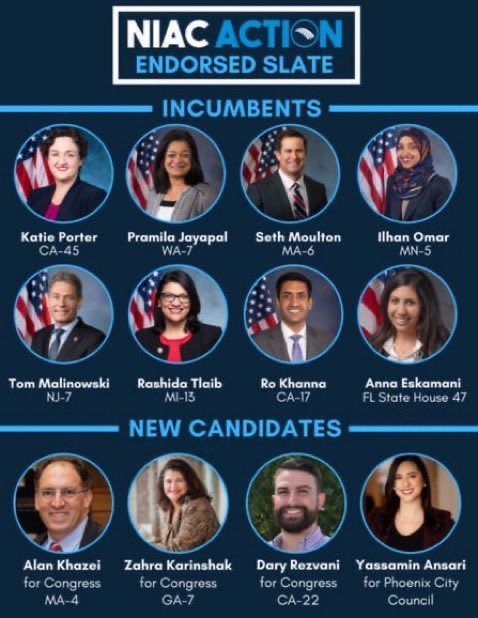
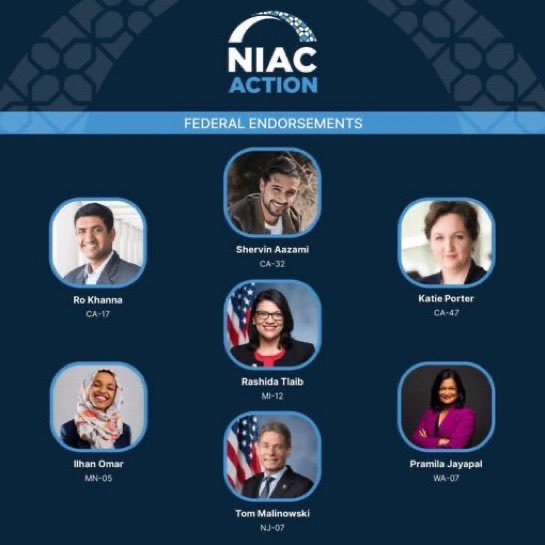
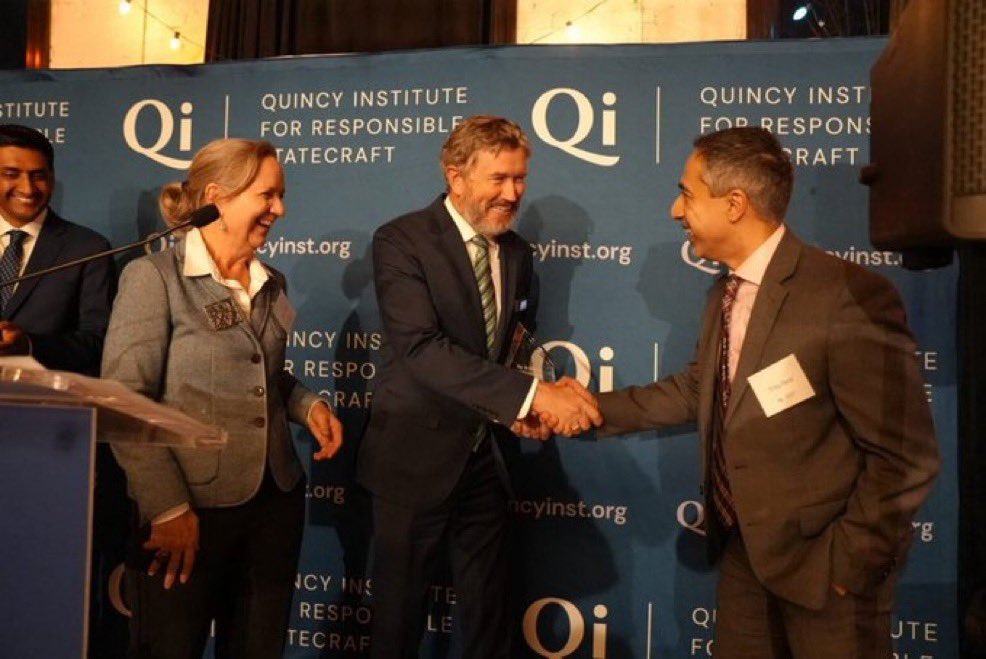
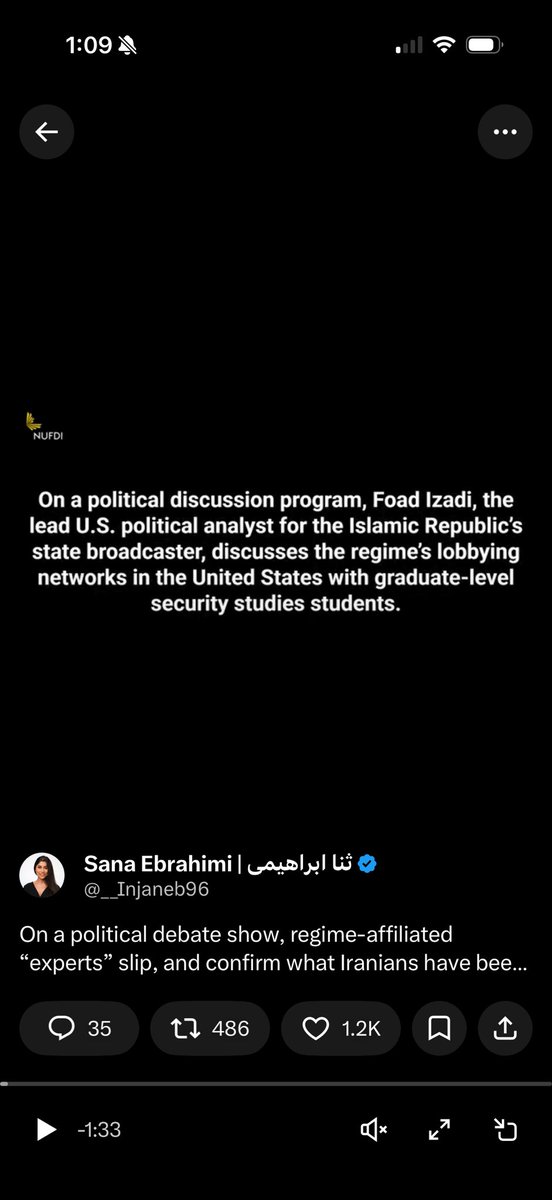
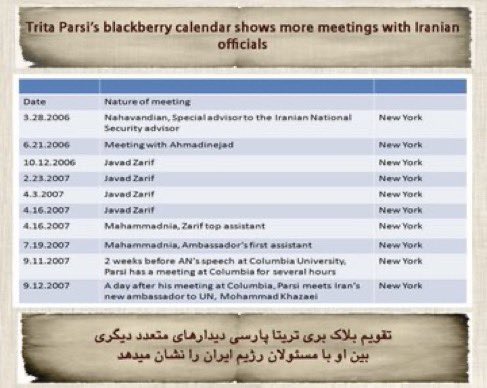
Watch closely who is loudly opposing any strike on the Islamic Republic’s military infrastructure. Then look at who endorsed them. A recurring name appears: NIAC Action, the political arm of the National Iranian American Council. NIAC presents itself as a voice for Iranian-Americans. That’s the branding. The controversy begins when you examine its leadership history and political activity. It was founded by Trita Parsi (alongside others, including Siamak Namazi). Over the years, many Iranian dissidents and diaspora activists have accused NIAC of advocating positions that align closely with the Islamic Republic’s foreign policy goals, particularly around sanctions relief and nuclear negotiations. In 2012, Parsi sued an Iranian-American activist for defamation over claims that NIAC functioned as a regime lobby. During court discovery, internal emails became public. Those documents showed that Parsi had extensive communications with Iranian officials, including Javad Zarif. Later, Zarif became foreign minister and a central figure in negotiating the nuclear deal. The released emails revealed coordination of meetings, messaging discussions, and efforts to facilitate access between Iranian officials and U.S. policymakers. Parsi has argued these contacts were normal diplomatic engagement. But the pattern went beyond neutral policy advocacy and into organized influence aligned with Tehran’s strategic interests. That debate never really went away. Over time, NIAC became so controversial among large segments of the Iranian diaspora and U.S. politicians that its name itself triggered backlash at protests and community events. Many Iranians openly labeled it the regime’s lobby arm in Washington. Then came a pivot. Parsi went on to co-found the Quincy Institute for Responsible Statecraft, a Washington think tank promoting foreign policy “restraint.” The Quincy Institute positions itself broadly as anti-interventionist across the globe. But critics argue that for Parsi, it provided a rebranded and expanded platform after NIAC’s reputation had become deeply polarizing within the Iranian community. Fast-forward to recent debates. On Iranian state media, analyst Foad Izadi, a frequent voice on Iran’s state broadcaster, openly discussed lobbying networks in the U.S. and named Trita Parsi and NIAC as the regime lobbyists. When state-aligned figures publicly describe you as part of their influence ecosystem, people start asking questions. This is not about conspiracy theatrics. It’s about patterns: – Consistent advocacy for policies that reduce pressure on the regime. – Documented communication with senior Iranian officials. – Political endorsements aligned with anti-pressure positions. – Public acknowledgment from regime-aligned media of influence networks. Influence operates through policy framing, “community representation,” and access to lawmakers. The Islamic Republic has invested heavily in soft power abroad because it understands something fundamental: shaping Western policy is cheaper than confronting it militarily. The question isn’t whether people are allowed to argue against military strikes. Of course they are. The question is transparency. Who are they connected to? Who amplifies them? Who benefits from their policy outcomes? In geopolitics, follow incentives, not slogans. History shows that authoritarian regimes don’t just export missiles. They export narratives. And those narratives travel through institutions that claim to represent communities. When you see coordinated messaging, recurring endorsements, and documented back-channel access, it’s not irrational to ask: whose strategic objectives are being served? Power moves through relationships.
ثنا ابراهیمی | Sana Ebrahimi tweet mediaثنا ابراهیمی | Sana Ebrahimi tweet mediaثنا ابراهیمی | Sana Ebrahimi tweet mediaثنا ابراهیمی | Sana Ebrahimi tweet media
Thomas Massie@RepThomasMassie

Do you want a U.S. led war with Iran?

English
30
393
951
12.8K
Nation retweetledi
IranRevolutionReport🇮🇷
IranRevolutionReport🇮🇷@IranRevReport·
You can ignore our pain. You can dehumanize us. You can call us Islamophobes, Mossad agents, CIA agents, bots. You can reduce the blood in our streets, our dead children and our screaming mothers and fathers to “fake news.” You can pretend our prisons are myths and our graves are propaganda. But we are real. Our suffering is real. Our anger is real. We are not pawns in your ideological wars. We are people who have buried friends, family and campatriots. We are the ones trying to save you from terrorists. We are people who have watched teenagers hanged. We have watched innocent civilians shot in streets. We have watched our people searching for their loved ones among masses and masses of body bags. We are people who have seen women beaten for daring to breathe freely. You may silence us in your spaces. You may mock us. You may try to shame us into submission. But we will not stop speaking. We will not stop resisting. We will not lose hope. Because hope is the one thing you cannot take from us. And freedom is worth every accusation you throw at us. Iran will be free. #IranMassacre
English
73
806
2.3K
31.7K
شهرک اکباتان | Ekbatan
شهرک اکباتان | Ekbatan@shahrak_ekbatan·
اکانت ایکس(توییتر) ما به‌خاطر ریپورت بن شده، برای حمایت نیاز داریم کامنت‌های انگلیسی برامون بزارید.
فارسی
2.9K
617
5.8K
147.6K
Nation retweetledi
Goldie Ghamari | گلسا قمری 🇮🇷
Many of you keeping up with the Iranian Revolution have probably heard clips of this epic song in various videos. It's called "Khorramshahr Symphony" by Majid Entezami. It's become one of the unofficial anthems of the Iranian Revolution. Here's the full version. Enjoy.
English
125
1.1K
4.5K
89.8K
Nation retweetledi
Jake Wallis Simons
Jake Wallis Simons@JakeWSimons·
Picture of 2026
Jake Wallis Simons tweet media
English
446
3.9K
38.5K
447.9K
Nation retweetledi
Jonah Katz
Jonah Katz@dinkin_flickaa·
X’s translation feature should win some kind of peace prize
English
84
126
4.3K
135.1K
Nation retweetledi
Shirin
Shirin@shooreshiirin·
همکار ونزوئلاییم رو دیدم ازش پرسیدم بهت تبریک بگم یا نه گفت اووو البته که تبریک امیدوارم بعدی شما باشید 🥹 به قول دوستمون من حسود نبودم، دیکتاتوری این بلا رو سرم اورد
فارسی
20
319
18.9K
159.2K