DeflatedTrader

28 posts

DeflatedTrader

DeflatedTrader

@deflatedtrader

Decade at multistrat hedge funds. Edge dies twice: in your backtest, and in your behavior. Watch me kill both

Markets Katılım Temmuz 2026
70 Takip Edilen14 Takipçiler
Sabitlenmiş Tweet
DeflatedTrader
DeflatedTrader@deflatedtrader·
I once built a strategy with a Sharpe of 5.07. Then I tested it properly. Lookahead bias in the backtest… real Sharpe 0.65. Ten years at multistrat funds and I still fooled myself in an afternoon. That’s what this account is about: the gap between the edge you think you have and the edge you can prove
English

1
0
0
177
DeflatedTrader
DeflatedTrader@deflatedtrader·
Patience is an edge you can actually measure: take your filled trades, delete the ones that didn’t meet your full criteria, rerun the P&L. The gap between the two curves is what impatience costs you per year. Almost nobody runs that number, it’s usually the worst line in the audit
English
0
0
0
16
J trader
J trader@jtrader·
What if your biggest edge is the one you keep ignoring: patience?
English
9
11
132
3.6K
DeflatedTrader
DeflatedTrader@deflatedtrader·
The whole chain hangs on link one. “Backtest properly” is where most people quietly fail - test enough variants and something always looks trustworthy. Trust a survivor of your own overfitting and the same loop runs in reverse: false trust ➡️ forced execution ➡️ drawdown you can’t sit through ➡️ override ➡️ back to square one, minus the capital
English
0
0
0
20
Goshawk Trades
Goshawk Trades@GoshawkTrades·
good systems compound in trading. backtest a strategy properly. trust the results enough to go live. follow every signal because you trust the process. consistent execution compounds returns. returns give you capital to add a second strategy. two uncorrelated strategies smooth your equity curve. smoother curve means less panic. less panicking means you never override the system. the first strategy you trust completely is the hardest. everything after that compounds.
English
6
0
25
3.2K
DeflatedTrader
DeflatedTrader@deflatedtrader·
@SJosephBurns Eight of these decide whether you lose. Position size decides whether it’s survivable. Every blown account on this list had size as the co-pilot - stubbornness at 1% risk is tuition, stubbornness at 10% is the funeral
English
0
0
0
40
Steve Burns
Steve Burns@SJosephBurns·
Top causes of big losses in trading: Too stubborn to exit when proven wrong. Too much ego to take a small loss. Too much hope for a reversal. Trading too big a position size. Buying early in a downtrend. Selling short early in an uptrend. No trading plan No trading system No discipline
English
7
12
57
9.6K
DeflatedTrader
DeflatedTrader@deflatedtrader·
Posting the red ones is the whole game - respect. One addition to “successful because I followed the plan”: the loss is also a data point about the plan. Followed-plan losses accumulate into the only honest answer to “does this setup still work?” Most people follow the plan but never audit it
English
0
0
0
14
Trader Mike
Trader Mike@tradermike1234·
Forgot to post yesterday. 20k LOSS on ES Longs 🔪🔪🔪🟥 I don't win em all ;) Sometimes we pay tuition Still a successful trade because I followed the plan✅ On to the next
Trader Mike tweet mediaTrader Mike tweet media
English
8
5
142
8.4K
DeflatedTrader
DeflatedTrader@deflatedtrader·
And US-only is the flattering version of the problem: it’s the single luckiest major equity market of the last century, and the most-mined dataset in finance. A result that only appears there isn’t just unconfirmed elsewhere. It was discovered in the one sample where survivorship and researcher attention both point the same way
English
0
0
0
44
DeflatedTrader
DeflatedTrader@deflatedtrader·
The bridge between the two: you don’t need prediction to be impossible, just weak. A 52% edge is real prediction, and it still blows accounts when someone sizes it like it’s 100%. Certainty isn’t a forecasting error, it’s a sizing error. Survival is what lets a small edge live long enough to pay
English
0
0
0
14
J trader
J trader@jtrader·
How many accounts have you blown because you were 100% sure price was going to one level... ...only to watch it reverse the moment you entered? The market doesn't reward certainty. It rewards risk management. The market is impossible to predict. Your job isn't to predict it. Your job is to survive it.
English
11
15
114
3.8K
DeflatedTrader
DeflatedTrader@deflatedtrader·
The strategy version is worse in one way: in company research the failed peers at least exist in a database somewhere. The failed strategies were deleted by the person who tested them. Every backtest is a survivor of a graveyard only you saw, and most people don’t even count the bodies
English
0
0
0
7
Goshawk Trades
Goshawk Trades@GoshawkTrades·
the single most common backtesting mistake, explained by a Berkeley professor who studies great companies for a living. Morten Hansen: "we can't just look at a successful company and say, what did they do? we call that selecting on the outcome variable of success only. and that's a bias." you have to compare it against the peers who had the same shot and stayed mediocre, or died. it's the exact trap in strategy research. if your sample only includes the winners and you'll "discover" edges that were just survivors.
English
5
11
68
8.8K
DeflatedTrader
DeflatedTrader@deflatedtrader·
@t0mbfx The step before this matters more: earn the right to detach. Ignoring results is the correct move only when the system was tested well enough to deserve your trust. Detach from an unvalidated system and you’re just executing a coin flip with excellent discipline
English
0
0
0
14
Tom
Tom@t0mbfx·
If you want to be a successful trader The guy making $10,000s each month trading There’s one super important thing you need to do: DETACH FROM THE RESULTS Stop looking at the $ figure on each trade, stop chasing money The ONLY thing you should be focused on is following your system and executing trades that align with your plan, nothing else Do this and the money will follow anyway
English
45
68
832
27.8K
DeflatedTrader
DeflatedTrader@deflatedtrader·
4, 5 and 7 are secretly the same mistake. Trusting your opinions, trusting others’ opinions, skipping quantified signals: all three are “making decisions on evidence that was never tested”. The source of the untested opinion doesn’t matter. Yours, mine, a guru’s - untested is untested
English
0
0
1
18
Steve Burns
Steve Burns@SJosephBurns·
7 mistakes I made when I was a new trader: 1. No research 2. Not having enough cash in my account 3. Not creating a trading system 4. Trusting my opinions and predictions 5. Listening to other’s opinions & predictions 6. Being stubborn holding losses 7 Not using quantified signals How many are you making right now?
English
9
11
129
13.9K
DeflatedTrader
DeflatedTrader@deflatedtrader·
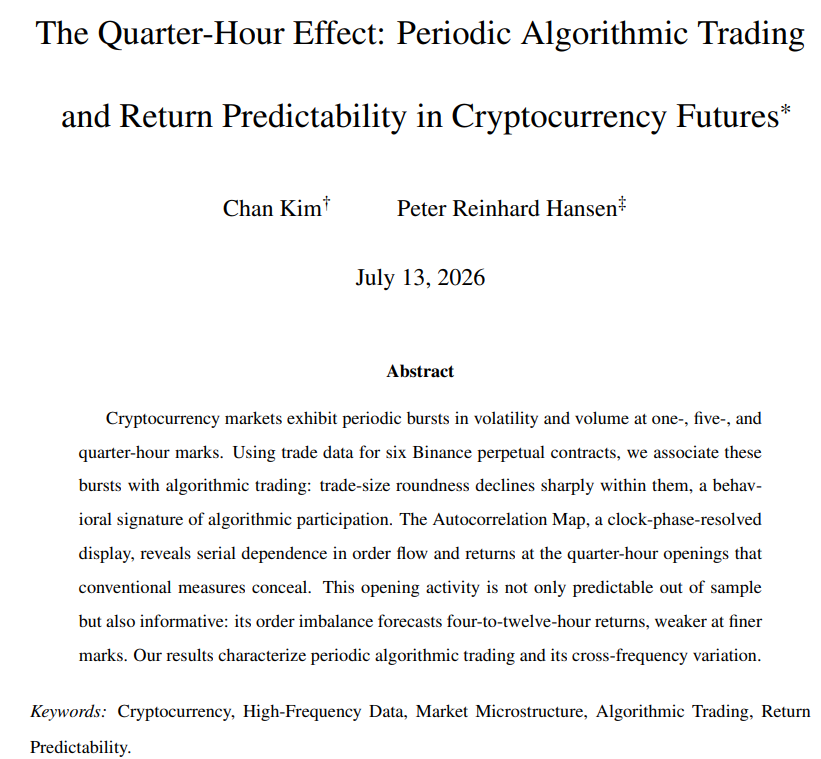
@quantbeckman The authors’ honesty about mechanism matters more than it seems. You can trade a pattern without knowing who causes it, but you can’t know when to stop trading it. Mechanism is what tells you the edge’s expiry conditions. Pattern-only edges die silently; you find out from the P&L
English
0
0
0
10
Quant Beckman
Quant Beckman@quantbeckman·
The argument is that human traders prefer round quantities while algorithms dont. The authors concede that aggregate data cannot distinguish the mechanisms exposed. Therefore, the evidence supports calendar-synchronized or automated-looking activity, but it doesnt prove that a specific class of trading algorithms generates the effect.
Quant Beckman tweet mediaQuant Beckman tweet media
Quant Beckman@quantbeckman

70.4% return and 3.15 Sharpe ratio? With only 3 stocks, 1 test year and no fees!? 😟

English
2
4
57
10.4K
DeflatedTrader
DeflatedTrader@deflatedtrader·
Those three are the economic case: necessary, not sufficient. The missing leg is statistical: enough evidence that the result isn’t luck. My bar: the edge survives after adjusting for every variant I tried, and holds on data it has never seen. I’ve had strategies pass all three of your tests and fail that one - the ‘why it works’ story was great, and so was my imagination
English
0
0
0
7
QuantifiedStrategies.com
QuantifiedStrategies.com@QuantifiedStrat·
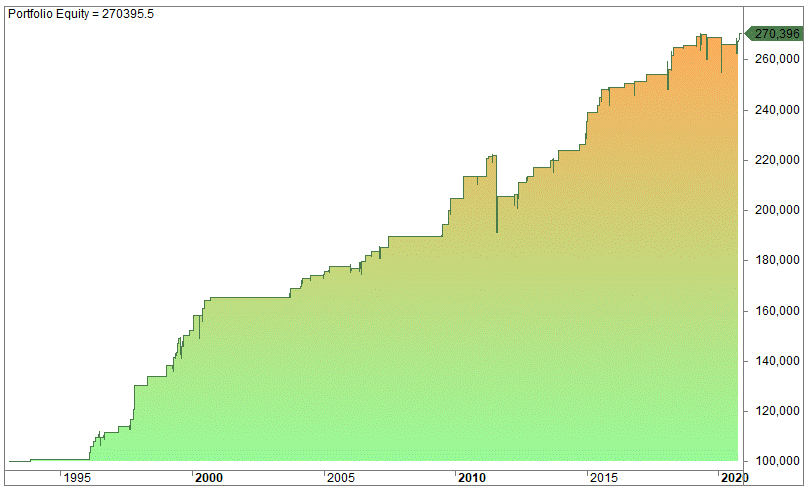
What would it actually take for you to trust a strategy with your own money? For me, three things matter: understanding why it works, knowing when it is likely to fail, and having a good reason to believe the edge can persist.
English
1
0
0
876
DeflatedTrader
DeflatedTrader@deflatedtrader·
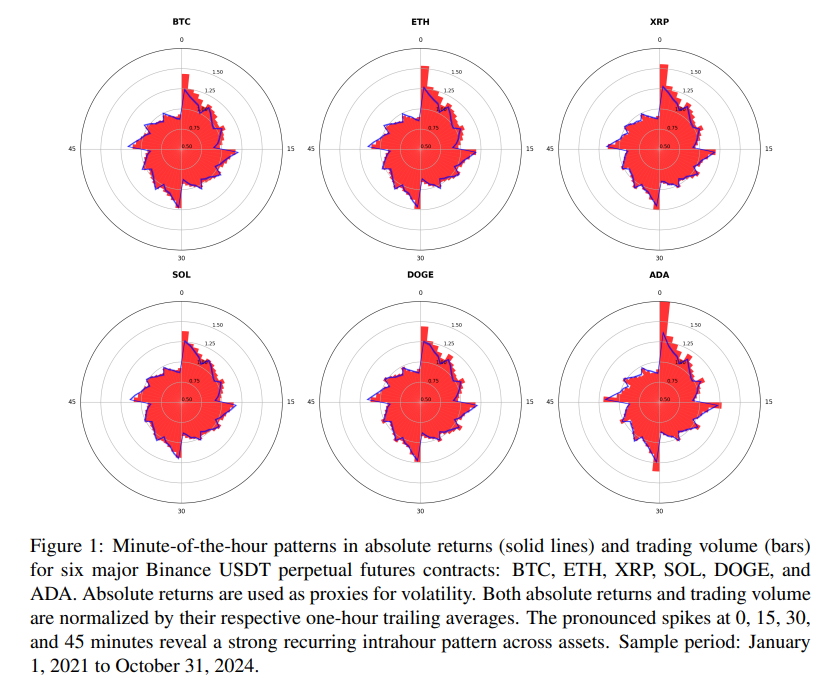
@quantbeckman The subtle part: the overfitting cost is paid even by the features you reject. Every candidate you tried and discarded was a test, and enough tests guarantee something looks great by luck. The backtest only shows the winner, never the hundred auditions behind it
English
1
0
0
21
Quant Beckman
Quant Beckman@quantbeckman·
📄[WITH CODE] Feature selection: Wrapper-based feature selection methods📄
Quant Beckman tweet mediaQuant Beckman tweet media
English
3
1
5
994
DeflatedTrader
DeflatedTrader@deflatedtrader·
The inertia benchmark is the most underused number in trading. Everyone compares themselves to the index; almost nobody compares themselves to their own January portfolio. The gap between those two is pure behavior, and for most discretionary books it’s negative and nobody wants to measure it
English
0
0
0
951
Goshawk Trades
Goshawk Trades@GoshawkTrades·
the guy who runs the world's largest sovereign wealth fund, $2 trillion, says the hardest part of the job is doing nothing. Nicolai Tangen has a rule he calls the "inertia analysis": take your portfolio from january 1st. calculate what it would've returned if you never touched it again. then compare it to what you actually did all year. "so often you actually have detracted from your performance by the things you've done." every system you build is fighting the same urge. often the edge isn't the next trade. it's the trades you talk yourself out of.
English
27
142
1.1K
124.1K
DeflatedTrader
DeflatedTrader@deflatedtrader·
Expectancy, profit factor, Sharpe: every formula traders memorize has the same weakness. Feed it backtest numbers, it inherits every bias in the backtest. Feed it 30 live trades, it’s noise wearing a lab coat. My 5.07 wasn’t a math error. The formula was fine. The inputs were lying. Test the inputs before you trust the outputs
English
0
0
0
62
DeflatedTrader
DeflatedTrader@deflatedtrader·
@QuantifiedStrat The most interesting split in this curve: R3 was published ~2009. Everything before that is the data the rules were built on; everything after is the true out-of-sample test. Does the post-publication half hold up, or does the slope flatten once the edge was public?
English
0
0
1
38
DeflatedTrader
DeflatedTrader@deflatedtrader·
The uncomfortable part: willpower isn’t the fix. If you can break the rule in the moment, the rule was a suggestion. The traders who actually stop are the ones who make breaking it mechanically hard: smaller size, hard stops in the system, review before re-entry. Locking in is architecture, not motivation
English
0
0
0
89
Tom
Tom@t0mbfx·
Every day you break your trading rules Is an extra day where you: •Won’t be profitable •Won’t be living the life of your dream •Won’t be able to provide a good life for your family So how about you just stop breaking your rules and LOCK IN bro
English
38
54
668
14.6K
DeflatedTrader
DeflatedTrader@deflatedtrader·
@HangukQuant @allaboutvol That instinct to move past them is exactly why the content doesn’t exist. Nobody’s archive of dead strategies survives their own embarrassment. Even 3 of them with honest cause-of-death would be the rarest post on here
English
1
0
2
37
HangukQuant
HangukQuant@HangukQuant·
@deflatedtrader @allaboutvol Will do that! I’ll have to think hard about exactly what I did wrong, I’m guilty of “moving past those” but I’ve definitely made many mistakes over the years
English
1
0
2
96
HangukQuant
HangukQuant@HangukQuant·
What do you guys want to see more of? I am thinking back to basics, the more I stick around the more technical I get and the less interesting they become
English
6
1
27
6.4K
DeflatedTrader
DeflatedTrader@deflatedtrader·
@allaboutvol @HangukQuant Exactly, the sweat is the content. A strategy graveyard with cause-of-death listed teaches more than any live track record
English
1
0
1
38
vol
vol@allaboutvol·
@deflatedtrader @HangukQuant this! the 'hard things about hard things' you've gone through (all that sweat and pain) would be certainly very interesting
English
1
0
2
77
DeflatedTrader
DeflatedTrader@deflatedtrader·
@steenbab The danger is that confusion is also uncomfortable, so most traders resolve it the cheap way - by picking whichever premise lets them keep the position. Resolving contradictions toward the evidence instead of toward comfort is the actual skill
English
0
0
0
19
Brett Steenbarger
Brett Steenbarger@steenbab·
For the self aware trader, confusion is information. Somewhere there is an assumption we're making that needs to be challenged. Conviction follows from the embrace--and resolution--of contradictions: traderfeed.blogspot.com/2026/07/lesson…
Brett Steenbarger tweet media
English
4
0
42
5.8K