Lucas ritter retweetledi
Lucas ritter
6.2K posts

Lucas ritter retweetledi

I am AMAZED that James Harden has never been called for pushing off
English
Lucas ritter retweetledi

The NBA needs more of this. They were at their peak when several players had this kind of edge.
But no, Ausar Thompson gets hit with a flagrant foul. Charmin-soft league.
Underdog NBA@UnderdogNBA
Ausar hit Sam Merrill with the Iverson step-over
English
Lucas ritter retweetledi

THE LIFE CYCLE OF A BUBBLE
1. A genuine advancement creates real productivity gains. A real technological or economic improvement increases productivity and leads to genuine revenue and earnings growth.
2. Stock prices leak into reported profitability. Rising stock prices improve reported earnings, financing conditions, collateral values, and perceived business performance.
3. Reported profitability drives real investment. Companies increase hiring, capital spending, construction, expansion, and speculative investment because of their own or their customers’ reported profitability.
4. Bubble beliefs and abandonment of present-value discipline. Investors stop focusing on discounted cash flows and begin relying on continuing gains from the greater fool theory, believing they can sell later at a higher price.
5. Inflows from sideline investors. Previously cautious investors enter the market in large numbers. New money from existing and new investors participation drive prices higher.
6. Extreme overvaluation. Prices rise far above historical normal multiples of reported fundamentals, even ignoring the fact that reported fundamentals have been driven by rising stock prices.
7. Issuance. Companies take advantage of high valuations through IPOs, secondary offerings, stock-based acquisitions, SPACs, and insider selling.
8. Exhaustion of inflows. The flow of new investors starts shrinking while existing investors approach their risk and leverage limits. Volatility and dispersion grow and gains become less uniform across stocks.
9. Earnings disappointments from slowing price appreciation. As stock prices stop rising rapidly, the earlier boost from higher valuations into earnings weakens or reverses. Companies begin missing expectations.
10. Stock-price collapse with high volatility. Confidence in both the fundamental growth and in the greater fool theory break down and prices fall sharply. Volatility rises further as leverage unwinds.
11. Bear-market rallies and progressively greater exhaustion. Bargain hunters and frustrated latecomers repeatedly buy the dips, creating violent temporary rallies that fail. Markets make lower highs and lower lows.
12. Capitulation, abandonment, and normalization. Bubble participants eventually give up in disgust or exhaustion. Volatility falls, valuations normalize, and the market returns to more ordinary behavior.
English
Lucas ritter retweetledi

sports in the streaming era are so cool. is it easier to find? no. is the broadcast weirdly dark and gray? yes. is the connection more reliable? definitely not. it must be cheaper then? also no
English
Lucas ritter retweetledi

The best reply I’ve heard from a millennial is “the kids coming out of college today have such a head start. They have been using it for years and are so creative with it.”
The technology is barely three years old and is going to take your job. Start cooking.
English
Lucas ritter retweetledi
It remains them (the "elites") vs. The Rest of Us
unusual_whales@unusual_whales
BREAKING: Just 20 minutes before Trump's announcement that the Strait of Hormuz was open, massive trades hit the market. Investors sold a combined 7,990 lots of Brent crude futures, a $760 million bet that oil would go down. These orders were much larger than anything else at the time. The traders made huge gains. Unusual.
English
Lucas ritter retweetledi

Tigers medical update, in addition to the Parker Meadows news
- Justin Verlander is scheduled to throw a bullpen Wednesday
- Beau Brieske, Troy Melton completed bullpens Tuesday
- Bailey Horn has paused his throwing and is getting evaluated

English
Lucas ritter retweetledi

China has spent 3.6 times more than the US on chipmaking subsidies over the past decade — $142 billion and counting, easily outweighs CHIPS Act tomshardware.com/tech-industry/…
English
Lucas ritter retweetledi

Lucas ritter retweetledi

Lucas ritter retweetledi

Keith (.898), Dingler (.885) and McGonigle (.808) are having such great starts to the season
Too bad Riley (.563) Tork (.621), Kerry (.699) and Gleyber (.711) are all asleep at the wheel and the entire pitching staff is prone to blowup innings.
English
Lucas ritter retweetledi

EXCLUSIVE: "Worse Than the Iran Helium Problem"... Semiconductor Industry Faces 'Tungsten Crisis'
"Helium can be sourced from the U.S. or Russia. For tungsten, there's nowhere to go but China."
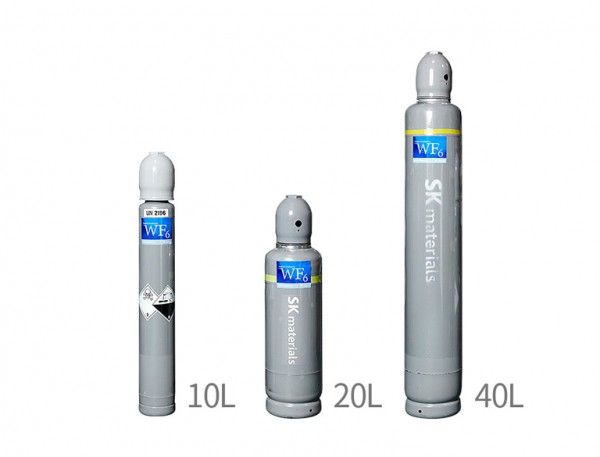
While concerns over semiconductor process material procurement — including helium — have emerged in the wake of the Iran war, the semiconductor industry points to tungsten hexafluoride (WF6) as an even more urgent supply risk.
Japanese suppliers, which account for roughly 25% of global WF6 supply, have signaled production cuts in the second half of the year. The reason: China's tightening of tungsten export controls toward Japan has made it difficult for them to secure raw materials.
According to multiple industry sources on April 3, Japanese WF6 suppliers such as Kanto Denka and Central Glass began notifying Korean semiconductor companies — including Samsung Electronics and DB HiTek — of raw material supply disruptions starting last week. A source familiar with the matter said, "They indicated they can maintain supply through May–June using existing tungsten inventory, but cannot guarantee anything beyond that for the second half." The source added, "They asked Korean clients to seek alternatives such as SK Specialty or Foosung."
Samsung Electronics has a higher dependence on Japanese WF6 than SK Hynix, making the switch to domestic suppliers more urgent. SK Hynix is reportedly in a relatively better position, as it already sources some volume from SK Specialty, Foosung, and the Chinese supplier Peric. Meanwhile, some foundries are now under pressure to fast-track process qualification of Korean-made WF6 — a procedure that typically takes over 18 months, parts of which are now being skipped given the urgency.
WF6 is a critical precursor used to deposit tungsten films on semiconductor wafers. These tungsten films serve as pathways for electrical signals within chips. While WF6 is used across DRAM, NAND, and logic, consumption is overwhelmingly concentrated in 3D NAND — its vertically stacked cell structure means that at 200 layers, tungsten must be deposited 200 times. A technology transition to replace tungsten interconnects with molybdenum is partially underway in leading-edge NAND processes, but full-scale adoption will take considerable time.
WF6 manufacturers import Chinese tungsten powder, react it with fluorine gas at high temperatures, then distill and purify it into high-purity gas for semiconductor use. China accounts for 80% of global tungsten powder supply.
Since February of last year, China has imposed an export licensing regime on strategic minerals including tungsten. On top of that, following Japanese Prime Minister Sanae Takaichi's remarks on Taiwan in January of this year, China added export controls on "dual-use" items destined for Japan. Tungsten powder qualifies as a dual-use item — it is both a semiconductor material and a component used in weapons systems including tanks, missiles, and aircraft.
As China's export controls have taken hold, tungsten prices have surged relentlessly. Tungsten powder prices have risen 6–7x over the past year. According to Bloomberg, the international benchmark price for ammonium paratungstate (APT) — the raw material for tungsten powder — has climbed 557% since February of last year.
South Korea remains relatively free from China's export controls, and SK Specialty and Foosung have maintained their tungsten powder imports. However, SK Specialty has reportedly notified customers of a more-than-double price increase for WF6. Foosung is taking the same stance, as the cost structure is identical. An industry source said, "The bottom line is that domestic WF6 suppliers stand to benefit from the windfall."
English
My original tweet was “mental health is like a gas station bathroom” but I got way too vivid with my description of fecal matter, so I changed it up.
English
Mental health is like a sand castle. It’s this fragile thing you’ll spend hours working on. You’ll be ready proud of it, then some asshole comes along and knocks it down.
That’s fine. Just keep building.
Thanks for coming to my Ted Talk.
English
Lucas ritter retweetledi

Lucas ritter retweetledi

It's very curious that all the groups who organized protests against Trump earlier have not organized a single protest over this very unpopular war. Most of those so-called left-wing groups are actually controlled by Democratic leadership, who are obviously in favor of this war.
English
Lucas ritter retweetledi
Trump said today, "You could make the case that we shouldn't be there at all." Exactly! You know who made that case during the campaign? You did! Then, why don't we fucking leave?!
English
Lucas ritter retweetledi