
didericis
476 posts


didericis
@didericis
Software Engineer, Mathematician and P2P fan.
Brooklyn, NY Katılım Haziran 2014
268 Takip Edilen32 Takipçiler

“This is the worst it’s ever going to be” will be one of those pithy statements about AI that ends up being totally wrong
LLM’s for text probably peaked about 6 months ago, now they will be impacted by an array of things that make them slowly worse for most consumer uses
English


@meaning_enjoyer Comparing it to “theatre” isn’t quite right, as the temptation was real/fully experienced.
It’s like when a father eats some food before asking their child to copy them: the food and the eating is real, but it’s a given they can do it.
He’s demonstrating how for the child.
English

interesting theological question re: the temptation of Christ;
was there a possibility he could have succumbed; or
was it just a piece of theatre with its conclusions foregone
English
@litcapital Bearish on LLMs and current gen datacenter spending != Bearish on AI
Am bullish on local AI
English

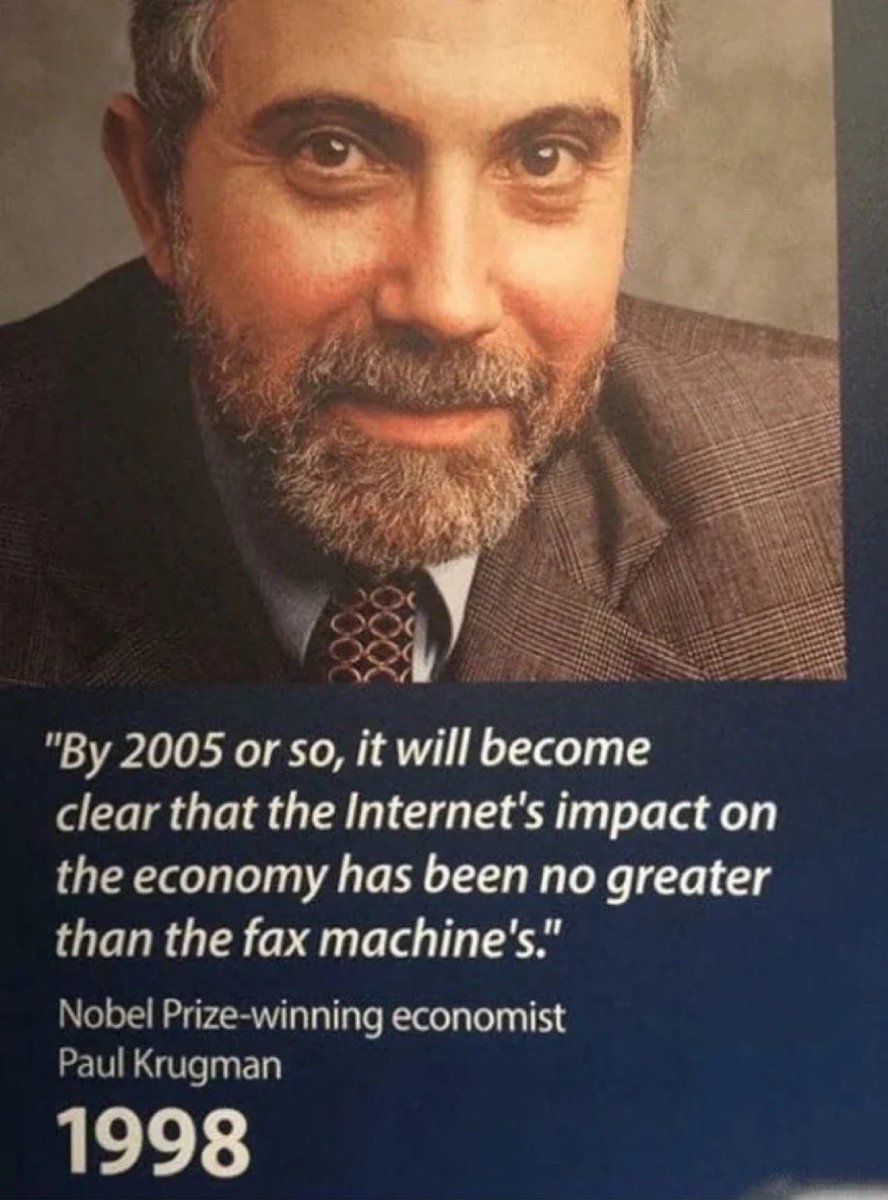
This is how everyone who is incredibly bearish on AI will look like in 5-10 years
English
if you are a wordcel of any capacity - intellectual, philosopher, even shitpoaster - impacting society is easy. steering or shaping it is hard. steering society by introducing ideas is like trying to sculpt the venus de milo on earth by hucking asteroids from the kuiper belt
English

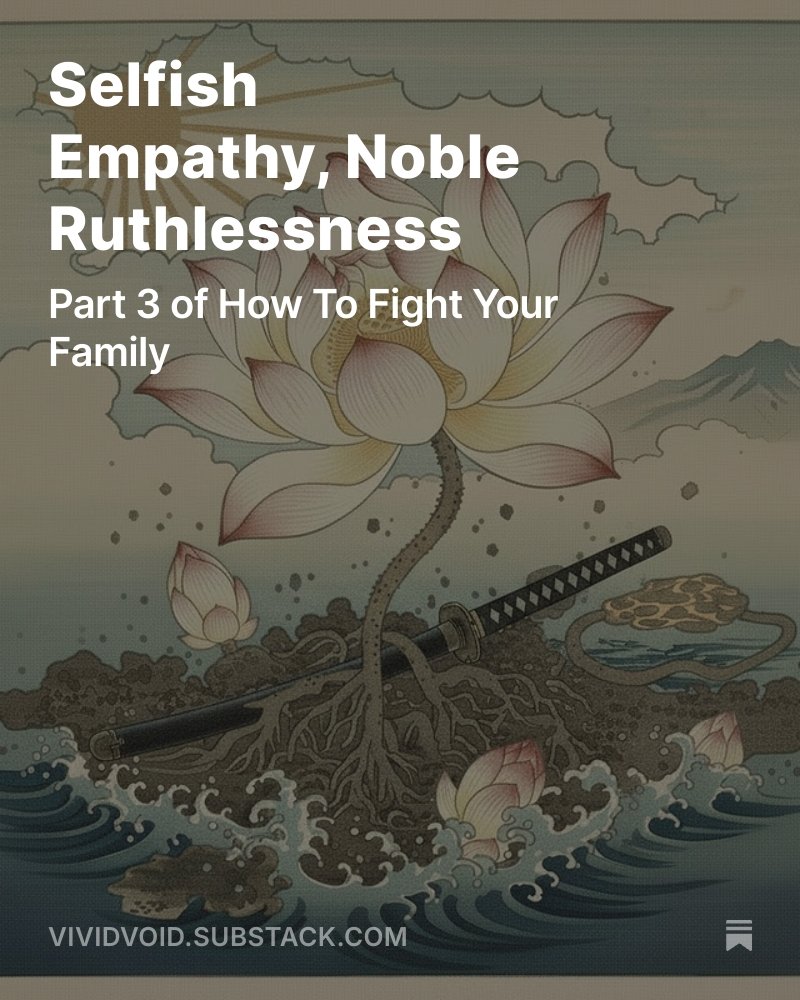
A new essay, Elsewhere: Selfish Empathy, Noble Ruthlessness.
This one is about how to build a felt sense of self that is so strong, you never lose it in dissociation or enmeshment again.
It's also about empathy, the human fawn response, the skillful use of ruthlessness, and how to guarantee integrity for yourself and your loved ones, especially in conflict. I hope you'll enjoy it.
English
@BretWeinstein @PageauJonathan I think the difference is that Jonathan views religion as the foundation of reason and perception rather than a “thing” you can reason about directly.
People need a top level “meta” perceptual framework. For you, I think it’s rationalism/evolution. For him, it’s Christianity.
English

@PageauJonathan I don’t resonate with that description of my beliefs at all. I specifically DO see religious systems as living in the same way wings, leaves and eyes are. I think your view of my view is a crude caricature, though I know that’s not intentional on your part.
English


@davidabecket @untimelysalts This is interesting/where I partially disagree, but yeah, I think we agree more than not.
I view religion as a glasses prescription for seeing the whole, and agree Nietzsche was corrective. But I view Christ as the focal point of a good prescription rather than a spoke.
English

@didericis @untimelysalts What Christ or Christianity teaches. The religion separates totality into division and puts a point among the whole, as the whole. Like a wheel, the center being the total nature of god, Christianity is a spoke and this division is the cause of much of the issues we’re seeing
English


@davidabecket @untimelysalts Justice and constraint are interrelated and are about aligning to the whole, not arbitrary punishment by a higher will. Theosis is the means by which we access the full blessing of life and overcome death, and Christ explains how to pursue that regardless of circumstance.
English
@didericis @untimelysalts That the constraints aren’t punishment, that the self is made to contend with being as it is, the ‘god’ did not condemn man, but blessed him with life.
Christ doesn’t make sense of any of it. The conception of Christ is a fractured totality, sacralyzing a portion of the whole.
English
@Agito2ndthought @untimelysalts At least that's what I got out of it when I read it, has been a long time. I'm due for a reread.
Regardless, I think if Nietzche's own hypocrisies are critiqued with the same energy he used against Christianity, Christ becomes more like what he hoped the Overman would be.
English
@Agito2ndthought @untimelysalts Nietzche's critiques are of Christians and slave morality, not of Christ. Nietzche blames Christ for slave morality, and does not generate the values Nietzche prescribes for our age, but Christ is still the progenitor of His own values.
English
@davidabecket @untimelysalts I agree that Nietzche helps in widening false conceptions of being/he's very good at critically assessing true motivations and unpleasant hypocrisies.
But I also think there were more self aware followers of Christ than he realized.
English
@didericis @untimelysalts The air and the ideas were part of him. I don’t think Nietzsche is the answer, but he’s a key that does release the bondage of Christianity and false conceptions of being.
English
@davidabecket @untimelysalts What is the ultimate antithesis to slave morality that also accounts for the constraints of being?
The higher and greater in complexity your will becomes, the stranger things become.
Christ makes sense of it. He transcends desert religion and destroys all bondage to the world.
English
@didericis @untimelysalts The idea that being is fallen and the only redemption is to believe in a savior born 2000 years ago, from a desert religion, is not compatible. We play apologetics because we’ve been inured within a construct of belief from birth, even if one was atheist he still breathed
English
@untimelysalts Was and still am pretty big into Nietzsche, fwiw. Think a Christian and a Nietzchian perspective are more compatible than most assume.
Nietzche's critiques were of subconscious and selfish motivations of alleged followers of Christ, but he still considered Christ a "superman"
English
@himbodhisattva @vividvoid Get your point/still disagree despite how messy the web is: think you’re right in the short term, but once a higher quality average is established the signal in AI generated data will decay/end up getting worse.
Some kind of symbolic validation could change that, though.
English

@didericis @vividvoid specifically talking about the quality of human data, which makes up the vast majority of web data
English
I don't know if there's a bubble or not, but some of the smartest AI people I know are writing white papers about whether robot meditation is theoretically possible, and in the meantime, Google still can't autofill my credit card details correctly on a single website
English
@himbodhisattva @vividvoid Strong disagree/think there’s a fundamental attention issue that’s irresolvable without specific highly precise goals/rewards, which requires the same effort as generating data (usually)
Could see that being true in limited cases though.
English
@didericis @vividvoid most model generated data will be better than most human data soon
English
@himbodhisattva @vividvoid …and then we’d need to spend decades cleaning AI polluted datasets.
AI generated data is the modern equivalent of asbestos.
English
@vividvoid if progress stopped today we'd spend a decade diffusing it
English
@vividvoid The flip side of recognizing impermanence is recognizing what an absolute miracle existence is.
Everything changes, everything decays, everything dies… and yet the eternal present is filled with life and grows forever from the past.
English
I think when I really accepted that everything in this world is impermanent, I started grieving every new person that came into my life the moment I met them
All love is shot through with loss now, from the very beginning, and I'm the sanest I've ever been
English
@DeanAbbott @TylerAlterman It’s a mistake people have been making over and over again for a long time/the gnostics were doing the same thing.
That being said, distinguishing hellish Earthly experiences from God’s will and seeking a Good you might not experience in this life is important too.
English

It's related to a big mistake people make about ultimate human destiny.
Much contemporary Christianity teaches the end point for Christians is a disembodied existence in a clouded Heaven.
The actual Biblical teaching is that God will make a new Earth where we will live in Peace and that He has begun that process in Jesus.
English

One thing that's blowing my mind from reading the Gospels and their history: Jesus seems to be talking about Heaven *arriving on earth*
There's little evidence that he was talking about a Heaven the soul ascends to after death if you're a good boy
Moreover there's not much evidence that Jesus believed in a Hell where your soul descends to suffer eternal torment if you're a bad boy
Overall, his example – as God incarnating in a human body – and his word seem to be teaching about God transforming society, the body, the world of matter
This is so radically different from contemporary Christianity that I feel confused
English