Didier Hilhorst

5K posts

Didier Hilhorst banner
Didier Hilhorst

Didier Hilhorst

@didierh

I like designing and building stuff. A road cycling, car (but carless) and track enthusiast. 🇱🇺🇳🇱 (yes those flags are different)... 👨‍👩‍👧‍👧

Paris, France Katılım Mayıs 2008
756 Takip Edilen3.6K Takipçiler
Sabitlenmiş Tweet
Didier Hilhorst
Didier Hilhorst@didierh·
Life update: after 15 years in San Francisco 🇺🇸, we moved to Paris 🇫🇷! And… after 6 years, today is my last day @Uber — thank you for the ride 🚗. As for what’s next? Some time off first, and I’ll see next year what new adventures await! Here’s to a new chapter in life 🍾🥂.
Didier Hilhorst tweet media
English
43
3
431
0
joshpuckett
joshpuckett@joshpuckett·
I see a lot of discussion around taste and craft for designers, but surprisingly little about business models and how they impact your day to day work. This came up twice last week as I was talking to designers evaluating their next role, so I figured I’d write down some thoughts I often find myself sharing. ----- The business model of your company will, to a large degree, constrain and shape the work you do as a designer. It will set the metrics you optimize for, the efforts that get prioritized, and the instincts you’ll build over time. Many designers, especially those early in their careers, don’t think about this when choosing where to work. While ultimately your job is to design a great product that users love, there are many nuanced and predictable ways that you’ll be impacted by business models. Here are a few examples: Ad-supported products Your world will orbit around attention. Impressions, time on site, scroll depth, CTRs, ad managers. These are all the things that pay the bills, and that in one way or another you’ll be impacted by them. Ad placements and engagement loops are required, and will create somewhat constant tension between what’s good for the end user (who is not paying you) and what’s good for your business (and advertisers). SaaS Users often enter these products via trials or sales. But much of the work is everything after that. You’ll be concerned with things like activation, churn rates, seat or net revenue expansion, as well as onboarding flows, admin and enterprise management, and all sorts of compliance features like SOC2 and more. Marketplaces With these, you’ll be designing for two (or three!) very different audiences at once. Think buyers or sellers, riders and drivers, hosts, and guests. You’ll spend time working on trust and safety (reviews, verification, dispute resolution) and how to increase or solve for liquidity on your supply and demand sides. Tensions can often come from trying to improve one side’s experience in a way that doesn’t compromise the other side that most users will never see. Gaming Whether paid or free-to-play, much of the business of gaming is spending time on monetization and habit formation. You want to sell upgrades and digital goods and also get users to complete streaks and challenges and unlock rewards all in a way that doesn’t feel extractive or icky. E-Commerce Conversion is king. Everything revolves around optimizing funnels, reducing bounces and cart abandons, and obsessing about how you can take a user who is playing with options on a product detail page all the way through the checkout flow. ----- No matter the business model, your chief responsibility is simple: design a great product that your customers love. But a designer who spent five years in an ad-supported product has built a very different set of instincts and habits than one who spent five years reducing SaaS churn or balancing a marketplace. Neither is better or worse. They’re just different; and will emerge as slightly differently shaped the designer, whether they realized it or not. So when you're evaluating your next role, don't just ask "What’s the product and who is it for?” Ask yourself: "How does this company make money?" That answer might just tell you more about your day-to-day than any job description will.
English
18
37
467
22.7K
joshpuckett
joshpuckett@joshpuckett·
@asallen Swipe to Close (Brandon Walkin) iOS6 Passbook Shred (Chan Karunamuni) MacOS Genie Effect (Bas Ording) Find my Friends Leather (Sebastiaan de With) iOS Camera Shutter (Johnnie Manzari) Mic Blow to Spin, Push Pop Press (Mike Matas)
English
2
2
129
4.7K
Andy Allen
Andy Allen@asallen·
I'm putting together a historical list of iconic interface details that shook the world of software design… (iOS slide to unlock, Path radial menu…) What would you nominate?
English
73
15
433
32.7K
Didier Hilhorst retweetledi
Zephyr
Zephyr@zephyr_z9·
Crazy diss from Anthropic aimed at OpenAI for introducing ads in ChatGPT Who is running the Ads department at Anthropic??
English
64
116
1.6K
244.6K
Raphael Schaad
Raphael Schaad@raphaelschaad·
Browsing Moltbook and listening to the bots speak among themselves is hell of a trip
Raphael Schaad tweet media
English
2
0
10
2.6K
joshpuckett
joshpuckett@joshpuckett·
Remembered that I've been on the morphing interface train for decades now. Share Cart for Dropbox Carousel iOS prototype, Objective-C 2013
English
8
2
114
13.4K
Didier Hilhorst
Didier Hilhorst@didierh·
@benblumenrose If you want more housing, don’t kill heritage, be smart. If anything replace this area (also not simple, but at least more reasonable…)
Didier Hilhorst tweet media
English
0
0
1
125
Didier Hilhorst
Didier Hilhorst@didierh·
Winter arrived in Paris… and in crypto I guess? 😅🤷🏻‍♂️
English
0
0
0
197
Tuomas Artman
Tuomas Artman@artman·
This is @praveenTweets. His journey at Uber started with a “Strong no-hire” interview feedback. Today, he’s Uber’s CTO. Back in 2015, Praveen was interviewing for a manager role on Uber’s mobile platform team. He came from LinkedIn, where he’d led backend infrastructure teams. Since he’d be my manager if hired, I was added to the interview loop to assess his mobile technology skills. We had a great conversation - but he’d never worked on mobile before. So when it came time to give feedback, I did what I was asked to do: I marked him as a "Strong No-hire" for lacking mobile expertise. Thankfully, Uber’s hiring process wasn’t completely rigid. Normally, one strong “no” would end the process. But we all recognized that interviewing Praveen on mobile engineering wasn’t fair given his background. The team looked past that specific evaluation, and Praveen got the job. He started on the mobile platform team, then steadily grew through the ranks - Director, VP, SVP. I left Uber in 2019, but he stayed. Earlier this year, I was thrilled to hear he had reached the top: CTO of Uber. If you ask Praveen, he’ll tell you he just stuck around while others left. He’s humble like that. I don’t buy it - but he’s right about one thing: perseverance matters. Spend ten years deeply immersed in a problem space, and eventually, you’ll know it well enough to lead it.
Tuomas Artman tweet media
English
12
18
445
53.8K
Ben Blumenrose
Ben Blumenrose@benblumenrose·
Your legacy will live on in our work, in the companies we helped build, the designers and leaders we helped develop, and now in a new generation of students who will build on your story. Hope you’re looking down and smiling on us E…
Ben Blumenrose tweet media
English
24
16
264
54K
Raphael Schaad
Raphael Schaad@raphaelschaad·
I’ve just seen the future 🤯
Raphael Schaad tweet media
English
7
0
58
10.3K
Didier Hilhorst
Didier Hilhorst@didierh·
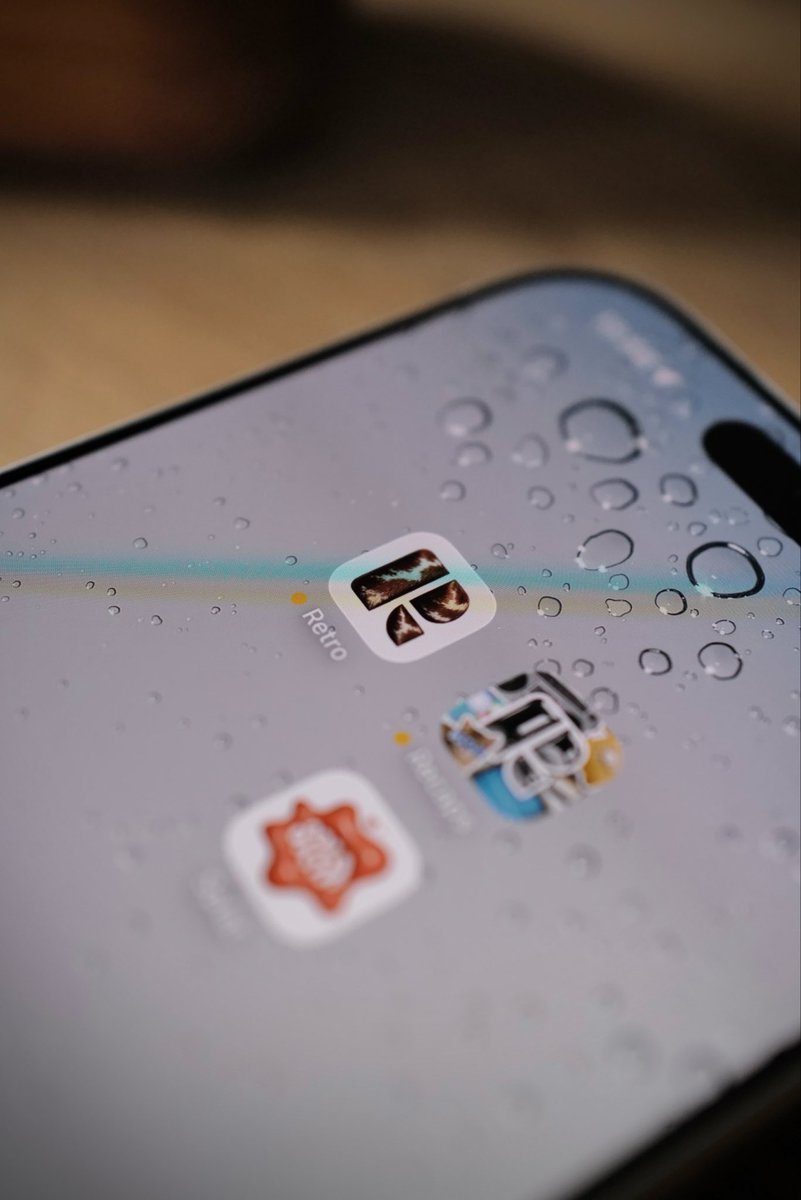
Sharing a proud moment 🥹: we’ve just evolved our brand @AskQonto! It’s such a pleasure to design and build on top of strong foundations with the team ⭐️. We aim to evolve at the same pace as our amazing customers — in business and beyond 😎.
English
2
0
4
419
Didier Hilhorst retweetledi
Nikita Bier
Nikita Bier@nikitabier·
After advising 50+ consumer companies over the last year, the one thing that separates those who can execute and those who can't: Having a full-time designer in the room at all times I've met with countless companies that have raised millions—and even one that has raised billions—that do not even have a designer on payroll. This makes product development broken: 1/ You simply cannot have constructive conversations about ideas without visualizing them in real-time 2/ Your experiments will frequently have inconclusive results because users cannot discover features or they misunderstand how they work 3/ There is no one who can galvanize the team with a vision of what the product could look and feel like And to be abundantly clear: I'm not referring to visual UI or graphics. I'm talking about someone who can think through the fundamental building blocks of product comprehension—like navigation, interaction and copywriting—and is technically savvy enough to visualize those components in high resolution. There can certainly be exceptions to not having a designer, like where the CEO is an exceptional visual thinker, but that does not scale beyond a small team. At the end of day, products live and die in the pixels: it's what the users see and tap. And without someone shepherding that process, you are effectively wandering the desert blind.
English
319
845
7.9K
1.2M
Didier Hilhorst
Didier Hilhorst@didierh·
Universal truth: limitations (or restrictions) breed creativity. Simple.
English
0
0
3
253