
Fr. Chris Decker
3.9K posts
Fr. Chris Decker
@digitalcatholic
a priest in the Roman Catholic Diocese of Baton Rouge, an artist, and occasional Catholic broadcaster.
Baton Rouge, LA Katılım Nisan 2008
780 Takip Edilen9.5K Takipçiler

@digitalcatholic I read somewhere once that the makers of Downton Abbey knew such a family would have prayed before dining but intentionally omitted filming any scenes of them sitting down at table to avoid showing prayer. So they always cut to them already seated.
English

Also a friend from my parish was telling me once that Zelda was supposed to be a Catholic figure and story but they had to dial that back when it was released commercially. Can anyone confirm? If true, I think I need to draw a Catholified Zelda fan piece. 😀
BARITUS Catholic Illustration@BaritusCatholic
I haven’t played video games since the mid 90s, but this is making worlds collide from my past in the best possible way! Very creative.
English
And that challenge continues, for sure. It's a thought process rampant in our educational institutions, sports programs, etc. So, it's very difficult to see The Faith outside that context.
Parents who outsource their responsibilities (often living vicariously through their children) while simultaneously intuiting they have a responsibility is a conundrum indeed.
English

@digitalcatholic @theblessedsalt The biggest challenge for my old parish was communicating that to parents who really just wanted to “check a box” as you put it.
English

This and all red tape that gets in the way of sacraments should be permanently gutted.
B. A. S.@BrentsASacerdos
A member of my family—who is married to a cradle Catholic, and not only went to Mass with her but also did all the maintenance of the parish facilities—tried to become Catholic in the 2000s. But because he worked rotating shifts at a coal mine and couldn’t attend most RCIA classes, the pastor told him he’d have to wait until retirement, 15 years away. He did exactly that, but what the hell?
English
With the catechumenate, it's both/and in my parish: After initial assessment by either myself, the deacon, or lay catechists, we either bring them into the OCIA cycle, private instruction, or a hybrid. When they're ready, believe the Creed, have canonical status verified, we proceed and the Sacraments do their work.
For younger people, there is still a challenge because teaching the Fatih falls to me (as a priest), but passing the Faith down (traditio) is a component of parental practice of the Faith. I can provide "programming" at the parish level and incarnational ministry, but it has to be handed on within the family unit. (To be sure, my ars celebrandi at Mass, sound teaching, and pastoral presence/guidance are essential to this "traditio", but it has to find a home outside the doors of the church building.)
There is a self-learning component that is still required on the part of the convert; and there is a mystagogia component that is less cerebral and more experiential that is still challenging to the modern Catholic experience.
In fact, of that ongoing follow-up I still don't have a complete picture, because it requires response from the new Catholic (or Confirmed young person) and the modern mindset is often to "check a box" and move on to the next "item". This is probably why no small number of OCIA "graduates" without a solid mystagogia tend to drift and even disengage from parish life in a few years.
Traditionally, the bridge between the brain activity of learning the Faith and the heart activity of receiving the Faith is a rich devotional life that connects back up to the liturgy. It's here that a relationship with Christ and the Saints is deepened and draws one back towards the Eucharistic sacrifice. And that's a mysterious, unique to each person, encounter that isn't governed by a metric or process, but rather of the call of The Bridegroom and the response of His bride.
English
@digitalcatholic @theblessedsalt Where do you see the educational components fitting in there?
I know a parish who sees multiple people every year walk across town because he has the nerve to insist the catechumens and candidates actually know the faith while another priest will just sign off on everything.
English
Bank holidays sound like the most boring holidays.
“Wishing you maximum interest this holiday weekend.”
Ick.
Irish Independent@Independent_ie
Push for Ireland to introduce three more bank holidays in line with EU neighbours buff.ly/xF85CGA
English
My pal @ArtByJZumo shares his journey from art to the sacred. A good Easter read!
NOLA.com@NOLAnews
From hip hop circles to sacred art: journey of Zumo nola.com/louisiana_insp…
English
An excellent resource for those wondering about the “silence on the earth” of this holy day:
FishEaters.com ΑΩ☾@FishEaters
Saturday, April 4, is Holy Saturday -- the day commemorating Christ's entombment and His harrowing of Hell. And it all ends with the glorious Easter Vigil! Visit FishEaters to learn all about Holy Saturday and its traditions: fisheaters.com/customslent15.…
English
Fr. Chris Decker retweetledi

“When you are before the altar where Christ reposes, you ought no longer to think that you are amongst men; but believe that there are troops of angels and archangels standing by you, and trembling with respect before the sovereign Master of Heaven and earth. Therefore, when you are in church, be there in silence, fear, and veneration.”
- St. John Chrysostom
English
@theblessedsalt It was in the ancient scrolls long before his arrival. 😄😏
English
@digitalcatholic Bishop Duca tell it to you? He became a friend. I’m jealous y’all got him! A good man.
English
Remembering that Chrism Mass in my diocese, c. 2008, when someone accidentally poured the wine cruet into the oil and we got a nice vinaigrette instead of what we were expecting. Then we all waited an hour while someone went and bought more oil.
English
Fr. Chris Decker retweetledi
Whatever a man does to curb his desires is considered fasting.
Whatever a man does out of love for his neighbor is considered alms-deeds.
Whatever a man does for the worship of God is considered prayer.

English

It would appear that after 14 years of loyal service, my Wacom Cintiq has died.
With 10 pages left to color for a graphic novel due at the printer in just a few weeks.
English
This summer I start a year of paying the bills just by illustration work.
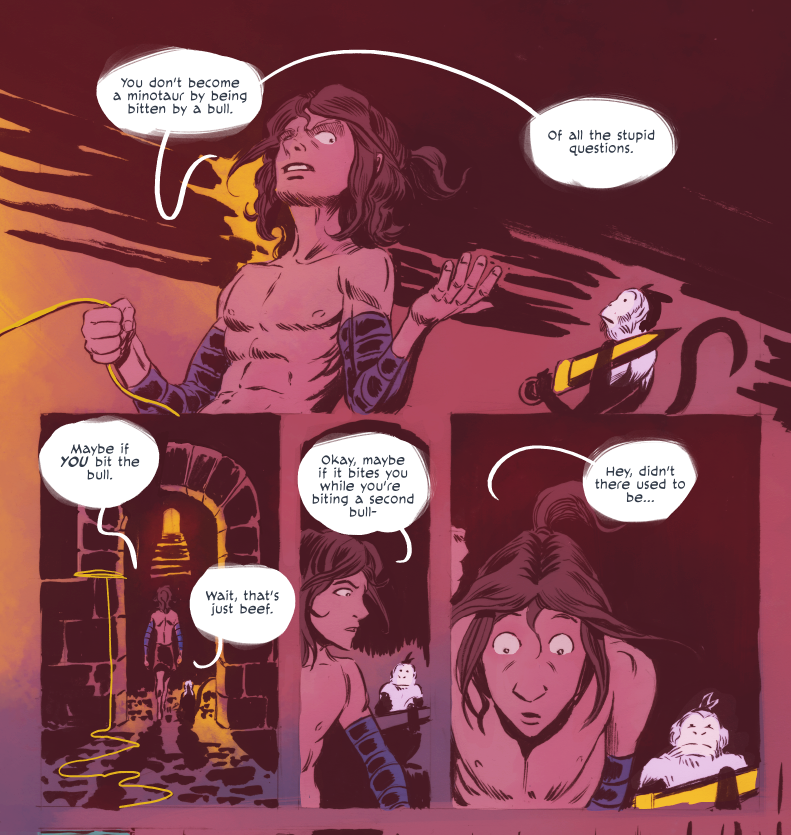
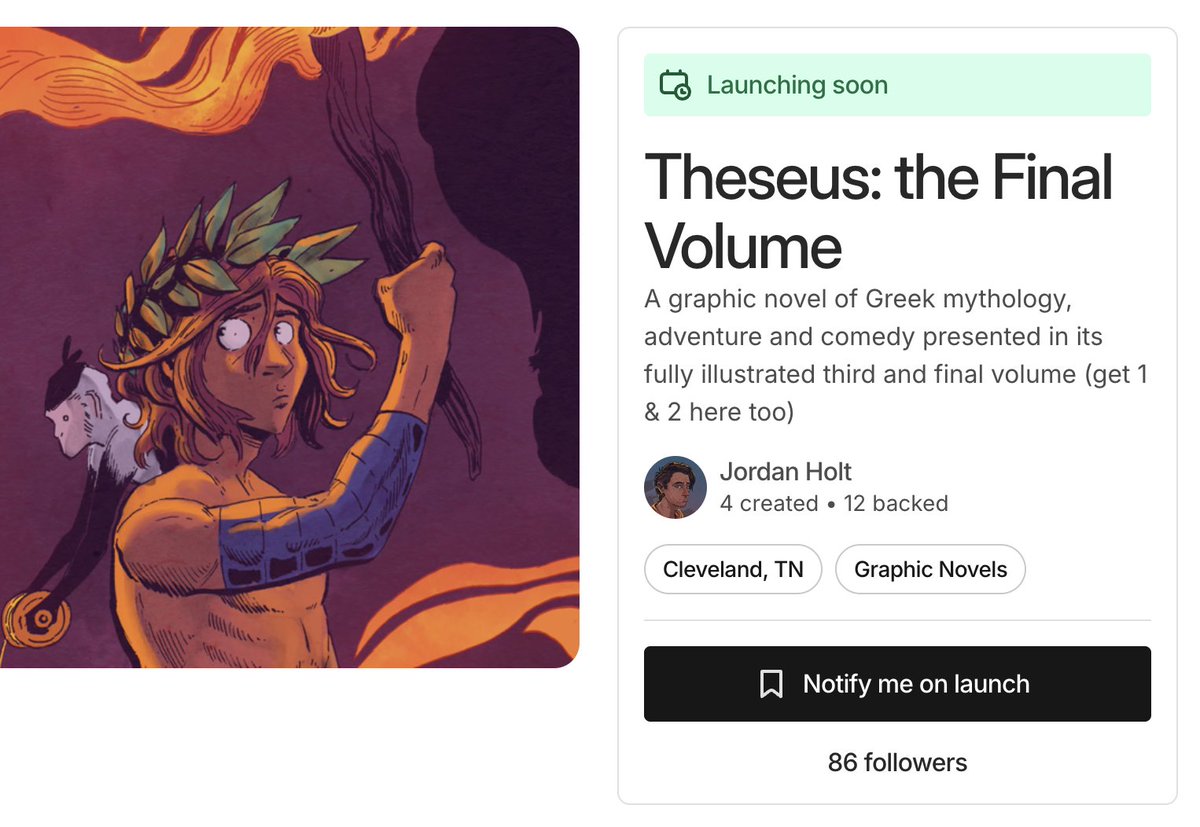
Tomorrow I launch the crowdfunder for my final Theseus book (Greek myth, adventure & comedy).
Going to have to invade your timeline for a few weeks. Bear with me, or get excited and buy. Either works.
English

Not going to lie. Those look SUPER sharp.
I've got the first two and if the kickstarter for book three has one of these slipcovers as an upgrade, I will be spending. 😍
J. Holt the Illustrator@jholtillus
Okay, I'm starting to get a feel for how this could look.
English
@jholtillus Receiveth mine florins! Lest buffoonery be writ of mine lethargies.
English
I'm worried about you.
86 people are awaiting the launch of Vol. 3. If you're not one of them, all the others will whisper about how you're a big dork.
I wouldn't wish that on you.
English

Check out this animation I made over the weekend! ✍️
English
@FrDylanSchrader @FrHilderbrand at least not outside Europe. I was in Mancinelli this month with a brother priest whose "diocese is more expansive". He tenderly took Fr's hands, looked at him mournfully, and then away (as if addressing the audience aside) saying, "he's just so fat". He then kissed his hands. 😅
English

@FrHilderbrand Clerical tailors are not used to addressing this unprecedented phenomenon.
English

Need a new cassock. My ordination cassock no longer fits (and it's the only one I own) - not because I'm too fat, but because I'm not fat enough.
Can anyone recommend where I can get a new, fitted cassock made? I can provide measurements!
English