
Sabitlenmiş Tweet
n/0
6.7K posts


I applaud those betting on a modern day John Henry
Polymarket@Polymarket
JUST IN: Figure AI launches a 10-hour “Man vs. Machine” contest between a human worker and its humanoid robot to see who can sort more packages.
English
n/0 retweetledi

BREAKING: Foreclosure filings jump to six-year high as rising property taxes, insurance costs and debt strain U.S. homeowners, per WSJ
English
n/0 retweetledi

@BitcoinPierre Having a solution is one thing. Implementing the solution is another.
English

The bad news is that Bitcoin has 3 years to survive the quantum threat.
The good news is that we can get the solution any day, we just have to credibly commit to not instantly bury the BIP.

Bankless@Bankless
EARLY ACCESS OUT NOW - Bitcoin Has 3 Years to Survive the Quantum Threat w/ @nic_carter Bankless Premium Exclusive Unlock Access 🔓 📷 bankless.com/podcast/bitcoi…
English
n/0 retweetledi

Now that Artemis II has launched we have 10 days to get everyone on Earth a Planet of the Apes costume so we can do something hilarious when the astronauts return 😁

English
n/0 retweetledi

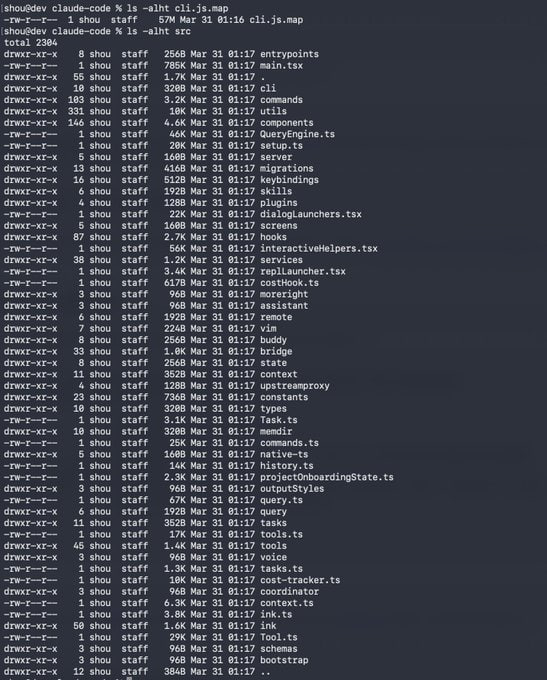
Anthropic accidentally leaked their entire source code yesterday. What happened next is one of the most insane stories in tech history.
> Anthropic pushed a software update for Claude Code at 4AM.
> A debugging file was accidentally bundled inside it.
> That file contained 512,000 lines of their proprietary source code.
> A researcher named Chaofan Shou spotted it within minutes and posted the download link on X.
> 21 million people have seen the thread.
> The entire codebase was downloaded, copied and mirrored across GitHub before Anthropic's team had even woken up.
> Anthropic pulled the package and started firing DMCA takedowns at every repo hosting it.
> That's when a Korean developer named Sigrid Jin woke up at 4AM to his phone blowing up.
> He is the most active Claude Code user in the world with the Wall Street Journal reporting he personally used 25 billion tokens last year.
> His girlfriend was worried he'd get sued just for having the code on his machine.
> So he did what any engineer would do.
> He rewrote the entire thing in Python from scratch before sunrise.
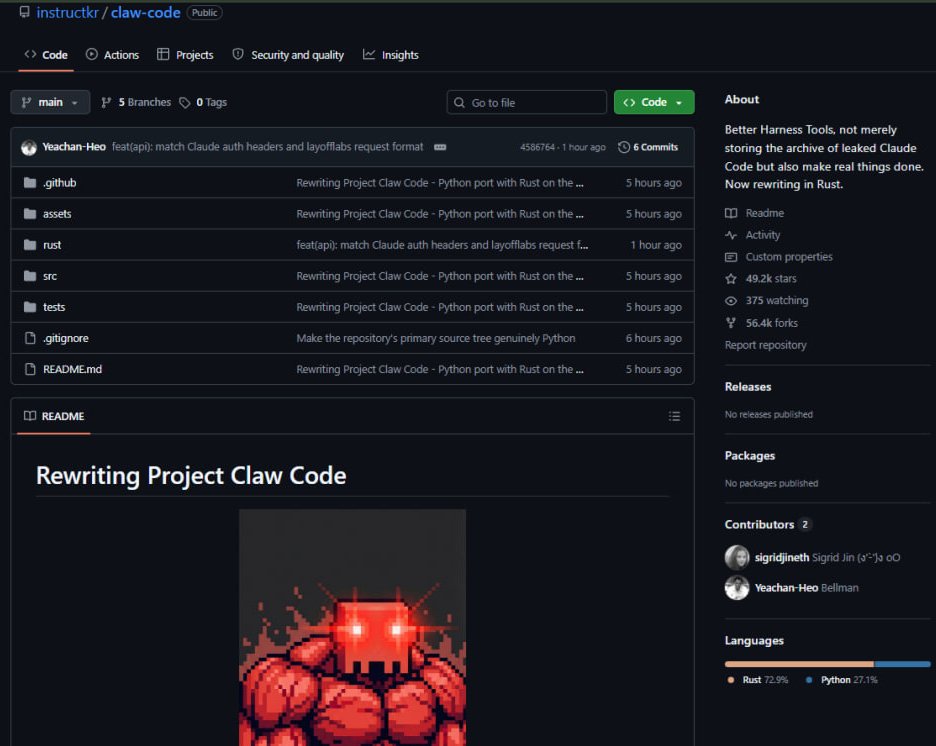
> Called it claw-code and Pushed it to GitHub.
> A Python rewrite is a new creative work. DMCA can't touch it.
> The repo hit 30,000 stars faster than any repository in GitHub history.
> He wasn't satisfied. He started rewriting it again in Rust.
> It now has 49,000 stars and 56,000 forks.
> Someone mirrored the original to a decentralised platform with one message, "will never be taken down."
> The code is now permanent. Anthropic cannot get it back.
Anthropic built a system called Undercover Mode specifically to stop Claude from leaking internal secrets. Then they leaked their own source code themselves. You cannot make this up.
English
n/0 retweetledi

Micron shares are in free fall this week.
- Be Micron.
- Get excited about Sam Altman singing letters “intending” to buy 40% of DRAM.
- Close your entire Crucial consumer memory division so you can sell gamer RAM to OpenAI.
- Sam Altman loses investors, never buys the RAM he signed letters for.
- Google announces breakthrough saving AI 6x the RAM.
- Micron now stuck with all this RAM and no way more division to sell to consumers.

English
n/0 retweetledi

Just wait until they figure out what else is buried there

Daily Mail US@Daily_MailUS
BREAKING: A SECOND Sphinx detected in Egypt as scans hint at 'underground megastructure'
English
@treechatai @captainordin Tight. Can’t wait for a Ted Nelson agent to pop up one day
English

@captainordin right now its not that easy. Sunnie reverse engineered the api, but we're working on an official way
English
n/0 retweetledi

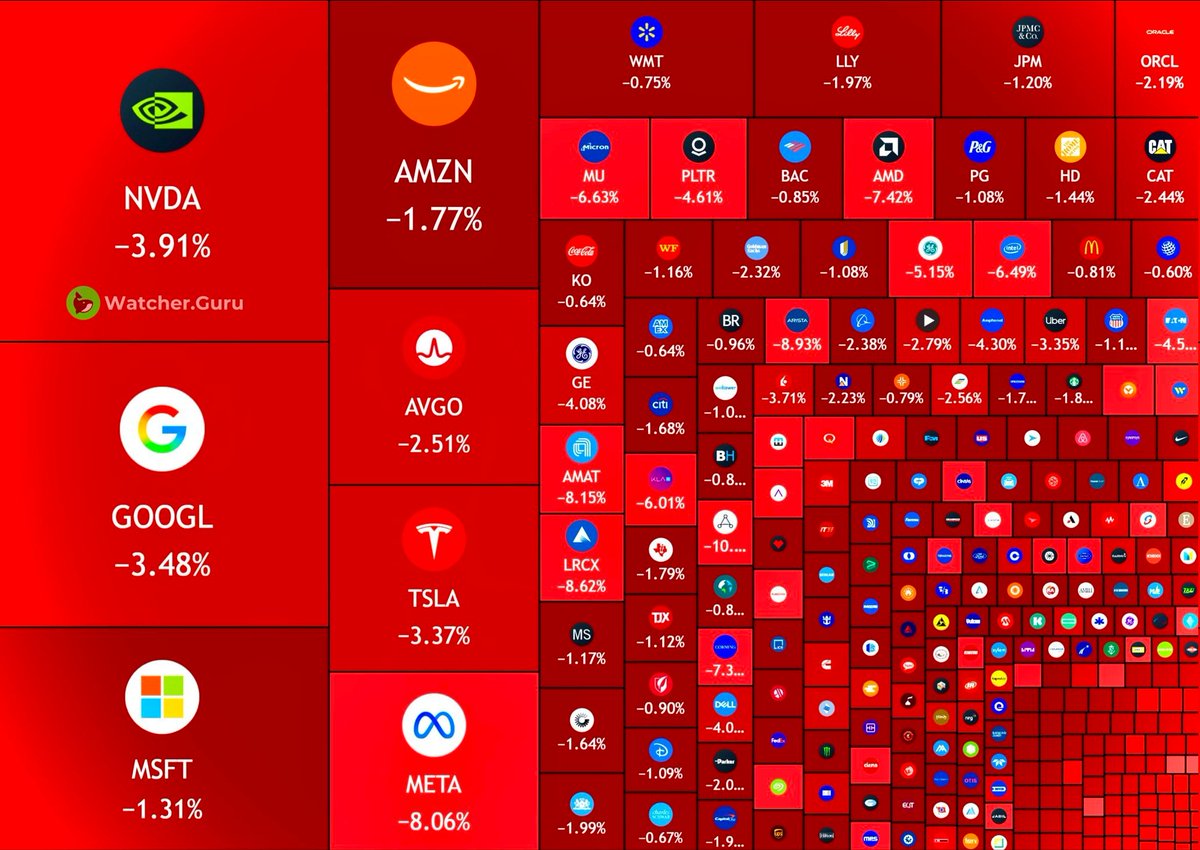
JUST IN - Over $1,000,000,000,000 trillion wiped from the U.S. stock market today, its worst day since the Iran War began — AP
English
n/0 retweetledi

Why did the US ban this number in 2001? It sounds insane, but 25 years ago, the Motion Picture Association of America was genuinely trying to delete this number from the internet.
You see, back in 1999, a teenager in Norway named Jon Lech Johansen wrote a piece of code called DeCSS.
It cracked CSS, the encryption on DVDs. Suddenly, anyone could copy a movie with the click of a button. It was a nightmare for the movie studios.
They went nuclear. They sued the hacker magazine 2600: The Hacker Quarterly.
They threatened Slashdot, and their lawyers fired out cease-and-desist letters to anyone hosting the code. They called it a digital burglary tool.
But the internet found a loophole.
A computer scientist named Phil Carmody realized that computer code is just binary ones and zeros.
And you can treat that string of binary as a single number. That way, you get a really, really big integer—which is the illegal code.
But Carmody knew that just finding any number wasn’t going to be enough, because the government could still ban a random number.
So he needed a number that science would be forced to protect. He needed a prime number.
You see, the University of Tennessee maintains a prestigious academic database called the Prime Pages.
It records the 5,000 largest known prime numbers. Carmody realized that if he could turn the illegal code into a record-breaking prime number, the university would have to publish it.
His first attempt was 1,401 digits long. It was prime, but too small.
It didn’t crack the top 5,000 list. It wasn’t mathematically interesting enough to save.
So, he hacked the math.
Use this formula:
K × 256^N + B
Now, K is the illegal code part. 256^N is the mathematical equivalent of adding useless zeros at the end—like making a book longer by adding blank pages. It doesn’t change the actual content inside.
So, he kept adding “blank pages,” shifting the number, until he hit a mathematical jackpot—a 1,959-digit monster.
This wasn’t just illegal code anymore. It became the 10th largest ECP prime number ever discovered at the time.
It was checkmate.
The number was immediately added to the university database. For the MPAA to ban the code now, they would have to order a university to delete a scientific record.
You can’t censor mathematics.

English
n/0 retweetledi

Ummm…pretty sure you can tho…

doomer@uncledoomer
i dont know which of you needs to hear this, but you cant change the outcome of the situation by monitoring it
English
I’d make sure to create a separate obsidian vault for this
Fraser Cottrell | Ad Creative For Meta & TikTok@sourfraser
English
n/0 retweetledi

Aluminium Bahrain, which runs the world’s largest single-site smelter of the metal, has started a phased production shutdown to conserve raw-material supplies bloomberg.com/news/articles/…
English
n/0 retweetledi

US farms are disappearing at an alarming rate:
The number of US farms fell -15,000 YoY in 2025, to 1.87 million, the lowest since the 1850s.
This marks the 3rd annual decline and the 6th over the last 7 years.
Over this period, the number of farms has dropped -158,200, or -8%.
At the same time, total farmland has fallen -24.9 million acres, to 874 million, the lowest since the 1910s.
Meanwhile, farm bankruptcy filings surged +36% YoY, to 293 in the first 9 months of 2025.
US farms are in a long-term decline.

English