David Krizaj

823 posts

David Krizaj

David Krizaj

@dkrizaj

Professor of Ophthalmology & Visual Sciences Director, Vision Research Training Program, University of Utah

Katılım Ocak 2011
165 Takip Edilen184 Takipçiler
David Krizaj retweetledi
Dániel Barabási
Dániel Barabási@bdanubius·
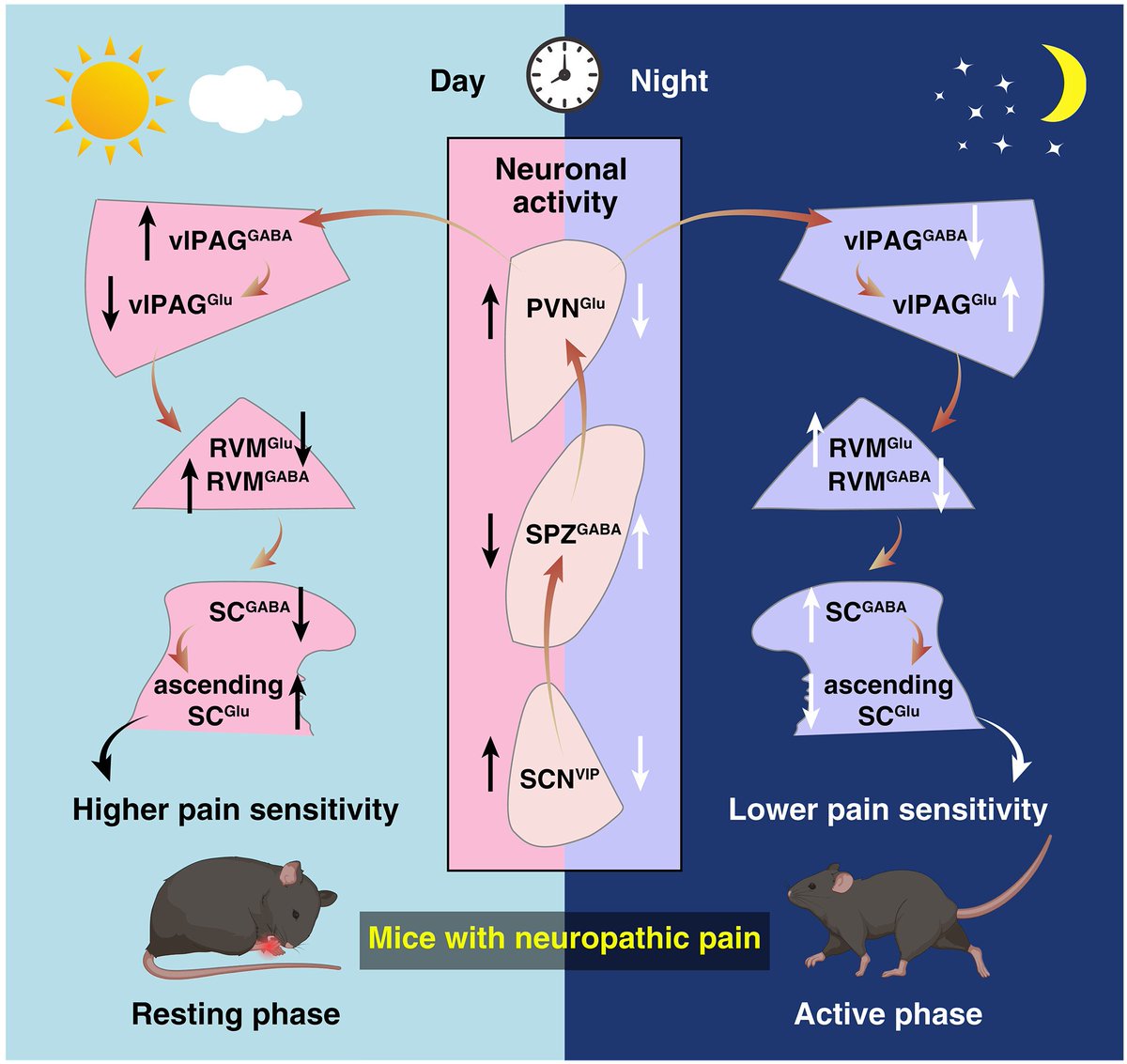
Hypothalamic clock governs circadian pain by Wei, Lou, Li et al. Pain runs like clockwork. A brain clock circuit rhythmically tunes how neuropathic pain feels. science.org/doi/10.1126/sc…
Dániel Barabási tweet media
English
2
1
20
1.1K
David Krizaj retweetledi
Daniel Friedman
Daniel Friedman@DanFriedman81·
The Iliad and the Odyssey are foundational literary works that are also about men doing manly things and feeling manly feelings — they’re about pride and duty, they’re about friendship and loyalty, they’re about fear of death and bravery in the face of it, they’re about striving and longing. These are stories that have taught men to be men for a thousand years, that celebrate the highest versions of masculinity, and that is why so many people who are hostile to these values and ideals try to mess with these works of literature, to claim them for other audiences, to “recontextualize” them, to “queer” them and to subvert them. Men barely read today. Boys are alienated and underserved by English instruction and are falling starkly behind in reading. The “literary man,” a common type in hipster Brooklyn as recently as the mid 2010s, is basically extinct. Men are now the most underserved, underrepresented audience in books and publishing, and anyone in publishing who claims to be interested in “equity” or serving neglected audiences should be focused on this disparity. English teachers and the publishing industry should be working to get men and boys reading again and to elevate works that speak to men and boys. And that means preserving and teaching Homer, in translations which preserve the majesty and the masculinity of the original works.
English
28
99
615
15.4K
David Krizaj
David Krizaj@dkrizaj·
...its UT range is a tiny SE corner. So I asked Gary (grynaf@yahoo.com) who curates the site. His answer: 'this is a juvenile rattlesnake. In SLC it should be a Great Basin Rattlesnake. It's venomous, so I hope nobody tried to pick it up' 😬 Caveat emptor, friends.
English
1
0
0
95
David Krizaj
David Krizaj@dkrizaj·
So I went for a hike this weekend in the hills above SLC and found this little snake across the trail. Perplexity AI told me this 'beautiful little snake' was the 'completely harmless and non-venomous' Western Ground Snake (Sonora semiannulata).... however...
David Krizaj tweet mediaDavid Krizaj tweet media
English
1
0
0
46
David Krizaj retweetledi
Crémieux
Crémieux@cremieuxrecueil·
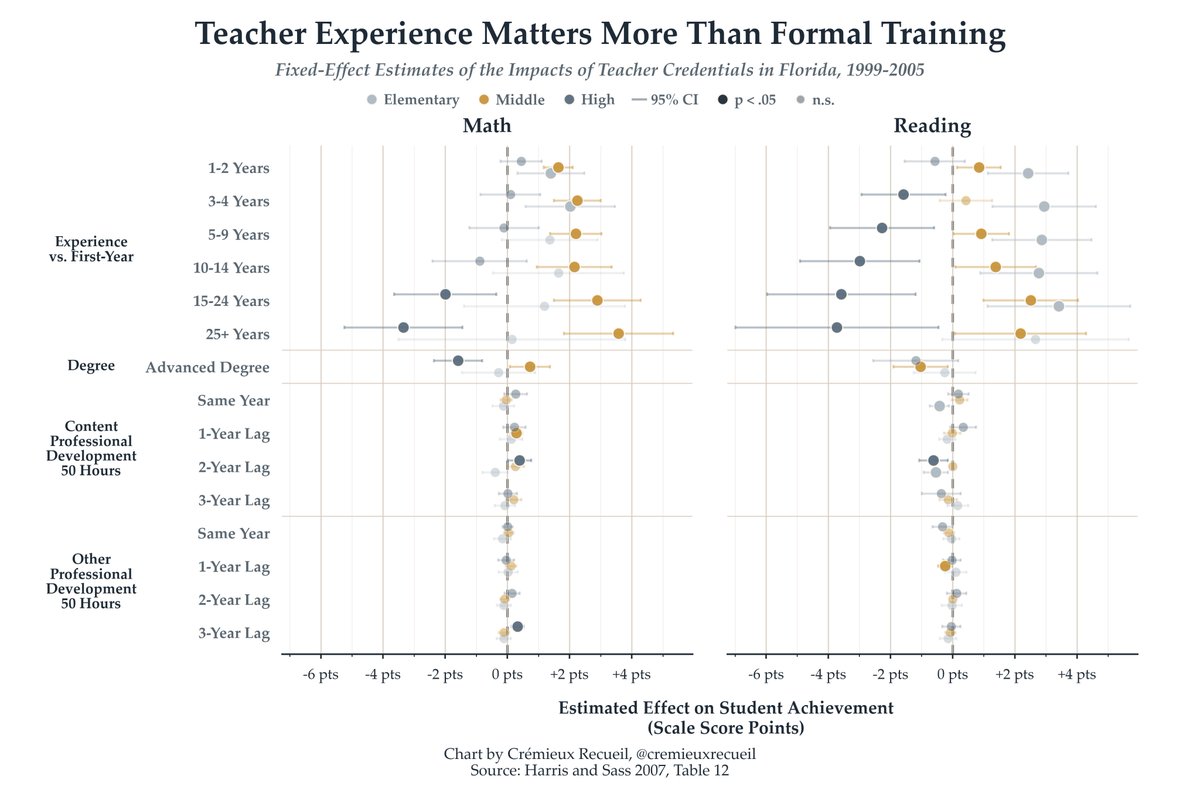
Researchers used administrative data from Florida and looked at the effects of teacher experience, advanced degree attainment, and professional development. Effects on student achievement were meager, and often not in the direction you'd hope:
Crémieux tweet media
English
9
21
183
13.1K
David Krizaj
David Krizaj@dkrizaj·
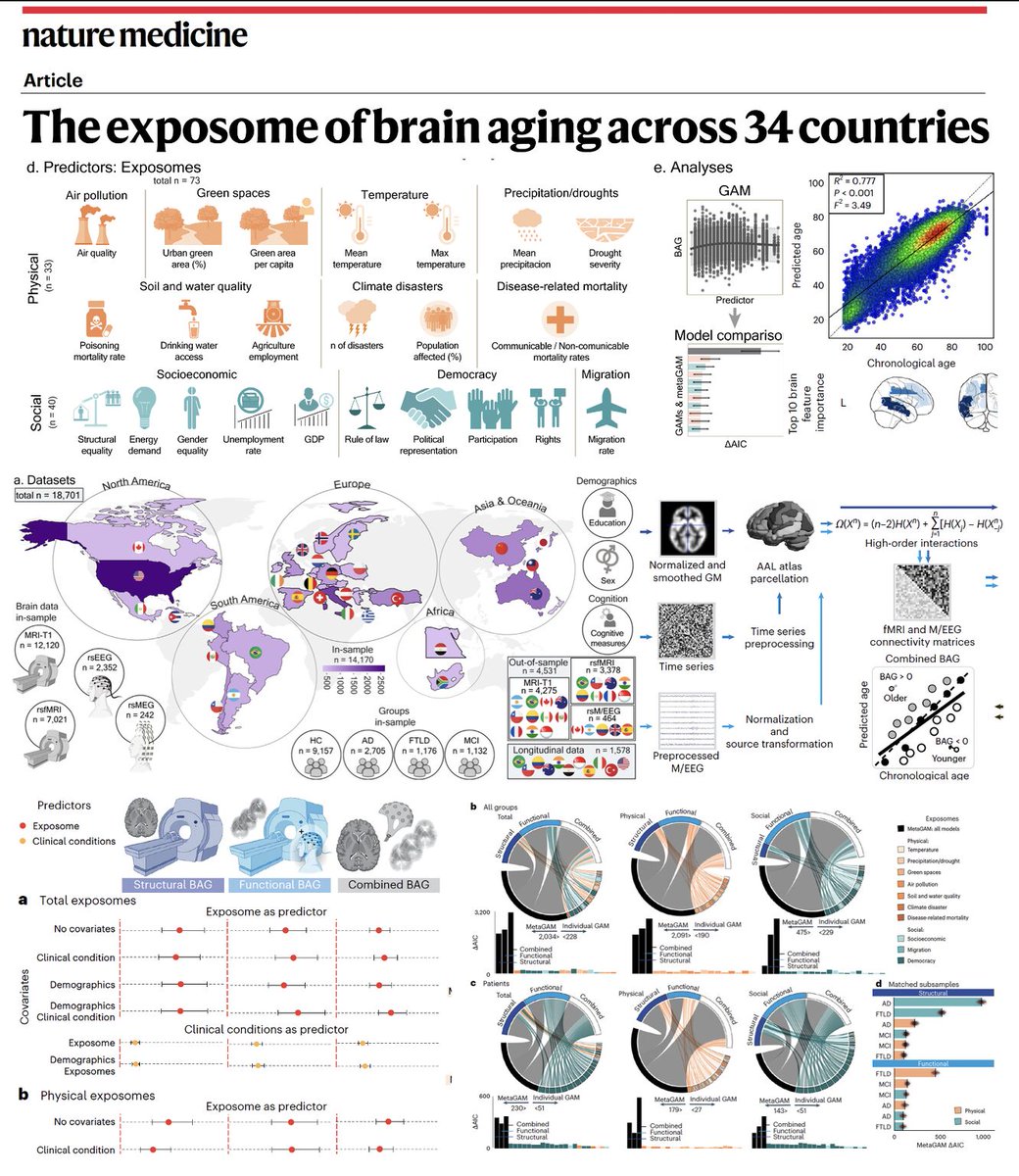
@louisanicola_ More simply, brain aging appears to be conditioned by culture and likely epigenetics. Not all cultures equal
English
0
0
2
102
Louisa Nicola
Louisa Nicola@louisanicola_·
Your brain ages partially according to the country you live in. Not just your genetics. Not just your habits. Your environment. This Nature Medicine study analyzed nearly 19,000 people across 34 countries and found that cumulative exposure to pollution, instability, inequality, and poor infrastructure strongly predicts accelerated brain aging. Most people still think cognitive aging begins internally. It does not. The brain continuously models the environment surrounding it. Chronic unpredictability and physiological stress force the nervous system into long-term vigilance and adaptation. Over time, that becomes structural. The brain is not aging in isolation inside the skull. It is aging in negotiation with the conditions of daily life.
Louisa Nicola tweet media
English
10
134
413
30.9K
Carlos E Alvarez
Carlos E Alvarez@CarlosEAlvare17·
Exactly. The overwhelmingly top priority of universities is concentration of power. This is supported by federal and state funding, tax exemptions, grants, and student loan guarantees -- without any accountability, and with the courts deferring to administrators' discretion under the guise of academic freedom. Compliance departments function as institutional risk-management units, just like HR. They have little if any interest in supporting the faculty and their work, or the university's mission. Rather, their primary role is to protect senior management and the institution's financial interests by ensuring that the government funding keeps flowing.
English
3
6
39
13.7K
Jason Locasale
Jason Locasale@LocasaleLab·
Another Nature piece that is completely detached from reality. This isn’t about preventing misconduct. It’s about expanding administrative power. Universities today are already so risk-averse that even the hint of an allegation can end a career—no due process, no meaningful standard of evidence, and deliberations that are far from fair or transparent. Now the proposal is to formalize that system across institutions—effectively allowing administrative bodies to coordinate and blacklist individuals they deem unsavory. This has nothing to do with truth or protecting anyone. It has everything to do with consolidating power inside bureacracies. As usual, there’s no mention of the falsely accused. Institutions are treated as infallible, even as they operate behind closed doors and face no real accountability.
nature@Nature

For decades, academic institutions have struggled with how to prevent researchers who have committed misconduct from securing jobs at new universities while hiding the bad behaviour. A proposal published today offers a solution. go.nature.com/4mi0bp0

English
5
10
95
9.6K
David Krizaj retweetledi
Steve Semmelweis
Steve Semmelweis@SteveSemmelweis·
nearly 80% of young faculty in medicine are women. 80%
Steve Semmelweis tweet media
English
31
26
351
223.9K
Curtis Yarvin
Curtis Yarvin@curtis_yarvin·
That’s not a null hypothesis. Does the same “neutral theory” predict uniformity across groups in any other human trait? Height, skin color, nostril width, lung capacity, distance running? Why is the brain special? Reminder:
Curtis Yarvin tweet mediaCurtis Yarvin tweet media
Sasha Gusev@SashaGusevPosts

@curtis_yarvin 1. Under neutral theory, race is expected to explain a negligible amount (<5%) of IQ variance, in either direction. 2. There's no evidence of persistent recent adaptation on IQ genes with many well-powered tests. 3. Family-based polygenic scores for IQ are 1SD higher in Africans.
English
22
50
1.3K
153.3K
David Krizaj
David Krizaj@dkrizaj·
"The study found that evolution accelerated during the Bronze Age ~ 5,000 years ago... Combinations linked to years of schooling, household income and intelligence test scores in Europe and the Middle East increased over the past 10,000 years" nature.com/articles/d4158…
English
0
0
1
13
David Krizaj retweetledi
Denis Wirtz
Denis Wirtz@deniswirtz·
3D single-cell maps of embryos reveal "universal" geometry of blood vessels and nerves. More here: biorxiv.org/content/10.648…
English
4
123
540
35.6K
David Krizaj retweetledi
Rob Henderson
Rob Henderson@robkhenderson·
Giving everyone a universal basic income will not reveal most people’s inner Mozarts or Emily Brontës. At bottom, this is about two competing views of human nature. One view holds that once basic material needs are met, people will use their free time to seek meaning and fulfillment. Unshackled from the burden of work, they will thrive. This is partly true. A small share of people would create, build, and explore. But for most, that is not what happens. When people are out of work, they do not spend their days painting or sculpting or learning another language. They scroll, they watch television, they play video games. Many advocates of UBI assume that people are simply waiting for the right conditions. Remove financial pressure, and they will pursue their creative passions. That may be true for a few. It is not true for most. Another view holds that meaning comes from the act of working. Earning your way, supporting yourself, and taking care of others provide structure and fulfillment. Effort, struggle, and self-reliance are not barriers to a meaningful life. They are part of what makes it possible. A society that removes the need to work risks removing one of the main sources of meaning in life.
English
78
239
1.4K
72.3K
David Krizaj
David Krizaj@dkrizaj·
@hjluks Fascinating parallels to deregulation of trabecular meshwork in ocular hypertension…
English
0
0
0
33
Howard Luks MD
Howard Luks MD@hjluks·
Tendon pain is the most common reason people come to see me. Most of it is self-inflicted — from doing too much, too soon, or from doing too little for too long. Let's review what most people (including many doctors) don't understand about why tendons hurt and how to fix them. 🧵
English
144
240
2.1K
829K
David Krizaj retweetledi
Jason Locasale
Jason Locasale@LocasaleLab·
Boston biotech has been running the same playbook for years and everyone in the ecosystem knows it. Early-stage companies are built less on validated biology and more on signaling: a splashy Nature or Science paper, a thin patent scaffold, and the reputational gravity of well-networked academic founders. That combination is often enough to unlock large funding rounds. The problem is that high-impact publication has become a proxy for truth. It isn’t. It’s a selection mechanism for novelty and narrative. The result is predictable: – groupthink gets reinforced – weak or irreproducible findings persist for years – dissent is disincentivized – hype substitutes for validation In many cases, the goal is not to rigorously test whether an idea is correct, it’s to create enough mystique that it feels important. That perception alone can carry a company surprisingly far. So it’s not surprising to see the same voices recycled across boards and advisory roles—people who helped build and legitimize this model in the first place.
Flagship Pioneering@FlagshipPioneer

Flagship welcomes @EricTopol M.D., as Academic Advisor. A renowned physician-scientist, researcher, and author, Dr. Topol has long been at the forefront of advancing medicine through science and technology. His leadership at the intersection of digital health, genomics and AI has reshaped how we understand disease detection and prevention. We look forward to working with Dr. Topol as we as we accelerate a new era of preemptive health and medicine.

English
17
20
199
43.5K
David Krizaj retweetledi
Olivier George
Olivier George@brainaddiction·
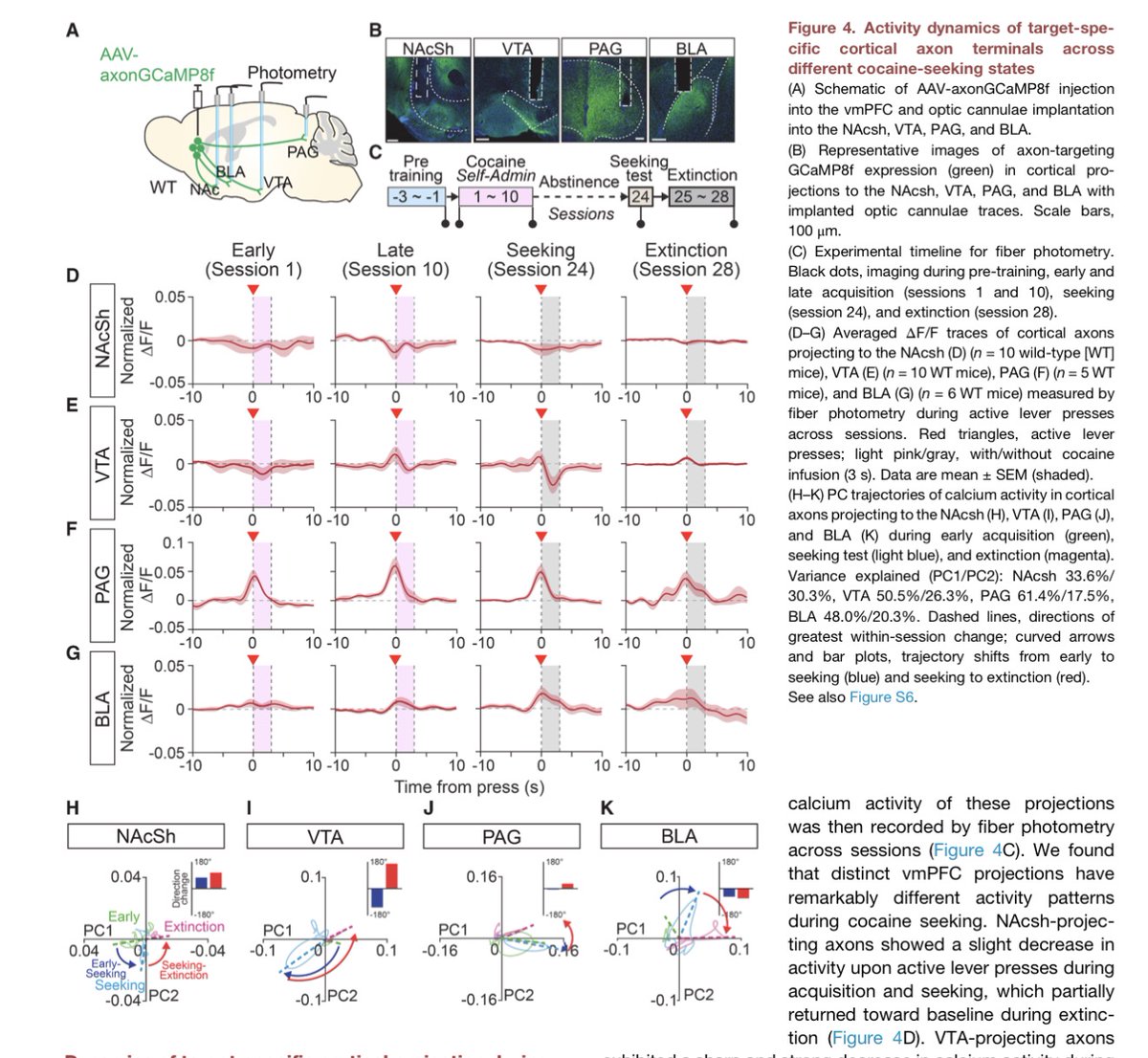
A beast of a paper from @byl015 @UCSDNeuro, dissecting the role of PFC interneurons (PV, SOM, VIP) controlling cocaine seeking. Normally, the PFC inhibits VTA DA neurons via a local GABA interneuron. Classic inhibitory role of the PFC over subcortical regions. Here, they show that chronic cocaine increases the activity of paravalbumin (PV) neurons in the PFC and their connectivity with the PFC pyramidal-VTA pathway, which basically removes the brake on the DA VTA neurons, leading to cocaine seeking. Only parvalbumin (PV) interneurons track and promote cocaine seeking. It's unclear what SOM and VIP do. It's a really incredible paper that demonstrates how powerful PFC interneurons are. Perhaps I'm biased because about 15 years ago we identified CRF interneurons in the PFC as being similarly recruited during withdrawal-induced craving for alcohol. I don't think that CRF colocalizes with PV neurons (probably more with VIP/SOM), so it's intriguing; perhaps it's a drug specificity (cocaine/alcohol), or model (limited vs extended access), or reinforcement specific (positive/negative). Now, the million-dollar question is if you get these mice to the point of dependence, would the VP interneurons still be the ones that matter, or would you see involvement of the SOM, VIP, CRF?
Olivier George tweet media
English
2
13
73
4.6K
David Krizaj retweetledi
Will Kinney
Will Kinney@WKCosmo·
What actually happened is that over the last ten or fifteen years, appeals to consensus were used in support of so many obvious falsehoods that consensus ceased to be a good heuristic for the best available science, and started to be a good heuristic for somebody lying to you.
Adam Frank@AdamFrank4

These distinctions are useful for philosophy/history of science. But as practicing scientist/"science communicator" I watched dismissal of consensus get weaponized back in 2010s by forces of organized climate denial. Now it's used everywhere. That's what we are talking about.
English
35
136
1.4K
43.7K