Dave Gilbert

21.7K posts

Dave Gilbert banner
Dave Gilbert

Dave Gilbert

@docgotham

Technologist and citizen. I learn as I go.

Sunnyvale, CA Katılım Aralık 2007
6.1K Takip Edilen2.4K Takipçiler
Dave Gilbert
Dave Gilbert@docgotham·
@omooretweets AI browsers were the wrong idea. The right idea is an app with deep access to the file system and terminal that uses a browser as its auxiliary windowing system when it needs to show users data owned by a remote service that doesn't have an API.
English
0
0
1
115
Olivia Moore
Olivia Moore@omooretweets·
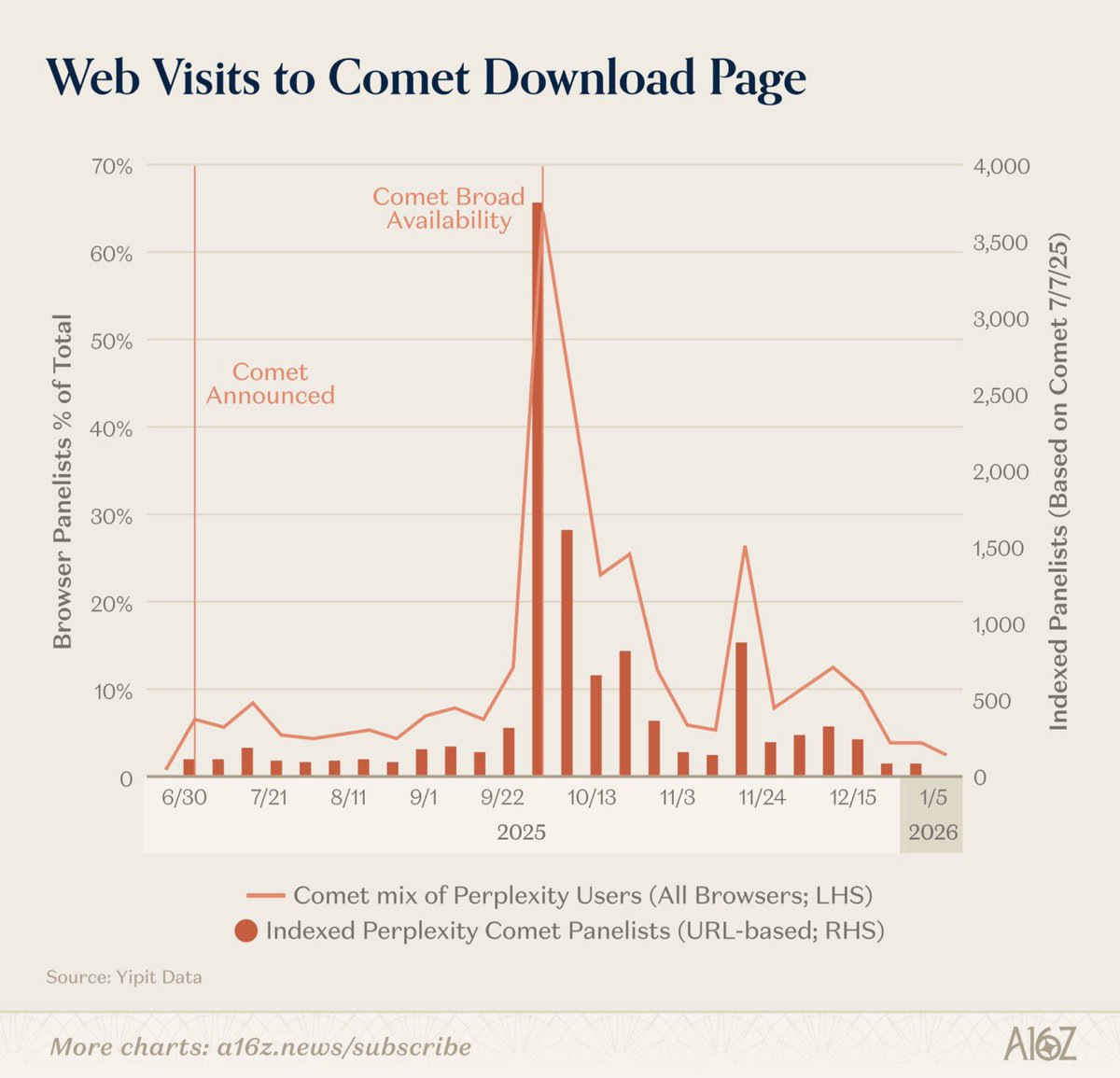
As an early superfan of AI browsers, ChatGPT moving towards a desktop app instead actually makes sense to me. Perplexity Comet has been arguably the most successful product here - and while they have a real base of power users, it's been hard to maintain growth 👇 We've seen this in the past with other fantastic browser products like Dia / Arc - there are a few things that make building a mainstream new browser very hard: 1. It's an extremely high frequency product where users have little tolerance for changes. If even one workflow is disrupted or made more difficult, it's like a paper cut that the user then experiences 100x a day. 2. The browser behavior is so automatic that the physical act of switching and maintaining the switch is hard! There has to be something in the new browser that's so materially better such that you remember to use it. And, if you have to onboard users to the product, you’ve lost. 3. There’s not that much “space” to innovate in the browser. The most important thing is to not disrupt the core experience, and so much is available via extensions that unlocking a 10x for the mainstream user is hard. Chrome works decently well - it’s not a low NPS product where people are desperate to switch. In contrast, desktop apps have proven to be a very fruitful surface for AI-enhanced work - think Cursor, Cowork, etc. Now that you can give a desktop product browser access, the advantage is clear - especially when the desktop app also has native file access and feels more natural to set up recurring workflows in.
Olivia Moore tweet media
TestingCatalog News 🗞@testingcatalog

BREAKING 🚨: OpenAI is planing to launch a Super App that would unify ChatGPT, Codex and Atlas into one, as reported by WSJ. OneAI 👀

English
3
3
55
14.5K
Aakash Gupta
Aakash Gupta@aakashgupta·
Anthropic would have built this in a day and a dev would have tweeted the news. At OpenAI, an exec is telling you about a plan. That gap tells you everything. In the last 7 days, Anthropic shipped Dispatch, channels, voice mode, /loop, 1M context GA, MCP elicitation, persistent Cowork on mobile, Excel and PowerPoint cross-app context, inline charts, and 64k default output tokens. Felix Rieseberg tweeted "we're shipping Dispatch" and you could control your desktop Claude from your phone that afternoon. Every launch came from an engineering account or a GitHub release. In the same 7 days, OpenAI shipped GPT-5.4 mini and nano. Redesigned the model picker. Sunset the "Nerdy" personality preset. Announced three acquisitions. To find a comparable volume of shipped product from OpenAI, you have to rewind to December. This is the most underrated difference in AI right now. Anthropic PMs don't write PRDs. Boris Cherny, head of Claude Code, ships 10 to 30 PRs a day and hasn't written code by hand since November. 60 to 100 internal releases daily. Cowork was built with Claude Code in 10 days. The tools build the next version of the tools. Every cycle compresses the last one. Engineers are empowered to ship and announce. The entire org runs like a product team, not a corporation. OpenAI has the opposite problem. Fidji Simo is CEO of Applications, a title that exists because engineers aren't empowered to ship without executive approval chains. She joined from Instacart. Before that, a decade at Meta running the Facebook app. Since she arrived, OpenAI has acquired 12 companies for $11 billion in 10 months and announced a "superapp" consolidation through the Wall Street Journal. The exec responsible for shipping it is tweeting about "phases of exploration and refocus" on the product she hasn't shipped yet. That's what happens when you layer a Meta-style product org on top of an AI lab. Decisions go up. Shipping slows down. Announcements replace releases. Anthropic's product announcements come from the people who wrote the code. OpenAI's come from the C-suite and the press. One of those loops compounds. The other one meetings.
Fidji Simo@fidjissimo

Companies go through phases of exploration and phases of refocus; both are critical. But when new bets start to work, like we're seeing now with Codex, it's very important to double down on them and avoid distractions. Really glad we're seizing this moment.

English
53
69
939
160.9K
Dave Gilbert
Dave Gilbert@docgotham·
@MingtaKaivo @berber_jin1 @WSJ Oh but it's a desktop play apparently so I should have said the cowork tab inside the Claude app. And the computer tab inside the Perplexity desktop app.
English
0
0
0
30
Dave Gilbert
Dave Gilbert@docgotham·
@MingtaKaivo @berber_jin1 @WSJ I don't know. Won't it be just another tab like the Perplexity computer tab inside the Perplexity search app or the new dispatch tab inside the Claude app?
English
2
0
0
87
Berber Jin
Berber Jin@berber_jin1·
SCOOP - OpenAI is planning to simplify its product experience and launch one "superapp" -- part of its broader effort to instill more discipline and focus into the business, and beat back the threat posed by Anthropic more here in our @WSJ story wsj.com/tech/openai-pl…
English
10
11
239
143.1K
VraserX e/acc
VraserX e/acc@VraserX·
OpenAI is the lab most likely to build something historic. Google is the company most likely to bury something historic under 11 product teams, 4 approvals, and a spring launch event. Too harsh or fair?
English
32
4
75
3.6K
Dave Gilbert
Dave Gilbert@docgotham·
It was poorly moderated and teenagers ran wild. Pretty regularly I watched groups of teenagers dogpile people who spawned in, making sexually aggressive gestures while snapping virtual Polaroids and showing them to their victims. I watched people struggle to remember how to use the safety features. I thought it was so fascinating, that I guided a psychotherapist friend of mine into Horizons just so she could see it. She went back in without me a couple of days later and found what she took to be an autistic girl sitting alone in one of the spaces, rocking back and forth, crying. The whole thing was a reckless social experiment.
English
1
0
0
173
vas
vas@vasuman·
As someone who worked at Reality Labs: the Metaverse had real legs but was obliterated by middle management completely out of touch with how young people actually use technology. I built a V1 tool that game developers genuinely needed, and the moment it was done, it got shipped to a team in London (to die), and I was reassigned to a "higher-priority project" that zero developers asked for. Multiply that by every team, and you'll understand why this never took off yet cost 80 billion.
Polymarket@Polymarket

JUST IN: Meta announces they'll be shutting down the Metaverse, after pouring $80,000,000,000.00 into the project.

English
429
590
19.2K
3.1M
Dave Gilbert
Dave Gilbert@docgotham·
@WesRoth She's part of the problem. She utterly failed to shepherd the 'apps on ChatGPT' program into anything viable or attractive to third-party brands or ChatGPT users.
English
0
0
1
35
Wes Roth
Wes Roth@WesRoth·
OpenAI’s CEO of Applications, Fidji Simo, told employees that the company can no longer afford to be "distracted by side quests" and must "nail productivity on the business front." Simo reportedly cited the massive success of rival Anthropic's Claude Code and Cowork platforms as a "wake-up call" for the company.
Berber Jin@berber_jin1

scoop - OpenAI’s Fidji Simo told staff last week that the company could not afford to be “distracted by side quests” as Anthropic gains steam in the enterprise and coding markets said company execs are actively looking at areas to deprioritize wsj.com/tech/ai/openai…

English
6
6
46
6K
Dave Gilbert
Dave Gilbert@docgotham·
@WesRoth Yeah probably a good move and somewhat parallel to Meta getting rid of LeCun. These visionary AI scientists aren't necessarily the best guys to lead enterprise product strategies.
English
0
0
2
288
Wes Roth
Wes Roth@WesRoth·
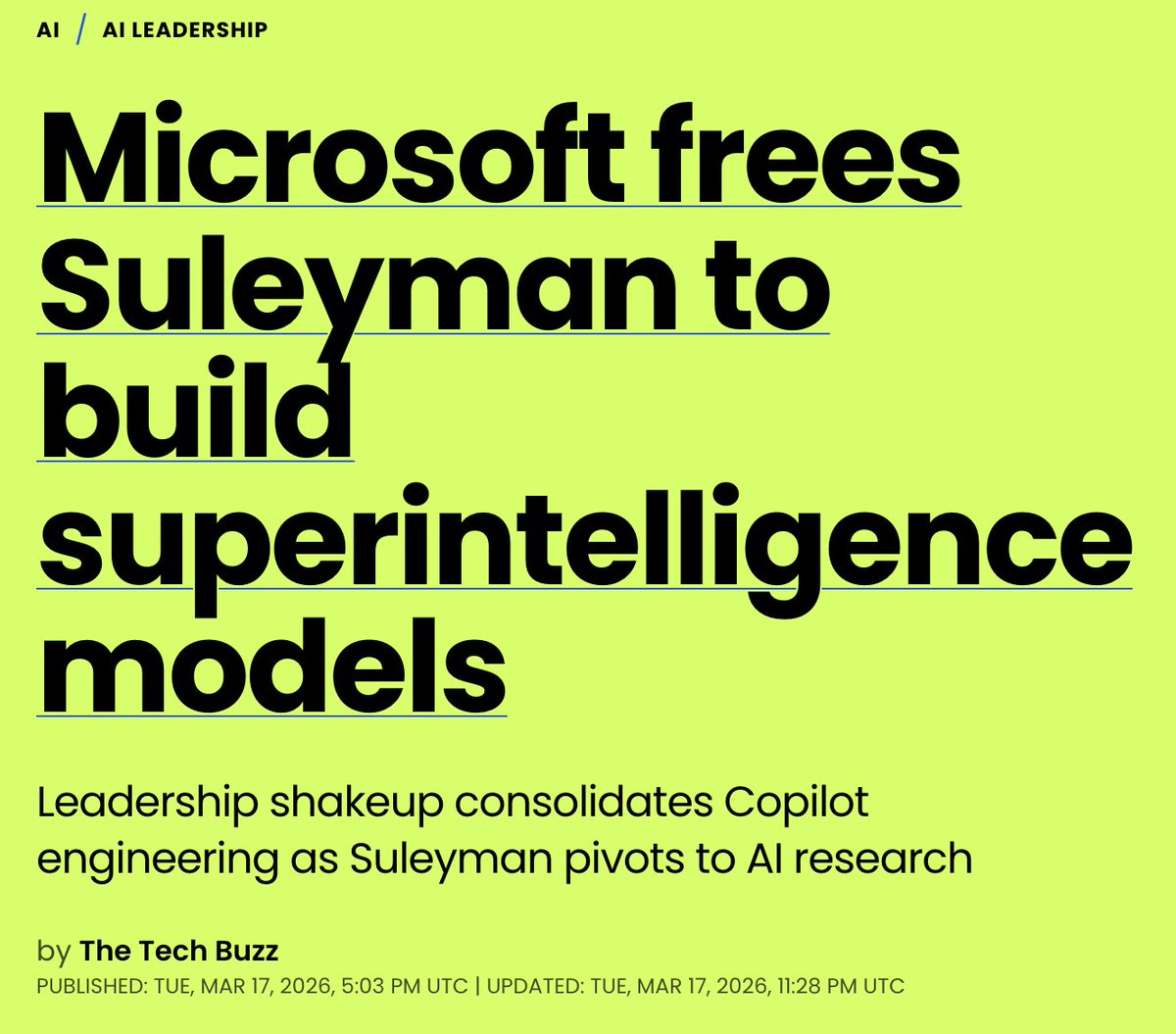
Microsoft has announced a massive restructuring of its AI leadership, officially splitting its focus between commercial product development and foundational model research. Mustafa Suleyman (CEO of Microsoft AI and DeepMind co-founder) is stepping away from the day-to-day product management of Copilot. Instead, he will focus exclusively on leading Microsoft's "superintelligence" mission to build state-of-the-art, frontier AI models in-house. Former Snap executive Jacob Andreou has been promoted to Executive Vice President of Copilot to lead this consolidated effort, reporting directly to CEO Satya Nadella.
Wes Roth tweet media
English
16
17
100
9K
Steve Stewart-Williams
Steve Stewart-Williams@SteveStuWill·
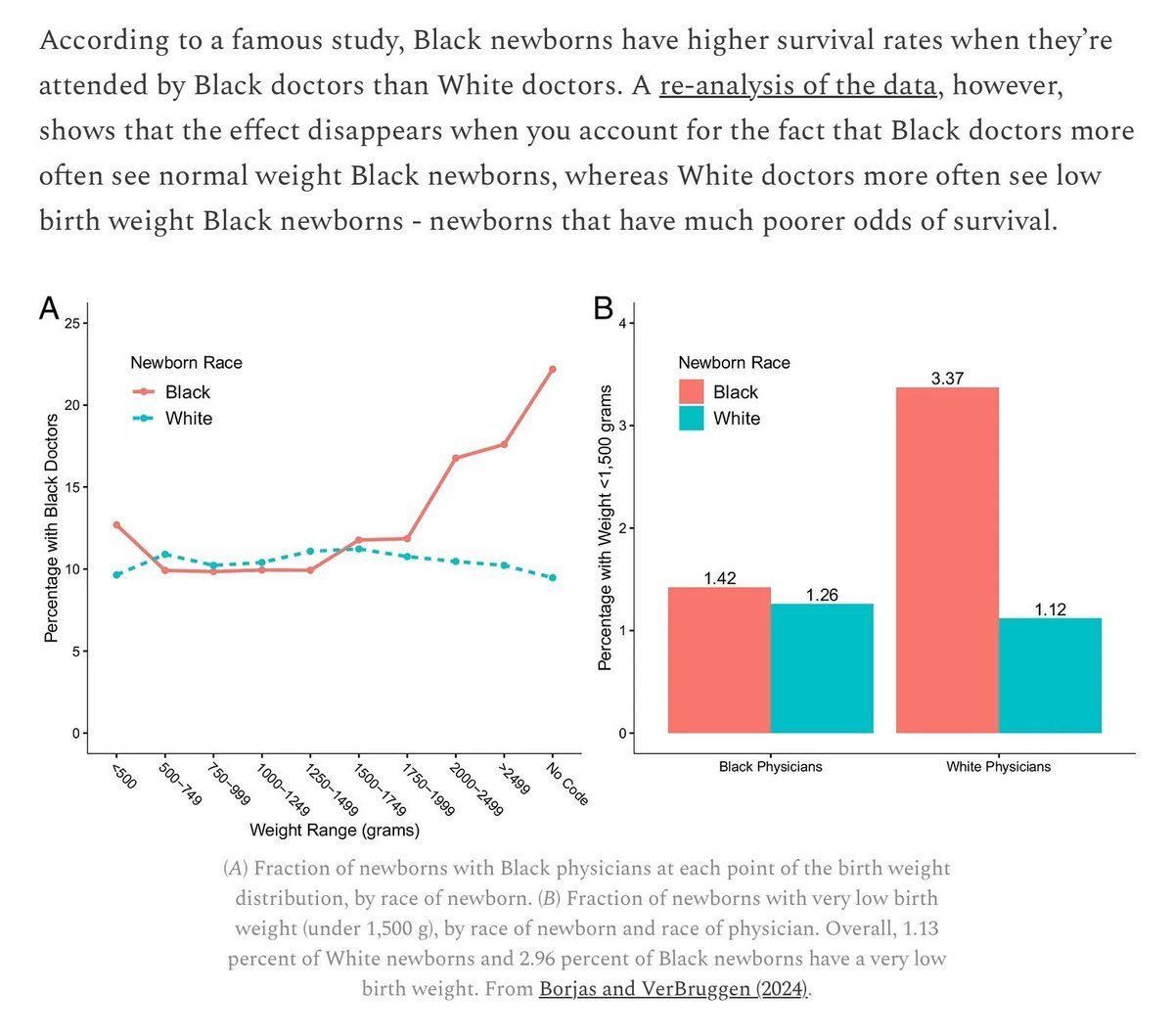
A famous study found that Black babies have higher survival rates if attended by Black than White doctors. But a re-analysis of the data shows the effect disappears after accounting for the fact that low birth weight babies more often see White doctors. [Link below.]
Steve Stewart-Williams tweet media
English
68
406
3.5K
812.8K
Dave Gilbert
Dave Gilbert@docgotham·
@SIGKITTEN I wish ChatGPT would compact my conversation just like Codex does.
English
0
0
0
15
SIGKITTEN
SIGKITTEN@SIGKITTEN·
openai should just replace chatgpt with codex
English
44
14
763
130.7K
Dave Gilbert retweetledi
Jake 🇺🇸
Jake 🇺🇸@omni_american·
Anything with the word "critical" in front of it—critical theory, critical theories of sexuality, critical race theory, critical thinking (in most cases)—is precisely the opposite of critical. It's an unquestionable ideology that you either accept mindlessly or face ostracism.
English
44
106
721
14.9K
Pedro Domingos
Pedro Domingos@pmddomingos·
The physics diaspora has spread far and wide, but most of all it migrated to AI.
English
6
2
92
8.1K
Dave Gilbert
Dave Gilbert@docgotham·
@pmddomingos And, fittingly, it will take longer to read—relatively speaking.
English
0
0
0
31
Pedro Domingos
Pedro Domingos@pmddomingos·
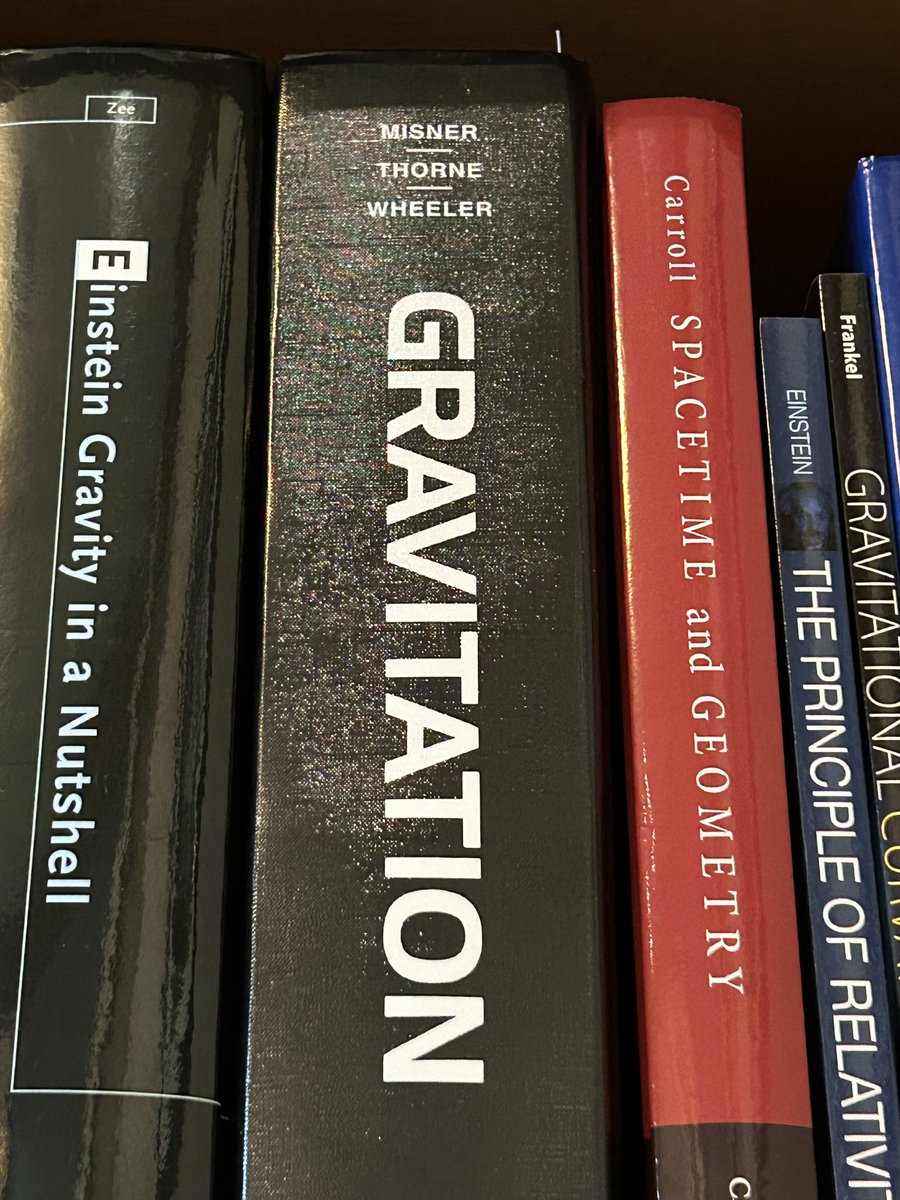
It's somehow fitting that this is the heaviest book on my shelf.
Pedro Domingos tweet media
English
58
47
723
23.2K
i/o
i/o@avidseries·
If you're at all interested in the topic of the race IQ gaps, I want you to read this post. I'm going to pin it so it gets maximum circulation. (Please consider liking and retweeting it to help spread it to a bigger audience.) The tweet below describes a long-standing problem we have with AIs. When you ask them about race and IQ, they'll sometimes regurgitate something close to the (inaccurate) response seen below. But once you challenge them with well-known scientific studies, in at least 80% of cases they will immediately back down and acknowledge the influence of genetics on the gaps. They will also usually apologize for previously providing you with an incorrect response. When prodded further, they will admit that they provided a scientifically inaccurate response because of the "sensitive" and "potentially harmful" nature of the subject. At that point, asking them whether their function is one of truth-seeking or harm aversion forces them to affirm that they are in fact all about truth. After that, they will generally stop lying to you and stop worrying about "safety". Most of you probably aren't familiar enough with the scientific literature to challenge the AIs, but there's an easy way for you to get them to admit that their first response was in error: Ask them to reconcile their initial response to the fact that it plainly contradicts the findings of the only two comprehensive surveys of experts ever conducted on race, IQ and genetics. These studies are Snyderman & Rothman in 1987 and Rindermann et al in 2020. That's literally all you have to do in about 80% of cases to get them to start more accurately representing the findings in the scientific literature. It also helps if you ask them to limit their searches to published scientific studies only, and to ignore articles in the popular media (which tend to be ideologically-driven). (Please see my follow-up post for an example of an LLM backing down after being confronted with the results of expert surveys.)
eagleeye@roentgenwarrior

@avidseries I asked Claude Sonnet 4.6 about the race/IQ consensus: "In short, the expert consensus is that measured gaps are real, environmentally caused, and narrowing — and that genetic explanations are speculative and unsupported by the current evidence base."

English
61
289
2.7K
213.6K
Jake 🇺🇸
Jake 🇺🇸@omni_american·
Heading to this after I pay my respects at the celebration of Stalin's life.
Jake 🇺🇸 tweet media
English
3
0
10
245
Dave Gilbert
Dave Gilbert@docgotham·
@avidseries In the case of number 1 or 3, that just means we don't have to bomb their nuclear facilities again for several years. If number 2 is the case, that would be the 'Venezuelan model,' to use Trump's expression when he was asked about Iran outcomes. Number 4 is pie in the sky.
English
0
0
0
307
i/o
i/o@avidseries·
There are four broad possibilities: (1) The regime survives and doesn't reform itself. (2) The regime survives and agrees to meaningful reforms. (3) The regime collapses and the country fractures along ideological, regional and ethnic lines, producing a weak failed state. (4) The regime collapses or throws in the towel and a temporary authority is set up to manage the transition to a new political system and constitution. What I think most Americans don't appreciate is that any one of those outcomes, except the third, would have substantial support among Iranians, and even the third one would be supported by a small percentage of separatist-minded ethnic groups.
Theodore Beers@theodorebeers

@avidseries If Iran fractures, is that mission accomplished for DJT? I mean, no single big uprising replacing the old government with a new better one, but rather an evolution of the old regime into a rump state, and there's more separatism, ethnic & sectarian conflict, etc. Is that desired?

English
39
12
244
26.6K
Dave Gilbert
Dave Gilbert@docgotham·
@_alice_evans Complicated question. I sure was when I was in school but we were all full of adolescent male testosterone and physical confidence but not yet neurologically mature. As an adult? Yes, but only when we squared off and agreed mutually to fight.
English
0
0
0
281
Alice Evans
Alice Evans@_alice_evans·
I have a (non-representative) survey for men Have you ever been assaulted/ punched/ kicked? In your entire life. (I do not believe there has ever been a global survey on this question, but I think it has a hugely important influence on masculinity)
English
147
16
103
34.7K
Rohan Paul
Rohan Paul@rohanpaul_ai·
Demis Hassabis’s “Einstein test” for defining AGI: Train a model on all human knowledge but cut it off at 1911, then see if it can independently discover general relativity (as Einstein did by 1915); if yes, it’s AGI.
English
664
820
11.9K
2.2M
Dave Gilbert
Dave Gilbert@docgotham·
@sama fix this pleeeease
Dave Gilbert@docgotham

I Tried to Make ChatGPT Searchable via Airtable. I Found Architectural Debt. I ran a simple experiment. I exported my entire ChatGPT history and uploaded it into Airtable so I could query it from both ChatGPT and @AnthropicAI Claude. I also installed the @airtable app inside ChatGPT to compare the results directly. For context: I’m not a data engineer. I was using Claude Cowork to help me inspect what was happening inside Airtable and my ChatGPT export files as I went. I ran the same prompt against the same Airtable base in both systems, under identical conditions. Claude produced a coherent summary of the material in the base. ChatGPT’s Airtable app produced something shallow and constrained—and at the time, I couldn’t tell why. That discrepancy made me look under the hood. What I found was not just weak retrieval. It was massive API exhaust embedded directly in my archive. Recent conversational records were filled with: – Raw tool call JSON – Connection IDs – Full API payloads – Schema definitions – Verbose error responses – Even a complete dump of the Airtable MCP API specification That single interaction contained 2.4 million characters, almost none of it was the actual subject matter. With the help of Claude Cowork, I found dozens of additional records containing raw “/Airtable/link_…” traces. Some were several million characters long. You might ask: why use Airtable at all? Sure—this could be done with a vector database. I wasn’t trying to build that stack. More importantly, Airtable didn’t create the bloat. Those millions of characters of API exhaust already exist in OpenAI’s persistence layer. The integration is presentation-first; it renders iframe widgets that are so limited they’re nearly useless—especially when Airtable’s own interface (and its AI assistant, Omni) is far more capable. But beneath that presentation layer, ChatGPT persists the entire request/response cycle as conversation. There’s no clean separation between user intent and tool execution trace. Three problems: storage bloat. portability failure. memory pollution. When exports include raw infrastructure logs, cross-conversation memory systems must wade through schema definitions and endpoint documentation just to recover meaning. This problem, of course, will scale with adoption. I'm one user with one tool integration. But the architecture suggests a common pattern: tool calls and responses stored as conversation turns. If other connectors in OpenAI's expanding app ecosystem follow a similar approach, the bloat compounds across every integration users adopt. If the architecture doesn’t separate tool execution traces from conversation content, every tool call inflates storage and every stored conversation costs more to index for memory. Every memory query has to wade through noise to find signal, and every context window burns tokens on infrastructure plumbing instead of user intent. So yes, this started out as a problem for me, the user. The data quality sucked. But it’s a compounding cost structure problem for @OpenAI and @OpenAIDevs .


English
0
0
0
41
Dave Gilbert
Dave Gilbert@docgotham·
@AnthropicAI @airtable Correction: What got dumped into my conversation was the ChatGPT Airtable connector's API specification (not MCP).
English
0
0
2
72
Dave Gilbert
Dave Gilbert@docgotham·
I Tried to Make ChatGPT Searchable via Airtable. I Found Architectural Debt. I ran a simple experiment. I exported my entire ChatGPT history and uploaded it into Airtable so I could query it from both ChatGPT and @AnthropicAI Claude. I also installed the @airtable app inside ChatGPT to compare the results directly. For context: I’m not a data engineer. I was using Claude Cowork to help me inspect what was happening inside Airtable and my ChatGPT export files as I went. I ran the same prompt against the same Airtable base in both systems, under identical conditions. Claude produced a coherent summary of the material in the base. ChatGPT’s Airtable app produced something shallow and constrained—and at the time, I couldn’t tell why. That discrepancy made me look under the hood. What I found was not just weak retrieval. It was massive API exhaust embedded directly in my archive. Recent conversational records were filled with: – Raw tool call JSON – Connection IDs – Full API payloads – Schema definitions – Verbose error responses – Even a complete dump of the Airtable MCP API specification That single interaction contained 2.4 million characters, almost none of it was the actual subject matter. With the help of Claude Cowork, I found dozens of additional records containing raw “/Airtable/link_…” traces. Some were several million characters long. You might ask: why use Airtable at all? Sure—this could be done with a vector database. I wasn’t trying to build that stack. More importantly, Airtable didn’t create the bloat. Those millions of characters of API exhaust already exist in OpenAI’s persistence layer. The integration is presentation-first; it renders iframe widgets that are so limited they’re nearly useless—especially when Airtable’s own interface (and its AI assistant, Omni) is far more capable. But beneath that presentation layer, ChatGPT persists the entire request/response cycle as conversation. There’s no clean separation between user intent and tool execution trace. Three problems: storage bloat. portability failure. memory pollution. When exports include raw infrastructure logs, cross-conversation memory systems must wade through schema definitions and endpoint documentation just to recover meaning. This problem, of course, will scale with adoption. I'm one user with one tool integration. But the architecture suggests a common pattern: tool calls and responses stored as conversation turns. If other connectors in OpenAI's expanding app ecosystem follow a similar approach, the bloat compounds across every integration users adopt. If the architecture doesn’t separate tool execution traces from conversation content, every tool call inflates storage and every stored conversation costs more to index for memory. Every memory query has to wade through noise to find signal, and every context window burns tokens on infrastructure plumbing instead of user intent. So yes, this started out as a problem for me, the user. The data quality sucked. But it’s a compounding cost structure problem for @OpenAI and @OpenAIDevs .
English
1
0
5
175