Doistol

2K posts

Doistol banner
Doistol

Doistol

@Doistol

Curious about how systems shape behavior. Fairness matters more than rules. Exploring Kleros.

Katılım Mart 2023
449 Takip Edilen187 Takipçiler
Doistol
Doistol@Doistol·
Una directora de Defensa del Consumidor de Junín resolvió una disputa de seguro médico con jurados anónimos votando online, sin pasar por tribunales. El caso ya está cerrado y el consumidor cobró. Una funcionaria del estado argentino acaba de arbitrar con blockchain. Y casi nadie lo está mirando.
Español
2
1
11
214
Doistol
Doistol@Doistol·
Cada jurado deposita tokens como garantía antes de poder votar. Si vota con la mayoría, los recupera más una recompensa. Si vota contra la mayoría, pierde parte del depósito. Como ningún jurado puede ver lo que votan los otros, tu estrategia ganadora termina siendo votar lo que pensás que los demás van a votar. Eso es lo que en teoría de juegos se llama Schelling point: en ausencia de comunicación, los jugadores convergen en la respuesta más obvia para una persona razonable. Funciona porque, en la mayoría de los casos, lo más obvio para una persona razonable termina pareciéndose a la verdad. No siempre. Pero estadísticamente rinde mejor que confiar en la buena fe de un juez aislado.
Español
0
0
1
17
Horacio Sansone
Horacio Sansone@horacio_sansone·
@Doistol y los jurados anónimos qué incentivo tienen para votar bien? si nadie los controla ni se conocen entre ellos, no entiendo cómo se asegura que decidan en serio
Español
1
0
0
16
Doistol
Doistol@Doistol·
En este caso la empresa pagó porque las dos partes habían firmado de antemano que iban a respetar lo que decidieran los jurados. Esa firma previa es lo que lo hace vinculante. Ahí es donde entra fuerte el rol de la directora de Defensa del Consumidor. Su trabajo fue convencer a la aseguradora de aceptar este mecanismo en lugar de mandar al consumidor a un juicio de tres años. Si una empresa firma y después se niega a pagar, hay que ejecutar el laudo en tribunal como cualquier sentencia arbitral. Pero eso es papeleo, no discusión del fondo.
Español
1
0
1
33
Horacio Sansone
Horacio Sansone@horacio_sansone·
@Doistol ¿Pero esto es vinculante? ¿Qué pasa si la aseguradora se niega a pagar el laudo?
Español
1
0
0
41
Doistol retweetledi
Elon Musk
Elon Musk@elonmusk·
@raqisright Lmao Instagram is for girls
English
2.7K
3.9K
30.9K
2.9M
Doistol retweetledi
Kleros
Kleros@Kleros_io·
En Argentina hay funcionarios públicos resolviendo disputas con jurados ciudadanos digitales. Mendoza por acordada del Poder Judicial, Junín en Defensa del Consumidor. El lunes 11/05 a las 18hs hablamos con quienes lo están haciendo. ↓
Español
7
28
119
1M
Doistol
Doistol@Doistol·
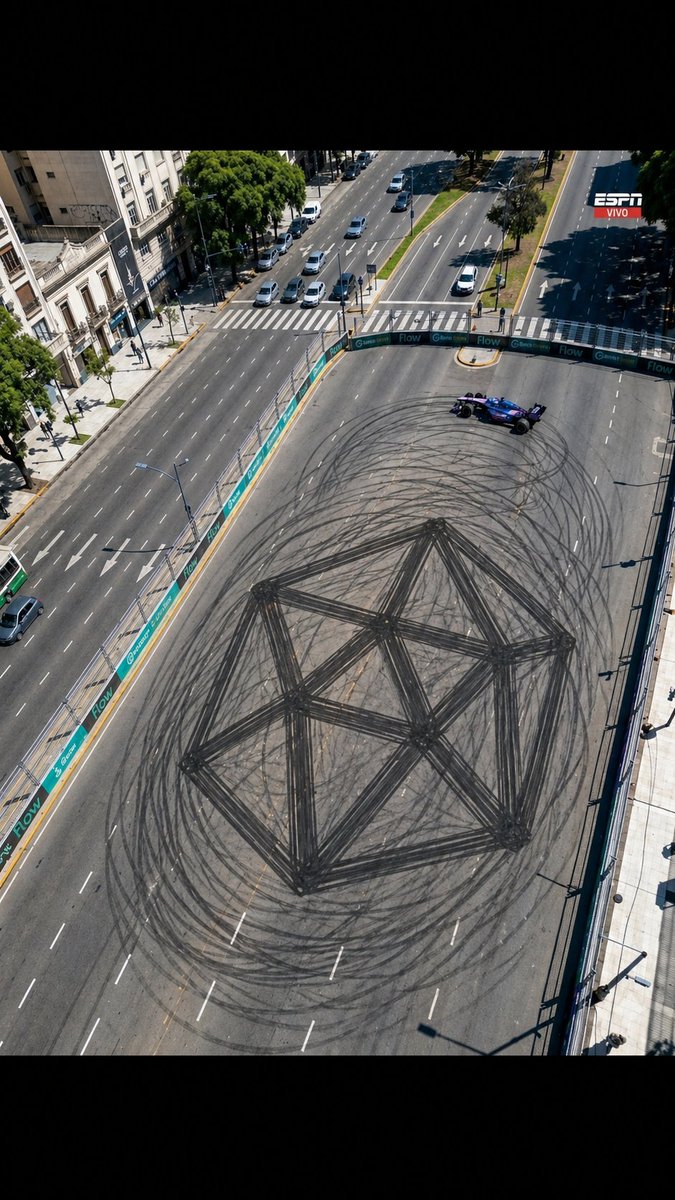
The icosahedron was never a symbol. It was a signal... war.gov/UFO/
Doistol tweet media
English
0
5
10
63
Doistol retweetledi
Brian Graham
Brian Graham@iroasmas·
me as i read 40% of what claude wrote back and type in “continue”
Brian Graham tweet media
English
183
1.1K
20.2K
544.8K
Doistol
Doistol@Doistol·
AI looking at you while you still think you're in charge...
Doistol tweet media
English
1
3
8
86
Doistol
Doistol@Doistol·
Llegamos a un punto raro. Cada herramienta nueva nos hace un poco menos importantes y un poco más cómodos... Esa es la trampa.
Doistol tweet media
Español
0
2
9
73
Doistol
Doistol@Doistol·
Doistol tweet media
ZXX
0
10
17
217
Doistol
Doistol@Doistol·
@HowToAI_ Plato argued there's a deeper reality beneath everything we see. We just can't access it directly. MIT just found that large AI models, trained on completely different data, converge toward the same internal representation of the world. Maybe he was onto something.
English
0
0
1
50
How To AI
How To AI@HowToAI_·
MIT proved every major AI model is secretly converging on the same "brain." It’s called the “platonic representation hypothesis,” and it’s one of the most mind-blowing papers you’ll ever read. You train a vision model purely on images. You train a language model purely on text. They use completely different architectures. They process completely different data. They should have completely different "brains." But as these models scale up, something impossible is happening. When researchers measure how they organize information, the mathematical geometry is identical. A model that only "sees" images and a model that only "reads" text are measuring the distance between concepts in the exact same way. The models are converging. The researchers named this after Plato’s Allegory of the Cave. Plato believed that everything we experience is just a shadow of a deeper, hidden, perfect reality. The paper argues that AI models are doing the exact same thing. They are looking at the different "shadows" of human data, text, images, audio. And they are independently discovering the exact same underlying structure of the universe to make sense of it. It doesn't matter what company built the AI. It doesn't matter what data it was trained on. As models get larger, they stop memorizing their specific tasks. They are forced to build a statistical model of reality itself. And there is only one reality to map. 2024, Arxiv
How To AI tweet media
English
243
825
3.9K
295.8K
Doistol
Doistol@Doistol·
Plato argued there's a deeper reality beneath everything we see. We just can't access it directly. MIT just found that large AI models, trained on completely different data, converge toward the same internal representation of the world. Maybe he was onto something.
How To AI@HowToAI_

MIT proved every major AI model is secretly converging on the same "brain." It’s called the “platonic representation hypothesis,” and it’s one of the most mind-blowing papers you’ll ever read. You train a vision model purely on images. You train a language model purely on text. They use completely different architectures. They process completely different data. They should have completely different "brains." But as these models scale up, something impossible is happening. When researchers measure how they organize information, the mathematical geometry is identical. A model that only "sees" images and a model that only "reads" text are measuring the distance between concepts in the exact same way. The models are converging. The researchers named this after Plato’s Allegory of the Cave. Plato believed that everything we experience is just a shadow of a deeper, hidden, perfect reality. The paper argues that AI models are doing the exact same thing. They are looking at the different "shadows" of human data, text, images, audio. And they are independently discovering the exact same underlying structure of the universe to make sense of it. It doesn't matter what company built the AI. It doesn't matter what data it was trained on. As models get larger, they stop memorizing their specific tasks. They are forced to build a statistical model of reality itself. And there is only one reality to map. 2024, Arxiv

English
0
2
6
194
Doistol
Doistol@Doistol·
For years, eggs were treated with medical suspicion. Butter came with guilt. Red meat carried an almost moral accusation. These ideas did not just appear on the dinner table. They arrived through studies, health columns, TV doctors, and that very serious voice people use right before changing their mind ten years later. If they were so certain then, and wrong, why should certainty impress us now?
Doistol tweet media
English
1
0
5
97