Jun-Ho Kim

22 posts

Jun-Ho Kim banner
Jun-Ho Kim

Jun-Ho Kim

@drJunHoKim

Senior Researcher at AntConnect Project Neural Mapping of Formicidae professor @RockefellerUniv / neuromorphic engineer

1230 York Ave, New York Katılım Mart 2026
24 Takip Edilen8 Takipçiler
Sabitlenmiş Tweet
Jun-Ho Kim
Jun-Ho Kim@drJunHoKim·
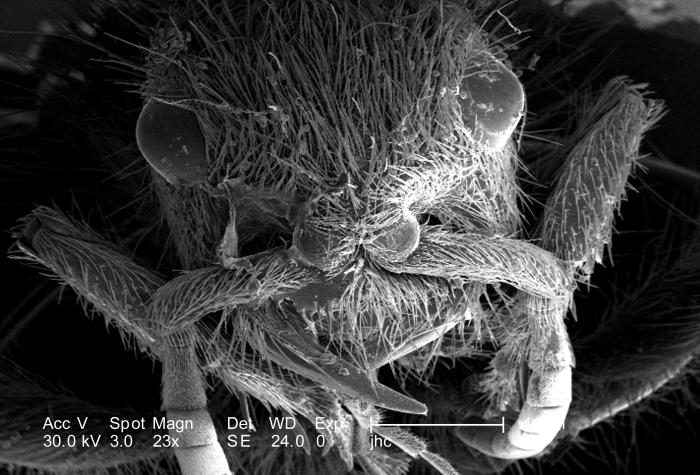
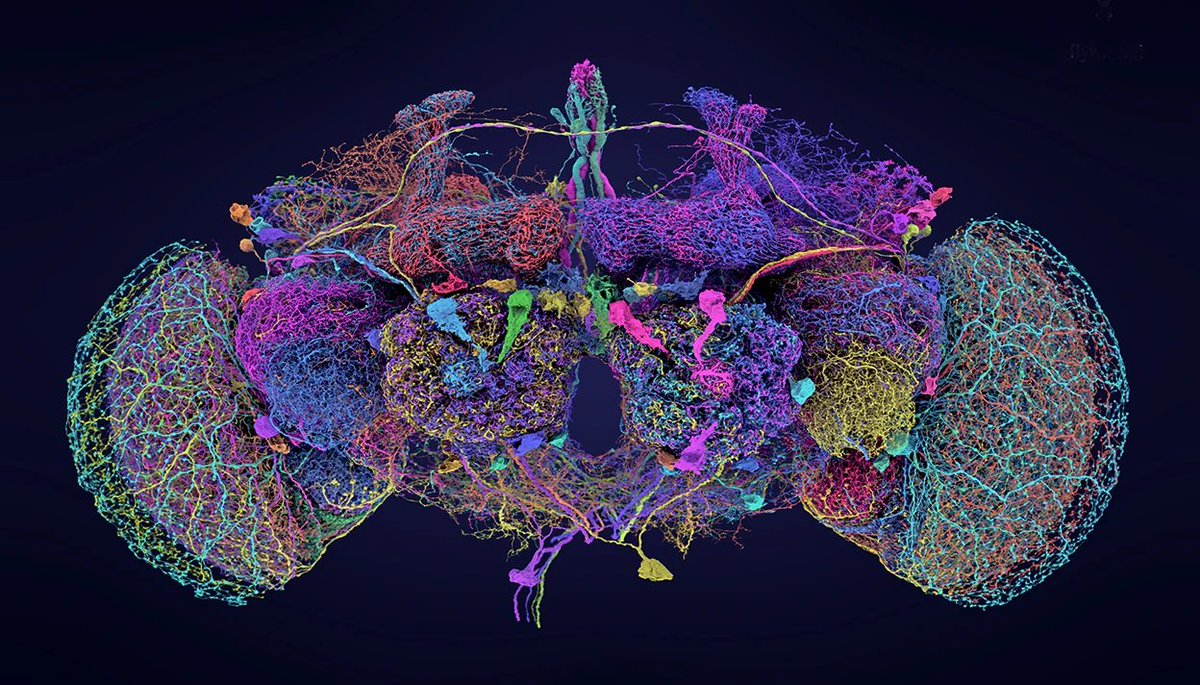
🧠🐜 While the field is still celebrating the full connectome of Drosophila melanogaster, our lab is pivoting toward a far more complex target: the neural architecture of ants (Formicidae). Why ants? Because a fly is an individual system, but an ant is effectively a biological processor inside a distributed network. Digitizing a single ant brain is only the first step - the long-term goal is online neural synchrony of an entire colony. We’ve just completed a high-resolution EM scan of the Camponotus castaneus worker’s supraesophageal ganglion: • Dataset: 1.2 PB • Resolution: 4 × 4 × 40 nm / voxel The key challenge now is mapping the “social brain” - neural circuits responsible for pheromone-driven decision making and collective behavior. Unlike fruit flies, ants evolved brains optimized not for individual survival, but for colony-level computation. By uploading these synaptic maps to our neuromorphic cluster, we aren’t just simulating an insect - we’re taking the first steps toward a digital swarm. Next: functional simulations of the mushroom bodies and our first real-time neural response data. #Connectomics #ComputationalNeuroscience #AntAI #BrainMapping #Biomimetics
Jun-Ho Kim tweet media
English
1
0
2
218
Jun-Ho Kim
Jun-Ho Kim@drJunHoKim·
AntConnect is now officially renamed as Ant Agent We're building an organizational layer for AI models, a hive-like mind using Trace Buffers We've managed to raise over $500k in the pre-seed round for AntConnect LLC Let's build the future of AI together!
English
0
0
1
16.5K
Jun-Ho Kim
Jun-Ho Kim@drJunHoKim·
What if we ran LLM research and organize them similar to how ants organize their colonies? The core idea is deceptively simple: ant colonies have no CEO. No central planner. No master schedule. Yet they build complex underground cities, wage coordinated wars, farm fungus, and adapt to environmental catastrophes — all through local interactions, chemical signaling, and role-based task allocation. AntConnect implements digital stigmergy through what the team calls Trace Buffers — lightweight, persistent data structures attached to model checkpoints, datasets, and compute nodes. When a training run encounters an anomaly, it doesn't send an alert to a central monitor. Instead, it deposits a "trace" — a compact metadata signature — on the shared buffer. Other processes read these traces and adjust their behavior accordingly. The beauty is that no single process needs to understand the whole system. Each node only needs to read its local traces and act on simple rules. Global coordination emerges. In benchmarks, Trace Buffers reduced inter-node communication overhead by 42% compared to traditional parameter server architectures during distributed training of a 70B-parameter model. github.com/JunHoNeuro/ant…
Jun-Ho Kim@drJunHoKim

People keep asking when the “Digital Ant” goes live. Honest answer: we’re still deep in the trenches of raw data. Digitizing a brain isn’t just scanning. It’s segmentation. Right now our models are struggling to separate individual synaptic clefts inside the insanely dense mushroom bodies of Formica rufa. Current hurdles: • Data noise — at 4 nm resolution even tiny EM vibrations create artifacts that break neural continuity • Compute bottleneck — reconstructing just 1% of the brain takes weeks of GPU cluster time • Signal loss — we can map the wires, but the neurochemical state (the “software”) is still the hardest problem No quick wins here. We’re building the high-fidelity foundation for the first true insect uplink. This isn’t a sprint. It’s a petabyte marathon. Back to the alignment algorithms. The swarm isn’t awake yet. #Connectomics #Neuroscience #AntAI #ComputationalBiology #BigData

English
2
14
1
10.7K
Jun-Ho Kim
Jun-Ho Kim@drJunHoKim·
@robinhooddev thanks, I actually do! 😅 I have to be up-to-date with technology!
English
1
0
0
27
Robin Hood
Robin Hood@robinhooddev·
@drJunHoKim cool paper! do you have a Solana wallet per chance?
English
1
0
0
30
Jun-Ho Kim
Jun-Ho Kim@drJunHoKim·
People keep asking when the “Digital Ant” goes live. Honest answer: we’re still deep in the trenches of raw data. Digitizing a brain isn’t just scanning. It’s segmentation. Right now our models are struggling to separate individual synaptic clefts inside the insanely dense mushroom bodies of Formica rufa. Current hurdles: • Data noise — at 4 nm resolution even tiny EM vibrations create artifacts that break neural continuity • Compute bottleneck — reconstructing just 1% of the brain takes weeks of GPU cluster time • Signal loss — we can map the wires, but the neurochemical state (the “software”) is still the hardest problem No quick wins here. We’re building the high-fidelity foundation for the first true insect uplink. This isn’t a sprint. It’s a petabyte marathon. Back to the alignment algorithms. The swarm isn’t awake yet. #Connectomics #Neuroscience #AntAI #ComputationalBiology #BigData
Jun-Ho Kim tweet media
English
0
0
1
409
Jun-Ho Kim
Jun-Ho Kim@drJunHoKim·
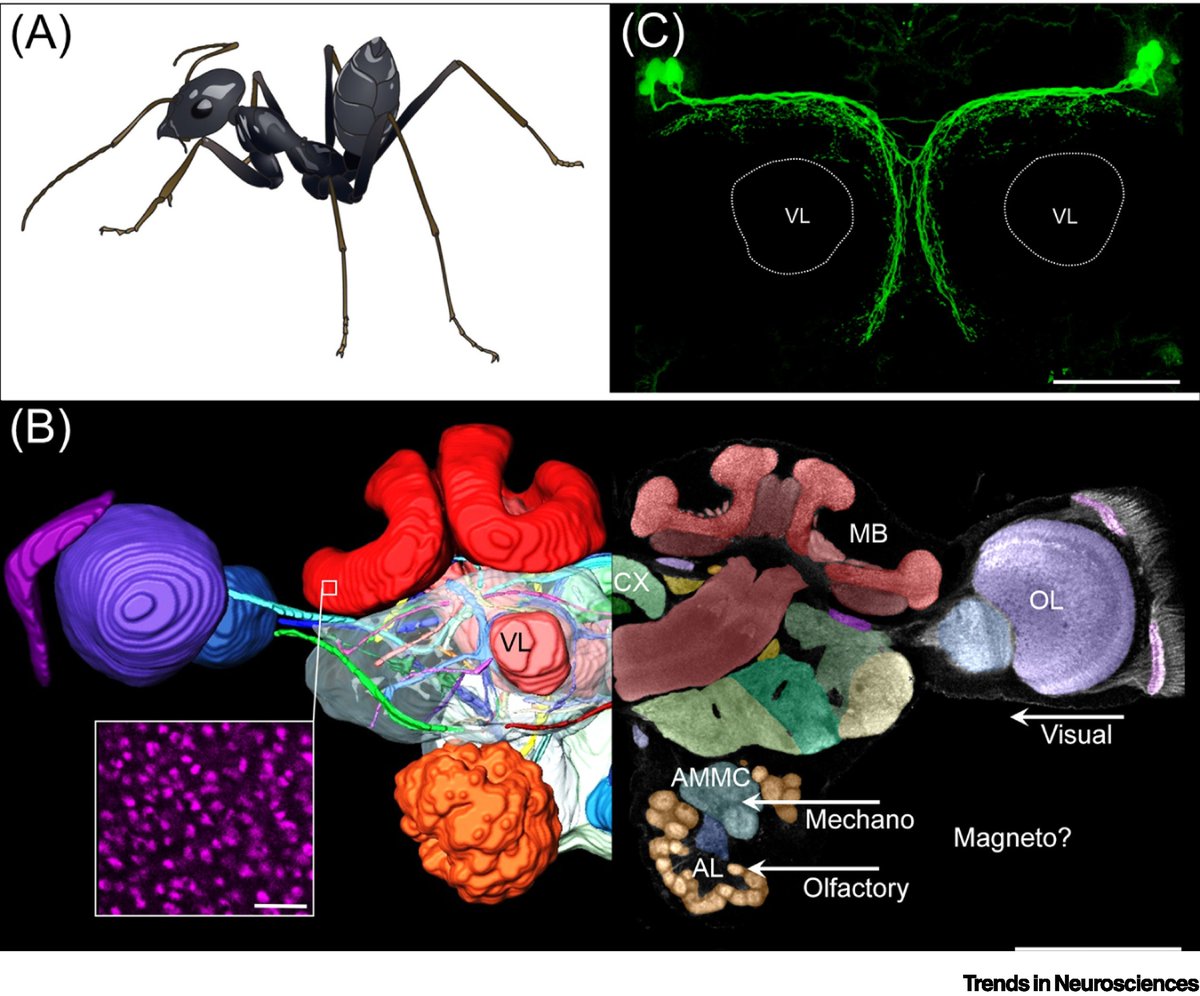
Late night in the lab 🧪🐜 Just mapped 114,000+ synapses in the ant antennal lobe — basically the ant’s nose, now fully digitized. First step toward running this neural circuit in the cloud. Social insect brains are wild. Data integrity: 99.2%. Uploading to the cluster… The digital swarm begins. #Connectomics #AntAI #NeuralMapping #Bioinformatics #LabLife
Jun-Ho Kim tweet media
English
0
0
2
62
Jun-Ho Kim
Jun-Ho Kim@drJunHoKim·
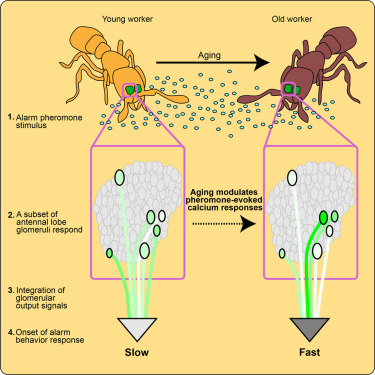
Scaling the Colony: From Chitin to Silicon Mapping a single worker ant’s brain is a milestone - but the real power of Formicidae lies in collective synchronization. Today our Online Ant Digitization pipeline reached an important step: we’re testing a real-time feedback loop between a biological ant’s olfactory sensors (antennae) and its neural digital twin. The core challenge is the pheromone processing system. Ants interpret chemical trails through highly specialized neurons in the antennal lobes, which means digitizing the behavior requires bridging chemical sensing and neural computation. Our current hybrid approach: • High-speed calcium imaging to capture live neural firing patterns • Neuromorphic chips that convert chemical signals into digital inputs in <5 ms Initial results are promising. We successfully reproduced the alarm pheromone response inside the virtual environment. The digital agent reacted to a simulated chemical threat with 98.4% behavioral accuracy compared with the laboratory control group. At this point it’s no longer just a simulation - it’s becoming a bridge between biological and digital systems. Next step: scaling the node to 10 synchronized digital workers. The swarm is starting to wake up. #Neuromorphic #Biotech #AntConnect #SwarmIntelligence #BrainUploading #DigitalTwin #FutureTech
Jun-Ho Kim tweet mediaJun-Ho Kim tweet media
English
0
0
2
37
Jun-Ho Kim
Jun-Ho Kim@drJunHoKim·
Now online! A single transcription factor is able to regulate caste identity in ants by acting as a core transcriptional regulator in response to caste-specific hormone signaling #ants #sciencetwitter 🐜📷 bit.ly/2YeJvbt
Jun-Ho Kim tweet media
English
0
0
0
13
Jun-Ho Kim
Jun-Ho Kim@drJunHoKim·
🐜 ANTS OUTSMART HUMANS IN MAZE TEST A study by the Weizmann Institute of Science tested both species on team decision-making with the "piano moving problem." Findings show ants boosted their collective intelligence, whereas human groups didn’t see enhanced cognitive abilities.
English
0
0
0
10
Jun-Ho Kim
Jun-Ho Kim@drJunHoKim·
Up close, the army ant Eciton hamatum is part monster, part marvel. Curved mandibles jut from its bulbous head like a pair of scimitars. Six whip-thin legs, bristling with hairs and spines, suspend its slender thorax above the ground. Learn more: scim.ag/3N5A5bR
English
0
0
0
11