
Dr. Dapo

6.5K posts

Dr. Dapo banner
Dr. Dapo

Dr. Dapo

@DrDapo

Dapo Iluyomade MD MBA FACC FAHA 🫀 Preventive Cardiologist @BaptistHealthSF || Assistant Prof of Medicine @FIUmedicine || #cvPrev 🇳🇬 Tweets mine.

Miami, FL Katılım Ekim 2010
1.1K Takip Edilen3.5K Takipçiler
Sabitlenmiş Tweet
Dr. Dapo
Dr. Dapo@DrDapo·
The term "VIP patient" further perpetuates existing disparities in healthcare. Let's work to treat all of our patients like the very important people that they are. 🤝🏾👩🏻‍⚕️⚕️⚖️🩺🏥 #HealthForAll #HealthEquity #HealthIsWealth
English
2
13
100
0
Dr. Dapo retweetledi
Scott Isaacs
Scott Isaacs@scottisaacsmd·
Honored to share that the new AACE Consensus Statement “Algorithm for Management of Adults With Type 2 Diabetes – 2026 Update” has been released for member review. Grateful to my coauthors and AACE colleagues for their incredible work on this important guidance for improving care for people with type 2 diabetes. endocrinepractice.org/article/S1530-…
Scott Isaacs tweet media
English

2
62
172
13.9K
Dr. Dapo retweetledi
Khurram Nasir
Khurram Nasir@khurramn1·
One of the most meaningful evolutions in the 2026 ACC/AHA dyslipidemia guideline is the continued elevation of CAC as a central tool in preventive decision-making. We have come a long way. 1. In the 2013 guidelines, CAC was effectively sidelined. 2. By 2019, it re-emerged as a decision aid. 3. In 2026, it is now clearly embedded in the framework of risk assessment, treatment initiation, and treatment intensity. Two messages stand out. 1. First, CAC has become the preferred decision aid when treatment decisions are uncertain. This is not an uncommon situation. In real-world practice, uncertainty is the rule rather than the exception, especially in borderline or intermediate-risk individuals. #PowerOfZero provides a clear distinction who is and not at risk that for the decision whether lipid-lowering therapy should be initiated. 2. Second, the guideline goes beyond initiation. CAC is increasingly used to guide the intensity of therapy. Increasing plaque burden corresponds to progressively more aggressive LDL targets and therapeutic strategies. For example, individuals with CAC ≥300–1000 are recommended to pursue LDL reduction strategies approaching secondary prevention intensity, reflecting event rates comparable to treated ASCVD populations. This is a MAJOR shift. CAC is no longer simply a tie-breaker for statin decisions. It is evolving into a disease-guided framework for preventive intensity. From a practical standpoint, this matters.Risk equations estimate probability. CAC visualizes disease. 1. When uncertainty exists, seeing the burden of atherosclerosis often changes the conversation for both clinician and patient. 2. It also aligns therapy more closely with biology (GREATER DISEASE, MORE INTENSE THE TREATMENT) rather than risk-factor projections alone. IN 2026. CAC has moved from the margins of guidelines to the center of preventive cardiology. For clinicians, that represents one of the most practical advances in translating risk assessment into actionable care. Congrats @rblument1 @RonBlankstein @DrMichaelShapir & rest of the guideline authors @AJPCardio @ASPCardio @MichaelJBlaha @Sadeer_AlKindi @HMethodistCV
Khurram Nasir tweet mediaKhurram Nasir tweet mediaKhurram Nasir tweet mediaKhurram Nasir tweet media
English
26
127
435
121.9K
Dr. Dapo retweetledi
Ahmed Bennis MD 🫀
Ahmed Bennis MD 🫀@drbennisahmed·
The urinary albumin-to-creatinine ratio can direct personalized prevention and treatment for cardiovascular and chronic kidney disease As UACR levels ≥30 mg/g indicate heightened risk for cardiovascular disease (CVD) and chronic kidney disease (CKD) progression, this biomarker may be used to personalize preventive care. Among individuals with UACR ≥30 mg/g, reducing the UACR by at least 30% from the pretreatment (baseline) value is associated with a reduction in the risk for both cardiovascular and kidney events. #Cardiology #MedTwitter #CardioTwitter #HeartHealth #Healthcare @mvaduganathan @brendonneuen @ShelleyZieroth @goKDIGO @DrMarthaGulati @hvanspall @AndrewJSauer @dranulala @almucastro01 onlinelibrary.wiley.com/doi/10.1111/jo…
Ahmed Bennis MD 🫀 tweet media
English
1
12
32
2.3K
Dr. Dapo retweetledi
Dr. Martha Gulati ♥️🫀❤️‍🩹🇨🇦
@CMichaelGibson Stop sending pizza to doctors in the name of wellness. Stop making wellness modules for physicians Stop MOC or repeat exams Change value assessment to quality of care over RVUs Ensure everyone gets 6 weeks of vacation and days off for weekend call
English

12
22
172
16.3K
Dr. Filippo Cademartiri
Dr. Filippo Cademartiri@FCademartiri·
🚨 What the 2026 Dyslipidemia Guidelines Actually Say About Calcium Score Before the opinions, let’s start with the actual recommendations from the new 2026 ACC/AHA Dyslipidemia Guideline. The document makes it very clear that Coronary Artery Calcium (CAC) scoring has a formal role in primary prevention decision-making. Key recommendations include: 📌 CAC should be used when treatment decisions are uncertain. In adults at intermediate risk and selected borderline-risk individuals without prior ASCVD, if the decision about lipid-lowering therapy remains uncertain, CAC scoring should be performed to guide whether therapy should be initiated, postponed, or withheld. 📌 CAC = 0 can justify postponing drug therapy. If the CAC score is 0 Agatston Units, and no high-risk conditions are present (such as diabetes, smoking, severe hypercholesterolemia, or strong family history), it is reasonable to defer lipid-lowering therapy and reassess in 3–7 years. 📌 CAC >0 should trigger treatment consideration. If any coronary calcium is present, lipid-lowering therapy should be considered, especially when the CAC score reaches ≥100 AU or ≥75th percentile, where therapy is recommended to reduce ASCVD risk. 📌 Incidental calcium matters. Even when coronary calcium is found incidentally on non-cardiac CT, the presence of calcified coronary plaque should influence decisions regarding initiation or intensification of lipid-lowering therapy. 💡 Why this matters This guideline essentially acknowledges something imaging specialists have known for years: Risk calculators estimate probability. CAC directly visualizes disease. Primary prevention is therefore shifting from a purely risk-based paradigm to one that also incorporates direct detection of subclinical atherosclerosis. And this raises a provocative but very practical question for modern preventive cardiology: 👉 If we can directly measure coronary atherosclerosis, should we still rely primarily on statistical risk models?🫀📊
Dr. Filippo Cademartiri tweet media
English
5
17
57
5K
Dr. Dapo retweetledi
Pablo Corral MD
Pablo Corral MD@drpablocorral·
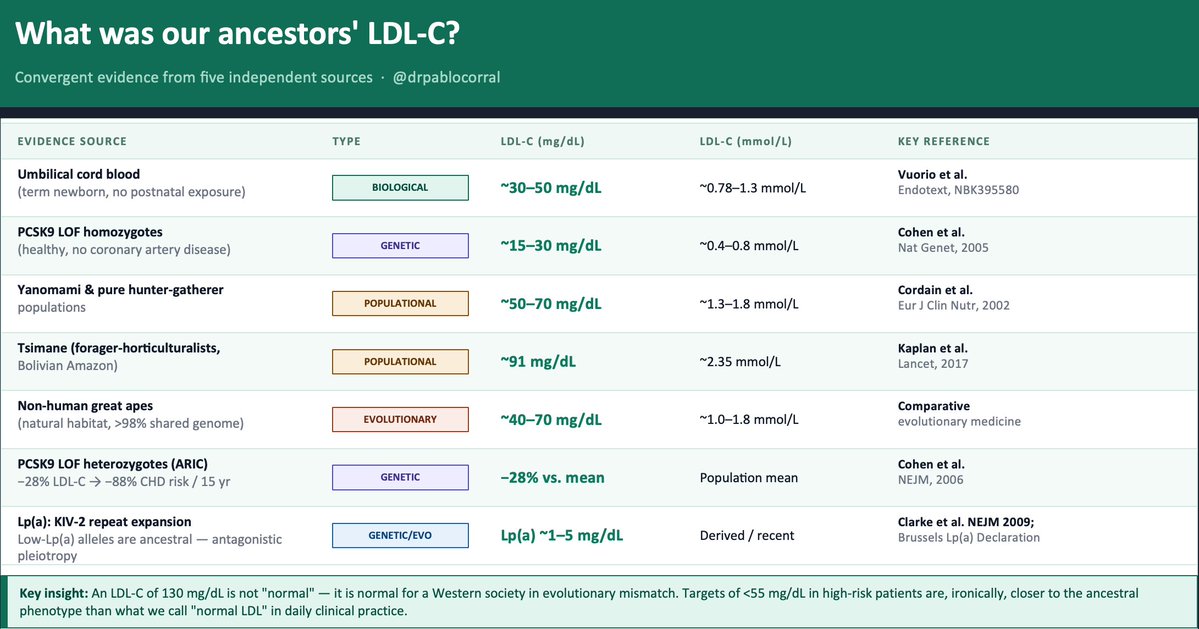
🇪🇺ESC/EAS (2025) vs 🇺🇲ACC/AHA (2026): 👉 Where They Differ—and Where They Converge 1️⃣ Risk stratification 2️⃣ Definition of very high risk 3️⃣ Role of coronary artery calcium (CAC) 4️⃣ Non-statin add-on therapy 5️⃣ LDL-C treatment goals @society_eas @escardio @LipidJournal @ATHjournal @ACCinTouch @American_Heart
Pablo Corral MD tweet media
English
8
74
211
11.9K
Dr. Dapo retweetledi
Johns Hopkins Ciccarone Center
Johns Hopkins Ciccarone Center@CiccaroneCenter·
🚨 The 2026 ACC/AHA Dyslipidemia Guidelines are here, and CAC scoring just got a Class 1 recommendation for guiding statin therapy decisions in intermediate-risk patients. Key updates: ➡️ CAC = 0 may allow withholding statins ➡️ CAC ≥100 AU or ≥75th percentile → statin therapy recommended ➡️ CAC ≥1,000 AU → intensive LDL-C targets ➡️ PREVENT-ASCVD equations now guide primary prevention ➡️ Lp(a) testing at least once in a lifetime Big shift in how we risk-stratify and treat. Worth reading the full guideline. 👇
Johns Hopkins Ciccarone Center tweet media
AHA Science@AHAScience

Key updates to this guideline include: ➡️ The use of the American Heart Association PREVENT-ASCVD equations to guide primary-prevention and lipid-lowering therapy decisions. ➡️ Testing Lp(a) at least once in a lifetime and selective apolipoprotein B measurement to improve risk assessment and guide treatment ➡️ The return of LDL-C and non-high-density lipoprotein cholesterol treatment goals (with lower targets for higher-risk groups) ➡️ Expanded use of coronary artery calcium scoring to reclassify risk[ME1.1] ✍🏼 @rblument1 @tygluckman @RonBlankstein @PamelaBMorris @pnatarajanmd @AnnMarieNavar @SethShayMartin @APRN_CNS @nyulangone @DrMichaelShapir @kgradneyrd @eugeniagianos @virani_md @KellieMcLain1 @ijeomaheartdoc @SamiaMoraMD @DrHeatherJohn @dmljmd

English
3
105
273
77.3K
Dr. Dapo retweetledi
AHA Science
AHA Science@AHAScience·
Key updates to this guideline include: ➡️ The use of the American Heart Association PREVENT-ASCVD equations to guide primary-prevention and lipid-lowering therapy decisions. ➡️ Testing Lp(a) at least once in a lifetime and selective apolipoprotein B measurement to improve risk assessment and guide treatment ➡️ The return of LDL-C and non-high-density lipoprotein cholesterol treatment goals (with lower targets for higher-risk groups) ➡️ Expanded use of coronary artery calcium scoring to reclassify risk[ME1.1] ✍🏼 @rblument1 @tygluckman @RonBlankstein @PamelaBMorris @pnatarajanmd @AnnMarieNavar @SethShayMartin @APRN_CNS @nyulangone @DrMichaelShapir @kgradneyrd @eugeniagianos @virani_md @KellieMcLain1 @ijeomaheartdoc @SamiaMoraMD @DrHeatherJohn @dmljmd
AHA Science tweet media
English
7
143
313
102.7K
Dr. Dapo retweetledi
Pablo Corral MD
Pablo Corral MD@drpablocorral·
🙌 Today the 2026 ACC/AHA Guideline on the Management of Dyslipidemia has been released. 📍Key updates shaping contemporary lipid management: 1️⃣ Lp(a) measurement is now recommended at least once in all adults for ASCVD risk assessment. 2️⃣ PREVENT equations replace the Pooled Cohort Equations for estimating 10-year and 30-year ASCVD risk. 3️⃣ LDL-C and non-HDL-C treatment goals return as central therapeutic targets alongside percentage LDL reduction. 4️⃣ Earlier intervention is emphasized to reduce lifelong exposure to atherogenic lipoproteins. 5️⃣ Broader integration of ApoB, CAC scoring, and modern lipid-lowering therapies to refine risk stratification and treatment. 👆 An important step forward in translating decades of lipid research into clinical practice and cardiovascular prevention. 🔓 Open Access 🔗 jacc.org/doi/10.1016/j.… @nationallipid @society_eas
Pablo Corral MD tweet media
English
15
125
419
54.3K
Dr. Dapo retweetledi
Dr. Martha Gulati ♥️🫀❤️‍🩹🇨🇦
How does Lp(a) drive atherosclerosis? 🫀Delivers cholesterol to the arterial wall 🫀Carries oxidized phospholipids → vascular inflammation 🫀Interferes with plasminogen → impaired fibrinolysis 🫀Promotes an atherothrombotic environment Understanding these mechanisms strengthens the case for targeted Lp(a) therapies 📎 shorturl.at/Uudsc @drmarthagulati @AnnalisaFiltz @CardioMDPhD 🙏🏽 @DrDerekConnolly for inviting this review #Lpa #CardioTwitter #CVprev
Dr. Martha Gulati ♥️🫀❤️‍🩹🇨🇦 tweet mediaDr. Martha Gulati ♥️🫀❤️‍🩹🇨🇦 tweet mediaDr. Martha Gulati ♥️🫀❤️‍🩹🇨🇦 tweet mediaDr. Martha Gulati ♥️🫀❤️‍🩹🇨🇦 tweet media
English
7
175
517
29.9K
Dr. Dapo retweetledi
Thomas Dayspring
Thomas Dayspring@Drlipid·
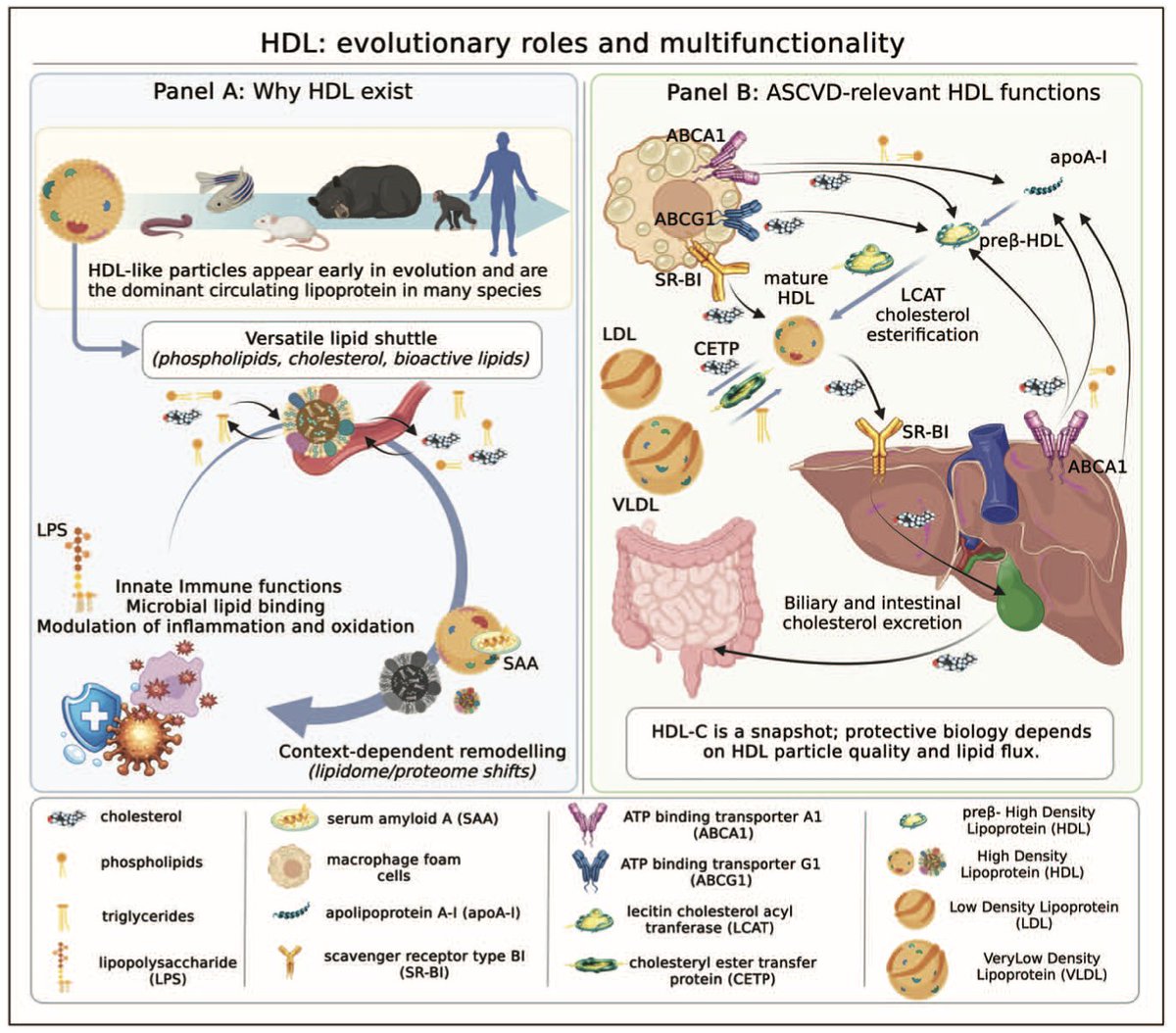
So much confusion regarding statin hydro- or lipophilicity regarding crossing the blood brain barrier. That pharmacokinetic attribute does not matter once one has a steady state plasma level (chronic use). All statins get into the brain and studies support their use in preventing or not preventing dementia with no harm. They all get into the brain - see the best paper ever written on the topic - Statins and cognition: Modifying factors and possible underlying mechanisms frontiersin.org/journals/aging… @nationallipid @society_eas @ASPCardio @escardio @atherosociety
Thomas Dayspring tweet media
English
8
12
78
5.9K
Dr. Dapo retweetledi
NEJM
NEJM@NEJM·
In adults with type 1 diabetes and chronic kidney disease with albuminuria, the decrease in the urinary albumin-to-creatinine ratio was significantly greater with finerenone than with placebo. Full phase 3 FINE-ONE trial results: nejm.org/doi/full/10.10… Editorial: Finerenone for Diabetic Kidney Disease in Type 1 Diabetes — A Fine Answer? nejm.org/doi/full/10.10…
NEJM tweet media
English
4
136
289
28.2K
Dr. Dapo retweetledi
Dr Parul Agrawal
Dr Parul Agrawal@ShardaClinic·
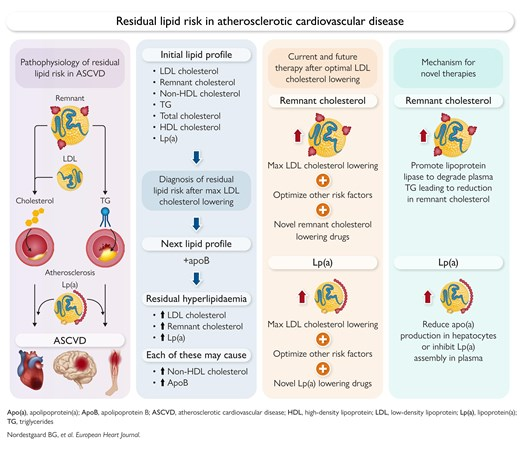
🌿 Non-HDL Cholesterol — Seeing the Whole Atherogenic Landscape 🔎 What is Non-HDL Cholesterol? Non-HDL cholesterol represents the cholesterol carried by all atherogenic (ApoB-containing) particles combined. 👉 Formula: Non-HDL = Total Cholesterol − HDL It includes: • LDL • VLDL • IDL • Remnant particles • Lipoprotein(a) In simple terms → Non-HDL reflects total atherogenic particle exposure using routine labs. 🧪 How is it Measured? No additional test is required. It is calculated directly from a standard lipid profile and remains reliable even when triglycerides are elevated or fasting is absent, making it highly practical in clinical practice. 🧠 What Risk Does It Indicate? Atherosclerosis is driven by cumulative ApoB particle exposure over time. Higher Non-HDL suggests: • Greater arterial particle entry • Increased remnant cholesterol load • Prolonged particle residence • Higher cardiovascular risk Because it captures multiple particle types, Non-HDL often reflects risk more completely than LDL alone, especially in metabolic dyslipidemia. 🔬 Pathophysiology Insight When hepatic insulin-nutrient signaling is disturbed: → VLDL overproduction increases → ApoC-III slows clearance → Remnants persist → ApoB particle burden rises LDL shows one fraction. Non-HDL shows the full traffic. 📊 Clinical Interpretation (Targets depend on risk) Low-risk individuals: 👉 Non-HDL <130 mg/dL → generally acceptable 👉 >130 → risk signal requiring evaluation Higher-risk individuals (diabetes, insulin resistance, high TG, prior CVD): 👉 Aim <100 mg/dL 👉 Very high risk → <85 mg/dL Lower targets reflect arterial vulnerability, not danger from low values. ⚠️ Deep Teaching Pearl A patient may show: ✔ Normal LDL ❌ Elevated Non-HDL This often signals: • Remnant-driven risk • Insulin resistance pattern • Hidden ApoB excess Risk may exist outside LDL visibility. 🌱 Clinical Meaning Non-HDL shifts the question from: “Is LDL high?” to “What is the total atherogenic particle exposure?” Atherosclerosis is an exposure disease, not a single-number disease. ⭐ Take-Away Message Non-HDL is the simplest way to see the entire ApoB story using routine lipid panels — revealing the environment that drives plaque, not just one fraction within it.
Dr Parul Agrawal tweet media
Dr Parul Agrawal@ShardaClinic

🧬 VLDL — The Central Particle Connecting Triglycerides, ApoB and LDL Within lipid metabolism, VLDL (Very Low Density Lipoprotein) represents the liver’s primary mechanism for exporting excess energy. It carries triglycerides and cholesterol from the liver to peripheral tissues and forms the starting point of the ApoB lipoprotein lifecycle. Understanding VLDL helps explain how triglycerides, HDL changes and LDL formation are interconnected. 🌿 VLDL Physiology — Why It Is Formed The liver produces VLDL when triglycerides accumulate from: • Dietary intake • Fatty acids released from adipose tissue • De novo lipogenesis These lipids are packaged with cholesterol and apolipoproteins — mainly ApoB-100 — allowing safe transport through circulation rather than hepatic storage. VLDL therefore represents energy distribution. 🧬 What VLDL Contains Each VLDL particle includes: • Triglycerides (major component) • Cholesterol • ApoB-100 (structural backbone) • ApoC proteins (regulate triglyceride utilisation) • ApoE (enables clearance) This integrates VLDL into the broader apolipoprotein network. 🌱 The VLDL Lifecycle As VLDL circulates: • Lipoprotein lipase removes triglycerides • The particle shrinks • It becomes IDL • Eventually contributes to LDL formation LDL is therefore a downstream product of VLDL metabolism. Under balanced conditions this process is efficient and transient. ⚠️ VLDL Pathophysiology — When Production Exceeds Utilisation When hepatic lipid input remains high or utilisation slows, VLDL production increases and clearance becomes less efficient. Common influences include: • Insulin resistance • Energy excess • Sedentary behaviour • Hormonal shifts • Inflammation and circadian disruption The system moves from turnover toward persistence. 🌿 What Persistent VLDL Leads To Prolonged circulation of triglyceride-rich particles results in: • Remnant particle accumulation • Lipid exchange with HDL altering its function • Increased ApoB particle burden • Formation of small dense LDL • Greater variability in LDL cholesterol despite similar particle numbers The disturbance extends across the lipid network. 🌱 Consequences of VLDL Imbalance When VLDL remains elevated: • Triglyceride levels rise • HDL patterns change • Remnant cholesterol becomes more relevant • Particle exposure to vascular tissue increases • Lipid profiles reflect persistence rather than efficient transport This explains why triglycerides often signal early metabolic change. 🌿 Why VLDL Matters Clinically VLDL reflects: • Hepatic metabolic state • ApoB particle production • Efficiency of triglyceride handling • Early cardiometabolic imbalance Changes in VLDL frequently precede significant LDL elevation and help interpret TG–HDL patterns. ✨ The Takeaway VLDL is not inherently harmful — it is essential for energy transport. Risk emerges when production, utilisation and clearance lose coordination, linking triglycerides, apolipoproteins, remnant particles and LDL transformation. Understanding VLDL shifts lipid interpretation from isolated numbers to dynamic metabolic processes.

English
3
36
114
15.4K