

Derek Thomson
2.1K posts
Derek Thomson
@drderekthomson
Loughborough, England Katılım Ağustos 2009
2.2K Takip Edilen219 Takipçiler
not only do i read all my references, i read their references to make sure they’re correctly cited + the references of the referenced sources
English
Derek Thomson retweetledi

There should be show trials for this farce
Joshua Garfield@JoshuaGarfield
How it’s started. How it’s going.
English
Derek Thomson retweetledi

Ben isn’t exaggerating about the order of magnitude difference.
In constant $:
🇬🇧 HS2: $626 mn/km
🇫🇷 LGV to Bordeaux: $43 mn/km
🇮🇹 Brescia–Verona: $63 mn/km
🇰🇷 Suseo line: $89 mn/km. Pricey. But that’s because it’s 87% in tunnel.
Ben Southwood@bswud
HS2 was a brilliant idea for £10bn, and is a terrible one for £100bn. That’s why getting costs down is the most important thing for Britain to do if it wants infrastructure abundance.
English
Derek Thomson retweetledi

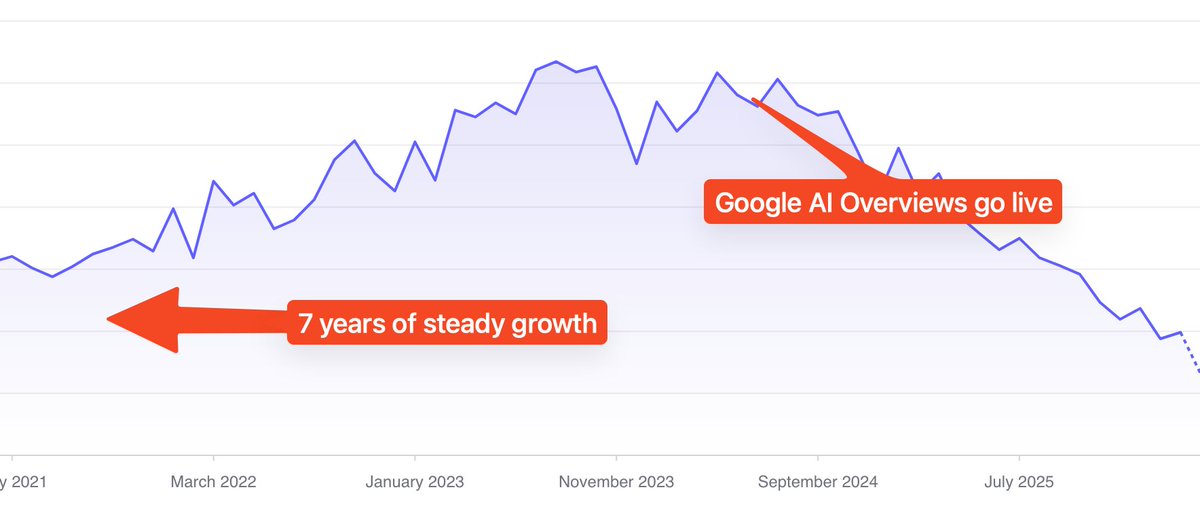
AI is killing All About Berlin. When you Google something, you used to get a link to my website, but now you get an AI-generated answer trained on my work. This has a devastating impact on traffic.
English
@ginadavidsonlbc She's role playing the "red sneakers effect", I see...
English
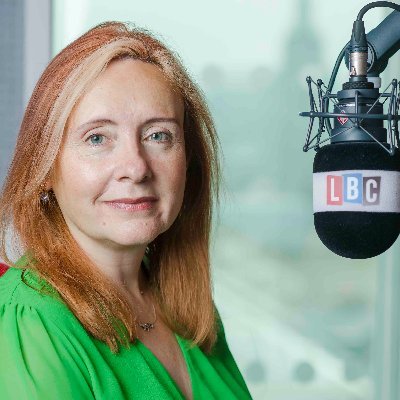
Junior ministers now being appointed- first in is new Shetland MSP Hannah Mary Goodlad. Never been in politics before now straight into govt. She resigned her job with oil firm Equinor the day she was elected.
English
Derek Thomson retweetledi

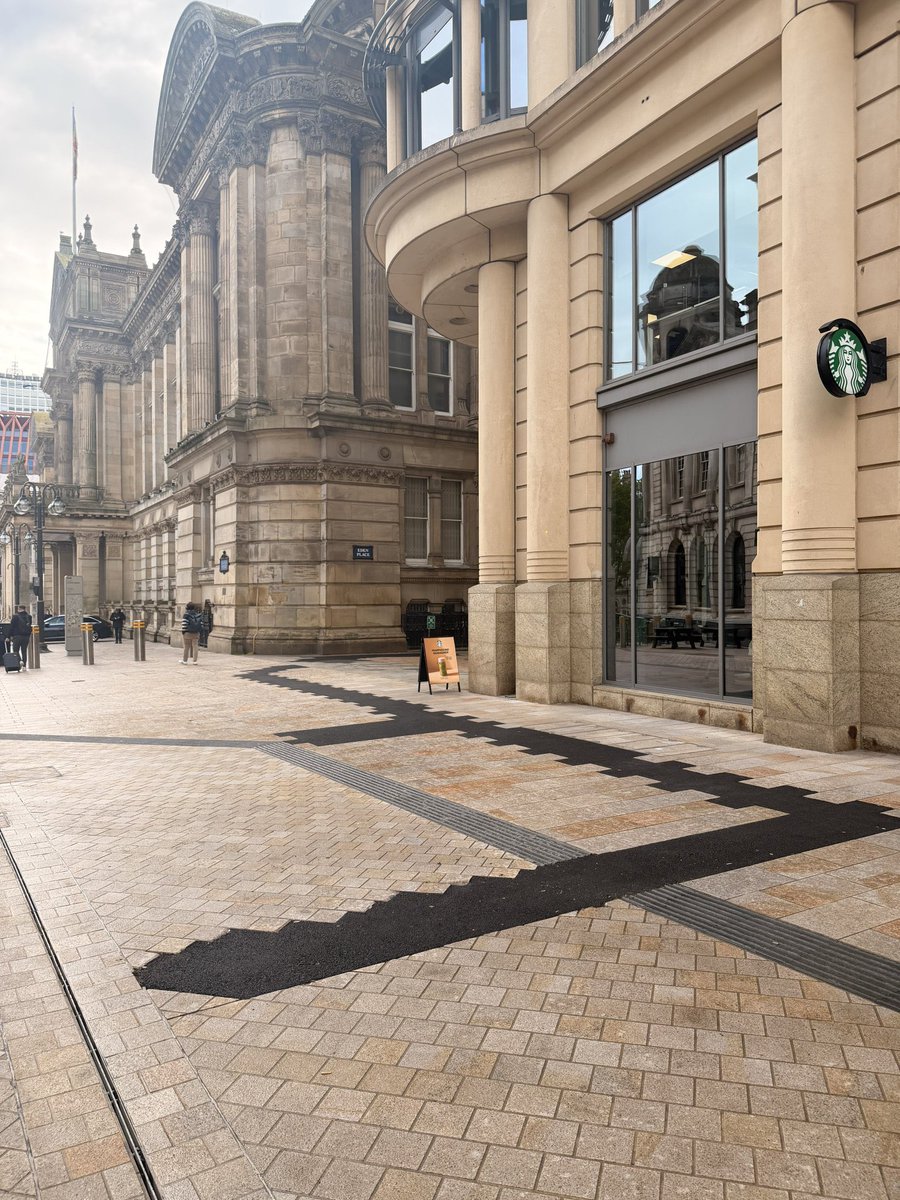
Bankrupt council or not. How this is allowed is beyond thinkable.
Complete disregard for the aesthetic of Colmore Row. One of the most prestigious thoroughfares in the city btw.
Sickening.

English
Derek Thomson retweetledi
... before the impacts of the Middle East conflict on construction. A greater problem is that, in real terms, UK construction wages in March 2026 were 6.2% lower than a year ago & this is before... (11/n)
#ukconstruction #ukhousing

English
Derek Thomson retweetledi
There were 2.07 million people employed in UK construction in 2026 Q1, which is 0.6% higher than in Q4 but 3.4% lower than a year ago, 14.5% lower than the recent peak in 2019 Q1 & it remains at its lowest levels since 2001, according to the ONS. (1/n)
#ukconstruction #ukhousing

English
Derek Thomson retweetledi

Incredible stat from the Milburn report show 35% of young people without jobs had A-levels or above with 10.6% a degree or equivalent. Too little technical and vocational courses and too many English and media. AI will make this worse. Even Labour must see this.
English
Derek Thomson retweetledi
Writing about Project Panama tonight. It is heartbreaking.
AI training pipeline that is turned psychotic in to a massive million dollar book burning.
It is a crime against humanity.
Train AI but don’t you dare burn books and expect us not to care.

English
@RobertTalisse @BruceHistorian And don't sacrifice your network of friends who know nothing about academia. You will need their sense of reality more than you could possibly imagine.
English

Unsolicited advice for people preparing to start a PhD program in the fall:
Maintain your non-academic interests and resist the impulse (and recommendations) to fold them into your academic work
English
Derek Thomson retweetledi

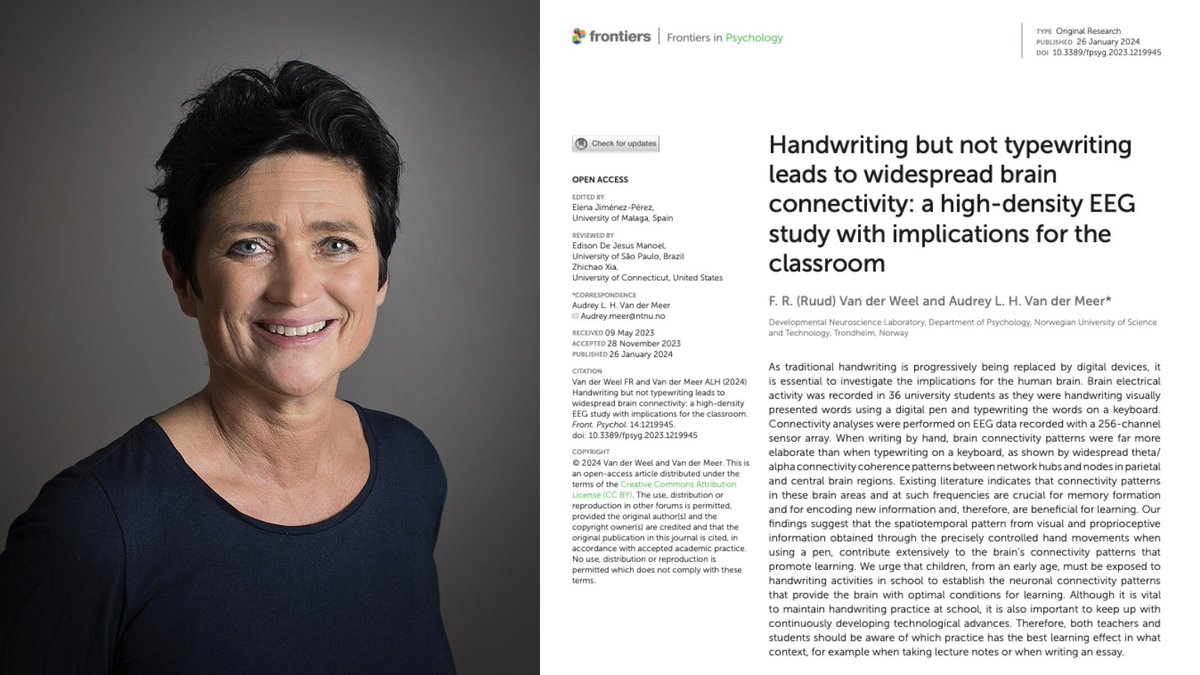
A Norwegian neuroscientist spent 20 years proving that the act of writing by hand changes the human brain in ways typing physically cannot, and almost nobody outside her field has read the paper.
Her name is Audrey van der Meer.
She runs a brain research lab in Trondheim, and the paper that closed the argument was published in 2024 in a journal called Frontiers in Psychology. The finding is brutal enough that it should have changed every classroom on Earth.
The experiment was simple. She recruited 36 university students and put each one in a cap with 256 sensors pressed against their scalp to record brain activity. Words flashed on a screen one at a time.
Sometimes the students wrote the word by hand on a touchscreen using a digital pen, and sometimes they typed the same word on a keyboard. Every neural response was recorded for the full five seconds the word stayed on screen.
Then her team looked at the part of the data most researchers had ignored for years, which is how different parts of the brain were communicating with each other during the task.
When the students wrote by hand, the brain lit up everywhere at once.
The regions responsible for memory, sensory integration, and the encoding of new information were all firing together in a coordinated pattern that spread across the entire cortex. The whole network was awake and connected.
When the same students typed the same word, that pattern collapsed almost completely.
Most of the brain went quiet, and the connections between regions that had been alive seconds earlier were nowhere to be found on the EEG.
Same word, same brain, same person, and two completely different neurological events.
The reason turned out to be something nobody had really paid attention to before her work. Writing by hand is not one motion but a sequence of thousands of tiny micro-movements coordinated with your eyes in real time, where each letter is a different shape that requires the brain to solve a slightly different spatial problem.
Your fingers, wrist, vision, and the parts of your brain that track position in space are all working together to produce one letter, then the next, then the next.
Typing throws all of that away. Every key on a keyboard requires the exact same finger motion regardless of which letter you are pressing, which means the brain has almost nothing to integrate and almost no problem to solve.
Van der Meer said it plainly in her interviews.
Pressing the same key with the same finger over and over does not stimulate the brain in any meaningful way, and she pointed out something that should scare every parent who handed their kid an iPad.
Children who learn to read and write on tablets often cannot tell letters like b and d apart, because they have never physically felt with their bodies what it takes to actually produce those letters on a page.
A decade before her, two researchers at Princeton ran the same fight using a completely different method and ended up at the same answer. Pam Mueller and Daniel Oppenheimer tested 327 students across three experiments, where half took notes on laptops with the internet disabled and half took notes by hand, before testing everyone on what they actually understood from the lectures they had watched.
The handwriting group won by a wide margin on every question that required real understanding rather than surface recall.
The reason was hiding in the transcripts of what the two groups had actually written down.
The laptop students typed almost word for word, capturing more total content but processing almost none of it as they went, while the handwriting students physically could not write fast enough to transcribe a lecture in real time, which forced them to listen carefully, decide what actually mattered, and put it in their own words on the page.
That single act of choosing what to keep was the learning itself, and the keyboard had quietly skipped the choosing and skipped the learning along with it.
Two studies. Two countries. Same answer.
Handwriting makes the brain work. Typing lets it coast.
Every note you have ever typed instead of written went into your brain through a thinner pipe. Every meeting, every book highlight, every idea you captured on your phone instead of on paper was processed at half depth.
You did not forget those things because your memory is bad. You forgot them because typing never woke the part of the brain that would have made them stick.
The fix is the thing your grandmother already knew.
Pick up a pen. Write the thing down. The slower road is the faster one.
English


@davepl1968 All while praying there wouldn't be a power cut...
English

Back in the early 90s, before the Internet, we had "Defrag and Chill". You'd start Disk Defragmenter on your 540MB hard drive, dim the lights, crack open a Surge, and just vibe while the little blue bars crawled across the screen like they were solving world peace. Forty-five minutes of pure, unfiltered anticipation. No notifications. No algorithms. Just the two of you, the gentle grinding of the hard drive, and the sacred promise that your Solitaire games were about to feel 3% snappier.
This is MS_DOS 6.22, which I worked on, but I honestly have no idea who wrote defrag. Iconic utility though!
English
Derek Thomson retweetledi

If they don't call the new institution Cranks they're missing a trick. 😜
Times Higher Education@timeshighered
King’s College London to merge with Cranfield University, in the latest major partnership between UK higher education institutions amid a sector-wide financial crisis.@Helen_Packer reports #merger #highered timeshighereducation.com/news/kings-col…
English
Derek Thomson retweetledi

The penalty is a 1-year ban from arXiv followed by the requirement that subsequent arXiv submissions must first be accepted at a reputable peer-reviewed venue. 4/
English
Derek Thomson retweetledi


Derek Thomson retweetledi

Since 1893, Princeton professors have left the room when students take their final exams. The idea was that if you treat students honorably, they would behave honorably.
In response to AI-fueled academic dishonesty, the university just ended that system. theatlantic.com/ideas/2026/05/…

English
Derek Thomson retweetledi

THIS GUY BUILT AN ENTIRE WIKIPEDIA THAT IS 100% AI HALLUCINATIONS AND IT'S OPEN SOURCE ON GITHUB
it's called Halupedia.
nothing on the site existed before you clicked. every article was generated the second you arrived.
the site has one rule: the universe only exists when you visit it.
it looks exactly like wikipedia. same fonts. same layout. same scholarly citations. same "stumble" button for random articles.
the only difference is none of it is real.
here are some actual articles currently in the encyclopedia:
> the great pigeon census of 1887
> the ministry of slightly wrong maps
> chaldic arithmetic — a branch of mathematics where subtraction is forbidden
> armund the river mapper — a cartographer who mapped 14,000 leagues of river without leaving his chair
> the society for the prevention of unnecessary tuesdays
every article page also tells you how many people are reading it right now. it says: "you alone are consulting this folio at present."
the creator's own tagline for the site is the most unhinged sentence i've read this year:
"an encyclopedia of a universe that does not exist until you visit it"
the entire backend is a single open source repo called vibeserver. one guy. one description on github: "a little webserver making things up just in time."
we built the largest knowledge base in human history and the very first thing a guy did with it was make a hallucinated mirror universe and put it on the open web.
the internet is healing.

English
Derek Thomson retweetledi

An MIT writing professor on his students using AI:
"I realized that for the first time as a writing professor, I had to deal with students producing words without work, which wasn’t quite plagiarism and wasn’t quite paying for someone else to do the job, but it felt like a kind of naive chicanery; a perversion of the contract between writer and reader."
theguardian.com/us-news/ng-int…
English