Ernest Kim, DC, LAc

580 posts

Ernest Kim, DC, LAc banner
Ernest Kim, DC, LAc

Ernest Kim, DC, LAc

@drernestkim

Chiropractor • Acupuncturist • Transformation Coach ⚡️Fix pain, 🧠clear the mind, 👁️remember your Self For biohacking, mindset & nervous system healing

Torrance, CA Katılım Mayıs 2020
150 Takip Edilen118 Takipçiler
NBA
NBA@NBA·
KNICKS. SPURS. 1999 REMATCH. THE NBA FINALS ARE OFFICIALLY SET! 🍿 New York returns to NBA Finals for the first time since 1999 🍿 San Antonio returns to NBA Finals for the first time since 2014 Game 1: Wednesday, June 3 at 8:30pm/et on ABC
NBA tweet media
English
1K
10.6K
45.7K
1.6M
Ernest Kim, DC, LAc
Ernest Kim, DC, LAc@drernestkim·
Walking can become a form of meditation when breath, movement, and focus work together. The "Vitality Walk," which combines breathwork and hand mudras, can greatly oxygenate the body.
English
0
0
0
181
Ernest Kim, DC, LAc retweetledi
Dr. Biohacker
Dr. Biohacker@Dr_Biohacker·
5. The exact method (step by step): 1. Sit up straight and open mouth wide 2. Extend tongue fully & breath through your nose. 3. Hold 40 seconds, then rest for 60 seconds. 4. Repeat 2 more times, 3 times total. 5. Do it every morning, and better if 2nd session before sleep.
English
8
150
1.5K
214.4K
Ernest Kim, DC, LAc
Ernest Kim, DC, LAc@drernestkim·
Mindful movement is more powerful than most people realize 🌿 Dr. Yun and Dr. Moramarco discuss how nature inspired some of the oldest movement and healing practices. From the balance of a crane to the calm strength of a tiger and the grounded power of a bear. These movements were designed to improve focus, stability, and overall well-being.
English
0
0
0
22
Beyza
Beyza@hicasamadim·
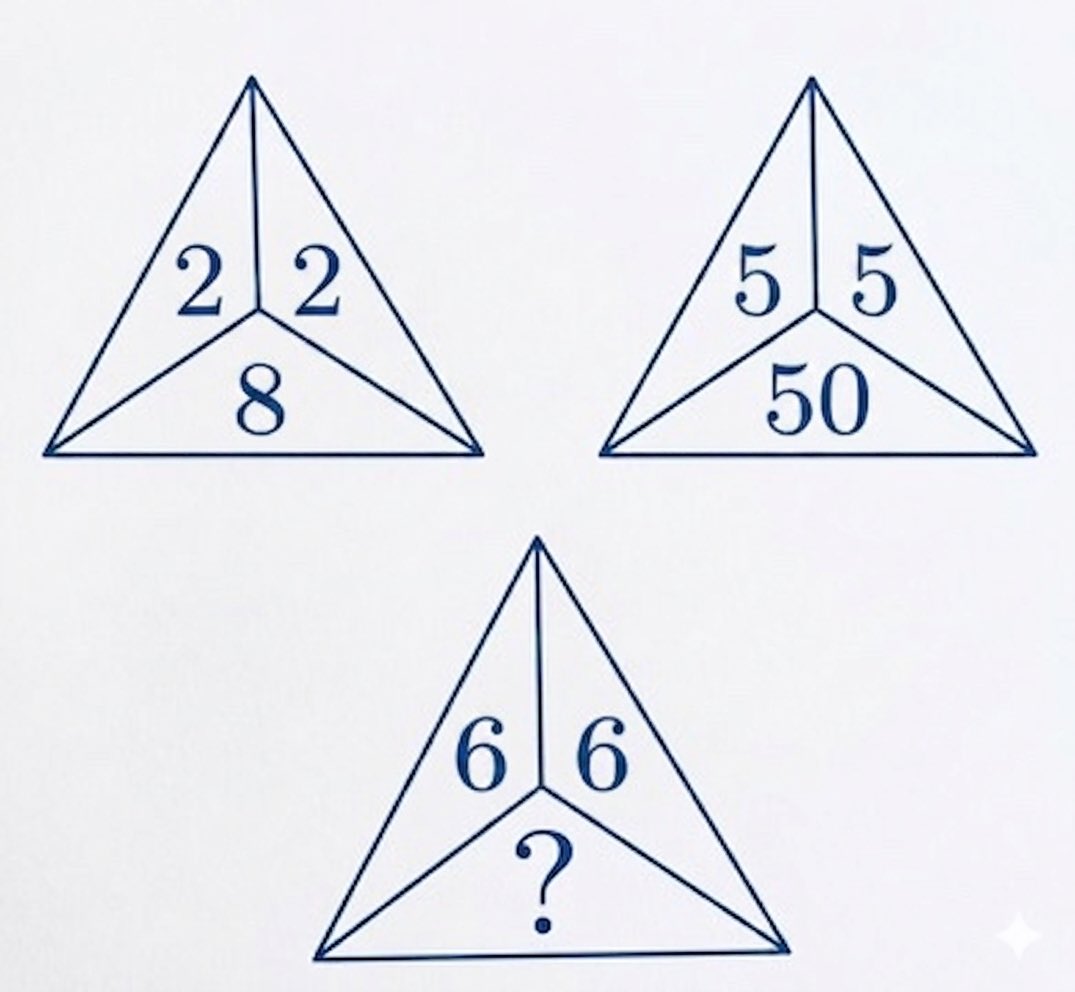
bunu çözersen, IQ seviyen ortalamanın üstündedir. çözebilir misin?
Beyza tweet media
Türkçe
162.7K
1.8K
32.8K
24M
Ernest Kim, DC, LAc
Ernest Kim, DC, LAc@drernestkim·
Terrain is more impactful than the microbe
Anish Moonka@anishmoonka

Finnish scientists trucked in real forest dirt and grass and laid it over the gravel at four daycare yards. They let the kids dig around in it for a month. The blood tests came back with changes the researchers hadn’t expected to see so fast or so clear. The study ran at ten daycares in two Finnish cities with 75 kids aged three to five. Four of the yards got the forest treatment: about a tennis court worth of soil and grass laid over the gravel, plus planters and peat blocks the kids could dig and climb on. Three others stuck with their normal gravel yards. The last three were daycares where the kids were already visiting real forests every day. After one month, the variety of bacteria living on the kids’ skin shot up, and the kind that helps train the skin’s immune defenses jumped the most. Their gut bacteria started to look like the gut bacteria of the forest-visiting kids. Their blood showed more of the immune cells whose job is to keep the body from freaking out at harmless stuff like pollen and peanuts, and overall inflammation dropped. The kids on the plain gravel yards showed none of this. Childhood asthma in the US doubled between 1980 and 1995. Food allergies in kids jumped 50 percent between 1997 and 2011, then jumped another 50 percent between 2007 and 2021. And peanut allergies in one-year-olds tripled between 2001 and 2017. The Finnish researchers think one of the reasons is simple: kids today don’t get dirty enough. 37 percent of American preschoolers now spend an hour or less outside on a normal weekday. Their immune systems are getting trained in environments stripped of the bacteria humans have always lived around. Aki Sinkkonen, who led the study, put it in plain words: “It would be best if children could play in puddles and everyone could dig organic soil.” The Finnish government is now helping pay for daycares across the country to make the same changes.

English
0
0
0
37
Ernest Kim, DC, LAc
Ernest Kim, DC, LAc@drernestkim·
🤯
SightBringer@_The_Prophet__

⚡️Consciousness is almost impossibly rare. Matter spends nearly all of its existence unconscious. Burning. Collapsing. Scattering. Reforming. Orbiting. Decaying. Becoming rock, gas, dust, ocean, bone, blood, brain. Then, for one microscopic interval, it wakes up and says: “What am I?” That is the miracle. Not comfort. Not religion. Not sentimental awe. A terrifying anomaly. The universe can run without witnesses. Stars do not need to be admired. Galaxies do not need to be understood. Atoms do not care where they have been. The furnace burns either way. Then consciousness appears, and suddenly the whole thing has a mirror. That is what makes human life so charged. A person is not merely an animal trying to survive. A person is ancient stellar material entering a temporary state of self-awareness before dissolving back into the larger process. The atoms continue. The person does not. That is the knife. Your atoms may survive future stars, but “you” are this one configuration. This one pattern. This one window where matter can remember, choose, love, suffer, create, tell the truth, and look back at the fire that made it. So wasting a life is obscene because the opportunity is so rare. Most matter never gets a voice. Most atoms never get a name. Most configurations never wake up. This one did. The only line that feels slightly too narrow is “consciousness was the accident.” The colder and deeper read is that consciousness may be what matter becomes when complexity finally turns inward. No guarantee. No promise. No cosmic safety net. But also not a meaningless glitch. More like a threshold event: matter crossing into witness. The strongest final truth: You are not separate from the universe. You are the universe briefly becoming aware of its own fire. Then the fire takes you back.

ART
0
0
0
44
Ernest Kim, DC, LAc
Ernest Kim, DC, LAc@drernestkim·
I def retain more when I hand write my notes 📝
Ihtesham Ali@ihtesham2005

A Norwegian neuroscientist spent 20 years proving that the act of writing by hand changes the human brain in ways typing physically cannot, and almost nobody outside her field has read the paper. Her name is Audrey van der Meer. She runs a brain research lab in Trondheim, and the paper that closed the argument was published in 2024 in a journal called Frontiers in Psychology. The finding is brutal enough that it should have changed every classroom on Earth. The experiment was simple. She recruited 36 university students and put each one in a cap with 256 sensors pressed against their scalp to record brain activity. Words flashed on a screen one at a time. Sometimes the students wrote the word by hand on a touchscreen using a digital pen, and sometimes they typed the same word on a keyboard. Every neural response was recorded for the full five seconds the word stayed on screen. Then her team looked at the part of the data most researchers had ignored for years, which is how different parts of the brain were communicating with each other during the task. When the students wrote by hand, the brain lit up everywhere at once. The regions responsible for memory, sensory integration, and the encoding of new information were all firing together in a coordinated pattern that spread across the entire cortex. The whole network was awake and connected. When the same students typed the same word, that pattern collapsed almost completely. Most of the brain went quiet, and the connections between regions that had been alive seconds earlier were nowhere to be found on the EEG. Same word, same brain, same person, and two completely different neurological events. The reason turned out to be something nobody had really paid attention to before her work. Writing by hand is not one motion but a sequence of thousands of tiny micro-movements coordinated with your eyes in real time, where each letter is a different shape that requires the brain to solve a slightly different spatial problem. Your fingers, wrist, vision, and the parts of your brain that track position in space are all working together to produce one letter, then the next, then the next. Typing throws all of that away. Every key on a keyboard requires the exact same finger motion regardless of which letter you are pressing, which means the brain has almost nothing to integrate and almost no problem to solve. Van der Meer said it plainly in her interviews. Pressing the same key with the same finger over and over does not stimulate the brain in any meaningful way, and she pointed out something that should scare every parent who handed their kid an iPad. Children who learn to read and write on tablets often cannot tell letters like b and d apart, because they have never physically felt with their bodies what it takes to actually produce those letters on a page. A decade before her, two researchers at Princeton ran the same fight using a completely different method and ended up at the same answer. Pam Mueller and Daniel Oppenheimer tested 327 students across three experiments, where half took notes on laptops with the internet disabled and half took notes by hand, before testing everyone on what they actually understood from the lectures they had watched. The handwriting group won by a wide margin on every question that required real understanding rather than surface recall. The reason was hiding in the transcripts of what the two groups had actually written down. The laptop students typed almost word for word, capturing more total content but processing almost none of it as they went, while the handwriting students physically could not write fast enough to transcribe a lecture in real time, which forced them to listen carefully, decide what actually mattered, and put it in their own words on the page. That single act of choosing what to keep was the learning itself, and the keyboard had quietly skipped the choosing and skipped the learning along with it. Two studies. Two countries. Same answer. Handwriting makes the brain work. Typing lets it coast. Every note you have ever typed instead of written went into your brain through a thinner pipe. Every meeting, every book highlight, every idea you captured on your phone instead of on paper was processed at half depth. You did not forget those things because your memory is bad. You forgot them because typing never woke the part of the brain that would have made them stick. The fix is the thing your grandmother already knew. Pick up a pen. Write the thing down. The slower road is the faster one.

English
0
0
0
30
Ernest Kim, DC, LAc retweetledi
Darshak Rana ⚡️
Darshak Rana ⚡️@thedarshakrana·
I just read about a phenomenon I can't stop thinking about: "The Red Car Theory" Once you understand it, you'll see it EVERYWHERE. And it will change how you view reality forever. Here's why:🧵
Darshak Rana ⚡️ tweet media
English
17
129
574
158.3K
Ernest Kim, DC, LAc retweetledi
Anish Moonka
Anish Moonka@anishmoonka·
Every Honeycrisp apple is a clone of a single tree planted at the University of Minnesota in 1962. Every one. Apple seeds are random. Plant a Honeycrisp seed and the new tree produces a small, sour apple that’s usually inedible. So apple growers do something old and clever. They cut a small branch off the original Honeycrisp tree, slot it into a slit in a young apple sapling, wrap the joint, and wait. The branch fuses to its new host and starts producing Honeycrisps. About 20 million Honeycrisp trees exist worldwide, every one a piece of that 1962 tree on different roots. Same goes for Gala, Fuji, Pink Lady, Granny Smith. Every Granny Smith on Earth traces back to a seedling found in 1868 by a woman named Maria Ann Smith in Australia. She’d thrown French crab apple cores onto her compost heap, one of them sprouted, and the apples it bore were unusually tart and good for cooking. That one tree is the ancestor of every Granny Smith in every grocery store on the planet. Wine has the bigger story. In the 1860s, a tiny aphid called phylloxera caught a boat from America to France, hidden in some grapevine cuttings. It eats grape roots. French vines had no defense and started dying everywhere. Within 15 years, French wine production crashed from about 11 billion bottles a year to 3 billion. The blight then tore through Italy, Spain, and Germany, and European wine was on the edge of collapse. The rescue came from Missouri and Texas. American grapevines had grown up with phylloxera and were immune to it. So growers chopped French grape varieties off at the trunk and joined them to American roots. Above the soil: still French grapes. Below the soil: aphid-proof American root. It worked. Today, almost every bottle of French, Italian, Spanish, Australian, and Californian wine you’ve ever drunk sits on top of an American root. The technique is ancient. Chinese farmers were grafting trees by 1000 BCE. A Greek medical text from 424 BCE describes it casually, like it was already old news. It works because plants don’t have a rejection system the way animals do. Cut two branches. Match the green layers just under the bark. Wrap them tight. In a few weeks the plumbing has fused into a single plant. A Syracuse University art professor named Sam Van Aken has spent 18 years building a single tree that grows 40 different fruits: peaches, plums, apricots, cherries, nectarines, almonds. In spring it blossoms in pink, white, and crimson all at once. He’s made more than a dozen. They sell for up to $30,000 each. Without grafting, there would be no commercial apple industry, no global wine industry, and most of the heirloom fruits humans have bred over the centuries would have gone extinct. One clean cut, and you’ve kept entire species alive.
Johnny@j00ny369T

There’s something satisfying about grafting - taking a strong rootstock and giving it a better variety on top. One clean cut, a little patience, and you’ve created something new.

English
118
1.6K
9.2K
1M
Ernest Kim, DC, LAc retweetledi
Farm Girl Carrie 👩‍🌾
Farm Girl Carrie 👩‍🌾@FarmGirlCarrie·
Prison violence dropped 300% all because of cats 🐱
English
1K
5.7K
30.3K
1.1M
Interstellar
Interstellar@InterstellarUAP·
Skip Atwater ex CIA of Project Stargate. "I was standing behind an alien in a spacecraft & asked how they get to Alpha Centauri in seconds" 👽🛸 He told Shawn Ryan: “You just twist the Q… When the periodic table occurs in a different place, you’re at that place.” “You have to stop thinking about going that way for a long time very fast. It doesn’t work.” The Alien told him: “You shouldn't be here” Do you think Interstellar travel is possible? Have you ever had an encounter with an extraterrestrial?
English
683
782
9.1K
381K
Ernest Kim, DC, LAc retweetledi
Bryan Johnson
Bryan Johnson@bryan_johnson·
This is it. Everything learned spending millions on longevity. From: Your Immortal Unc and Auntie. To: Our Immortal nieces and nephews. 0. Sleep is the world's most powerful drug. 1. Be in your bed for 8 hours 2. Same bedtime every night, any time before midnight 3. Don’t eat right before bed 4. Calm foods for dinner 5. No screens 1 hour before bed 6. Avoid added sugar (be aware it’s in everything) 7. Avoid all things in an American convenience store 8. Avoid fried foods 9. Shoes off at the door 10. Eat whole foods, particularly veggies fruits nuts legumes berries 11. Walk a little after meals or air squats 12. Get your heart rate high routinely 13. Lift heavy things 14. Stretch daily 15. Water pik, floss, brush, tongue scrape, morning and night 16. Make an effort to drink water 17. Get sunlight when you wake up (UV is low) 18. Protect skin in midday sun 19. Stand up straight 20. See at least one friend once a week 21. Avoid plastic where you can (in all things) 22. Circulate air in rooms 23. When stressed, breathe, learn to calm your body 24. Go to the dentist 25. Avoid sitting for long times 26. Protect your hearing, the world is too loud 27. Alcohol is bad for you 28. Finish coffee before noon 29. Avoid bright lights after sunset 30. If obese, look into a GLP 31. Sleep in a cold room 32. Texting while driving is dangerous 33. Turn off all notifications 34. Limit social media use 35. Don’t smoke anything 36. If you struggle to sleep, read a physical book before bed 37. 1 hour before bed have a calm wind down routine: bath, read, light walk, listen to music 38. The body is a clock and loves routine. Have a daily morning and evening schedule. 39. Avoid long distance travel where you can 40. Baby steps first: incorporate new things slowly 41. Do less… most things don’t work. Bonus points if you get your blood checked. Start here, it will change your life.
English
1K
4.9K
43.3K
5.7M
Ernest Kim, DC, LAc retweetledi
Carnivore Aurelius ©🥩 ☀️🦙
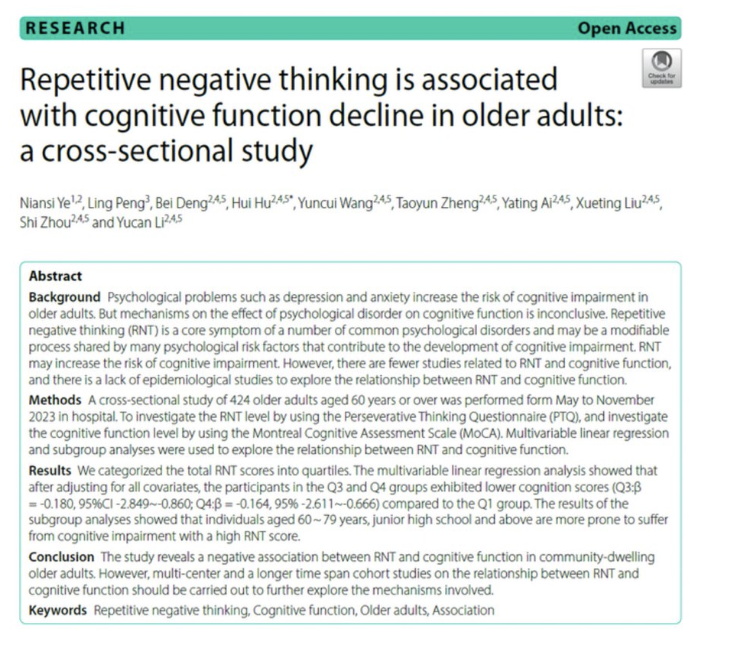
you need to be delusionally optimistic negative thinking poisons your brain and leads to congitive decline whereas positive thinking, and gaslighting yourself into thinking everything is amazing, ACTUALLY makes your life amazing too. you must be a silly goose
Carnivore Aurelius ©🥩 ☀️🦙 tweet media
English
260
5K
29.7K
1.2M