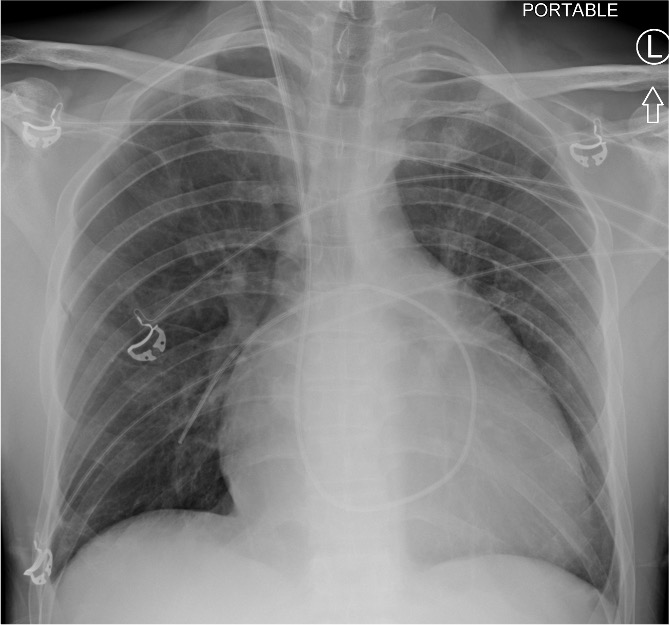

For the first time ever in the UK, we are bringing ECMO to the streets of London, offering hope to patients in cardiac arrest. londonsairambulance.org.uk/news-and-stori…
Mamoun
2.6K posts

@drmamoun01
Critical Care / Resuscitation. Interested in Trauma, Damage Control & Extra-Corporeal Support. #FOAMed #HEMS #ECMO #ECLS #NHS - views my own.

For the first time ever in the UK, we are bringing ECMO to the streets of London, offering hope to patients in cardiac arrest. londonsairambulance.org.uk/news-and-stori…


NHS trusts across England that have introduced the new standardised uniform report positive feedback, but take-up is low – we look at how many staff are now wearing the garments. The new uniform is optional and organisations are not obliged to adopt it. rcni.com/nursing-standa…


Ring Block for the Knee (Dr Palbha Jain)


🚑 3 years of ACCESS London Supporting critical care transfers across London and beyond 📷 130,000+ km travelled 📷 Supported by over 500 healthcare professionals #CriticalCare #NHS

🤓🫀We keep asking: “What’s the cardiac output?” But maybe the better question is: “How efficiently is the heart working?” In septic shock, we often focus on: Preload Cardiac output MAP But we forget something fundamental: 👉 The heart doesn’t work alone. 👉 It works against the arterial system. 1. The missing concept: Ventriculo–arterial coupling (LVAC) LVAC = interaction between: Ees → contractility Ea → arterial load 👉 Expressed as Ea / Ees This ratio reflects: How efficiently the heart converts energy into forward flow 2. What is “normal”? LVAC ≈ 0.5 → optimal efficiency LVAC ≈ 1 → maximal stroke work LVAC > 1 → uncoupling (inefficient system) But here’s the twist: 👉 In septic shock, LVAC is often >1 👉 Not just due to vasodilation—but also myocardial dysfunction 3. Why this matters clinically Two patients can have: Same MAP Same CO But completely different physiology: ✔ One → efficient coupling ❌ One → energy wasted, poor flow generation 4. The key insight Septic shock is NOT just: ❌ “low preload” ❌ “vasodilation” It is: 👉 A mismatch between heart and arterial system 5. Therapy changes the balance Fluids → may improve coupling (↓ LVAC) Norepinephrine → can improve OR worsen coupling Inotropes → target Ees Important: 👉 Increasing MAP ≠ improving flow 👉 Increasing pressure can worsen afterload 6. The most interesting part From the data: LVAC >1 can predict response to norepinephrine But improving LVAC ≠ guaranteed tissue perfusion and outcomes follow a U-shaped curve 👉 Both too high AND too low LVAC can be harmful 7. The limitation we must respect Even if you “optimize” LVAC: 👉 Microcirculation may still be impaired 👉 Lactate may still rise 👉 Shock may persist Because: Macro ≠ micro 🤓Final message We need to move from: ❌ “Fix the blood pressure” To: ✅ “Optimize the interaction between heart and vessels” LVAC doesn’t replace hemodynamics. It completes it. 📃Reference Caicedo Ruiz JD et al. Journal of Critical Care, 2026. doi.org/10.1016/j.jcrc…

🚨 ACCESS Mega Sim Day 🚨 High-fidelity, high-pressure, real-world simulation in action today with the ACCESS team. This isn’t routine ICU — it’s ICU in motion. 👏 Huge well done to everyone undertaking the sim today — pushing boundaries!


Totally amped to announce HR26 registration is open! Foundations Reimagined. Lets rake everyone’s game to another level!!! thinkingcriticalcare.com/2026/01/16/fou…

Today marked an important step forward in US resuscitation science! The Center for Resuscitation Medicine’s MMRC completed the first Helicopter EMS–facilitated extracorporeal cardiopulmonary resuscitation (ECPR) in the United States!