DrNicW 🥂 I am fearless + therefore powerful 💪

2.7K posts

DrNicW 🥂 I am fearless + therefore powerful 💪 banner
DrNicW 🥂 I am fearless + therefore powerful 💪

DrNicW 🥂 I am fearless + therefore powerful 💪

@drnicwatson

#Orthogeriatrics, dreamer, enthusiastic grower of funny coloured vegetables. Hat inclusive #radfem #Malapert Incandescent with rage- ♀️Heretic #lactofermented

South West, England Katılım Mayıs 2015
589 Takip Edilen464 Takipçiler
Nomcebo Mkhaliphi
Nomcebo Mkhaliphi@nomcebo_mkhali·
If it is all possible for anyone, I would like to request any donations like bras, clothes, socks, shoes, bags, earrings etc
English
51
188
483
20.8K
Nomcebo Mkhaliphi
Nomcebo Mkhaliphi@nomcebo_mkhali·
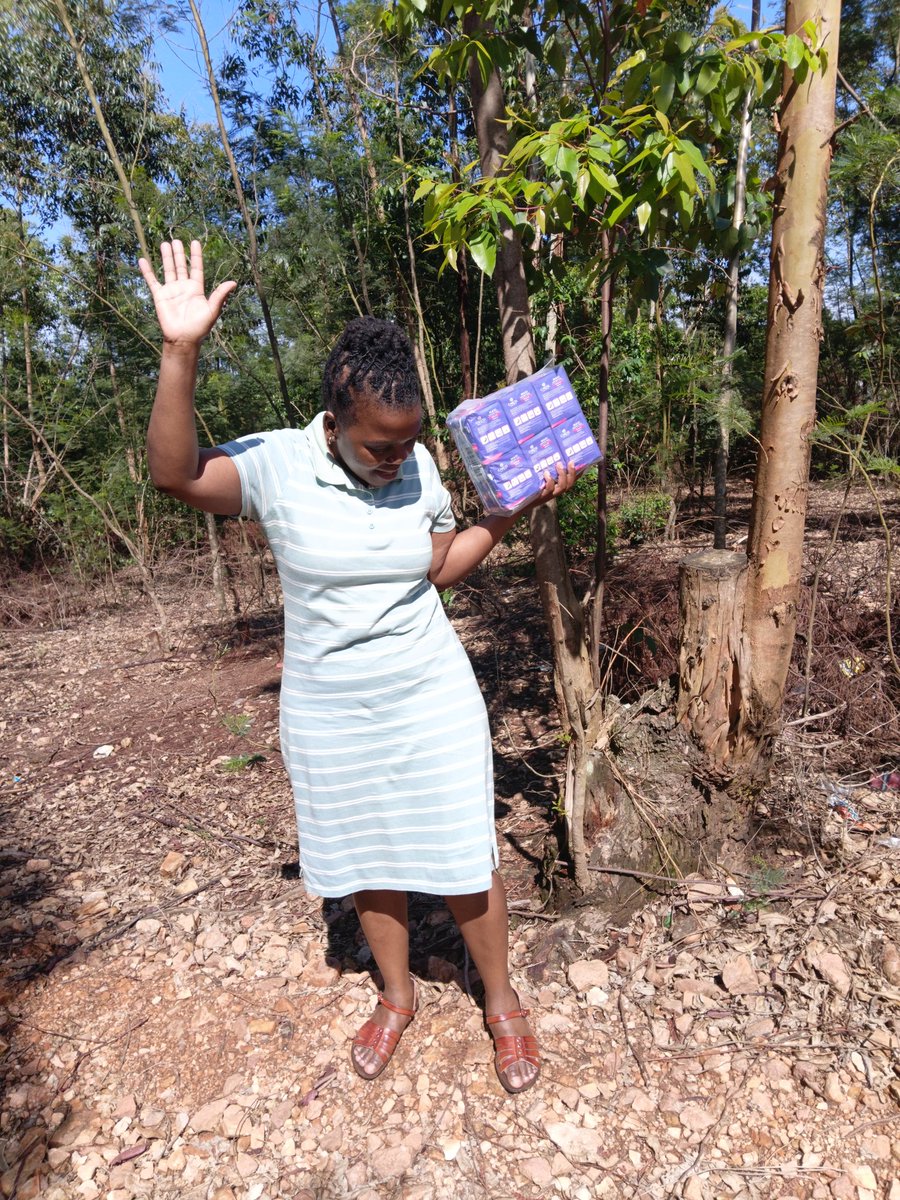
High five for the love you ALL show me without even knowing how much I need it. Remember that PERIODS are normal and nothing to be ashamed of ❤️
Nomcebo Mkhaliphi tweet media
English
13
58
431
2.9K
VeryBritishProblems
VeryBritishProblems@SoVeryBritish·
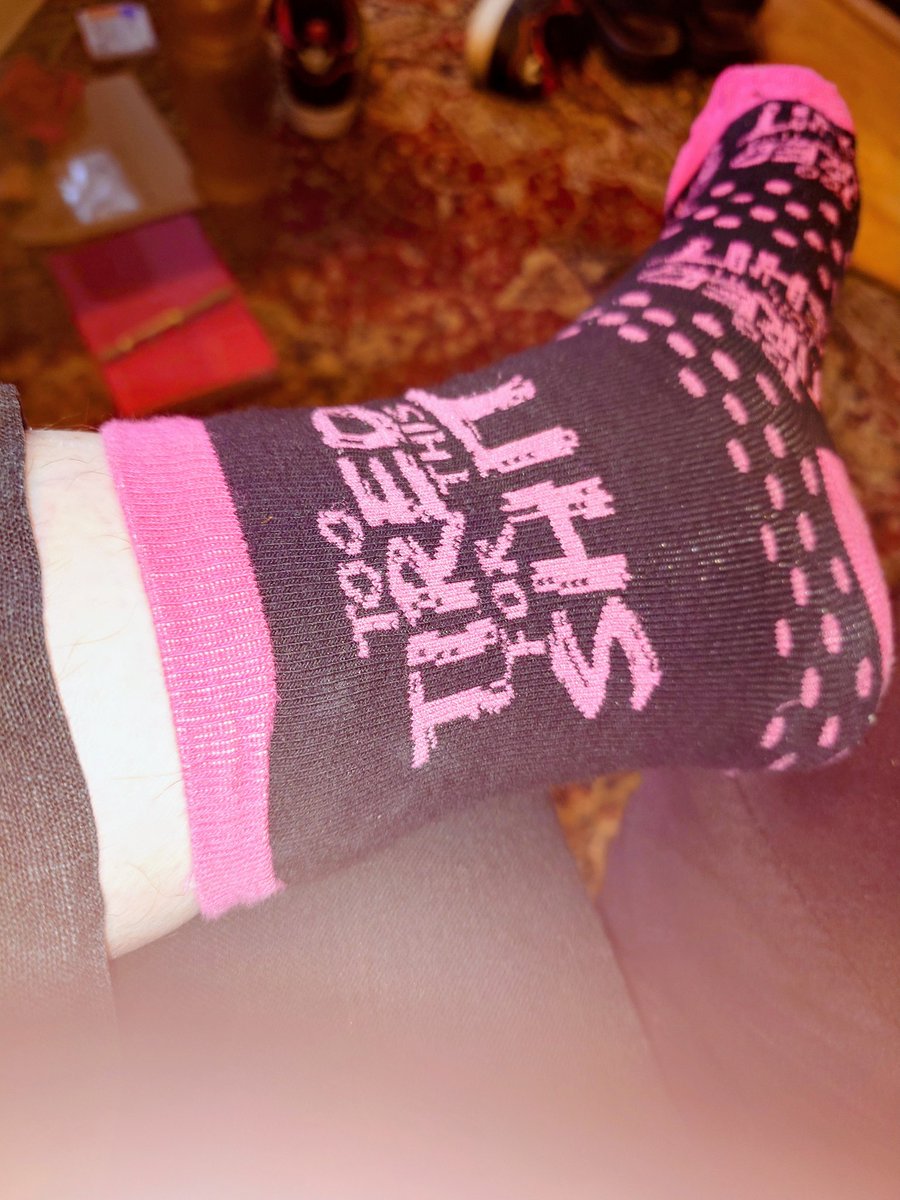
Feel free to post your new Christmas socks in the comments. Let’s see if we can get a new socks thread going 😂
VeryBritishProblems tweet media
English
133
55
810
94.1K
Lily Craven
Lily Craven@TheAttagirls·
Woman of the Day suffragette Margaret Travers Symons (1879-1951) of London made history OTD in 1908 when she became the first woman after Elizabeth I to speak in the House of Commons. It broke all the rules and embarrassed her boss but she had a very clear message to deliver to the male-only House. In 1906, Margaret became secretary to Labour MP Keir Hardie, a friend of her father’s, and played a major role in running his household. She held the post for at least six years but it was another family friend she approached on 13 October 1908 - Labour MP Idris Howell - to seek a private tour of the House of Commons. She wrote her name on one of the cards that attendants used to convey messages to MPs and sent it to him as he dined with a friend. Women could neither be seen nor heard in the House but he agreed to escort Margaret to a peephole through which she might be permitted to peer into the main chamber. Let’s think about that for a moment. The first supposedly “representative Parliament” in this country was the all-male Model Parliament convened in 1295 by Edward I. For the whole of its then 613 year history, no female presence had ever been tolerated in the Mother of Parliaments other than Elizabeth I in 1601. (No British monarch has entered the House of Commons since 1642 when Charles I attempted to arrest MPs). It remained an exclusively all-male preserve for over six centuries yet it made the laws that affected men and women. In fact, it made laws that applied ONLY to women while scarcely troubling itself to even hear a woman’s voice. Do you call that “representative”? I don’t. If the timing of Margaret’s protest was accidental, it was a striking coincidence. Earlier that day, Emmeline Pankhurst of the Women’s Social and Political Union presided over a Women’s Parliament meeting at Caxton Hall and was planning to lead suffragettes in rushing the House as a protest against the refusal to consider women’s suffrage. The police turned out in force - between 7,000-8,000 officers, of whom 1000 were mounted on police horses - far outnumbering the women attending the meeting. A newspaper report of the time recorded that the procession of thirteen women moved along Victoria Street and “the police had the greatest difficulty preventing the women from being swept off their feet”. When informed that their deputation would not be allowed to reach the House of Commons itself, the suffragettes “commenced to grapple with the police [Seriously? Do you believe that?] but the scuffle lasted a few moments only.” Each woman was subdued by two policemen and “conveyed to the Westminster police station in Rochester Row. Altogether, 24 women and 20 men were arrested.” Margaret took advantage of the kerfuffle outside to break away from her male escort into the main chamber of the HoC where a debate was in progress on a bill about issues related to children. According to the newspaper: “In an instant she darted past him, pushed through the swing doors, and rushed into the House” shouting “Leave off discussing the children’s question and attend to the women question first. Votes for Women!” “It was not a long speech, but it had a great effect. The daring suffragette was pursued by one of the biggest of the attendants who grasped her around the waist and carried her into the lobby. She continued to demand Votes for Women and to struggle with her capture, but she did not yell, and for this, Members were thankful.” Margaret was removed from the building but not arrested. The Met has no jurisdiction in the Houses of Parliament. The Speaker however imposed a sanction excluding her from the House for two years, extended by area to the precincts of Westminster Abbey. This caused a bit of a problem in terms of doing her job. Margaret had to work on Keir Hardie's correspondence at his flat off Fetter Lane (he was much embarrassed by her protest but they managed to remain on good terms). The Independent Labour Party also met at the flat. She was eventually arrested in December 1911 for obstruction, another event that embarrassed Keir Hardie, but she remained his secretary until at least the following year. Margaret died sometime after 1951, exact date unknown. She divorced her husband in 1910 - in those days, this required a private Act of Parliament, which was costly - but it was granted on the grounds of his adultery. I especially enjoyed reading the letter Margaret sent to Idris Howell later on the evening of her historic protest: Dear Mr Idris, My action this evening must have surprised you. It surprised me. I had no intention of calling you out. What I did was on the spur at the moment and it would not have occurred to me to call you out had I not known of your enthusiasm for the women’s cause. If I have caused you any annoyance, I am very sorry and I can only repeat that as far as *you* are concerned, what I did was entirely unpremeditated. Yours sincerely, Margaret Travers Symons It’s a cleverly written letter, one I think you could reasonably file in either the “It’s better to seek forgiveness than permission” drawer or the “Sorry, Not Sorry” drawer - take your pick. I’m going with “Sorry, Not Sorry”.
Lily Craven tweet media
English
20
150
437
16.3K
Lily Craven
Lily Craven@TheAttagirls·
Woman of the Day mathematician Dorothy Vaughan, born OTD in 1910 in Missouri, the first African American manager at NASA and so expert in FORTRAN - a frontrunner of electronic computer programming - that once she’d taught herself, she taught other women. Dorothy was a natural at maths. She had a masters degree and spent twelve years teaching maths at a time when just 2% of African American women had degrees and 60% of those became teachers, then considered the pinnacle of achievement, but she needed to earn more money to support her family. In early 1943, two job ads at the post office caught her eye: one for a laundry which practically guaranteed a job, and one calling for mathematicians at the National Advisory Committee for Aeronautics, a federal agency at Langley. She thought it through. NACA was unlikely to accept her but if she didn’t give it a go, she’d never know. She applied for both. NACA’s application was more detailed: employment history, educational qualifications, languages spoken (French), any foreign travel (No), would you work abroad? (No), would you work in Washington DC? (Yes), how soon could you start? Dorothy didn’t even need to think about that. “48 hours. I can be ready to go within 48 hours.” The USA was on the brink of WW2. Aircraft production had ramped up from 3,000 per year to 50,000 per year. Three-shift, six-day-a-week operations needed specialist staff urgently: physicists and mathematicians to research wind tunnel and flight data and calculate lift and drag, friction and flow, quickly and accurately with little more than slide rules and graph paper. What NACA needed was women. President Roosevelt had signed Executive Order 8802 on 25 June 1941 ordering desegregation of the defence industry and Executive Order 9346 on 23 May 1943 creating the Fair Employment Practices Committee so the way was clear to hire women of any ethnicity but in Virginia, Jim Crow laws prevailed. The solution was separate workspaces, canteens and restrooms. A white woman was placed in charge of what was known as the Colored Computers, although many of NACA’s engineers were Northern and couldn’t care less about race. The maths expertise was what they wanted. Dorothy joined the West Computers and got stuck in, calculating the variables affecting the drag and lift of aircraft. It was crucial to the war effort with bomber planes carrying heavier loads further and faster than any in the history of the world. Yet no matter how important her work was to the country of her birth and despite the presidential executive order, Virgina state law held. She was set apart from most of her co-workers: separate restrooms and cafeterias designated “white” or “colored.” In the NACA cafeteria, white people could choose their meals and sit in a dining room. African Americans had to ask a cafeteria worker for what they wanted and take their food back to their desks. In March 1949, her white supervisor left. NACA deliberated for six weeks but the truth is, Dorothy was the best candidate. It named her as acting head of West Computing but dithered for nearly two years in the hope that a suitable white candidate might present herself, even though by this time Dorothy had made the post her own and was running with it. That included intervening on pay and promotions on behalf of her Section. Eventually, in January 1951, this memo was issued: “Effective this date, Dorothy J. Vaughan, who has been acting head of the West Area Computers unit, is hereby appointed head of that unit.” Dorothy - the first African American to be promoted to manager at NACA, before desegregation and before NACA became NASA in 1958 - retired in 1971 at the age of 61 but she left a fine legacy: her work on the SCOUT Launch Vehicle Program that sent the USA’s first satellites into space, her work on John Glenn’s launch into orbit, and the many other women at NASA she trained and mentored. “I changed what I could, and what I couldn’t, I endured.”
Lily Craven tweet media
English
27
191
582
12.6K
Dr Helgi
Dr Helgi@doctorhelgi·
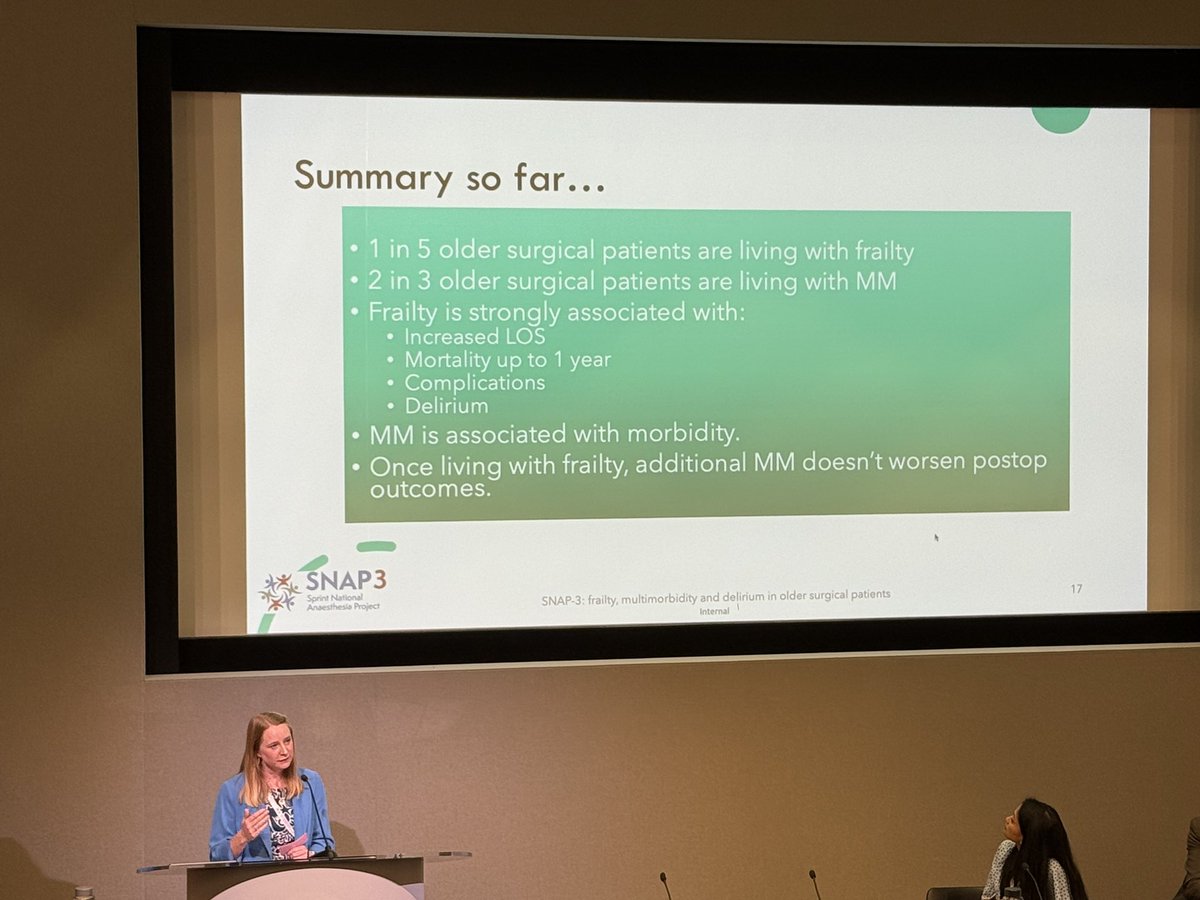
Good morning everyone. I’m at the #BGSconf this morning talking about delirium. Caught @cswarbrick1’s excellent talk on the impact of delirium and the results of Snap3. Delirium increases length of stay, mortality and all complications.
Dr Helgi tweet media
English
2
4
14
2.2K
Nehal Yemula
Nehal Yemula@DoctorYemula·
Today, SHO life complete ✅ Tomorrow, the medical registrar 🫠
English
12
10
400
28.5K
DrNicW 🥂 I am fearless + therefore powerful 💪
It's almost like terms/conditions/work-life balance and actual fucking training posts aren't what most resident doctors (that I have spoken to) really want... The focus on pay from @BMAResidents is utterly tone deaf and self defeating in the current climate (dons hard hat)
Tim Ricketts@timricketts_

@kayamayj Yeah locuming isn’t on. Worth remembering that IMT3s are also in a dodgy position. It’s another bottleneck, and many won’t have jobs lined up.

English
1
0
2
557
DrNicW 🥂 I am fearless + therefore powerful 💪
"I'm very proud of myself because I didn't get blown into a tree" What a fucking ♀️
Lily Craven@TheAttagirls

Woman of the Day award-winning war photojournalist Catherine Leroy of France, died OTD in 2006, the only woman to make a combat parachute jump with US forces in Vietnam. She spent more time at the front — three weeks per month — than any other woman journalist in Vietnam and she did that for over two years. Born in Paris in 1944, 22 year old Cathy flew to Laos as a freelancer on a one-way ticket with a Leica camera and $200 in her pocket. No work lined up, no contracts, very little by way of a portfolio, she reasoned that if she could convince US forces to accept her, she could eat rations and sleep in the countryside alongside them but first, she needed accreditation. Cathy approached the Associated Press editor responsible for scores of photojournalists filing out of Saigon: as many as 600, but only 20 or 30 freelance and none of those were women. He told her to go and find some work that would convince him she was up to the job. So she did. “I was making $15 a photograph. There was a great appetite for this work.” What she did have was a licence as a qualified parachutist with a record of 84 successful jumps. Military Assistance Command Vietnam granted her credentials and the commanding officer agreed to let her jump with the 173rd Airborne Brigade during Operation Junction City - an 82-day combined US/South Vietnam military operation against the Viet Cong - on 22 February 1967. He gave her just two days’ notice. “My size 6 foot was swimming in my size 7 jungle boots, the smallest they had.” Despite persistent rumours that she’d only got permission because she’d slept with a colonel (men never have to put up with such insulting sexist nonsense but women in combat zones face it all the time), she was the seventh to jump from the seventh plane and shot photos from the air which AP sent out. Just 5’ tall and weighing six stone (85 lbs), she had to be weighed down so as not to be blown away. “I’m very proud of myself because I didn’t jump into a tree.” Embedded with the US Marines, Cathy accompanied them on countless operations, sharing their everyday life in the heat and mud to produce extraordinary photographs depicting their gruelling lives in battle conditions. “In Vietnam, most of the time it was extremely boring. Exhausting and boring. You walked for miles through rice paddies or jungle — walking, crawling, in the most unbearable circumstances. And nothing was happening. And then suddenly all hell would break loose.” Her photos captured the human face of war. One of her most famous photographs, “Corpsman in Anguish, 1967”, is a triptych of split-second shots showing an American soldier with both hands on the chest of his comrade trying to staunch the blood, trying to find a heartbeat, realising it was too late. “When you look at war photographs, it’s a silent moment of eternity. But for me, it is haunted by sound, a deafening sound.” On 19 May 1967, she went on patrol with a marine unit in an open rice paddy in the demilitarised zone near Con Thien and was hit in an ambush by mortar fire. Thirty-five pieces of shrapnel pierced her body, broke her jaw and destroyed her cameras, which took the brunt and saved her life. She had to be evacuated by tank instead of helicopter but six weeks later, she was back in the field. When the all-out Têt Offensive began on 30 January 1968 (Têt is the Vietnamese New Year), Cathy was on holiday at My Khe Beach near Da Nang but travelled to Hue with another French journalist because they’d “heard there was action.” They sheltered with some refugees in the cathedral but were asked to leave because the presence of foreigners made the refugees nervous. Capture by the Viet Cong was inevitable. “Five or six men, all carrying guns, jumped on us, took my camera, tied our hands behind our backs.” Realising that their captives were French, not American, the North Vietnamese colonel gave their cameras back and allowed them to interview and photograph him and his soldiers after Cathy persuaded him that the world was only hearing one side of the story. Her essay became the byline cover story in Life magazine on 16 February 1968. “It was an extraordinary experience for me. I had seen many North Vietnamese prisoners, but they were always in great fear and great pain. This was the first time, suddenly, that their humanity was in front of me.” Cathy finally went home to Paris in December 1968. After covering the war for just over two years, she described herself as “extremely shell-shocked” when she left. “It took years to get my head back together because I was filled with the sound of death, and the smell of death...I was extremely cool under fire. I didn’t show anything. But when I went back to Saigon…the horror of it would hit me.” Her pictures were published on the pages of the world’s most prominent magazines and she was a trailblazer for women photographers working today in conflict zones around the world. “I always felt that it was a great privilege to be with the soldiers, to be accepted, to spend a couple of days or maybe a week with them. But I could leave any time, and they couldn’t. Within 48 hours I would be in Saigon, have a long shower and rest. I would be in a French restaurant where the food was nice, where the wine was decent, and I always felt guilty inside. To me, it was as if I was a deserter. Which is a bit ridiculous, but it’s true.”


Bristol, England 🇬🇧 English
0
0
1
87
Lily Craven
Lily Craven@TheAttagirls·
Woman of the Day bookseller and printer Elizabeth Mallet of London (date of birth unknown but she married in 1672 and died in 1706) who published the world’s first daily newspaper in 1702. Until 1695, the Stationers' Company held a monopoly: nothing could be printed without its approval. This was conferred by the Licensing of the Press Act 1662, intended to prevent the "frequent Abuses in printing seditious treasonable and unlicensed Bookes and Pamphlets and for regulating of Printing and Printing Presses." The only homegrown exception was the London Gazette (now just The Gazette), founded in 1675 as Britain’s official public record. Foreign broadsheets and pamphlets could not be restricted by the Stationers' Company, which is why “corantos” – digests of foreign news – were printed in Amsterdam. The word comes from the French “courant” (running), meaning periodicals rather than one-off broadsheets. So what changed in 1695? The Act expired. It created a free-for-all, yet no one thought to capitalise on it by producing a daily newspaper until Elizabeth came along. She was already a businesswoman, operating a book-making business and running two printing presses with her husband. They worked from their home in Blackhorse Alley just off Fleet Street and specialised in “last dying speeches”, the last words of prisoners before they were hanged at Tyburn. I’m not entirely sure why the public might be so captivated by the final words of criminals unless they thought great truths might be revealed. (Charles Darwin - not a criminal, I hasten to add - was supposed to have renounced his Theory of Relativity in favour of God in his dying moments but the supposed witness to this was nowhere near at the time). Still, there’s no accounting for taste. Elizabeth and MrE did a roaring trade. He died in 1683 leaving Elizabeth a widow, albeit one with an established business. She took on her son as apprentice and showed him the ropes but after ten years, he still hadn’t made a go of it so in 1693, she took over again, printing serial publications and “sensational tracts”. On 11 March 1702 - it was a Saturday, by the way - Elizabeth published The Daily Courant, a single sheet with two columns providing a purely factual digest of foreign news from papers abroad. By focusing on international affairs, she hoped to evade government attention and described herself as “E. Mallett…Next door to the King's Arms Tavern by the Ditch-side near Fleet Bridge" so no one could snipe that it was the work of a woman. Her editorial standards were clear though. The Daily Courant was a rational newspaper dealing in facts not opinions so as to "spare the public at least half the impertinences which the ordinary papers contain" and she credited her readers with more than half a brain: “Nor will [the Author] take it upon himself to give any Comments or Conjectures of his own, but will relate only Matter of Fact; supposing other People to have Sense enough to make Reflections for themselves." Today’s print media could learn a thing or two from her. If The Daily Courant was around today, I’d buy it. Elizabeth published her newspaper for forty days and then sold it as a going concern to the future editor of the The Spectator, Samuel Buckley. It remained in print for 33 years when it merged with another newspaper but by that time, the idea had taken flight and Fleet Street was established as the home of the newspaper industry. There are at least two plaques to The Daily Courant. They don’t mention the name of the woman who started it. Can’t think why.
Lily Craven tweet media
English
20
91
232
6.2K