
dsaccon
139 posts
dsaccon
@dsaccon
First-principles maximalist @megacode_ai
Katılım Ocak 2009
617 Takip Edilen45 Takipçiler

The US government, citing national security authorities, has issued an export control directive to suspend all access to Fable 5 and Mythos 5 by any foreign national, whether inside or outside the United States, including foreign national Anthropic employees.
The net effect of this order is that we must abruptly disable Fable 5 and Mythos 5 for all our customers to ensure compliance.
Access to all other Claude models is not affected.
We apologize for this disruption to our customers. We believe this is a misunderstanding and are working to restore access as soon as possible.
Read our full statement: anthropic.com/news/fable-myt…
English

We've been sold a lie: 'better model = better agent'
But frontier teams see something different:
→ GPT-5 still fails on 60% of long coding tasks
→ Same model + better harness = 10× improvement
→ No new weights required
The bottleneck isn't intelligence. It's infrastructure."
"This is called the 'binding constraint thesis':
Your agent's ceiling = MIN(model capability, harness quality)
Right now? The harness is the binding constraint.
Think of it like this: a Ferrari engine in a go-kart frame.
That's your GPT-5 wrapped in a prompt string."
"Production teams don't think in 'prompts.'
They think in 7 infrastructure layers:
• Execution (sandboxes)
• Tools (protocols)
• Context (memory)
• Lifecycle (orchestration)
• Observability (ops)
• Verification (eval)
• Governance (security)
This is ETCLOVG. Your new mental model."
Layer 1: Execution Environment
Your agent needs a sandbox that can't be escaped.
Poor harness: Agent runs arbitrary code → prompt injection → game over
Good harness: Docker/microVM isolation + reset on failure
OpenHands gained +13.7pp on benchmarks from sandbox design alone."
Layer 3: Context & Memory
Models 'lose information in the middle' (U-shaped attention).
Poor harness: Dumps everything into one 100K token context
Good harness:
Short-term (scratch)
Mid-term (KV-cache hits 70%+)
Long-term (vector retrieval)
Cost drops 30-90%."
Layer 6: Verification
You can't improve what you can't measure.
Poor harness: 'It failed. Try again?'
Good harness:
Outcome metrics (did it work?)
Trajectory analysis (where did it break?)
Attribution (model vs. tool vs. context?)
Turn failures into regression tests.
Layer 7: Governance
The forgotten layer. Also the most dangerous.
Poor harness: Agent has root access to everything
Good harness:
Declarative permissions (YAML constitutions)
Audit trails
Human-in-the-loop hooks
Anthropic's Claude now ships with constitutional AI baked in."
Every harness faces 3 fundamental trade-offs:
Cost ↔ Quality ↔ Speed (pick 2)
Capability ↔ Control (more power = more risk)
Harness Coupling (fix one layer, break another)
Great teams engineer across these tensions, not around them."
Here's the 80/20:
KV-cache-aware context design = biggest bang for buck.
→ Stable prompt prefixes
→ Append-only logs
→ Deterministic serialization
One team reported 10× cost reduction from reordering their prompt structure.
Same model. Same task. Different harness.
Hot take: As models get better, your harness should get simpler.
Right now we over-engineer because models are weak.
Future winners will:
Delete scaffolding
Trust the model more
Focus governance/observability
The best harness is the one you don't need.
Why doesn't research talk about this?
Because:
Papers measure models, not systems
Harness code is messy/proprietary
No shared vocabulary (until now)
Meanwhile practitioners at OpenAI/Anthropic quietly ship harness gains that dwarf model upgrades.
If you're building agents:
Map your stack to ETCLOVG (find the gaps)
Instrument observability first (you're flying blind)
Harden your sandbox (prompt injection is real)

English
@sdusteric Thanks, that writeup summarizes it well. At the end of the day it’s all about context engineering :)
English

@dsaccon Good call out. There are couple issues on the confidence level. I can only imagine hitting the balance between token usage and enough context is difficult.
github.com/rtk-ai/rtk/iss…
github.com/rtk-ai/rtk/iss…
English
rtk: a Rust CLI proxy that cuts Claude Code token usage by 60–90%.
It filters output from git, tests, lint, kubectl etc. before it hits the LLM context. A pre-bash hook reroutes commands like git status through rtk to strip redundant info. No workflow changes.
github.com/rtk-ai/rtk
English
@manasrnkar There’s lots of room for token usage optimization techniques and tools to emerge. Things like more efficient skills usage, model routing etc etc
English

I had exactly 3 conversations in the last 3 hours with engineering leaders who have blown through their token budgets for the year - and are actively asking their teams to “rightsize” token usage
Jaya Gupta@JayaGup10
English
@ttunguz Great overview. #7 - workflow optimization will be increasingly important as agent architectures get more complex. We are working on exactly this problem at @megacode_ai
English

The end of the software era is the beginning of the harness era.
The LLM is the smallest part of the system. The harness around it does the work.
7 components separate a demo from a production agent : 🧵

English


Something I've been thinking about - I am bullish on people (empowered by AI) increasing the visibility, legibility and accountability of their governments.
Historically, it is the governments that act to make society legible (e.g. "Seeing like a state" is the common reference), but with AI, society can dramatically improve its ability to do this in reverse. Government accountability has not been constrained by access (the various branches of government publish an enormous amount of data), it has been constrained by intelligence - the ability to process a lot of raw data, combine it with domain expertise and derive insights. As an example, the 4000-page omnibus bill is "transparent" in principle and in a legal sense, but certainly not in a practical sense for most people. There's a lot more like it: laws, spending bills, federal budgets, freedom of information act responses, lobbying disclosures... Only a few highly trained professionals (investigative journalists) could historically process this information. This bottleneck might dissolve - not only are the professionals further empowered, but a lot more people can participate.
Some examples to be precise: Detailed accounting of spending and budgets, diff tracking of legislation, individual voting trends w.r.t. stated positions or speeches, lobbying and influence (e.g. graph of lobbyist -> firm -> client -> legislator -> committee -> vote -> regulation), procurement and contracting, regulatory capture warning lights, judicial and legal patterns, campaign finance... Local governments might be even more interesting because the governed population is smaller so there is less national coverage: city council meetings, decisions around zoning, policing, schools, utilities...
Certainly, the same tools can easily cut the other way and it's worth being very mindful of that, but I lean optimistic overall that added participation, transparency and accountability will improve democratic, free societies.
(the quoted tweet is half-ish related, but inspired me to post some recent thoughts)
Harry Rushworth@Hrushworth
The British Government is a complicated beast. Dozens of departments, hundreds of public bodies, more corporations than one can count... Such is its complexity that there isn't an org chart for it. Well, there wasn't... Introducing ⚙️Machinery of Government⚙️
English
dsaccon retweetledi

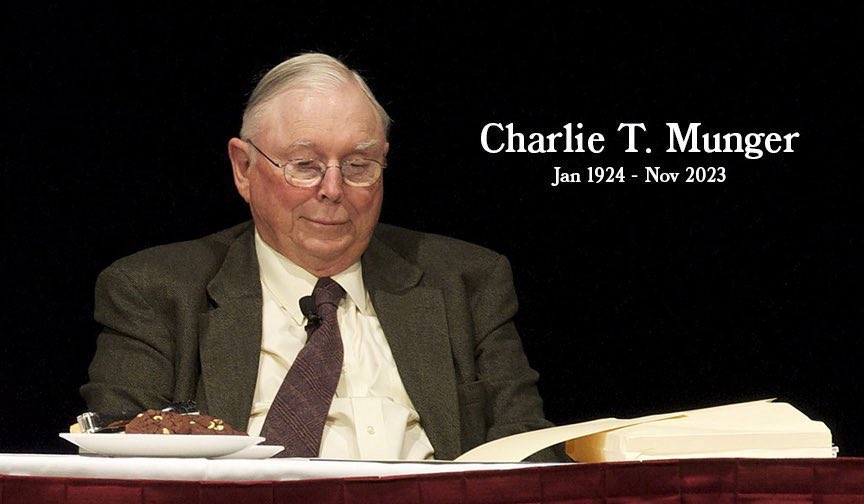
“Never, ever, tell anyone about your problems. 90% of the people really don't care. The other 10% are glad you have them.”
—Charlie Munger
English

In 1980 Singapore Airlines faced a major pilot strike. Here’s how PM Lee Kuan Yew dealt with it.
English

if you're a Solana builder, we welcome you with open arms — and have no expectation or desire that you move entirely to Base!
We want to give your assets access to the demand that is building on Base and to make that process as simple as humanly possible.
English
@AerodromeFi @base @solana @wagmiAlexander There are more people on that panel than there are validators on Base
English



@rumilyrics Might be worthwhile to consider how they are dealing with you
English


My biggest concern with crypto at the moment is having a large % of my portfolio in ETH and then looking back 10 years from now to realize that Ethereum is Linux instead of MacOS or Windows
English

There are child prodigies in chess, music and sports. Why are there no child prodigies in law?
English

You just sold your company for $100M.
What’s the first thing you buy?
English
@clairekart Neither, there have been tons of EVM-compatible L1s out there for many years, some with varying levels of success. None have had a material impact on Ethereum or Solana
English

Should I understand Monad as an Ethereum killer or a Solana killer?
Simple framing, which is it?
English
@svpino AI is amazing for coding. But when was the last time you saw a job posting for ‘Coder’ on LinkedIn? Those jobs all have a title of ‘Software Engineer/Developer’
Same as how AutoCAD didn’t put architects out of a job, engineers with AI tools are just going to be more productive
English