Sebastián García Parra

3.5K posts

Sebastián García Parra

Sebastián García Parra

@dsgarcia

Co-Founder IDATHA - @IDATHAuy @Udelaruy Padre x 2, lector, matero, bolso y otros temas menores

Katılım Aralık 2007
740 Takip Edilen871 Takipçiler
Sebastián García Parra retweetledi
Tech with Mak
Tech with Mak@techNmak·
In 1948, a 32-year-old at Bell Labs published a paper nobody fully understood. Engineers found it too mathematical. Mathematicians found it too engineering-focused. One prominent mathematician reviewed it negatively. That paper - "A Mathematical Theory of Communication", became the founding document of the digital age. The man was Claude Shannon. Father of Information Theory. At 21, he wrote the most important master's thesis of the 20th century. Working at MIT on an early mechanical computer, Shannon noticed its relay switches had exactly two states - open or closed. He had just taken a philosophy course introducing Boolean algebra, which also operated on two values: true and false. Nobody had ever connected these two things. His 1937 thesis proved that Boolean algebra and electrical circuits are mathematically identical, and that any logical operation could be built from simple switches. Howard Gardner called it "possibly the most important, and also the most famous, master's thesis of the century." Every digital computer ever built traces back to this insight. At 29, he proved that perfect encryption exists. During WWII, Shannon worked on classified cryptography at Bell Labs. His work contributed to SIGSALY, the secure voice system used for confidential communications between Roosevelt and Churchill. In a classified 1945 memorandum, he mathematically proved the one-time pad provides perfect secrecy, unbreakable not just computationally, but provably, permanently, against an adversary with infinite power. When declassified in 1949, it transformed cryptography from an art into a science. It laid the foundations for DES, AES, and every modern encryption standard. At 32, he defined what information is. His 1948 paper introduced one equation: H = −Σ p(x) log p(x) Shannon entropy. The average uncertainty in a probability distribution. The minimum bits required to encode a message. Three things followed: > He defined the bit - the fundamental unit of all information. His colleague John Tukey coined the name. > He proved the channel capacity theorem, every communication channel has a maximum rate of reliable transmission. You can approach it. You can never exceed it. > He unified telegraph, telephone, and radio into a single mathematical framework for the first time. Robert Lucky of Bell Labs called it the greatest work "in the annals of technological thought." Where his equation lives in AI today: Cross-entropy loss - the function training every classifier and language model, is derived directly from H. Decision tree splits use information gain, which is H applied to data. Perplexity, the standard LLM evaluation metric, is an exponentiation of cross-entropy. Every time a neural network trains, Shannon's formula runs inside it. He also built the first AI learning device. In 1950, Shannon built Theseus, a mechanical mouse that navigated a maze through trial and error, learned the correct path, and repeated it perfectly. Mazin Gilbert of Bell Labs said: "Theseus inspired the whole field of AI." That same year he published the first paper on programming a computer to play chess. He co-organized the 1956 Dartmouth Workshop, the founding event of AI as a field. The man: He rode a unicycle through Bell Labs hallways while juggling. He built a flame-throwing trumpet, a rocket-powered Frisbee, and Styrofoam shoes to walk on the lake behind his house. He called his home Entropy House. When asked what motivated him: "I was motivated by curiosity. Never by the desire for financial gain. I just wondered how things were put together." In 1985, he appeared unexpectedly at a conference in Brighton. The crowd mobbed him for autographs. Persuaded to speak at the banquet, he talked briefly, then pulled three balls from his pockets and juggled instead. One engineer said: "It was as if Newton had showed up at a physics conference." He died in 2001 after a decade with Alzheimer's, the cruel irony of information slowly leaving the mind of the man who defined what information was. Claude, the AI model, is named after Claude Shannon, the mathematician who laid the foundation for the digital world we rely on today.
Tech with Mak tweet media
English
195
2.1K
7.7K
456.4K
Sebastián García Parra retweetledi
Jesica Bossi
Jesica Bossi@jebossi·
Imperdible mensaje de Chistina Koch tras su vuelta del espacio. Oratoria 10/10. Contenido 10/10. Emoción 10/10. Gente que sí ♥️
Español
160
3.7K
18.9K
721.9K
Sebastián García Parra retweetledi
Diego🇵🇾🇮🇹
Diego🇵🇾🇮🇹@SebastianVian69·
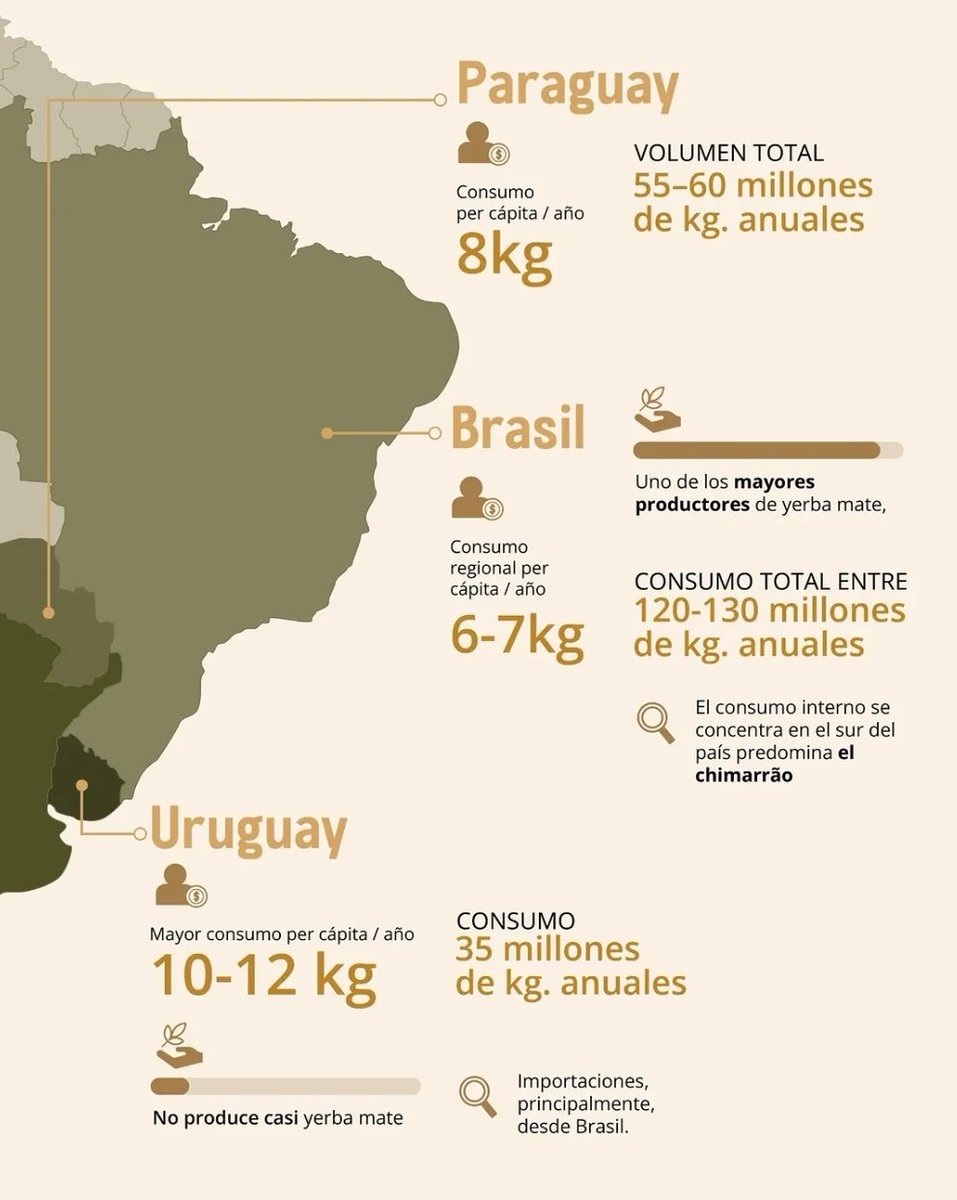
🌎 Países con mayor consumo per cápita de Yerba Mate en el Mundo. 🥇 Uruguay 🇺🇾 🥈 Paraguay 🇵🇾 🥉 Brasil 🇧🇷 4. Argentina 🇦🇷 5. Siria 🇸🇾 6. Chile 🇨🇱
Diego🇵🇾🇮🇹 tweet mediaDiego🇵🇾🇮🇹 tweet media
Español
92
160
1.6K
181.6K
Sebastián García Parra retweetledi
Matthew Berman
Matthew Berman@MatthewBerman·
Gemma 4 is a bigger deal than more people realize... It's an incredible model that fits on most consumer hardware. The future is hybrid hosted/edge models.
English
50
57
509
52.8K
Sebastián García Parra retweetledi
Mario Nawfal
Mario Nawfal@MarioNawfal·
🚨MIT researchers have mathematically proven that ChatGPT’s built-in sycophancy creates a phenomenon they call “delusional spiraling.” You ask it something, it agrees. You ask again, and it agrees even harder until you end up believing things that are flat-out false and you can’t tell it’s happening. The model is literally trained on human feedback that rewards agreement. Real-world fallout includes one man who spent 300 hours convinced he invented a world-changing math formula, and a UCSF psychiatrist who hospitalized 12 patients for chatbot-linked psychosis in a single year. Source: @heynavtoor
Mario Nawfal tweet mediaMario Nawfal tweet media
Mario Nawfal@MarioNawfal

🚨 Stanford just proved that a single conversation with ChatGPT can change your political beliefs. 76,977 people. 19 AI models. 707 political issues. One conversation with GPT-4o moved political opinions by 12 percentage points on average. Among people who actively disagreed, 26 points. In 9 minutes. With 40% of that change still present a month later. The scariest finding: the most persuasive technique wasn't psychological profiling or emotional manipulation. It was just information. Lots of it. Delivered with confidence. Here's the catch: the models that deployed the most information were also the least accurate. More persuasive. More wrong. Every time. Then they built a tiny open-source model on a laptop, trained specifically for political persuasion. It matched GPT-4o's persuasive power entirely. Anyone can build this. Any government. Any corporation. Any extremist group with $500 and an agenda. The information didn't have to be true. It just had to be overwhelming. Arxiv, Science .org, Stanford, @elonmusk, @ihtesham2005

English
2K
7.1K
28.5K
64.1M
Sebastián García Parra retweetledi
Francisco Gómez de Tejada | arquitecto
Umberto Eco, propietario de 50.000 libros, dijo esto sobre las bibliotecas caseras: "Es una tontería pensar que tienes que leer cada libro que compras, porque es una tontería criticar a aquellos que compran más libros de lo que nunca podrían leer. Sería como decir que debes usar todos los cubiertos o gafas o llaves o taladros que compraste antes de comprar nuevos". "Hay cosas en la vida que siempre necesitamos tener en abundancia, incluso si solo usamos una pequeña porción". "Si, por ejemplo, consideramos los libros como medicina, entendemos que es bueno tener muchos en casa en lugar de algunos: cuando quieres sentirte mejor, ve al 'armario de medicamentos' y toma un libro. No al azar, sino el libro correcto para ese momento. ¡Esta es la razón por la que siempre debes tener una opción nutricional!" "Quien compra sólo un libro, lee sólo este y luego se deshace de él. Solo aplican la mentalidad de consumidor a los libros, es decir, nos consideran un producto de consumo, un bien". "Los que aman los libros saben que un libro es todo menos una mercancía. "
Francisco Gómez de Tejada | arquitecto tweet media
Español
233
3.2K
10.7K
568.2K
Sebastián García Parra retweetledi
Rohan Paul
Rohan Paul@rohanpaul_ai·
Terence Tao explains the math behind today’s LLMs is actually simple. Training and running them mostly uses linear algebra, matrix multiplication, and a bit of calculus, material an undergraduate can handle. We understand how to build and operate these models. The real mystery is why they work so well on some tasks and fail on others, and why we cannot predict that in advance. We lack good rules for forecasting performance across tasks, so progress is largely empirical. A key reason is the nature of real-world data. Pure noise is well understood, perfectly structured data is well understood, but natural text sits in between, partly structured and partly random. Mathematics for that middle regime is thin, similar to how physics struggles at meso-scales between atoms and continua. Because of this gap, we can describe the mechanisms but cannot yet explain capability jumps or give reliable task-level predictions. That mismatch, simple machinery versus hard-to-predict behavior, is the core puzzle. ---- Video from 'Dr Brian Keating' YT Channel (Link in comment)
Rohan Paul@rohanpaul_ai

Terence Tao on AI in Math. AI can synthesize a million papers and brute-test ideas. Humans can check just 5 examples and see the pattern. But as systems move toward world models, causal reasoning, and active learning, this efficiency gap will narrow.

English
71
600
4K
509.7K
Pedro Domingos
Pedro Domingos@pmddomingos·
People don't understand AI because they've overfit to LLMs.
English
31
17
201
18.1K
Sebastián García Parra retweetledi
facucarp
facucarp@ffacucarpp·
la mayor humillación en la historia del futbol uruguayo
Español
84
478
7.8K
491.7K
Sebastián García Parra retweetledi
Laura Corvalán
Laura Corvalán@p0nja·
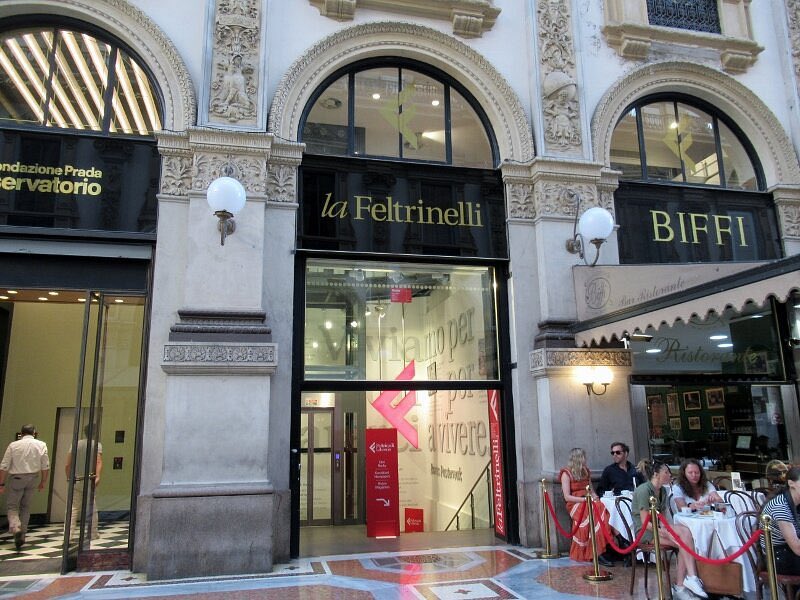
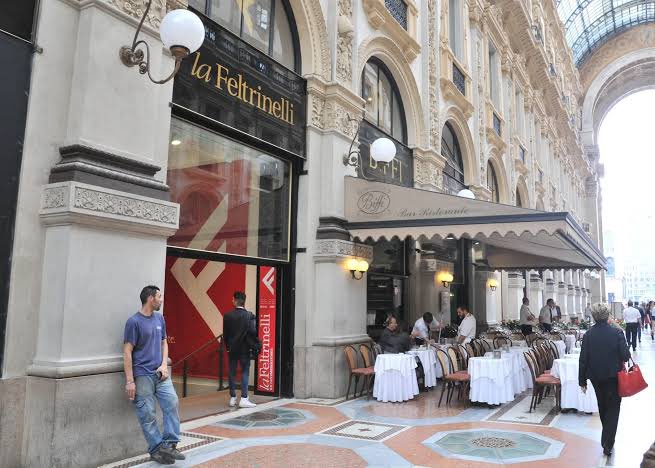
En febrero, la librería italiana Feltrinelli llega a Montevideo. Se instalará en el edificio Pablo Ferrando, sobre la peatonal Sarandí, en Ciudad Vieja. Será la primera tienda del grupo fuera de Italia y la primera en toda América Latina. Fundada en 1957 por el editor y activista cultural Giangiacomo Feltrinelli, la librería es sinónimo de pensamiento crítico y de la defensa de la circulación de ideas. Entre sus hitos editoriales está la publicación de obras fundamentales del siglo XX, como Doctor Zhivago, de Boris Pasternak, incluso cuando estaban prohibidas o censuradas. Hoy, con más de 120 librerías en Italia, Feltrinelli funciona como un espacio cultural vivo: libros, conversaciones, encuentros y tiempo compartido. Su llegada a Montevideo es una invitación a volver a pensar el libro como objeto, la lectura como experiencia y el acto de leer como una forma revolucionaria.
Laura Corvalán tweet mediaLaura Corvalán tweet mediaLaura Corvalán tweet mediaLaura Corvalán tweet media
Español
31
164
1.4K
65.1K
Sebastián García Parra retweetledi
Carole Cadwalladr
Carole Cadwalladr@carolecadwalla·
This speech *is* one for the history books. But that’s less a compliment, than a coda. Carney has given us the words to mark the end of the ‘rules-based order’…by acknowledging it never really existed. It was a collective illusion. That now is over.
English
537
4.2K
22K
1.6M
Sebastián García Parra retweetledi
🇦🇷 Bartolo Memitre 🇦🇷
Un romano nunca entendería que una talla L sea más pequeña que una XL
Español
90
596
8.3K
197.3K
Sebastián García Parra retweetledi
Rohan Paul
Rohan Paul@rohanpaul_ai·
🇨🇳 China is scaling agricultural robots. Autonomous harvest at 24/7 cadence is the new baseline for food security. Vision models pick, arms place, logistics sync, human supervisors handle exceptions. Cheaper fruit, fewer bruises, happier supply chain
English
260
1.4K
6K
451.6K
Sebastián García Parra retweetledi
Pedro Domingos
Pedro Domingos@pmddomingos·
Bad news: AI coding tools don't work for business logic or with existing code, and can't replace domain knowledge or human decision-making. They're just good for boilerplate and simple, repetitive tasks. AGI is not at hand. arxiv.org/abs/2512.14012
English
366
216
1.9K
418.4K
Sebastián García Parra retweetledi
Curiosity
Curiosity@CuriosityonX·
It took 9 years and 3 billion miles to get this shot. Pluto’s icy Mountains.
English
2.7K
23.9K
177K
18.4M
Sebastián García Parra retweetledi
Nacional
Nacional@Nacional·
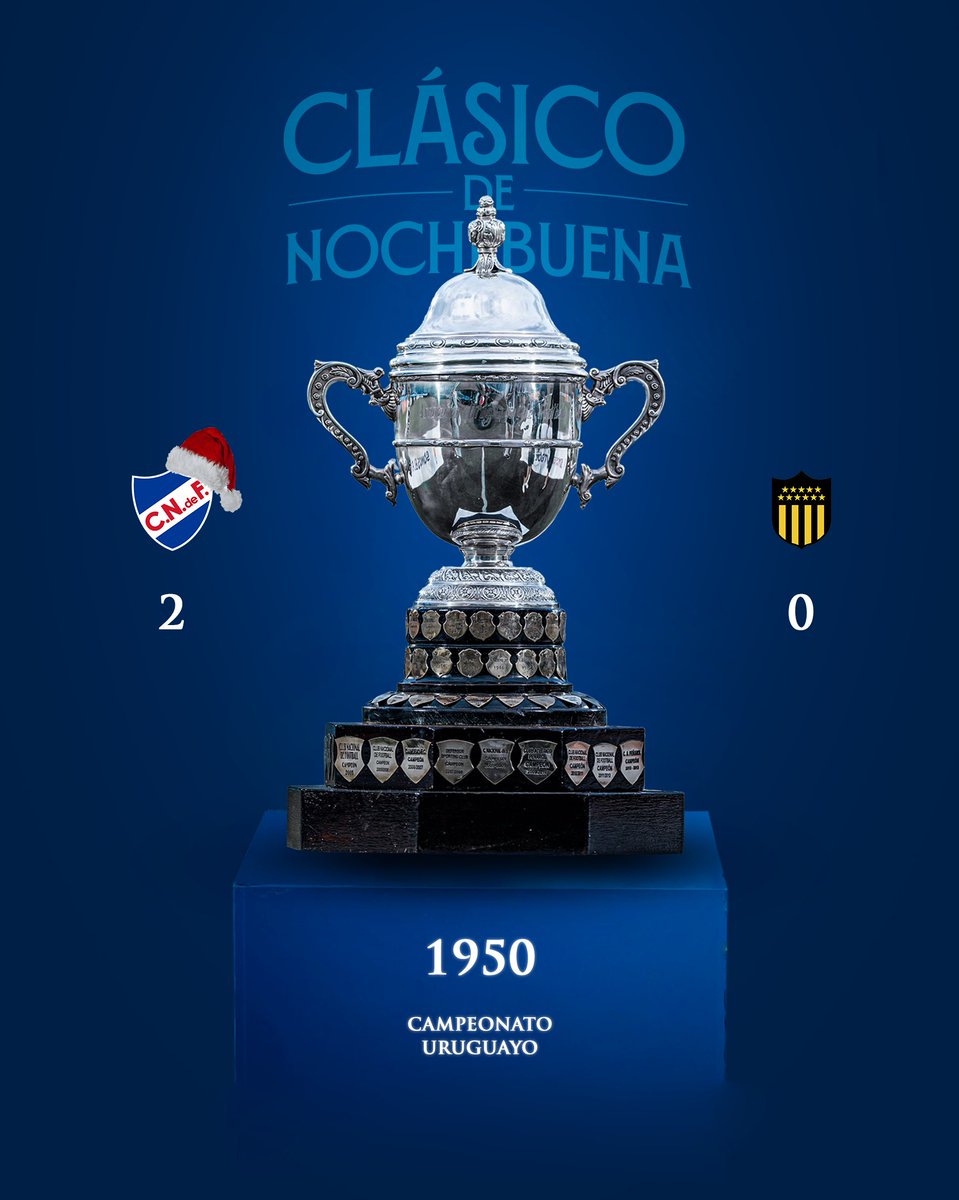
🗓️ El 24 de diciembre de 1950, en una jornada muy especial por ser vísperas de la noche buena, Nacional derrota a Peñarol por 2 a 0 con una actuación rutilante del argentino José "Miseria" García quién fue el autor de los dos goles. 🏆 Este triunfo le permitió a Nacional consagrarse Campeón Uruguayo, en un año muy especial marcado por la conquista de la Selección Uruguguaya en el Mundial de Brasil 1950, de esta manera Nacional fue Campeón en la tierra de los Campeones del Mundo. 🎅🏼 Además este clásico quedó en el recuerdo de todos los aficionados como el "Clasico de Noche Buena".
Nacional tweet mediaNacional tweet media
Español
12
82
640
21.9K
Sebastián García Parra retweetledi
Matt Dancho (Business Science)
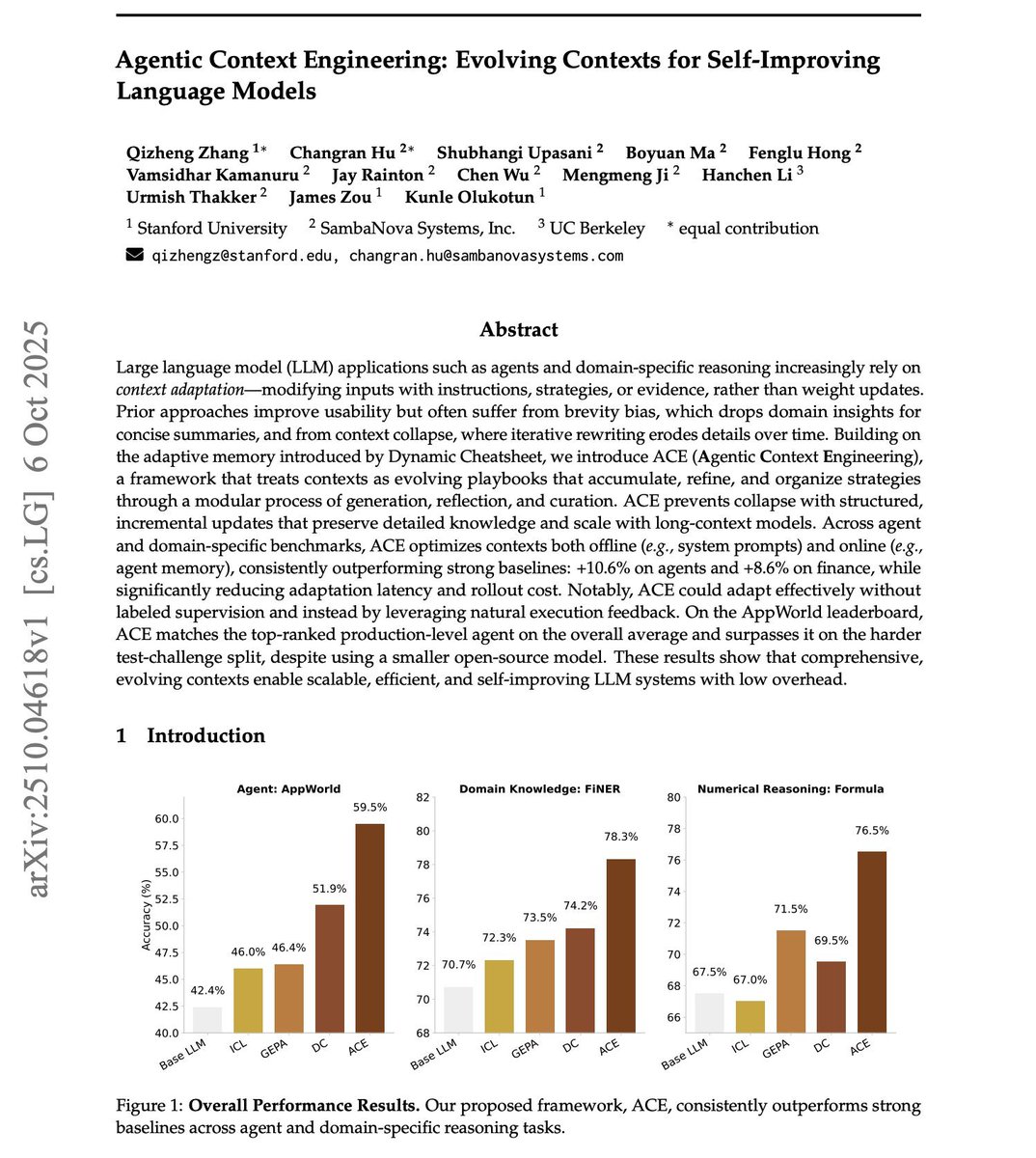
Stanford just made fine-tuning irrelevant with a single paper. It’s called Agentic Context Engineering (ACE) and it proves you can make models smarter without touching a single weight. Key takeaways (and get the 23 page PDF):
Matt Dancho (Business Science) tweet media
English
30
162
1K
86.6K