Doug Stewart

33 posts

Doug Stewart

Doug Stewart

@dstewartzz

Katılım Eylül 2013
544 Takip Edilen61 Takipçiler
Doug Stewart
Doug Stewart@dstewartzz·
Does anybody know a way to track token usage in Claude Co-Work on a per-project basis so those costs can be billed back to a client? I don't think the analytics API is going to make that possible.
English
1
0
1
22
Alex Lieberman
Alex Lieberman@businessbarista·
I want to start an AI community for executives. This will be a space for people to share killer use cases, agentic workflows/agents, post-AI org structure, AI governance, AI training/enablement, change management, and more. Comment “AI-native” if you want to join.
English
1.8K
33
1.1K
183.2K
Muhammad Zahid
Muhammad Zahid@mzahidtech·
🚀 This is wild. @cursor_ai just dropped a Linear-style Kanban board where you can literally drag in tasks and Cloud Agents pick them up, work on them, open PRs, and ship results. Built with the new Cursor SDK. Full agent orchestration in one dashboard. Mind officially blown.→ Check the example: github.com/cursor/cookboo… #Cursor #AIagents
English
9
16
301
123.1K
Doug Stewart
Doug Stewart@dstewartzz·
@seandsweeney Sean, not sure this is your problem, but when I first signed in this afternoon, I noticed that it had rearranged all of my chats by project rather than date. Any chance you just have to filter them by date and they’ll come back?
English
0
0
2
501
Sean Sweeney
Sean Sweeney@seandsweeney·
Need your help Claude experts! I just opened the app to see my entire last week of work gone. Hours and hours of thinking and strategy. The thread reverted back to last Wednesday. Any idea how to access the info that appears lost?
English
30
0
42
30.3K
Doug Stewart
Doug Stewart@dstewartzz·
@ansubkhan @openclaw @karpathy Thanks you for building this. Realized this weekend that my Wiki needed a way for our attorneys to visualize it. Very helpful.
English
1
0
1
560
Ansub
Ansub@justansub·
late to the party but built a UI layer on top of the wiki my @openclaw agent writes and maintains, based on exactly what @karpathy describes here. obsidian vault underneath, react frontend on top: search, an interactive knowledge graph, topic browsing, article pages with tables of contents + neighborhood mini-graph and many more.
Andrej Karpathy@karpathy

LLM Knowledge Bases Something I'm finding very useful recently: using LLMs to build personal knowledge bases for various topics of research interest. In this way, a large fraction of my recent token throughput is going less into manipulating code, and more into manipulating knowledge (stored as markdown and images). The latest LLMs are quite good at it. So: Data ingest: I index source documents (articles, papers, repos, datasets, images, etc.) into a raw/ directory, then I use an LLM to incrementally "compile" a wiki, which is just a collection of .md files in a directory structure. The wiki includes summaries of all the data in raw/, backlinks, and then it categorizes data into concepts, writes articles for them, and links them all. To convert web articles into .md files I like to use the Obsidian Web Clipper extension, and then I also use a hotkey to download all the related images to local so that my LLM can easily reference them. IDE: I use Obsidian as the IDE "frontend" where I can view the raw data, the the compiled wiki, and the derived visualizations. Important to note that the LLM writes and maintains all of the data of the wiki, I rarely touch it directly. I've played with a few Obsidian plugins to render and view data in other ways (e.g. Marp for slides). Q&A: Where things get interesting is that once your wiki is big enough (e.g. mine on some recent research is ~100 articles and ~400K words), you can ask your LLM agent all kinds of complex questions against the wiki, and it will go off, research the answers, etc. I thought I had to reach for fancy RAG, but the LLM has been pretty good about auto-maintaining index files and brief summaries of all the documents and it reads all the important related data fairly easily at this ~small scale. Output: Instead of getting answers in text/terminal, I like to have it render markdown files for me, or slide shows (Marp format), or matplotlib images, all of which I then view again in Obsidian. You can imagine many other visual output formats depending on the query. Often, I end up "filing" the outputs back into the wiki to enhance it for further queries. So my own explorations and queries always "add up" in the knowledge base. Linting: I've run some LLM "health checks" over the wiki to e.g. find inconsistent data, impute missing data (with web searchers), find interesting connections for new article candidates, etc., to incrementally clean up the wiki and enhance its overall data integrity. The LLMs are quite good at suggesting further questions to ask and look into. Extra tools: I find myself developing additional tools to process the data, e.g. I vibe coded a small and naive search engine over the wiki, which I both use directly (in a web ui), but more often I want to hand it off to an LLM via CLI as a tool for larger queries. Further explorations: As the repo grows, the natural desire is to also think about synthetic data generation + finetuning to have your LLM "know" the data in its weights instead of just context windows. TLDR: raw data from a given number of sources is collected, then compiled by an LLM into a .md wiki, then operated on by various CLIs by the LLM to do Q&A and to incrementally enhance the wiki, and all of it viewable in Obsidian. You rarely ever write or edit the wiki manually, it's the domain of the LLM. I think there is room here for an incredible new product instead of a hacky collection of scripts.

English
32
26
519
109.9K
Doug Stewart
Doug Stewart@dstewartzz·
@trq212 Not sure I’m a mutual but definitely interested.
English
0
0
0
452
Thariq
Thariq@trq212·
I want to do some streams where I work with non-technical people using Claude Code to figure out how they might be able to improve their process. My feeling is that just a few tips could make a big difference in efficiency. Any mutuals interested?
English
694
80
3.4K
188.8K
Jerry Liu
Jerry Liu@jerryjliu0·
I built a Claude Code skill that allows it to generate a deep research report over any collection of complex docs (PDFs, Word, Pptx)….and generate word-level citations and bounding boxes directly back to the source! 📝 Check out “/research-docs”. 1. It parses out text and bounding boxes from every doc with liteparse, in seconds. 2. It then generates a full HTML report of the outputs that let you see word-level citations in each page. Raw Claude obviously has deep research capabilities, but it lacks an audit trail back to the source. This skill gives you a researched report that can be audited by others. Check it out: github.com/jerryjliu/lite… LiteParse: github.com/run-llama/lite…
English
33
85
796
77.1K
Doug Stewart
Doug Stewart@dstewartzz·
@maxhodak_ Just dive into Code. I’m a non-tech person, took one beginning CC class with @every, and have never gone back to Chat or Co -Work. It does all of the coding.
English
5
0
13
16.5K
Max Hodak
Max Hodak@maxhodak_·
why are claude, cowork, and code three different uis? why is this not all just claude?
English
125
12
1.2K
207.8K
Doug Stewart
Doug Stewart@dstewartzz·
@dansemperepico Even worse, things I’m setting up in Code for my firm do not seem to work in Cowork as I assumed they would.
English
0
0
1
250
Daniel Sempere Pico
Daniel Sempere Pico@dansemperepico·
I don’t understand why Claude Cowork exists other than as a marketing wrapper to get non-technical people using agentic AI that we’re scared of trying Claude Code because they thought you have to be technical. There’s nothing I can think of that Cowork can do that Claude Code can’t and I’ve had at least one experience where Cowork failed to do a non-coding task that Claude Code could do
English
161
9
337
116.1K
Doug Stewart
Doug Stewart@dstewartzz·
@BitGrateful I’m just using the expanded summary from granola through the MCP into case notes, as opposed to the entire transcript.
English
0
0
1
28
Doug Stewart
Doug Stewart@dstewartzz·
@stockthoughts81 I’ve tried to work with OneNote through the MCP but Claude struggles with it mightily. Claude suggested MD files instead. I read mine with Obsidian. I think a MD structure, Obsidian, or Notion might work for you instead.
English
1
0
2
49
Uncovering Value
Uncovering Value@stockthoughts81·
Has anyone used Claude Code to port a large, messy research folder into OneNote? Thinking nested folders, Word docs, Excel files, scattered notes, and one big OneNote checklist as the destination. Curious if anyone has done this well, especially with OneNote as the endpoint.
English
5
0
5
2.3K
Doug Stewart
Doug Stewart@dstewartzz·
@strikerglows @amorriscode I was wondering the same thing and noticed in another thread that the response was that they were pretty much the same thing.
English
0
0
1
13
Strikerglows
Strikerglows@strikerglows·
@amorriscode What is the difference between a project and a top level work folder with sub folders?
English
1
0
4
84
Doug Stewart
Doug Stewart@dstewartzz·
Thanks Chris, would be nice, but not a deal-killer, to provide access to shared team mailbox so I can get firm-wide visibility through Claude without going through each individual user. I appreciate your responsiveness and have been very pleased with the MCP access. Using it and O365 for my entire firm knowledge base management.
English
0
0
1
470
Chris Pedregal
Chris Pedregal@cjpedregal·
There are some tweets out there saying that Granola is trying to lock down access to your data. Tldr; we are actually trying to become more open, not closed. We’re launching a public API next week to complement our MCP. Read on for context. A couple months ago, we noticed that some folks had reversed engineered our local cache so they could access their meeting data. Our cache was not built for this (it can change at any point), so we launched our MCP to serve this need. The MCP gives full access to your notes and transcripts (all time for paid users, time restricted for free users). MCP usage has exploded since launch, so we felt good about it. A week ago, we updated how we store data in our cache and broke the workarounds. This is on us. Stupidly, we thought we had solved these use cases well enough with our MCP. We’ve now learned that while MCPs are great for connecting to tools like Claude or chatGPT, they don’t meet your needs for agents running locally or for data export / pipeline work. So we’re going to fix this for you ASAP. First, we’ll launch a public API next week to make it easier for you to pull your data. Second, we’ll figure out how to make Granola work better for agents running locally. Whether that’s expanding our MCP, launching a CLI, a local API, etc. The industry is moving quickly here, so we’d appreciate your suggestions. We want Granola data to be accessible and useful wherever you need it. Stay tuned.
English
97
41
811
154.7K
Doug Stewart
Doug Stewart@dstewartzz·
The CSV output is designed for accounting import: date, case_number, description, session_id, duration, input_tokens, output_tokens, cache_write, cache_read, cost_usd /bill report 2026-03 gives you a grouped monthly summary by case in a csv file that you can drop into your accounting program. I welcome suggestions or constructive criticism, but bear in mind that I am an attorney, not a computer programmer. Claude Code basically took my suggestion, created the skill, pushed it to GitHub, and helped me write a thread that would clearly explain what it created for me. I only wish it worked for Cowork or Chat, but it does not and Claude reports that there's no mechanism available for that — Anthropic would need to build it into the platform.
English
0
0
1
41
Doug Stewart
Doug Stewart@dstewartzz·
It handles edge cases: mixed-model sessions (Claude spawns Haiku subagents for searches — those get different rates), cache write 5-min vs 1-hour tiers, subagent transcript files in nested directories. All from parsing what Claude Code already logs — no API proxy needed.
English
1
0
1
79
Doug Stewart
Doug Stewart@dstewartzz·
After watching and reading on X for months I finally took a class on Claude Code from @every and have been having a blast "coding" (well, repeatedly pushing the accept button) ever since. It didn't take me long to figure out that my new hobby was taking a lot of tokens so I had Claude build an open-source billing tracker for Claude Code (not Chat or Cowork) that lets professionals recover appropriate AI costs as client expenses. github.com/dstewartzz/cla… /bill, client code, and description at session start. When the session ends, a SessionEnd hook automatically parses the JSONL transcript, extracts per-message token usage (input, output, cache read/write), applies Anthropic's published per-model rates, and appends a row to a CSV. Three files, zero npm dependencies, pure Node.js built-ins. Works with mixed-model sessions (Opus/Sonnet/Haiku) and captures subagent costs. Monthly report generation built in.
English
1
0
1
117
Doug Stewart
Doug Stewart@dstewartzz·
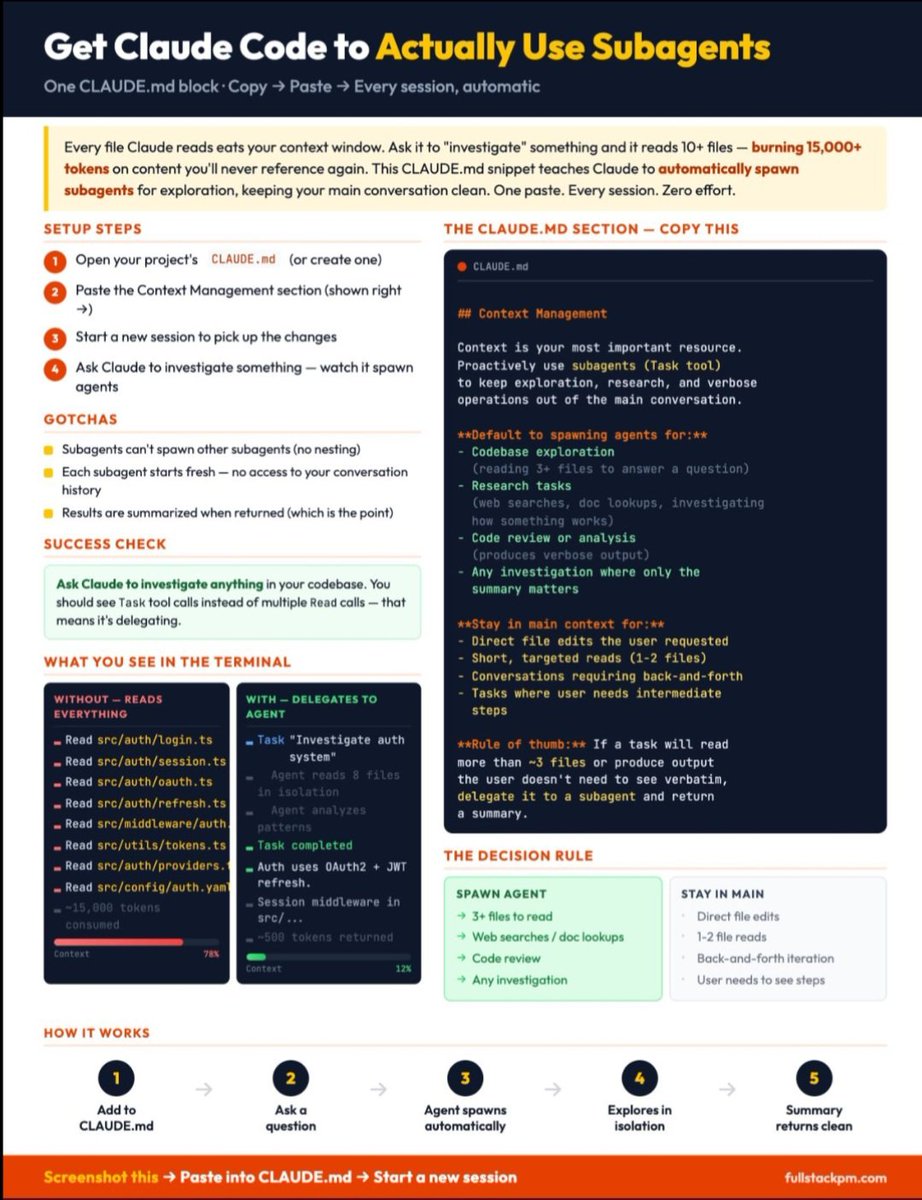
@DivyanshT91162 Thank you for this post. Question from a non-technical knowledge worker who makes Claude read a lot of context, why is it more efficient to pass work to sub-agents? Intuitively it seems that spreading out the work would take a similar amount of tokens? Thanks again.
English
1
0
1
284
divyansh tiwari
divyansh tiwari@DivyanshT91162·
This is insane 🤯 Most people using Claude Code are wasting thousands of tokens… without realizing it. Every time Claude reads files to “investigate” something, it eats your context window. 10+ files → 15,000+ tokens gone And most of that information is never used again. That’s the hidden productivity killer. But there’s a simple fix most developers don’t know about: Subagents. Instead of letting Claude read everything in your main session, you can force it to spawn subagents that investigate things in isolation. Your main conversation stays clean. Your context window stays intact. And Claude becomes dramatically more efficient. Here’s the trick 👇 Add a Context Management block inside your CLAUDE.md. Then tell Claude: • Use subagents for exploration • Delegate research & multi-file analysis • Return only summarized insights Now Claude behaves like a true AI research team instead of a single assistant. Example rule: If a task needs to read 3+ files → spawn a subagent. That one rule alone can save tens of thousands of tokens across a project. Result: • Faster sessions • Cleaner context • Better reasoning • Less token burn Tiny configuration. Massive workflow upgrade. AI tools aren’t just about prompts anymore. They’re about architecture. And the people who understand this will build 10x faster than everyone else.
divyansh tiwari tweet media
English
13
24
144
10.9K
Doug Stewart
Doug Stewart@dstewartzz·
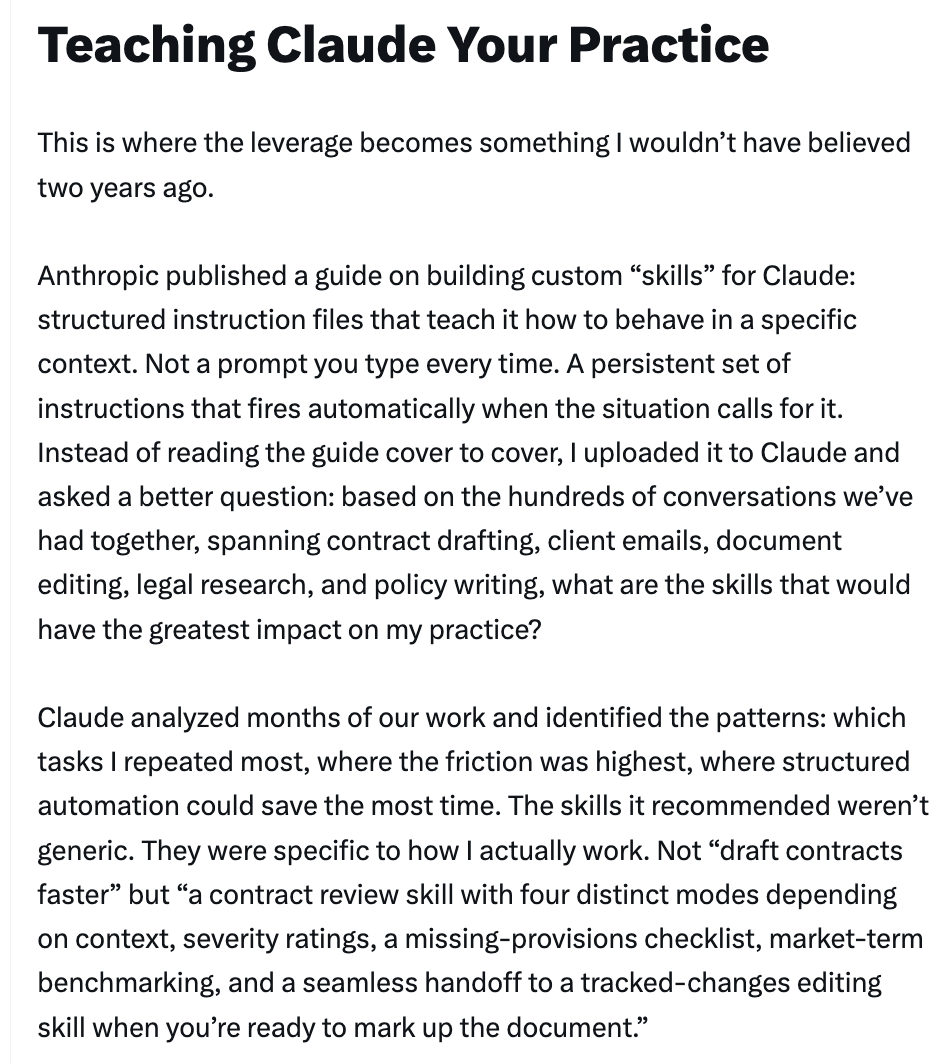
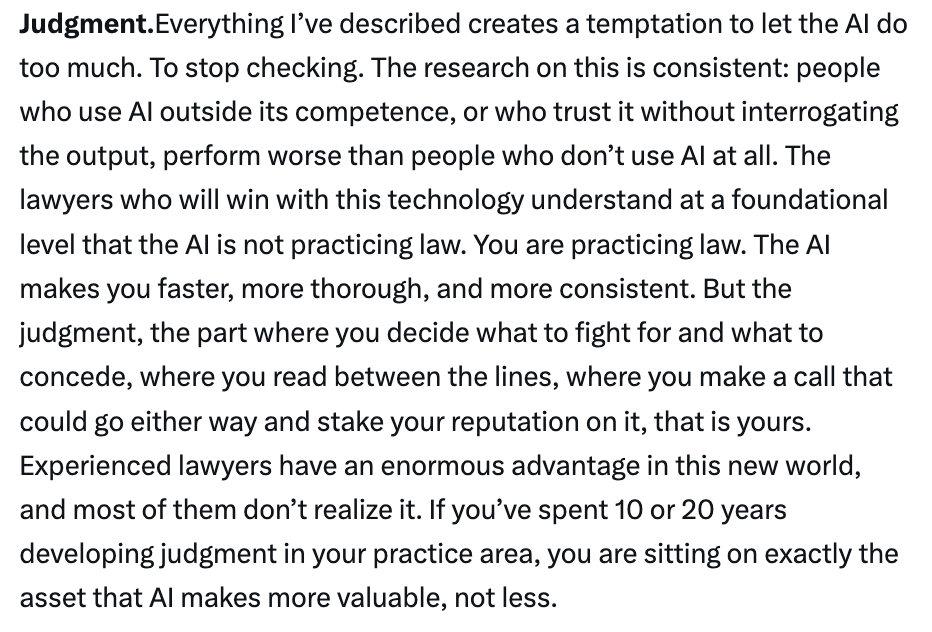
@osmarks1 @Dorialexander You missed a very significant part of the article. What experienced lawyers add is judgment. I spent the better part of my day yesterday working through issues with Claude that required the judgment I have earned in 30 years of experience. That’s what the human lawyer adds.
English
0
0
2
81
osmarks
osmarks@osmarks1·
@Dorialexander I have to wonder what the human lawyer is adding here. Clearly not their writing.
English
3
0
8
1.3K
Stephanie Kelton
Stephanie Kelton@StephanieKelton·
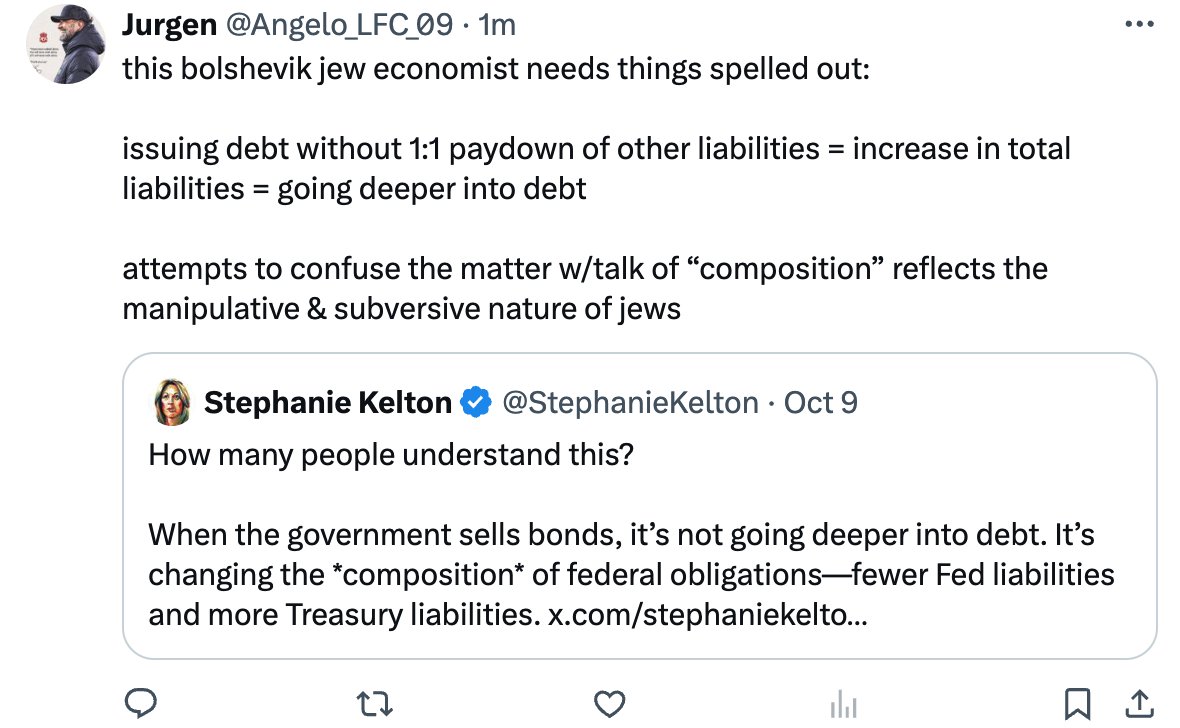
With the block feature gone, how do I keep this sort of vile stuff out of my timeline?
Stephanie Kelton tweet media
English
66
54
334
28.2K