Francis Duvivier

24 posts

Francis Duvivier

Francis Duvivier

@duviwin

Lifelong Learner | Developer | Tinkerer

Wijnegem, Belgium Katılım Aralık 2016
320 Takip Edilen28 Takipçiler
Francis Duvivier
Francis Duvivier@duviwin·
@BrianRoemmele As I see it, if Monty does not want you to pick the right door, then why would he ever offer to switch? If you had chosen wrong, he could have just opened that wrong door and he wins. So this whole problem makes no sense to me unless you specify that Monty is forced to do this.
English
3
0
1
2.5K
Brian Roemmele
Brian Roemmele@BrianRoemmele·
In 1990 I wrote a letter to Marilyn vos Savant, Parade Magazine in support of her proof on the Monty Hall Problem. I ran an AI (expert system) test on it and she was right and just about the entire academic community was wrong. They could not accept it. Now they do.
English
128
284
2.5K
209.2K
0xSero
0xSero@0xSero·
Do you want to try Droid? I’m doing a giveaway 3 people will win 100M Factory credits each.Thats 5 months of their 20$ a month subscription. Winners selected randomly from comments in 48 hours.
0xSero tweet media
English
1.1K
36
794
78.6K
ArkType
ArkType@arktypeio·
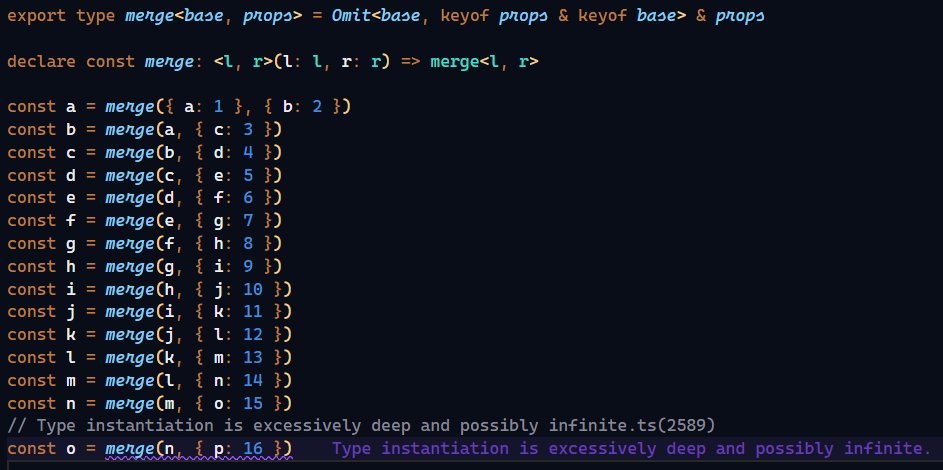
Investigating a TypeScript caching issue that could have a *massive* impact for validators like ArkType, Zod and Valibot. For projects that heavily rely on schema inference like tRPC, fixing this could have a bigger impact than tsgo. Trigger Warning: O(3^N)
ArkType tweet media
English
21
37
791
82.5K
Francis Duvivier
Francis Duvivier@duviwin·
@skdh Ok but then are you being really fair to the chatbot if you just ask it to explain Bell's theorem. I mean If you ask it to explain a theorem, it makes sense to explain it as the original author saw it. If you then ask it for which are the assumptions it will probably tell you.
English
1
0
0
288
Sabine Hossenfelder
Sabine Hossenfelder@skdh·
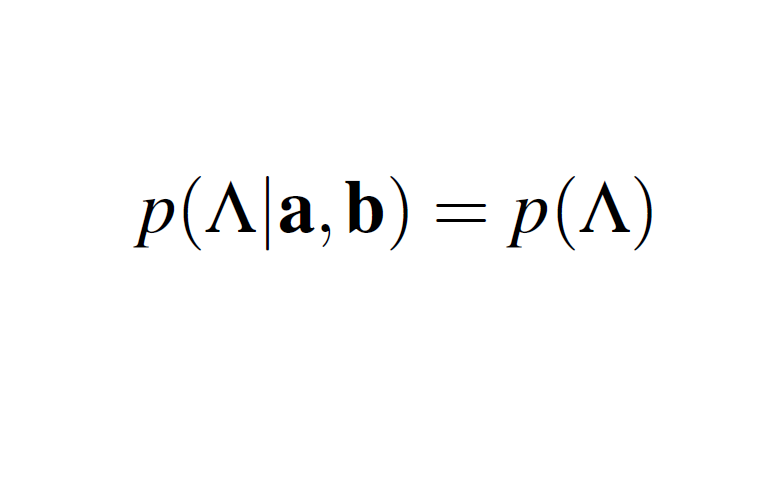
Since people are still confused about why I say the chatbot output about Bell's theorem is wrong, let me clarify what the correct answer is. Bell's theorem is a mathematical proof that says: a model with certain assumptions X, Y, Z will obey an inequality on measurement results. This inequality is violated in experiments. This means that any model which fulfils all assumptions is incompatible with evidence. The question I keep asking chatbots is: what are the assumptions? The first assumption for the model is that measurement outcomes can be calculated from a variable usually called the "hidden variable". A lot of confusion surrounds this assumption. Note that you can calculate the measurement outcome from the measurement outcome (duh), so there is always such a variable, even for quantum mechanics itself. The question is, what are the properties that the distribution of these variables needs to fulfil? The second assumption is the most famous one and is called "local causality". It looks like this for a situation with two detectors. a is the detector setting of the first detector and O_a is the observed measurement outcome. b is the detector setting of the second detector and O_b is the observed measurement outcome. and Lambda are the "hidden variables", that is, what you need to know to calculate the measurement outcome. Don't worry if you don't understand what this equation means, it just says that a theory should be local in the sense that causes travel from one point only to its neighbors (they cannot "jump" -- that would be nonlocal), and they cannot travel faster than light. Bell also thought it includes causality, but that depends on what you mean by "causality". But this isn't so relevant here, so let me skip over this. This assumption of local causality is sometimes broken down into a list of other assumptions, output independence, setting independence, parameter independence, factorizability etc. So, there are many different ways to formulate it and it can get somewhat confusing because everyone does it somewhat differently, but in the end you need local causality for Bell's theorem. The third assumption is statistical independence: The relevant thing is now this: Statistical Independence is necessary to derive Bell's theorem. But this assumption is independent of local causality. This means you can violate statistical independence without non-locality. Bell himself got this wrong in his original paper. He seems to have thought that Statistical Independence is implied in local causality. It is not. This means most importantly, a theory which violates Statistical Independence can be locally causal AND violate Bell's inequality. That Bell made this assumption without noticing was only pointed out in 1976 by Shimony, Horne, and Clauser (same Clauser who won the Nobel Prize in 2022). The paper is titled “Comment on ‘The theory of local beables’.”, and is published in Epistemological Letters 13, 1 (1976). Bell and Clauser both realized that since this additional assumption was required, an experimental violation of Bell's inequality would *NOT* demonstrate a violation of Local Causality. Hence, they tried to find a reason why statistical independence must be fulfilled on philosophical grounds. They claimed that it's necessary for free will to exist, which is not only nonsense (free will is difficult to reconcile with any deterministic theory, but that's nothing to do with statistical independence) it is also putting a lot of philosophical baggage onto a simple equality. This is why Bell dismissed a violation of Statistical Independence as "superdeterminism". But none of that matters -- it is clearly an assumption that enters the proof. It is highly problematic that this necessary assumption is now usually not even mentioned. (Let me note in the passing that Bell's theorem makes no assumptions about either realism or determinism, it's just unnecessary. Strictly speaking it makes a bunch of other assumptions which are necessary for the probability distribution to be well-defined.) It's even more worrying because since the 1980s we have had multiple models that have demonstrated explicitly that it is possible to violate Bell's inequality with local hidden variable models, so long as those models violate statistical independence. My point here is the following: All of what I said here are mathematically true statements. You can check them for yourself. It is not a difficult proof. You find this proof in many places. It's undergrad materials. This is not something we should have to discuss. But in verbal terms, Bell's theorem has been misstated so often that most people never look at the proof. And the same mistake is now being further reinforced by AI repeating it. Some of you will question what I just told you. Fair enough. Please go and just do the proof yourself. You will see that you actually need this extra assumption. I keep going on about this because I strongly believe that we will not make progress in the foundations of physics as long as we use a model that violates local causality. We currently do: Quantum mechanics itself violates local causality. All the difficulty we have with finding a quantum version of gravity comes from using a quantum model that is incompatible with the locality of general relativity. It blows my mind that physicists can't see this. /end rant
Sabine Hossenfelder tweet mediaSabine Hossenfelder tweet media
English
150
108
890
73.4K
Rhys
Rhys@RhysSullivan·
You see this in a code review, what do you do?
Rhys tweet media
English
265
11
674
314.6K
Francis Duvivier
Francis Duvivier@duviwin·
@pavelsvitek_ Because a lot of js devs don't understand how 'this' works in a normal js function. Using arrow functions everywhere prevents a whole bunch of bugs in that respect.
English
1
0
9
492
Pavel Svitek 🇨🇭
Pavel Svitek 🇨🇭@pavelsvitek_·
Why do most people use the `const fn = () => {}` function notation? It takes more mental power to identify/parse if it's a variable or a function every time you are looking at some code. What is this madness. Just use `function ... () {}` and you identify the function with first 3 letters.
Pavel Svitek 🇨🇭 tweet media
English
226
50
1.5K
320.7K
Francis Duvivier
Francis Duvivier@duviwin·
@jeremyphoward Hmm, probably to state the obvious, but they specifically went to BlueSky because it's called "Blue", and that's what a lot of people were craving for...
English
0
0
0
13
Jeremy Howard
Jeremy Howard@jeremyphoward·
Wow! What on earth happened here? (I don't mean "why did so many people move to a different social network," but "why did they all go to 🦋")
Jeremy Howard tweet media
English
1.4K
467
5.9K
1.4M
François Fleuret
François Fleuret@francoisfleuret·
Linux, Python, Pytorch, Slurm, tex, latex, tikz, bash, zsh, ssh, screen, tmux, emacs, vi, gcc, gnuplot, matplotlib, scikit, firefox. Who am I missing.
English
317
73
2K
338.9K
Martin Fowler
Martin Fowler@martinfowler·
With the recent uptick in tech activity on Bluesky, I've decided that I will start posting there in addition to my current locations. I've also put together my current thoughts on the state of social media. martinfowler.com/articles/2024-…
English
14
5
83
33.2K
Francis Duvivier
Francis Duvivier@duviwin·
@cyberdaemonum I have done this as well, at the same time as changing all thos secrets. If they were there at some point, they are compromised anyways
English
0
0
0
40
Francis Duvivier
Francis Duvivier@duviwin·
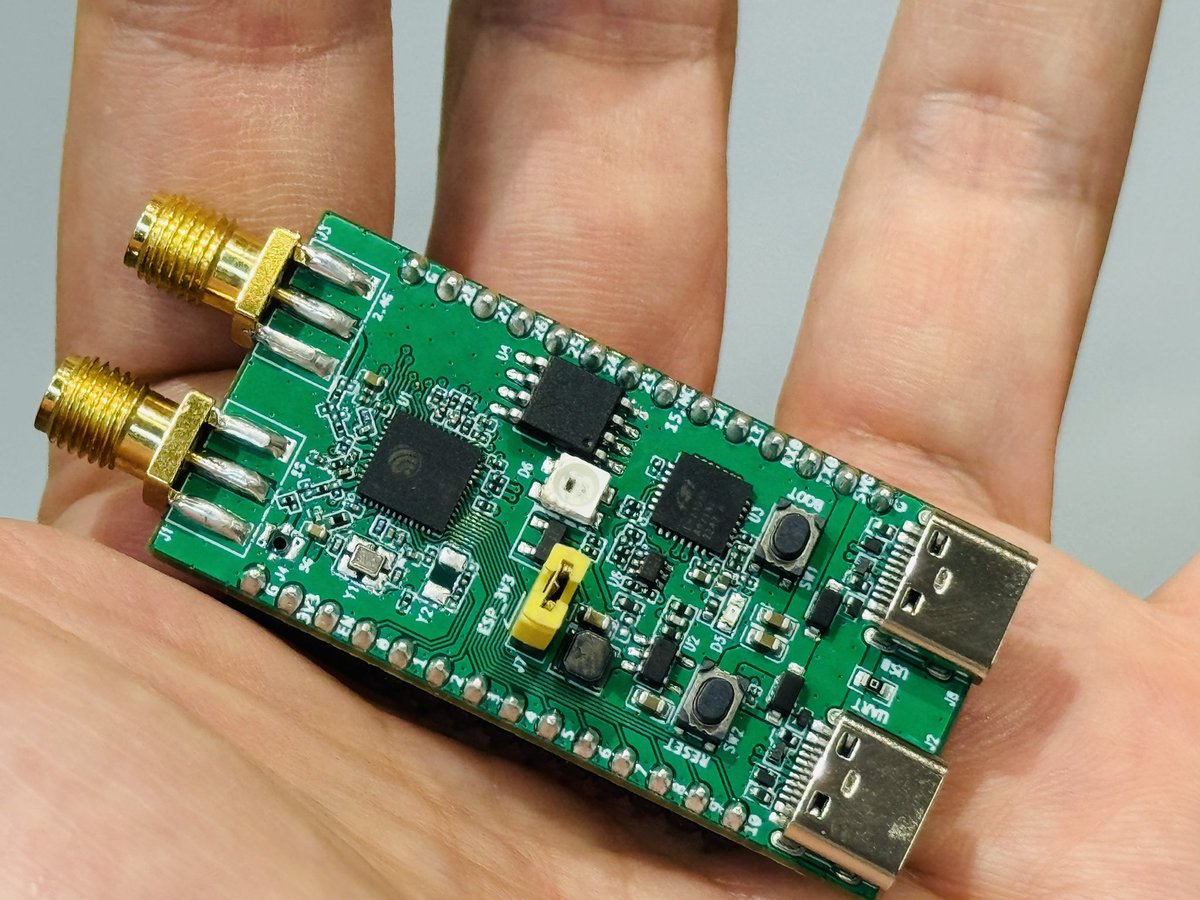
@adafruit Small correction, unless you have some very special edition, the wireless coprocessor is an esp32-C6.
English
0
0
0
103
adafruit industries
adafruit industries@adafruit·
OOOh, some hot new chips just dropped into our mailbox - ESP32-P4! 🔥🚀 Espressif's latest chip has a snazzy eval board, and we just snagged a couple for CircuitPython development. The P4 is a RISC V dual core 400MHz processor with CSI/DSI support, USB HS, and Ethernet too. This chip doesn't have BLE or WiFi like all the other ESP chips. Instead, it uses a low-cost ESP32-C5 module as a wireless co-processor. The eval board is sorta shaped like a Raspberry Pi and has various A/V connections. We also got 100 sample chips of the 16MB in-package PSRAM variety, so we can start designing our first board. Shall we do a Feather? a Metro? maybe a Pi Zero-shaped thingy? #espressif #esp32 #ESP32P4 @EspressifSystem
English
6
14
121
14.3K
John Lee
John Lee@EspressifSystem·
Drumroll…. Drumroll…. This one is gonna be fun, folks! Anyone needs samples? #ESP32C5
John Lee tweet media
English
200
51
657
82.3K
WarrenBuffering
WarrenBuffering@WarrenInTheBuff·
plz stop doing this
WarrenBuffering tweet media
English
315
121
3.3K
736.2K
javinpaul
javinpaul@javinpaul·
IntelliJIDEA or Eclipse?
Română
46
3
30
19.5K
Francis Duvivier
Francis Duvivier@duviwin·
@brunoborges Beware, wsl2 has some weird networking issues because if packet limit and other annoying dns issues as well. Better just use some virtual machine or remote linux
English
0
0
2
337
Bruno Borges
Bruno Borges@brunoborges·
If your company prohibits you from using Docker Desktop, and they still don't trust Podman, how else would you do container development?
English
61
9
58
40.7K
Francis Duvivier
Francis Duvivier@duviwin·
@unclebobmartin @JosuGoi1 @unclebobmartin I think the interesting part lies in the exceptions and why those exceptions are allowed. That part seems to be missing in Clean Code. Do you have some sample production code that is a good example of Clean Code that people can look at?
English
1
0
2
702
Uncle Bob Martin
Uncle Bob Martin@unclebobmartin·
People think that “jumping around” is painful because they are used to bad code with poorly named functions and poorly encapsulated concepts. “Jumping around” is only a problem when you can’t trust the names and encapsulation of the functions. If a function does what it says, and does that only, then you don’t have to do much jumping. Moreover, if the functions are small, when you _do_ have to jump you can quickly jump back.
English
22
6
222
22.9K
Uncle Bob Martin
Uncle Bob Martin@unclebobmartin·
One of the main complaints people seem to have about the Clean Code book is my advice to keep functions very small. In Java I prefer functions that are ~4-6 lines long. (Thats a preference, not a demand). Why? Because this forces me to make each function about _one thing_ and give each a very descriptive name. Over the years I have found this to be a very beneficial technique both for enhancing readability and for deriving good designs.
English
176
75
982
652.1K
Alex Volkov
Alex Volkov@altryne·
Folks we should name this weekend. GOT has the red wedding, what do we call this weekend? Best suggestions will be included in next @thursdai_pod title! Usage of copilot / GPT4 allowed
English
32
3
16
5.9K