

Eric Cardinal
1.8K posts
English
Oui. 100%. Et vous messieurs?
Dudes Posting Their W’s@DudespostingWs
Perfect video showing how men cook
Français
@EricEngels @MartinLemay Good job Eric. Your French is outstanding. Ton français écrit est parfait.
Français

À tous les auditeurs de Le Retour, avec @MartinLemay, j’ai lu vos commentaires dans le chat et ça m’a fait chaud au coeur ! Merci pour votre appui ! Je savais à quel point vous supporterez toujours l’effort d’un anglophone qui essai de se débrouiller en français, mais vous me motivez à pratiquer pour maîtriser la langue. Peut-être que je n’arriverai jamais, mais j’espère m’améliorer au fil des prochains mois. Merci encore !!
Français
Les gars… c’est vous lorsque vous cuisinez?! 😅
J.P. Hovey@jhovey34
Never related to something more than I relate to this
Français
Eric Cardinal retweetledi

Moyenne de 2h40 pour me rendre de la Rive-Nord à Brossard après deux jours de camp.
Je suis de nature très optimiste, mais il y a eu un manquement quelque part.
On parle de 65 km. Pas 300.
Quand partir de la Rive-Nord de MONTRÉAL t’amène plus rapidement à Québec que sur la Rive-Sud…
Abominable.
Français




Français
“Just like Washington”
The Hockey News@TheHockeyNews
Fix You remains undefeated as a hockey walkout song
English
Pro hockey player in Cali wants to stay with @AnaheimDucks but tax system is so onerous that he agrees to defer payment of 50% in 10 years!! @elonmusk @BillyM2k
Pierre LeBrun@PierreVLeBrun
Frank Vatrano’s 3-year, $18M extension is an interesting one. He will get paid $3M a year in base salary but then $9M in deferred salary. Starting 10 years from now in 2035, will make $900,000 a year for 10 years, and his plan is to live outside of California (and its tax system) at that point in retirement. Ducks, meanwhile, benefit with deferred payments by having $4.57M AAV (instead of $6M AAV) on the deal. Creative way for both the team and player to make it work. And perhaps show other players in future way to stick-handle around California tax issue.
English
Interested in finance, M&A? Give @QuilanFoster a follow. Very bright young man.
Quilan Foster@QuilanFoster
Here’s how to think about working capital adjustment in a business acquisition. The main idea is simple: Working Capital adjustment will keep the buyer’s effective price the same, but will change the proceeds available to the selling shareholders. The proceeds to the selling shareholders will be based on how the company manages its working capital relative to the “Target Working Capital” as the deal closes. The goal is to incentivize management to run the company normally as the deal closes. Example 1: Working capital below target If the WC is below the buyer will have to reduce the purchase enterprise value and pay for additional funding to bring the WC up to the target level. This means that the buyer pays the same price, but the selling shareholders get less. In my example 1, you can see that the selling company has $50 in WC vs. a target of $100. This creates a reduction in the EV, which essentially reduces the equity value. In the sources & uses, you can see that the buyer will then include a $50 to fund the working capital requirements to bring that WC up to the target level. Example 2: working capital above target If the WC is above the targeted level, the buyer will increase the purchase enterprise value and then take some of the company’s excess WC for itself after the deal closes. As a result, the buyer still pays the same price, but the shareholders of the selling company get more. As seen in my example, the equity value increase from $175 to $255 The key takeaway here is that the investor’s equity in the deal is the same in both examples, and what changes is the seller’s equity value. As a buyer, you don’t want to acquire a company that needs additional funding on Day 1, so doing this shifts some of the risks to the seller. Example: before a deal closes, a seller could conveniently “forget” to pay its bills, or “forget” to order inventory, which would in both cases reduce its working capital. This is a scenario you want to avoid. - Thanks for read - if you enjoyed, RT and drop me a follow at @QuilanFoster for more Business, Investing and Acquisitions content!
English
Eric Cardinal retweetledi

Back in my investment banking days, I had a client walk away from a management presentation with a private equity group and he said to me “F*ck that guy. I don’t care how much he’s offering to pay for my company, I’m not selling to that guy!”
M&A is as much about building relationships as it is about structuring a great deal and making a strong offer for an SMB.
If the principals don’t make a connection, it’s going to be exceptionally difficult to get a deal done.
The SMB seller wants to have confidence their company, employees, and customers are in good hands with the right partner after the wires go out at closing.
English
Eric Cardinal retweetledi

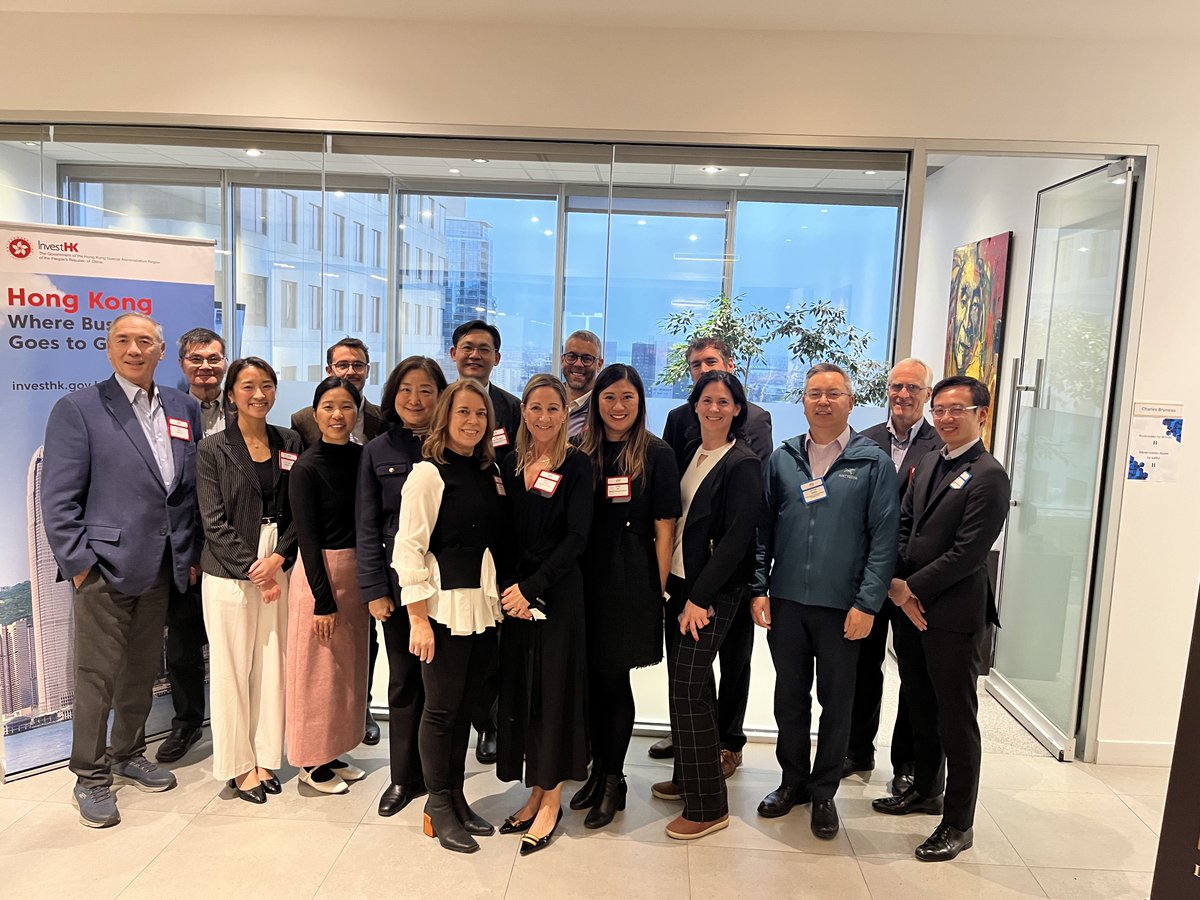
Merci à nos partenaires et participants (dont certains sont photographiés ci-dessous) à notre activité SVTM
À voir sur YouTube. //
Thank-you to our partners and participants (some of whom are pictured below) at our LSHT event
Available on YouTube:
youtu.be/KWWDy3b7eTQ

YouTube
Français
Eric Cardinal retweetledi

@RDSca Bonne retraite!! Ce fut un privilège de te côtoyer a quelques occasions Marc, au plaisir de te recroiser.
Français

Après une incroyable carrière de 30 ans chez RDS, Marc Labrecque accroche son micro!🎙️
Bonne retraite (bien méritée) à un collègue extraordinaire ! On va s'ennuyer de toi Marc, un véritable rayon de soleil dans la salle des nouvelles de RDS❤️
rds.ca/hockey/lnh/rds…

Français
Eric Cardinal retweetledi

There must be different rule book read by Copa America referees.
So many fouls not called
English
Soccer is an incomprehensible game. 🤷♂️🤷🏻♂️🤷🏼♂️🤷🏽♂️🤷🏾♂️🤷🏿♂️
#CANMNT
English