European Chinese Law Research Hub

429 posts

European Chinese Law Research Hub banner
European Chinese Law Research Hub

European Chinese Law Research Hub

@eclrhub

https://t.co/ofsGE47acE & @UniCologne's Chair for Chinese Legal Culture. We share events & findings on Chinese law. WE MOVED https://t.co/TwNug8AnHH

Katılım Ocak 2020
407 Takip Edilen648 Takipçiler
European Chinese Law Research Hub retweetledi
Oxford Chinese Law Discussion Group
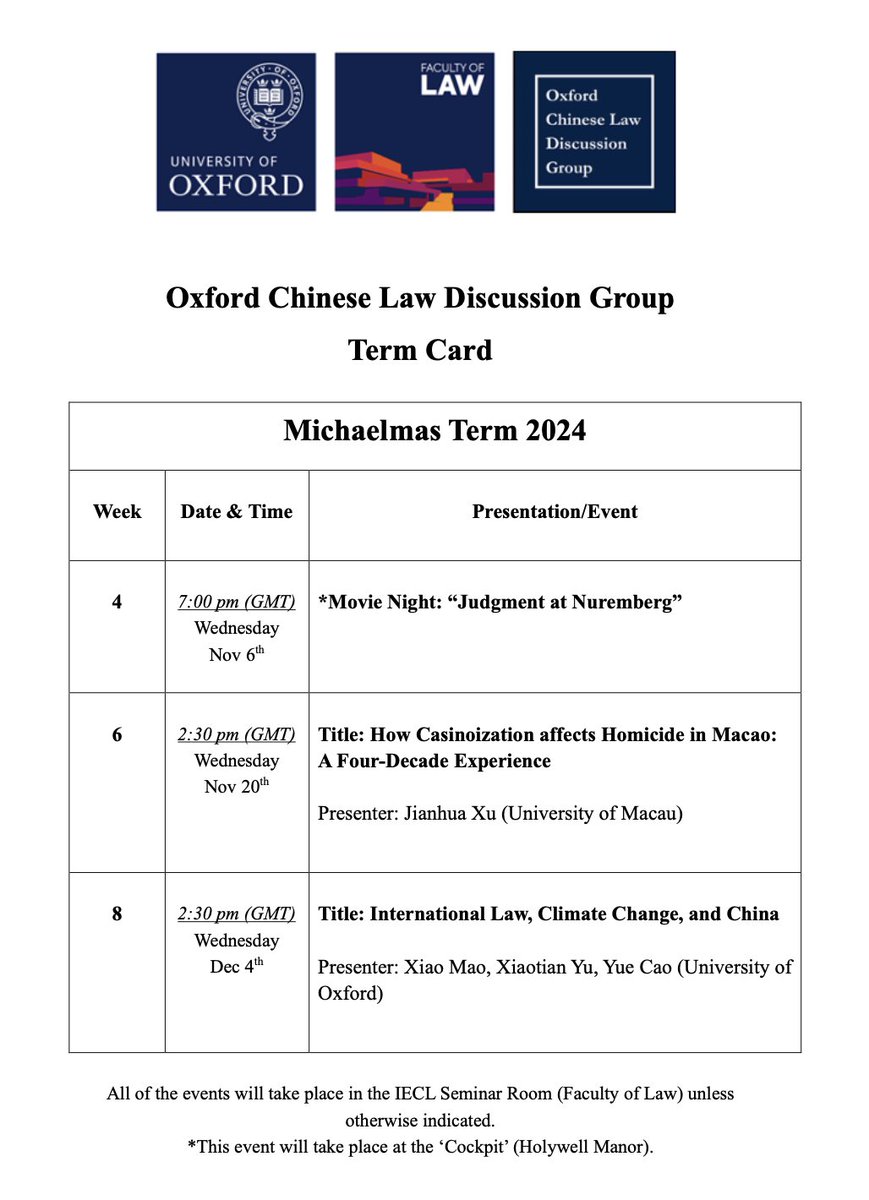
Check out our 2024-25 MT term card! If you are interested in subscribing to our mailing list, please send a blank email to chineselaw-subscribe@maillist.ox.ac.uk
Oxford Chinese Law Discussion Group tweet media
English
0
3
7
357
European Chinese Law Research Hub retweetledi
𝐋𝐢𝐧𝐠 𝐋𝐢
𝐋𝐢𝐧𝐠 𝐋𝐢@lingli_vienna·
Some problems with this diagram of China's political-legal (zhengfa) system 1. The diagram draws a curious direct line between the Ministry of Public Security and subnational (provincial) zhengfawei (political-legal committee). Unless there is some secret new development that I do not know about, the indicated relation is false and it would violate the core operational principle of the Party. Zhengfawei answers to the Party committee of the same level and the latter answers and answers ONLY to the superior Party committee. That is the golden principle of the operation of the Party - if the Ministry of Public Security wants a provincial committee to do certain things, it has to go through the Party system of the same level, namely, any tier of decision-making body at the Party Center depending on the nature/significance of the issue. If the Party Center decides to take actions, it will send commands to sub-national Party committees directly or through its subcommittee, such as the Central Political-Legal Committee. The Ministry of Public Security or any ministry really, for this matter, simply cannot overstep the boundaries and directly command a Party committee to do things. Direct communication between the leaders of these two institutions is of course possible at the informal/personal level, but this diagram is supposed to reflect the formal relations only. 2. The diagram does not reflect the full picture of the PRC political-legal system but only of the state institutions (courts, procuratorates, public security, state security, justice department) that are under the purview of zhengfawei. The book puts the supervision/disciplinary institutions in a separate chapter and the legislature/people's congresses in yet another chapter. These two institutions are excluded from the diagram because I believe the editors want to structure the book through different lines of command within the Party administration system even though both are essential parts of the PRC political-legal system in the general sense as well.
Jean Christopher (Chris) Mittelstaedt@jcmittelstaedt

Still the best diagram of China's Political-Legal system.... from the Centre to the county-level

English
2
10
42
6.2K
European Chinese Law Research Hub
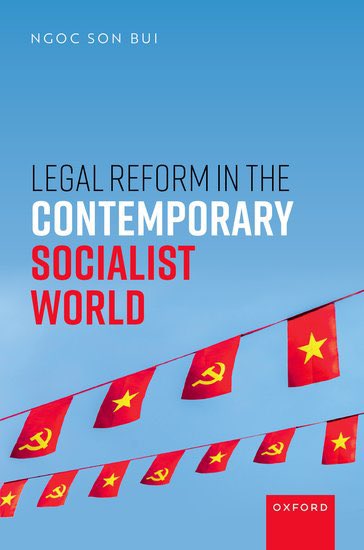
After a brillant keynote by @PKU1898 Law Dean Prof GUO Li, we are now discussing the civil code, ideological speech in law and effects of live broadcasting trials with Yingmai Tang, @BuiNSon B Pissler and S Seppänen
European Chinese Law Research Hub tweet mediaEuropean Chinese Law Research Hub tweet media
English
0
0
3
269