Eduardo Reis

7.7K posts

Eduardo Reis banner
Eduardo Reis

Eduardo Reis

@edreisMD

Vice President Strategy @ Hippocratic AI, Founding Radiologist @ Cognita Imaging, AI @StanfordAIMI, Neuroradiologist.

Katılım Eylül 2015
2.7K Takip Edilen1.3K Takipçiler
Eduardo Reis retweetledi
jack
jack@jack·
people are sleeping on how excellent goose has become under the hood (interface needs some work but team is pushing). it's a superpower. github.com/block/goose
English
208
424
4.9K
449.1K
Eduardo Reis retweetledi
Gauri Gupta
Gauri Gupta@gauri__gupta·
3/ We start with a baseline agent on Tau3 bench and run our system directly on top of it where it: - observes and mines failures from production traces - automatically clusters them into underlying failure modes - converts failure clusters into reusable living eval cases - proposes and experiments multiple harness changes and validates them - accepts only changes that both improve performance and don’t regress on previously fixed failures.
Gauri Gupta tweet media
English
2
2
25
8.6K
Eduardo Reis retweetledi
shyamal
shyamal@shyamalanadkat·
evals grounded in real usage are the foundation of systems that compound in quality over time. companies that close the loop between production signals and evaluation will win. @NeoSigmaAI is building the infra to make that possible. very excited for their launch!
Gauri Gupta@gauri__gupta

We @neosigmaai @RitvikKapila are building the future of self-improving AI systems! By closing the feedback loop between production data and system improvements, we help teams capture failures, convert them into structured evaluation signals, and use them to drive continuous improvements in agent behavior. We show how our system works on Tau3 bench across retail, telecom, and airline domains. Agent performance on the validation set (with a fixed underlying model, GPT5.4) improves from 0.56 → 0.78 (~40% jump in accuracy).
English
2
4
38
4.3K
Eduardo Reis retweetledi
Sebastian Caliri
Sebastian Caliri@SebastianCaliri·
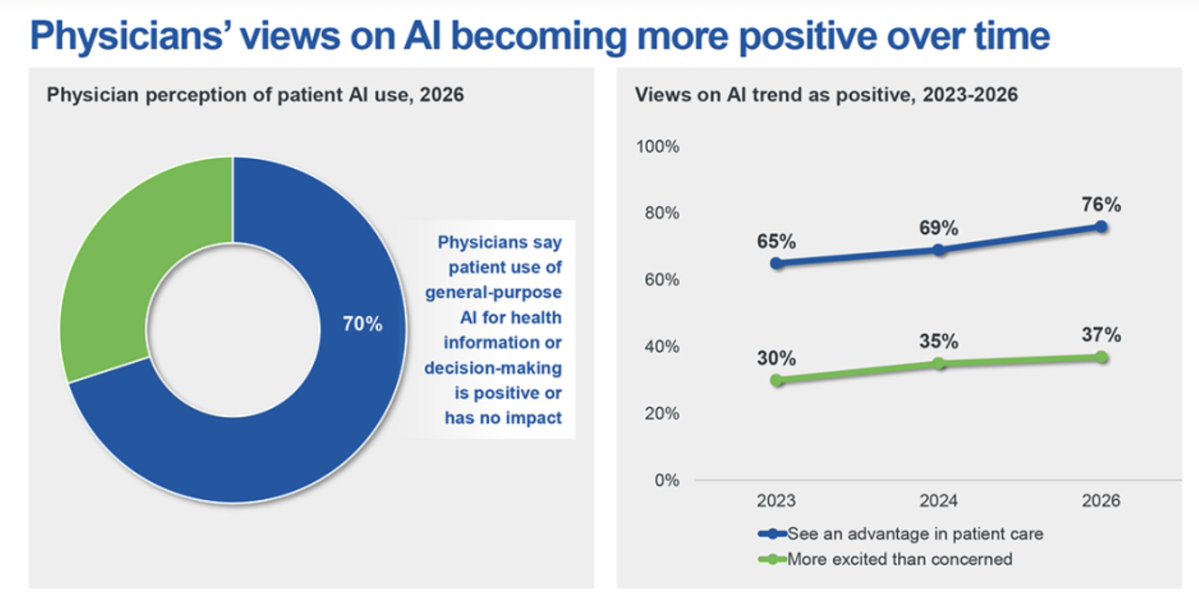
American physicians are remarkably pro-AI, and getting more supportive each year. 76% of doctors believe AI can help their ability to care for patients. And 70% believe that patients’ use of general-purpose AI chatbots for health information is positive / or has no impact. AI will not become a part of American healthcare without buy in from physicians (i.e. individual physicians, not the AMA or other societies, that don't necessarily speak for docs). Misguided ideas like the NY state bill would limit patient access to these tools. But most American doctors understand that banning data centers is bad for patients.
Sebastian Caliri tweet media
English
11
21
120
15.2K
Eduardo Reis retweetledi
Chris Orlob
Chris Orlob@Chris_Orlob·
Gong grew from $200k ARR to $200M ARR and $7.2B valuation in a 5 year span. Buyers told us our demos were 2nd to none. 9 lessons I learned about SaaS demos I'll never forget:
English
27
56
996
259.4K
Eduardo Reis retweetledi
Yoonho Lee
Yoonho Lee@yoonholeee·
How can we autonomously improve LLM harnesses on problems humans are actively working on? Doing so requires solving a hard, long-horizon credit-assignment problem over all prior code, traces, and scores. Announcing Meta-Harness: a method for optimizing harnesses end-to-end
Yoonho Lee tweet media
English
75
263
1.6K
425.6K
Eduardo Reis retweetledi
Ankit Gupta
Ankit Gupta@agupta·
Fun update: I got tired of disliking every email client I’ve ever used and built my own. It’s called Exo (for exoskeleton). It’s Claude Code for my inbox. It manages my inbox for me, and it’s open source. Link to repo + some notable features in thread!
Ankit Gupta tweet media
English
100
55
984
166.8K
Eduardo Reis retweetledi
Salma
Salma@Salmaaboukarr·
it's time @claudeai
Salma tweet media
English
215
686
8K
776.4K
Eduardo Reis retweetledi
vitrupo
vitrupo@vitrupo·
Jeff Dean says we’re going to have to re-engineer our tools because they were designed for human speed. An AI agent can run 50x faster, but the tools it relies on don’t. So even if the model gets infinitely fast, you only get 2-3x improvement overall. Amdahl’s law still applies.
English
126
169
1.3K
339.2K
Eduardo Reis retweetledi
Olafur Pall Olafsson
Olafur Pall Olafsson@olafurpall80·
@JoinLifespan Just because epigenetic drift follows a predictable pattern doesn't necessarily mean it's causal in aging. Predictable patterns can form from stochastic reactions. Also you cannot fix all extracellular damages with cellular rejuvenation. More here: olafurpall.substack.com/p/why-aging-is…
English
9
7
50
188.9K
Eduardo Reis retweetledi
David Sinclair
David Sinclair@davidasinclair·
This paper took us 13 years and is one of the longest papers ever in Cell. Check it out & judge for yourself cell.com/cell/fulltext/…
David Sinclair tweet media
Olafur Pall Olafsson@olafurpall80

@JoinLifespan Just because epigenetic drift follows a predictable pattern doesn't necessarily mean it's causal in aging. Predictable patterns can form from stochastic reactions. Also you cannot fix all extracellular damages with cellular rejuvenation. More here: olafurpall.substack.com/p/why-aging-is…

English
25
271
1.5K
221.1K
Eduardo Reis retweetledi
Dalton (Analyze & Optimize)
Dalton (Analyze & Optimize)@Outdoctrination·
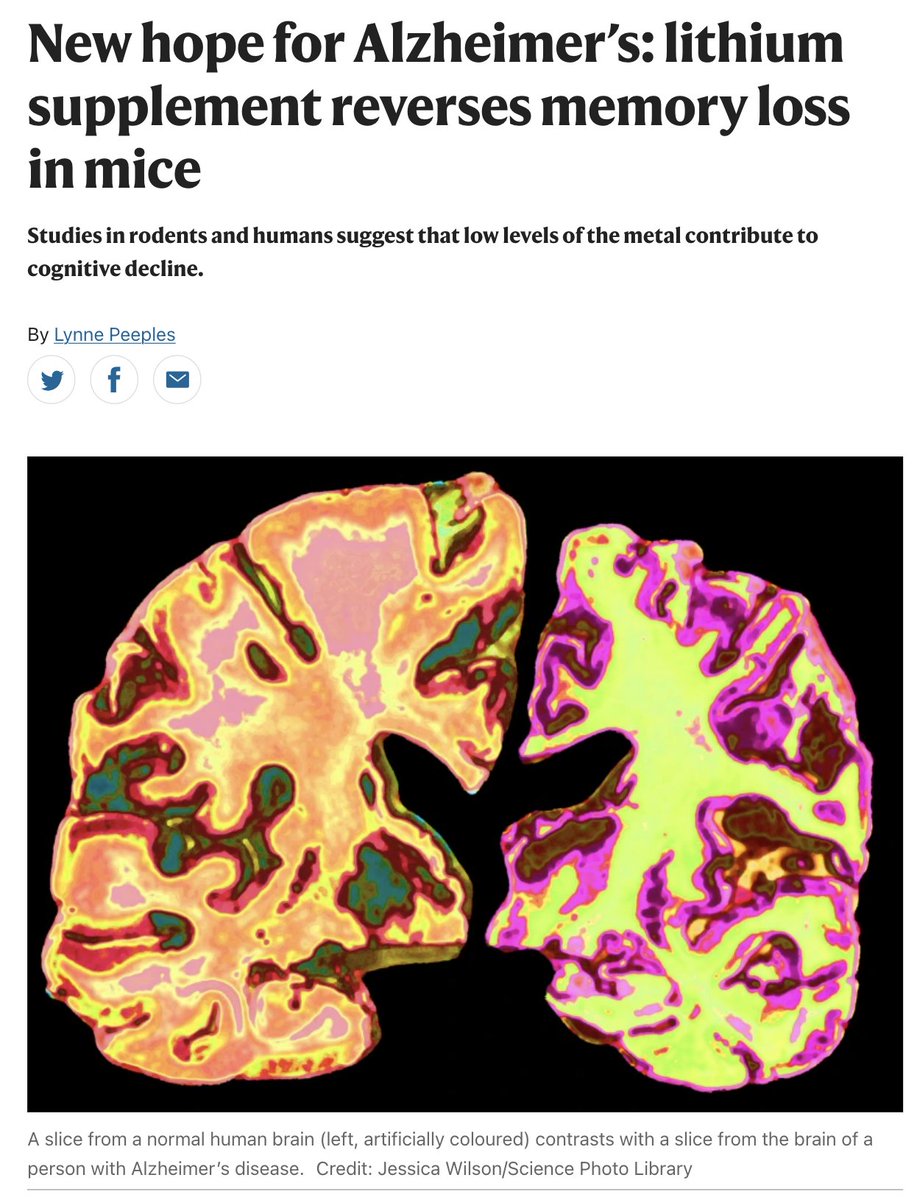
A groundbreaking new study shows that a mineral deficiency can drive Alzheimer's, and consuming it can reverse it. (🧵1/10)
Dalton (Analyze & Optimize) tweet media
English
32
212
1.2K
95.3K
Eduardo Reis retweetledi
shyamal
shyamal@shyamalanadkat·
context is the new code - and right now it’s not easily version-controlled, portable, or auditable
English
20
10
91
9K
Eduardo Reis retweetledi
Patrick OShaughnessy
Patrick OShaughnessy@patrick_oshag·
William on how an early stage employee takes way more risk than a founder: "If I'm making $400-500K at Google or Meta and go to an early stage company to get 1% of this company and make $90,000. I've now changed the trajectory of my life, that's a lot of risk. But as a founder, you're not. It's a much higher likelihood that of the next round, regardless of your company, you'll be able to sell some secondary. If it shuts down, you can get employed at a great company, and you have a CEO on your resume. That first employee, they have first employee at a failed company. That's actually not a great resume line item. So we've de-risked the founder, but we haven't de-risked the early stage employee."
Patrick OShaughnessy@patrick_oshag

.@williamhockey is one of the least visible founders in tech relative to what he has created. He co-founded Plaid and is now building Column, a software company that owns a bank, and powers Ramp, Wise, Bilt, Mercury, and others. He funded it himself by borrowing against nearly everything he had in Plaid shares, and has never raised any outside capital. His story matters because so much of the value in our industry gets created through exactly this kind of extreme personal risk. He is maniacal about being the best in the world at his thing, and has spent his entire career betting on himself and doing whatever it takes to win. He also spends a lot of time outside the US (in places like Kinshasa) which has given him a rare perch on the power of the US dollar. We discuss: - Why emerging markets are often the most financially innovative - What owning 100% of his company allows him to do that VC-backed founders cannot - Getting margin called and nearly going bankrupt - Why the best founders are specialists - What it takes to be the best in the world at your thing - How Silicon Valley's consensus culture produces consensus founders - How the US dollar functions as an instrument of national security Enjoy! Timestamps: 0:00 Intro 9:19 Emerging Markets 14:03 Silicon Valley's Elite Consensus Problem 16:03 Rejecting the VC Hamster Wheel 21:45 Equity and Liquidity 26:03 Funding a Bank 29:45 The Necessity of Extreme Founder Risk 37:18 Finding Leverage 45:20 Longevity and Profitability in Banking 48:46 Matching Your Capital Structure to Your Business 51:44 The Unseen Power of the US Dollar 1:02:30 How AI Will Transform Legacy Banks 1:09:23 The Kindest Thing

English
109
104
2.5K
900K