
Eli Bar-On
388 posts

@eli_bar_on
Chief Executive Officer, @mena_2050, head in the air, feet on the ground, dreamer and doer. Let's work together to bring hope and prosperity to our MENA region!


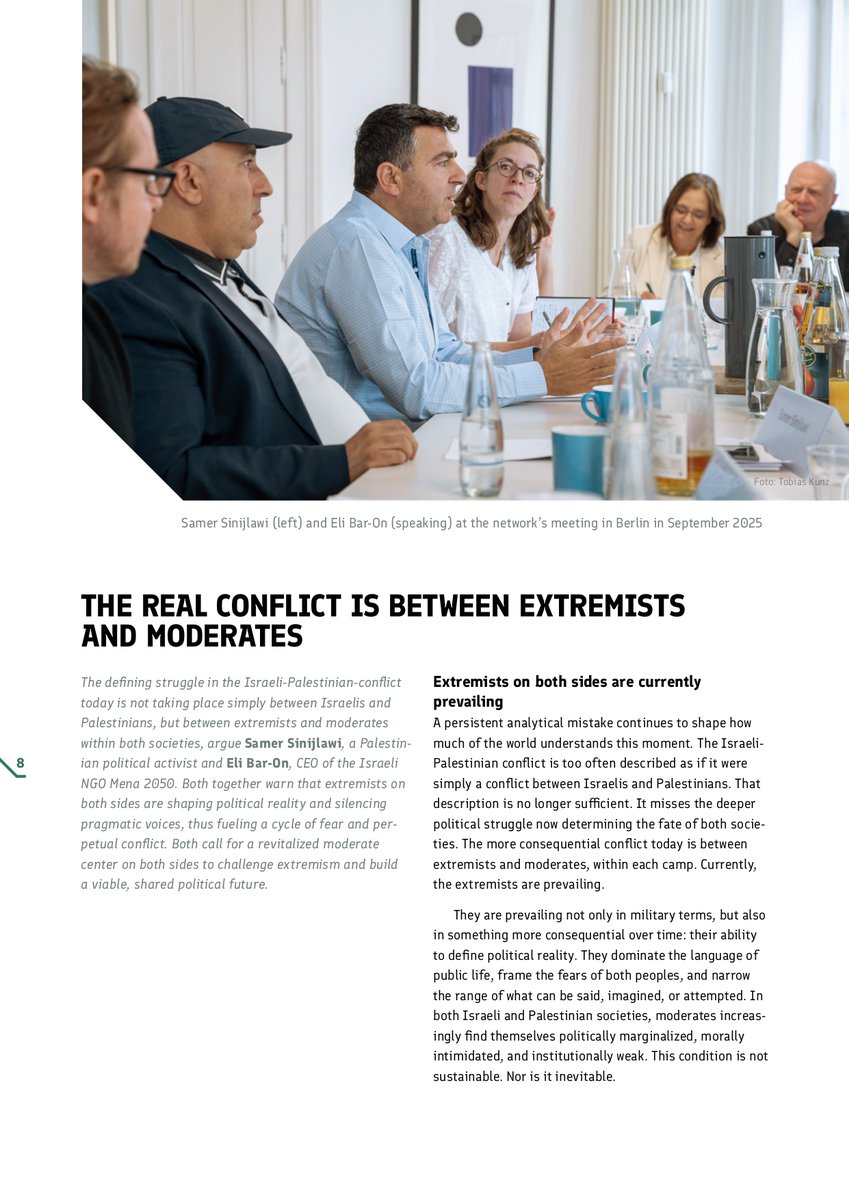
When we speak about moderates versus extremists, we are not describing the traditional divide between the political left and the political right. Moderates exist on both sides of that spectrum. They include Israelis and Palestinians—whether from the left, the center, or the right—who recognize that the current reality is unsustainable and that continuing on the same path will only bring more violence, suffering, and instability. Extremists, by contrast, are those who reject compromise, fuel perpetual conflict, or believe that military force alone can determine the future. The challenge before us is therefore not to defeat the political right or the political left. It is to build a broad coalition of pragmatic Israelis and Palestinians who understand that the time has come to fix what is broken and create a future based on security, dignity, and hope for both peoples.


Artificial intelligence is rapidly changing the global landscape, but across the MENA region, not everyone is moving at the same pace. While Gulf countries are investing heavily in AI infrastructure, North Africa is home to a growing generation of talented engineers, researchers, and innovators. The challenge is not simply closing this gap, but finding ways to bring these complementary strengths together. In his latest @MENA_2050 policy brief, Youssef Lahbiel, a MENA2050 member, explores how greater regional cooperation could connect Gulf investment with North African talent, creating a stronger and more competitive AI ecosystem for the region. AI is more than a technological race. It is an opportunity to build new partnerships, strengthen regional resilience, and shape MENA's role in the future of global innovation. Read here the full policy brief: mena2050.org/news/policy-br… #MENA2050 #AI #ArtificialIntelligence #Innovation #MENA #RegionalCooperation #DigitalTransformation #NorthAfrica #Gulf

𝐋𝐚𝐮𝐧𝐜𝐡𝐢𝐧𝐠 𝐌𝐄𝐍𝐀'𝐬 𝐅𝐢𝐫𝐬𝐭 𝐑𝐞𝐠𝐢𝐨𝐧𝐚𝐥 𝐀𝐠𝐫𝐢𝐟𝐨𝐨𝐝 𝐒𝐲𝐬𝐭𝐞𝐦𝐬 𝐖𝐡𝐢𝐭𝐞 𝐏𝐚𝐩𝐞𝐫 𝐚𝐭 𝐃𝐢𝐚𝐥𝐨𝐠𝐮𝐞𝐍𝐄𝐗𝐓 𝐀𝐟𝐫𝐢𝐜𝐚 Dr. Lee Recht, Chairwoman of the MENA2050 Food Systems Committee, has unveiled the new white paper "𝐓𝐫𝐚𝐧𝐬𝐟𝐨𝐫𝐦𝐢𝐧𝐠 𝐀𝐠𝐫𝐢𝐟𝐨𝐨𝐝 𝐒𝐲𝐬𝐭𝐞𝐦𝐬 𝐢𝐧 𝐭𝐡𝐞 𝐌𝐄𝐍𝐀 𝐑𝐞𝐠𝐢𝐨𝐧: 𝐂𝐡𝐚𝐥𝐥𝐞𝐧𝐠𝐞𝐬, 𝐒𝐭𝐫𝐚𝐭𝐞𝐠𝐢𝐞𝐬 𝐚𝐧𝐝 𝐏𝐚𝐭𝐡𝐰𝐚𝐲𝐬 𝐭𝐨 𝐒𝐮𝐬𝐭𝐚𝐢𝐧𝐚𝐛𝐢𝐥𝐢𝐭𝐲" at the DialogueNEXT Africa event convened by the @WorldFoodPrize in Nairobi, Kenya. The Middle East and North Africa region is often viewed through the lens of conflict, energy, or geopolitics, and far less often through the lens of food systems. Yet food systems sit at the very center of the region's most urgent questions of our time: water scarcity, climate resilience, import dependency, public health, economic diversification, youth opportunity, and regional stability. This white paper is a first-of-its-kind regional effort to examine agrifood systems across MENA as a shared regional challenge and shared regional opportunity. Launching in Africa is no coincidence: Africa and MENA are bound by geography, climate, trade, and history. When we learn, invest, and build together, both regions thrive. Thank you to the @WorldFoodPrize for your platform to speak the voice of Food Systems in the MENA region. Read the full white paper here: docs.mena2050.org/agrifood #DialogueNEXT #MENA2050 #AgrifoodSystems #FoodSecurity #WorldFoodPrize #Sustainability


The Phosphate Pivot: Why Morocco and Tunisia Matter to U.S. Food Security Phosphate is no longer merely a fertilizer input. In an era of geopolitical competition and increasingly fragile supply chains, it has become a strategic resource with direct implications for food security, economic resilience, and national security. As China tightens phosphate exports and global dependencies become more visible, securing reliable and diversified supply chains has become a strategic imperative. In this new analysis, @MENA_2050 members Dr. @Gbaghazi and @elahmadim, together with @sabinajh3, argue that a stronger Morocco–Tunisia partnership could anchor a resilient fertilizer corridor, deepen Mediterranean economic integration, and enhance long-term food security for the United States, Europe, and Africa. The article examines how industrial cooperation, strategic infrastructure investment, and regional connectivity can strengthen resilience, reduce vulnerabilities, and promote stability in an increasingly fragmented world. Read the full analysis to explore why North Africa may hold a critical key to the future of global food security: mena2050.org/news/the-phosp…