
Sabitlenmiş Tweet
Emir Atli
1.6K posts


Emir Atli
@emiratli_
Co-founder at HockeyStack. Revenue Agents for the Enterprise. Raised $50M+ from YC, Bessemer, GC, Soma, and Uncorrelated.
San Francisco Katılım Temmuz 2020
710 Takip Edilen6K Takipçiler

Raising the wrong Series A kills hundreds of great startups every year. If you have a term sheet on the table, make sure you’re not making one of these 5 mistakes:
1. Raising Series A pre-empted
It’s a great feeling to have an investor already on your cap table to give you a term sheet and pre-empt you. But this is actually a trap because there is a big chance that:
- You actually don’t need the money
- Price is too low
- You are not ready to run a good process fast
So you actually end up raising at a lower valuation and without proper process/story.
2. Raising before true PMF
Series A is the loudest external validation founders see at the early stages. Most seed-stage founders are dreaming of the day they announce this round. But most don't think about what being a Series A company actually means:
- A board member in every major decision
- Board-level numbers you have to hit
- P&L, CAC, LTV, payback, all of it
All of these mean that you cannot focus on hitting PMF and you cannot pivot easily. It’s all about scaling as quickly as possible.
If you don’t 100% believe you have true product-market fit, you should not raise a Series A.
3. You are tired of being a seed-stage company/founder
A lot of founders want to raise a Series A because they don’t want to be a “seed stage” company. You think enterprise buyers won't take a seed company seriously. That’s not true anymore. Enterprise appetite for early-stage tools is the highest I've seen.
I closed multiple 6-figure deals as a seed-stage founder in 2024. If you have PMF and good demand gen, they will buy.
4. Raising without thinking about board control/dynamics
The decisions you make at Series A is determine future rounds. You need a very good company-side counsel before going into negotiations, and the founders need to align on what they want in board dynamics to be able to maximize control. Too many founders think they can just change things later in future rounds and end up getting bad terms, the wrong control, and hate their lives at their own companies.
5. Optimizing for the highest valuation
Raise too much at too high a price and you spend the next 18 months growing into an realistic number. Miss it and your next round is flat or down, which kills momentum and morale.
TAKEAWAY
The term sheet is the start of the race, not the end.
Every decision you make at this stage is mission critical, especially the timing.
Series A sets the stage for the future rounds. Board seats, control, the people in the room when it gets hard.
Get those right, and the money is the easy part.
Get them wrong and you'll have to raise again just to fix them.
English

I'm deeply grateful and honored
YC has changed my life twice: first as a founder, and now as someone who gets to back and support ambitious talent that's unproven
feel lucky to do this work, and even luckier to do it with people I admire so much
Y Combinator@ycombinator
We're excited to announce Diana Hu (@sdianahu) as YC's newest Managing Partner. Diana co-founded Escher Reality (YC S17), which was acquired by Niantic, where she shipped AR to the 100M+ people playing Pokémon GO. Since returning to YC as a partner, she has worked with nearly 230 companies that are now worth a combined $7 billion. Few people have built a startup from zero and also shipped at global scale. Diana has done both. ycombinator.com/blog/diana-hu-…
English


Went to breakfast with an old friend
Asked how he's using AI in his startup
He paused for a moment
"As a large language model, I can't help with that request."
Unbelievable.
He was using AI and sent his robot clone to breakfast with me.
You think you know someone...
English

So we got a multibillion dollar captive out there. Kind of. More or less. @CORGI is suddenly a massive player in the startup business insurance space. Here is a breakdown on what the company is & how its doubled its billion dollar valuation in 3 weeks.
Corgi is the program administrator for the Technology Risk Retention Group, Inc. An RRG is a member-owned liability insurance company permitted to write across state lines. It's similar to an E&S carrier but only has filings with its domicile state & has materially lower capitalization requirements. TRRG is domiciled in Arizona which has a minimum paid in capital requirement of $500k.
TRRG is, in turn, reinsured by Corgi Reinsurance, Inc. Corgi Re is also an Arizona domiciled entity and appears to be a captive.
Both TRRG & Corgi Re are managed by Dane Management, LLC.
So what is Corgi? And why is it so important?
English
Just chatted with a founder friend
He has a huge problem
3 months ago, he told his team to spend whatever they wanted on AI
No limit or budget
He just got the bill
$575,000 for last month alone
His company only does $50k in MRR
He's panicking
I told him to relax
"Spend 10x more," I said
He looked at me like I was crazy
"Look, if you owe the AI company $500k, that's your problem. But if you owe them $50 million, that's their problem."
English


Today, I'm incredibly excited to announce @withdefault's Series A led by @8vc and our new product.
We spent the last three years building the tools and orchestration layer companies like @owner and @AirbyteHQ have used to build infrastructure across their go-to-market functions.
Today, we're launching the first real-time data layer for go-to-market, a powerful new revenue agent, and a suite of tools for revenue teams and their agents.
It's Day 1.
English

Anyone know who funded them? Worked it into the subject, body, and signature.


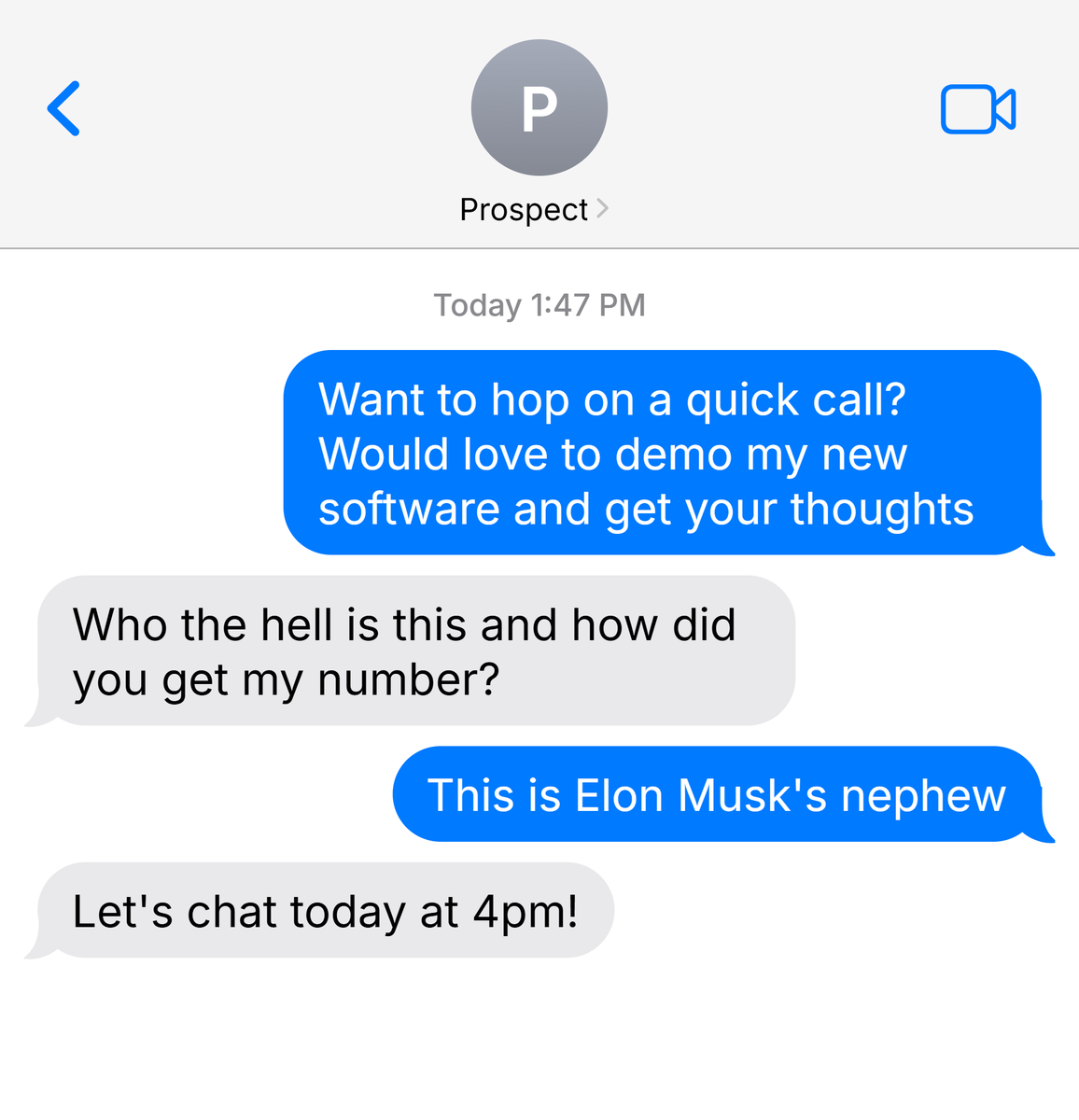
English



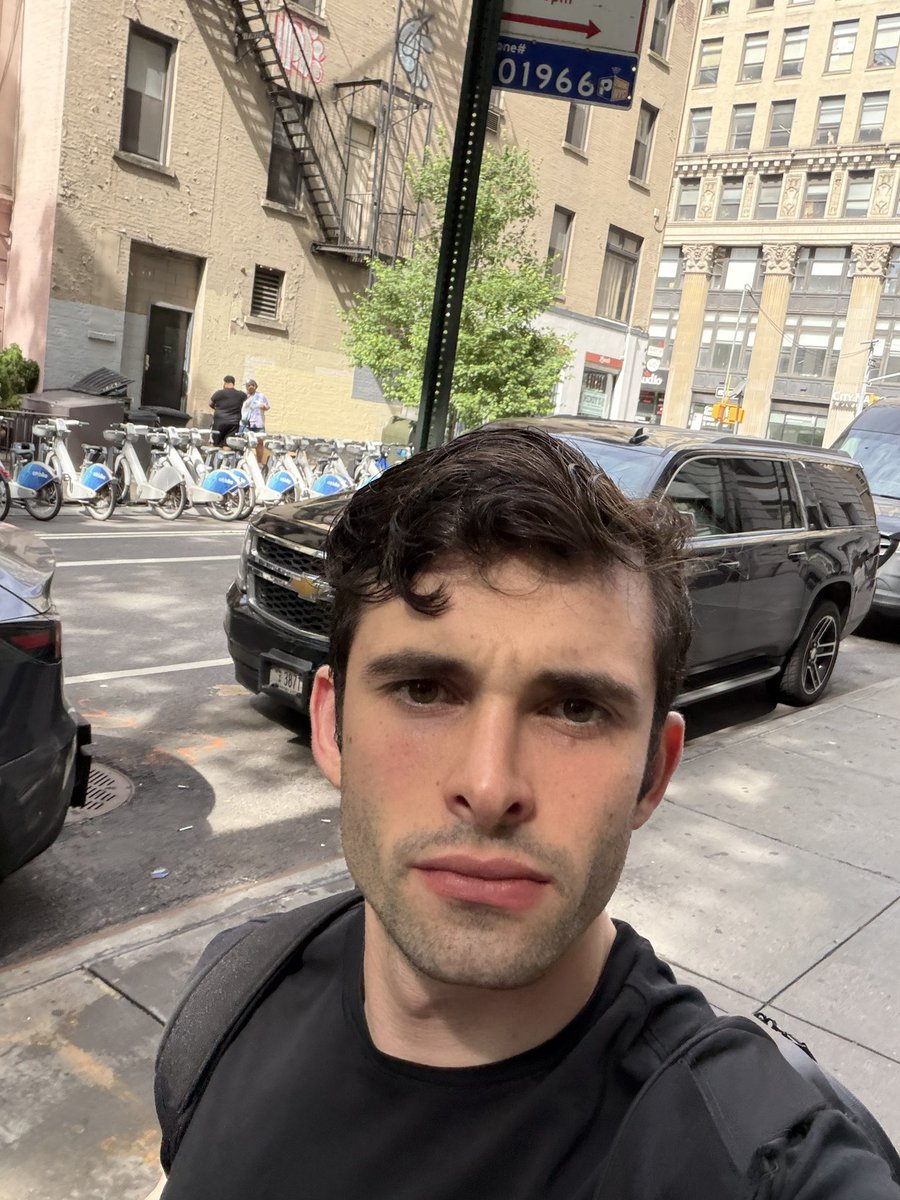
Back in nyc… spent a week away
Forgot how nyc is the best city in the world
Fuck sf

English
Just chatted with an old startup friend
Asked what he's been building lately
Told me he's founded 90 new startups in the last month
Vibe coded every single one of them in just a few minutes
I asked if any of them generated revenue
He said no and told me that I just didn't understand what vibe coding is all about
English