Elizabeth McNally retweetledi
Elizabeth McNally
599 posts

Elizabeth McNally
@emmcnally
Scientist, physician, sports fan
Chicago Katılım Haziran 2013
231 Takip Edilen888 Takipçiler
Elizabeth McNally retweetledi

The future belongs to men and women of peace. Justice will always triumph over injustice in the end, just as violence will never have the last word, despite all appearances. #ApostolicJourney #Algeria vatican.va/content/leo-xi…
English
Elizabeth McNally retweetledi

@RepBillFoster What do these funds go to? Institutional review boards to keep patients safe in clinical trials, support for animal welfare, laboratory safety, keeping the lights on, the buildings heated/cooled, the water running, the safety hoods working and more.
English

This is dangerously irresponsible on every level. Indiscriminately slashing this funding will cripple lifesaving research on everything from cancer to opioid addiction.
The Trump Administration's willful ignorance of the critical funding behind our research infrastructure will put American lives at risk. We will remember this moment the next time a public health crisis strikes.
NIH@NIH
Last year, $9B of the $35B that the National Institutes of Health (NIH) granted for research was used for administrative overhead, what is known as “indirect costs.” Today, NIH lowered the maximum indirect cost rate research institutions can charge the government to 15%, above what many major foundations allow and much lower than the 60%+ that some institutions charge the government today. This change will save more than $4B a year effective immediately.
English
Elizabeth McNally retweetledi

Investigators celebrated the 100-year anniversary of @jclinicalinvest during a day-long symposium on campus.
Congratulations on 100 years of excellence! 👏
spr.ly/6017SK05x
English
Elizabeth McNally retweetledi

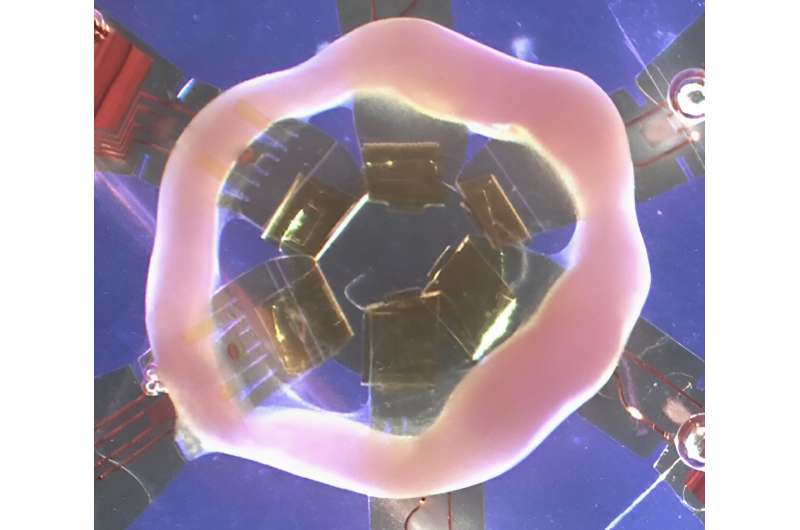
"If we get results out of the tissues that predict what happens in humans, that's incredibly valuable for us." Elizabeth McNally, MD, PhD (@emmcnally), discusses a recent Northwestern Medicine study published in Science Advances, where scientists discovered a new way to measure #HeartContraction and electrical activity in #engineered human heart tissues. medicalxpress.com/news/2024-09-h…

English
Elizabeth McNally retweetledi

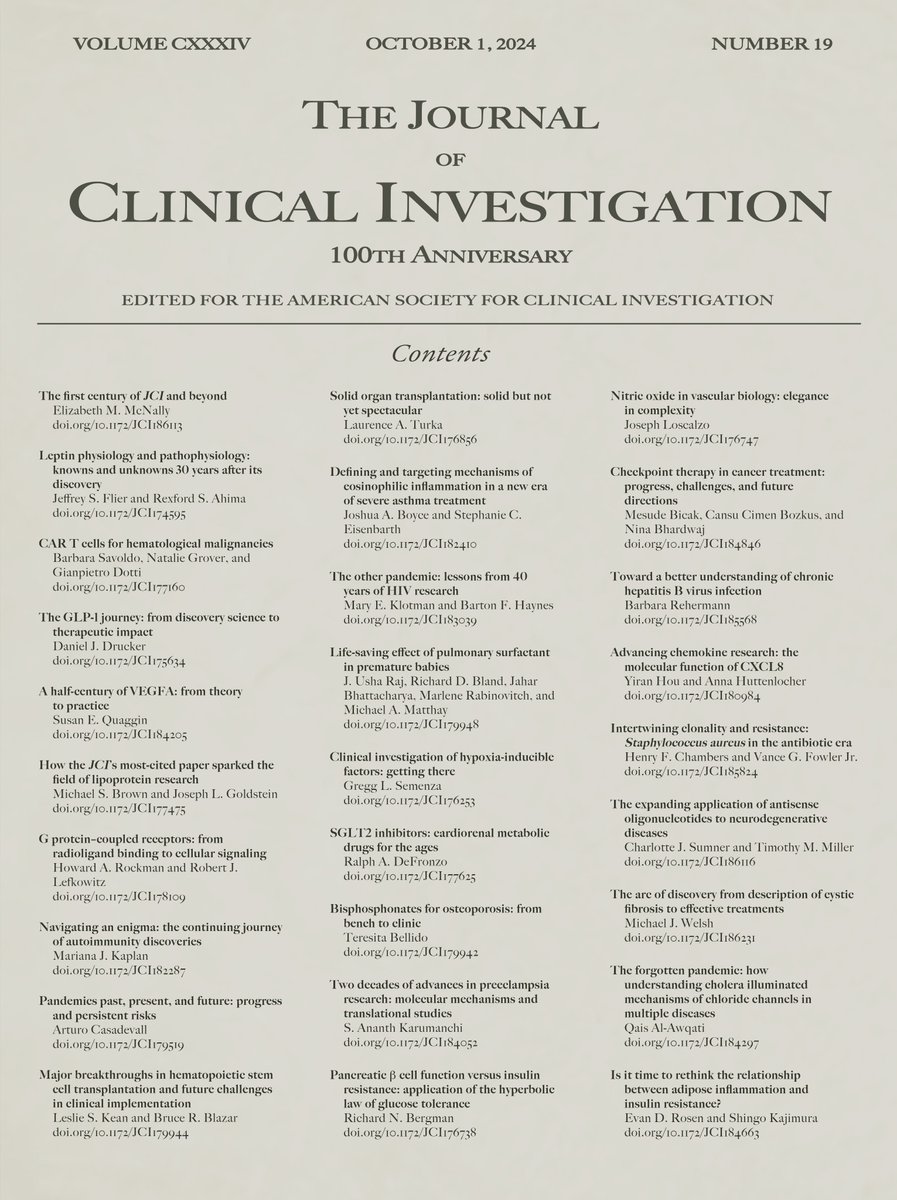
The first century of JCI and beyond...
Editor-in-Chief @emmcnally reflects on the 100th anniversary of the Journal of Clinical Investigation, major breakthroughs in medicine in the last century, and emerging areas of innovation.
jci.org/articles/view/…

English
Elizabeth McNally retweetledi

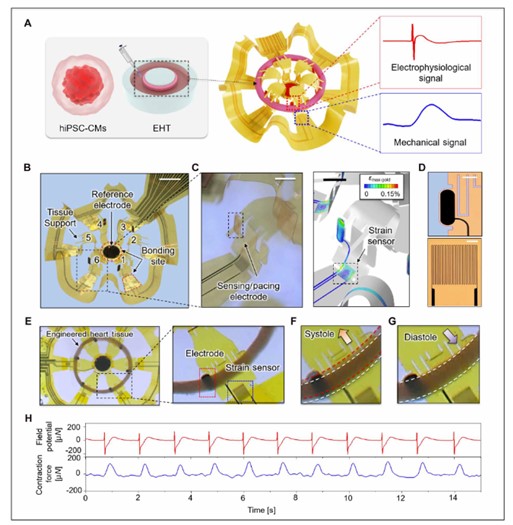
Happy to report the publication today of our latest paper in @ScienceAdvances – three-dimensional (3D) mesoscale interfaces to cardiac organoids derived from human stem cells, with applications that range from drug testing and to disease modeling. These biological systems avoid limitations associated with animal model studies, and they allow for patient-specific investigations. Methods for electrically interrogating and stimulating and these organoids are currently limited, however, by the lack of small-scale, flexible electrical and mechanical interfaces capable of precise time-synchronized measurements for long-term studies. The results reported in our paper address this unmet need, in the form of a unique 3D filamentary electronic architecture that integrates arrays of multiplexed electrical and mechanical sensors and stimulators in a framework that not only supports the cardiac organoid but also delivers well-defined mechanical loading to mimic a native tissue environment. Thanks to Dr. Wooyoul Maeng and to Prof. Dominic Fullenkamp for their leadership on the aspects in engineering and cardiac science, respectively. Thanks also to senior collaborators Prof. E. McNally @emmcnally and Prof. I. Efimov @IEfimov. The image below is featured on the Science Advances website. A reproduction of Figure 1 shows various features of the engineering designs and some typical recorded data.
science.org/doi/10.1126/sc…


English
Elizabeth McNally retweetledi

Australia to completely ban the use of genetic information in life and disability insurance. A huge win for the genetic disease community, for research participants and researchers, and for @JaneMTiller and others who tirelessly campaigned for this change! abc.net.au/news/2024-09-1…
English
Elizabeth McNally retweetledi

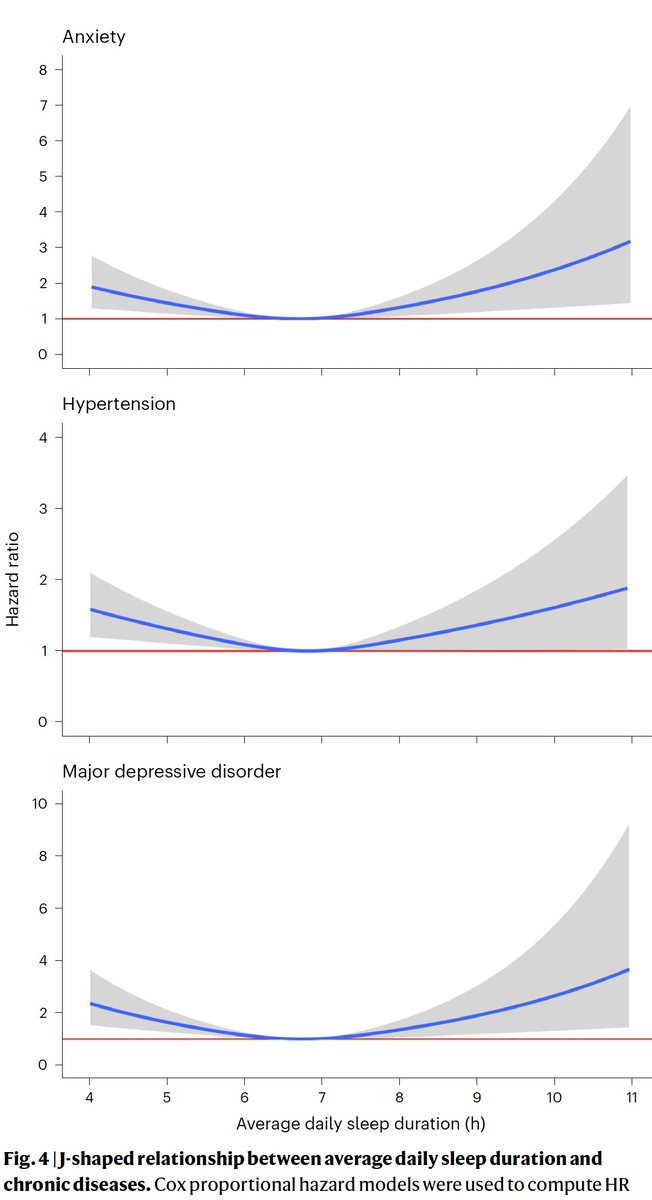
A relationship ≠ cause and effect. A major depressive disorder can underly excessive sleep duration.
A side note: many studies have concluded that 7 hours is the optimal sleep duration. For example:
nature.com/articles/s4358…
English

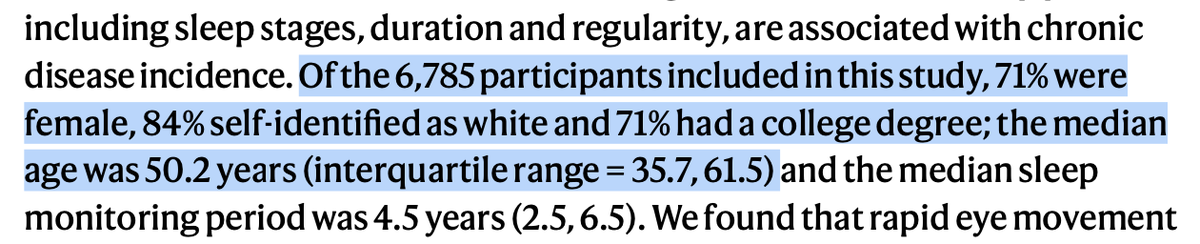
The relationship between sleep duration and some chronic conditions in ~7,000 @AllofUsResearch participants @NatureMedicine
nature.com/articles/s4159…

English