
Eric 🔺
100 posts


Eric 🔺
@eric_lu_sc
Lead Economist @AvalancheFDN @avax. Fresh account. NFA. Views are my own.
Katılım Kasım 2012
64 Takip Edilen566 Takipçiler

@eric_lu_sc What are future sources of potential revenue for validators besides AVAX emissions? Diverting some AVAX that would have been burned as gas would simply create more sell pressure. MEV? Something else?
English
Yes. This is one of first mechanism we can try when we are put all these parameter in a quantitative model (the model in the paper does allow for this). We can even try something even more wild: for example, dynamically adjust the burn vs redistribute ration according to market conditions (think pro-cyclical or countercyclical). However, I do want to note that at the end of the day, this is still a distribution policy. The bigger question to solve imo is to expand the sustainable and distributable value beyond transaction fees.
English

@eric_lu_sc @gunduru Yep. Maybe divert some % to validators and burn the rest. Generally like very much where this discussion is going.
English
@eric_lu_sc @gunduru For 2) why not redistribute some or all transaction fees to validators, instead of burning?
English
@RebaseMan Not sure I completely follow your question. Could you elaborate on the imbalance you mentioned?
English

@eric_lu_sc The current imbalance in gas paid being several orders of magnitude because of priority fees for rapid inclusion -- how are you looking at priority fees / urgency vs. base fees / covering costs?
English
This is exactly the type of questions we need to address. It's actually 2 questions: 1) what is the appropriate level of incentive to keep the validators validating? 2) how can we finance such validator incentives? For #1, I think it will be helpful to explore market based approach to "price" validating nodes (which is essentially a public goods for the ecosystem). For #2, I think the end goal is obvious: we need to find other sustainable funding source for validator incentives.
English

@eric_lu_sc When emissions inevitably drop, not sure what keeps the infrastructure secure?
English
Value accrual isn't a narrative - it's an equilibrium outcome.
We wrote up how the Avalanche Foundation thinks about AVAX tokenomics: why "more staking" isn't automatically better, why emissions are redistribution (not free yield), and why the real question isn't whether the ecosystem creates value - but how the mechanisms route it through AVAX.
A general-equilibrium lens on supply, demand, and the trade-offs that actually matter 👇
Eric 🔺@eric_lu_sc
English
Eric 🔺 retweetledi

Most tokenomics debates are overly simplistic: "more staking is good," "burn is good," "APR is good."They pick a side:
• Supply or demand
• Staking or liquidity
• Burn or emissions.
The more useful frame is how those forces interact in equilibrium, and what any given policy actually does to both sides at once.
Eric Lu, our Lead Economist at Avalanche Foundation, published a rigorous breakdown of exactly that.
Worth reading if you're interested in how value actually accrues in a token ecosystem!
Eric 🔺@eric_lu_sc
English

@eric_lu_sc this is the right approach-tokenomics and value accrual ideals have changed a lot in the last 5 years and we must adapt. i'm excited to see what changes Avalanche makes on both supply & demand side
English

Absolutely. The paper I cite in the article has an important takeaway that the monetary policy, validator incentives, and the financing of validator incentives shape the trajectory to the mature state of the chain. And to make more informed decisions about what trajectory we want to take from here, we first need to have a better understanding of where there ecosystem is at right now in terms of maturity. This is where the on-chain GDP accounting comes in.
English

@eric_lu_sc The net burn vs net mint number matters - the question becomes can an early growth ecosystem maintain enough velocity to overcome the inflation paradigm. How does the foundation track and calibrate foe this metric?
English
@RicardOruka For sure, we will be sharing some programs aiming at these questions.
English
@eric_lu_sc Great reading! Looking forward for building answers!
English
Eric 🔺 retweetledi

Avalanche Summit New York 2026.
September 16th & 17th.
See you there 🔺
English
Eric 🔺 retweetledi

Avalanche Summit New York is coming 🔺
September 16th and 17th, 2026.
Builders, founders, and ecosystem leaders gathering in New York City for one of the biggest events in the Avalanche calendar.

English
Eric 🔺 retweetledi
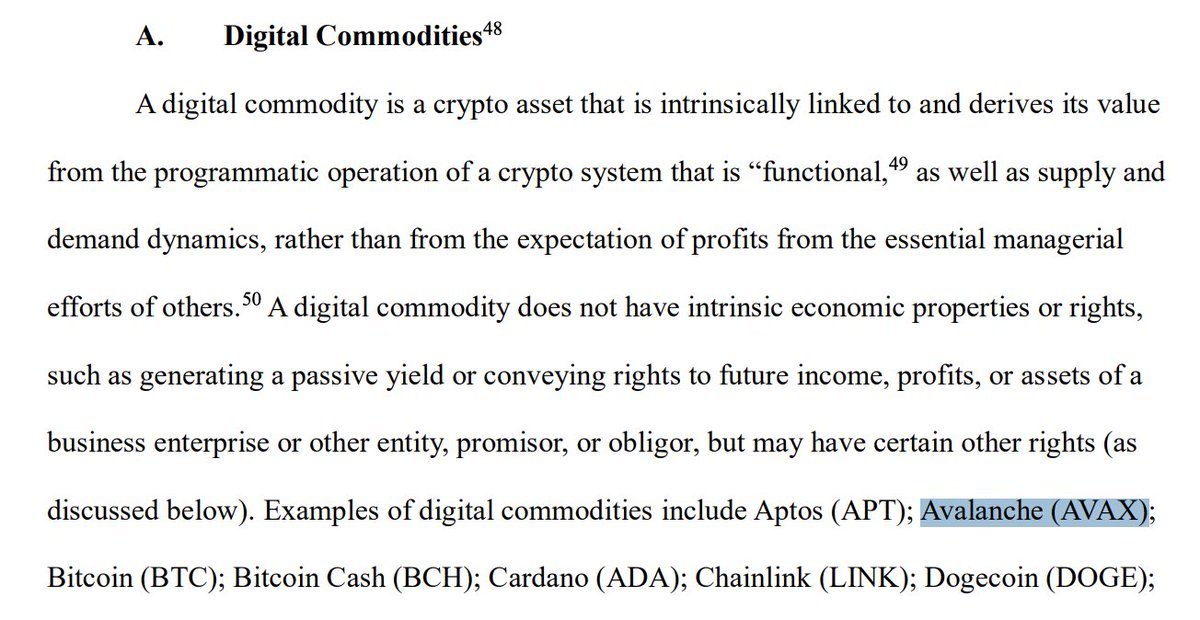
The Avalanche Foundation welcomes the recognition of $AVAX as a digital commodity in the SEC's recent CFTC release.
A reflection of the network's maturity, credibility, and the work this ecosystem has put in 🔺
English
Eric 🔺 retweetledi


Eric 🔺 retweetledi
Thank you for all the thoughtful replies to my reflection on Avalanche Foundation programs!
Here are three standout ideas from the replies, with full credit to the community members who shared them:
1. @0xSmitty: Got me thinking about what momentum really means, the value it creates, and what mechanisms could amplify it. One angle worth exploring: measuring "vibes." What could that methodology look like, and where could that data feed into program design? Interesting problems to sit with.
2. @ijaack94: A really interesting idea here around a reward system for APC contributions. An incentive structure like this could help bring fresh thinking to the table.
3. @MyStandard_Adam: Thoughtful points about the experience of long term builders in the ecosystem, the value of loyalty, and their real pain points, with ideas about what more could be done to support them. This gets at the tourist builder problem and how to build loyalty that lasts beyond a single grant cycle.
These are exactly the kinds of ideas that make these conversations worth having.
Keep the ideas coming. We're listening 🔺
Daniel 🔺@Dorlanz0x
English
Eric 🔺 retweetledi
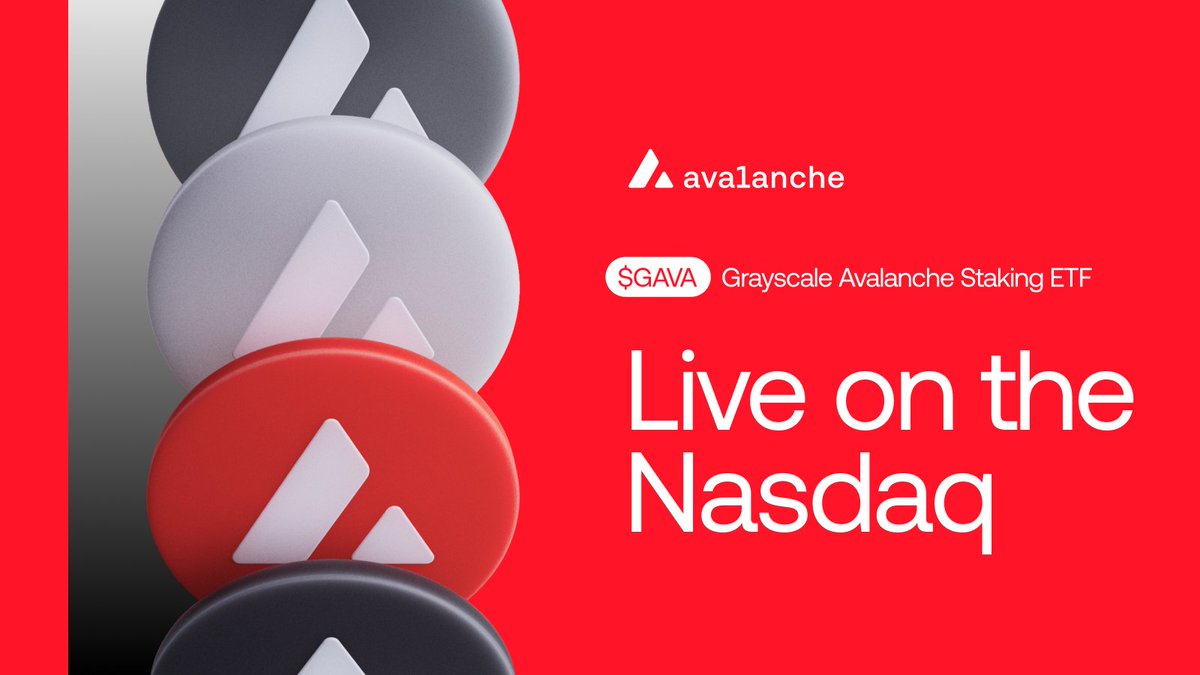
The Avalanche Foundation welcomes the launch of the Grayscale Avalanche Staking ETF ($GAVA), listed today on the Nasdaq.
This reflects Avalanche's growing role as financial infrastructure that connects traditional capital markets with onchain systems 🔺
English
Eric 🔺 retweetledi

Introducing: Team1 USA
Our mission is to build community, back builders, cultivate a culture for talent to grow, and accelerate US leadership in blockchain.
Over the coming months we will roll out official Team1 hubs across the US in major capitals of tech, AI, blockchain, and culture. Each official hub will have a lead, help coordinate local events/initiatives, and work together towards the overall Team1 mission.
The next great wave of American businesses will be built by bold founders who see a better way to do things. America has always led in innovation. The American dream has always belonged to the ones who build. Team1 is here to build with you.
Join the community below 👇
English
We are actively working on evaluating historical programs and building the analytical frameworks and data pipelines for future programs. Let’s do it!
Daniel 🔺@Dorlanz0x
English