Erik King

1.1K posts

Erik King banner
Erik King

Erik King

@erikrking

Metallica, wine, open water, XX/XY

San Francisco Katılım Nisan 2009
266 Takip Edilen162 Takipçiler
Spencer Pratt
Spencer Pratt@spencerpratt·
They not like us
English
6.1K
25.7K
152.9K
14.5M
Erik King
Erik King@erikrking·
@MrAndyNgo If these women have jobs they should be fired tomorrow. What company would want to employ a person with zero morals? Celebrating a pre-meditated murder of someone?
English
0
1
1
117
Andy Ngo
Andy Ngo@MrAndyNgo·
New York City (May 18) — Outside the courthouse where leftist assassin suspect Luigi Mangione had a hearing, antifa-style leftist credentialed “journalists” Ashley Rojas and Lena Weissbrot expressed support for the killing.
English
245
256
1.4K
48K
Rohin Dhar
Rohin Dhar@rohindhar·
Is this regulation banning gas water heaters actually really happening in the entire Bay Area in California? It will turn replacing your water heater into a catastrophically expensive event “A broken water heater will soon become thousands of dollars more expensive to replace in the Bay Area, as regulators move to phase out gas-powered models.  Starting next year, many homeowners will be required to replace broken gas-powered water heaters with electric heat pump models, a swap that is on average $3,500 more expensive”
Rohin Dhar tweet media
English
131
42
360
53.2K
Erik King
Erik King@erikrking·
OpenAI is getting outmaneuvered in the enterprise. Interesting to watch…
English
0
0
0
1
Reverend Jordan Wells
Reverend Jordan Wells@WellsJorda89710·
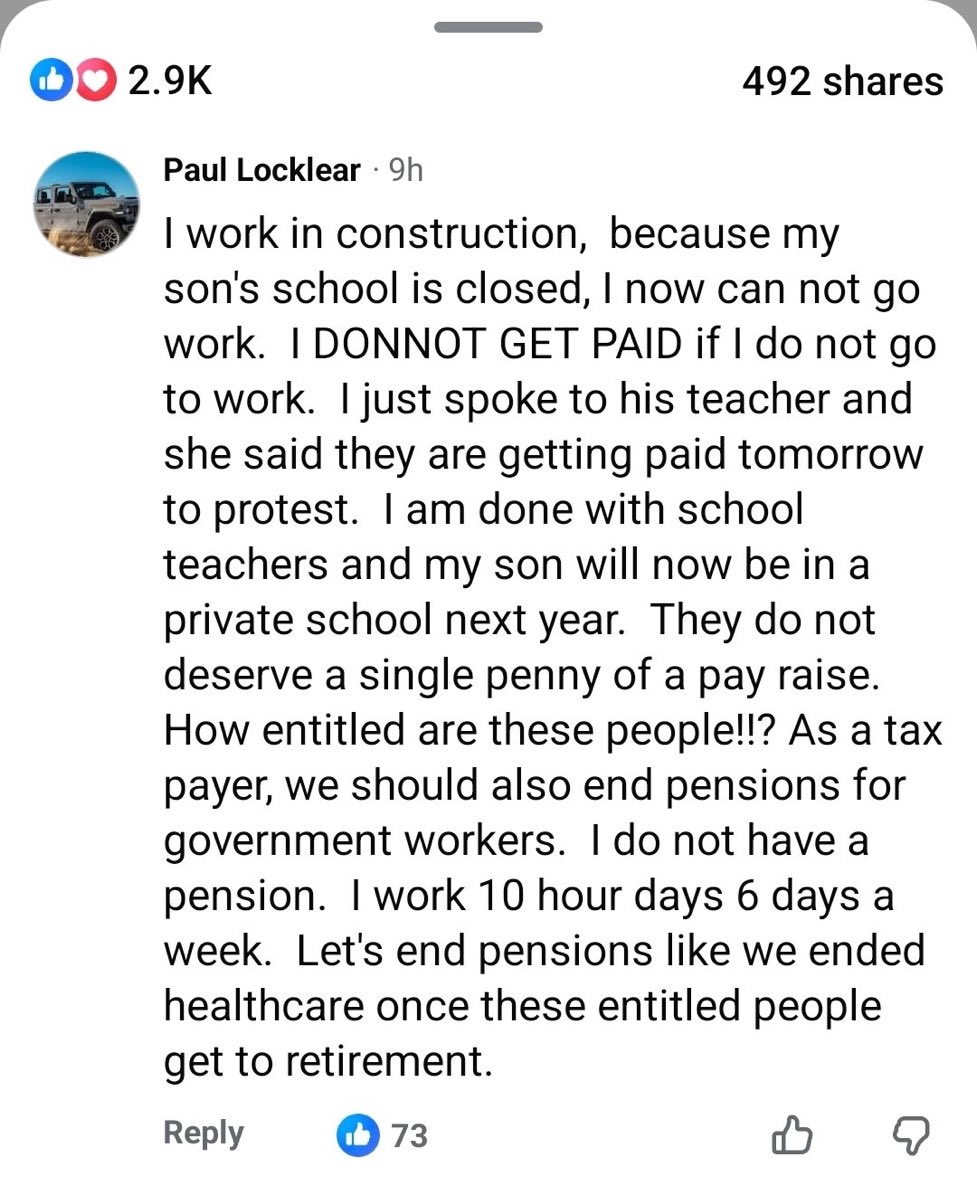
🚨Construction worker drops truth bomb on NC teachers’ union “sick-out” today:🚨 “I work in construction. My son’s school is closed because teachers called out to protest in Raleigh. I don’t get paid if I don’t show up — no work, no paycheck. Just talked to his teacher. She admitted they’re getting full pay tomorrow while marching. I’m done. These entitled folks don’t deserve another dime in raises. As a taxpayer, I’m saying: end the pensions for government workers too. I have none. I grind 10-hour days, 6 days a week. No safety net. Why should they? Teachers: do your job or find another one. Our kids come first — not your rally.” Paul Locklear (and thousands of working parents nodding along) #TeachersStrike #NCSchools #KidsFirst #TaxpayerAnger #EndEntitlement #PublicEducationFail #NCTeachers #RaleighProtest #WorkForPay #SchoolChoice
Reverend Jordan Wells tweet media
English
793
11.3K
29.3K
276.9K
Erik King
Erik King@erikrking·
@Clara_Gold #5 is the most important thing. And totally agree. That’s the mental crisis affecting a LOT of people in the world.
English
0
0
0
992
Clara Gold
Clara Gold@Clara_Gold·
6 months ago, I moved to San Francisco. It’s the best place in the world to build, and one of the worst places to stay human. My unfiltered take: 1. SF is both overhyped and underrated The overhyped part: there are a lot of people with incredible resumes who are deeply unimpressive in real life. They were at the right company, at the right time, in the right market, and got carried by the wave. They made money, got comfortable, and now spend their time “exploring opportunities” over coffee, wasting your time. The underrated part: the top 1% here is insane. But almost impossible to get. Hiring in SF feels like being a guy on a dating app: everyone you want is out of your league, and everyone in your league wants someone out of theirs. The best people have unmatchable packages, endless options, and are optimizing for maximum impact: labs, frontier companies, or startups raising $100M pre-seed rounds. If you raised $10M from Tier 1 investors, you’re not hot shit here. You’re a B-player. It’s humbling. 2. There are fewer mission-driven people than I expected Especially on the application layer. A lot of people are in “secure the bag before it’s too late” mode. And honestly, it gives me the ick. The real religious builders I’ve met are often in labs, hardware, biotech, deeptech, defense — places where the work is hard enough that you can’t fake obsession. 3. The status game favors builders This is what SF does better than anywhere else. It rewards obsession. It rewards weirdness. It rewards people who make building their entire personality. Europe punishes that. SF gives it status. If you’ve felt like an outsider your whole life because you care too much, work too much, think too radically, or refuse to be chill about things that matter, this city will make you feel less insane. 4. The market liquidity is absurd Even if you don’t build a billion-dollar company, if you manage to build a strong product with a great team, someone smart might still acquire you for $ 100M. Yeah I know, it’s not your dream outcome as a founder, but on the days you feel desperate, it helps to keep going. 5. SF does not care about the meaning crisis that’s coming Anyone paying attention here can feel that something massive is happening with AI. But I’m shocked by how little people talk about the meaning crisis coming next. Everyone wants to talk about AI liberating humanity. Almost no one wants to talk about what happens when work — the thing that gives most people identity, structure, dignity, status, and purpose — starts disappearing. The vacuum will not be peaceful. People are underestimating the chaos that comes from humans suddenly having no idea why they matter. And I really feel like no one cares. 6. Personally, I’ve never been more unhappy I moved to SF and entered the matrix. I’ve always been intense. I’ve always worked crazy hours. But here, I lost the last parts of myself that were not about building. I don’t go to events. Most networking events feel like theater for people pretending to be important. The only events worth going to are small, curated dinners with people who are actually alive. I’ve made 0 real friends. I don’t do well with transactionality. I don’t do well with people constantly performing greatness. I don’t do well with rooms where everyone is optimizing and no one is being honest. So yes, SF is lonely, transactional, delusional, addictive, inspiring, boring, extraordinary, and completely insane. But it is still the only place to be right now if you’re a founder trying to build the next wave of humanity. And for now, that’s enough.
English
419
210
4.9K
1.3M
Erik King
Erik King@erikrking·
@brivael This is the best quote: “The market identifies good allocators; politics identifies good communicators.”
English
0
0
0
217
Brivael Le Pogam
Brivael Le Pogam@brivael·
Elon Musk avait dit un truc qui m'avait marqué sur l'allocation de ressources. En substance : passé un certain niveau de richesse, l'argent n'est plus de la consommation, c'est de l'allocation de capital. Cette phrase change tout. L'économie, dans le fond, c'est juste un problème d'allocation. Tu as des ressources finies et des usages infinis. Qui décide où va quoi ? Imagine une cour de récré. 100 enfants, des paquets de cartes Pokémon distribués au hasard. Tu laisses faire. Très vite, un ordre émerge. Les bons joueurs accumulent les cartes rares, les collectionneurs trient, les négociateurs trouvent des deals. Personne n'a planifié. Et pourtant chaque carte finit dans les mains de celui qui en tire le plus de valeur. Le système maximise le bonheur total de la cour. C'est ça, la main invisible. Maintenant fais entrer la maîtresse. Elle trouve ça injuste. Léo a 50 cartes, Tom en a 3. Elle confisque, redistribue, impose l'égalité. Trois effets immédiats. Les bons joueurs arrêtent de jouer, à quoi bon. Les mauvais n'ont plus de raison de progresser, ils auront leur part. Les échanges s'effondrent. La cour est égale, et morte. Elle a maximisé l'égalité, elle a détruit le bonheur. Le problème de la maîtresse, c'est qu'elle ne peut pas avoir l'information que la cour avait collectivement. C'est le problème du calcul économique de Mises, formulé en 1920. L'URSS a essayé de le résoudre pendant 70 ans avec le Gosplan. Résultat : pénuries, queues, effondrement. Pas parce que les Soviétiques étaient bêtes, parce que le problème est mathématiquement insoluble en mode centralisé. Quand Musk a 200 milliards, il ne les consomme pas, il les alloue. SpaceX, Starlink, Neuralink, xAI. Chaque dollar est un pari sur le futur. Et lui a un track record. PayPal, Tesla, SpaceX. Il a démontré qu'il sait identifier des problèmes immenses et y allouer des ressources avec un rendement spectaculaire. L'État aussi a un track record. Hôpitaux qui s'effondrent, éducation qui décline, dette qui explose, services publics qui se dégradent malgré des budgets en hausse constante. Le marché identifie les bons allocateurs, la politique identifie les bons communicants. Le profit n'est pas une finalité, c'est un signal. Il dit : tu as alloué des ressources rares vers un usage que les gens valorisent suffisamment pour payer. Plus le profit est gros, plus la création de valeur est grande. Quand Starlink est rentable, ça veut dire que des millions de gens dans des zones rurales ont enfin internet. Quand un ministère est en déficit, ça veut dire qu'il consomme plus qu'il ne produit. L'un crée, l'autre détruit, et on appelle ça redistribution. Dans nos sociétés il y a deux catégories d'acteurs. Les entrepreneurs et les bureaucrates. L'entrepreneur prend un risque personnel pour identifier un problème, mobiliser des ressources, créer une solution. S'il se trompe il perd. S'il a raison, ses clients gagnent, ses employés gagnent, ses fournisseurs gagnent, l'État collecte des impôts. Il est la cellule de base du progrès humain. Le bureaucrate ne prend aucun risque personnel. Son salaire est garanti. Au mieux il maintient une rente existante. Au pire il la détruit par excès de réglementation, mauvaise allocation forcée, incitations perverses qui découragent ceux qui produisent. Mais dans aucun cas il ne crée. Regarde les 50 dernières années. iPhone, internet civil, SpaceX, Tesla, Google, Amazon, Stripe, mRNA, ChatGPT. Toutes des inventions privées, portées par des entrepreneurs, financées par du capital risque. Pas un seul ministère n'a inventé quoi que ce soit qui ait changé ta vie au quotidien. La France est devenue le laboratoire mondial de la dérive bureaucratique. 57% du PIB en dépenses publiques, record absolu. Une administration tentaculaire, une fiscalité qui pénalise la création de richesse. Résultat : décrochage face aux États-Unis, à l'Allemagne, à la Suisse. Fuite des cerveaux. Désindustrialisation. Dette qui explose. Et le pire c'est que la mauvaise allocation s'auto-renforce. Plus l'État prélève, moins les entrepreneurs créent. Moins ils créent, moins il y a de base fiscale. Plus l'État s'endette et taxe. Boucle de rétroaction négative parfaite. La maîtresse pense qu'elle aide, et chaque année la cour produit moins. Dans nos sociétés, ce sont les entrepreneurs, toujours, qui font avancer la civilisation. Les bureaucrates au mieux maintiennent une rente, au pire la détruisent. Aucune société n'a jamais progressé en taxant ses créateurs pour subventionner ses gestionnaires. La question n'est jamais qui a combien. C'est qui alloue le mieux la prochaine unité de ressource pour maximiser le futur de l'humanité. La réponse depuis 200 ans n'a jamais changé. Ce ne sont pas les fonctionnaires.
Français
3.3K
16.4K
61.8K
81.6M
Erik King
Erik King@erikrking·
@bryan_johnson You shouldn’t care what Swisher says. She doesn’t really know anything, and seems like a miserable person all around. Maybe she should stary your protocol
English
0
0
1
246
Bryan Johnson
Bryan Johnson@bryan_johnson·
Kara Swisher says I have a male eating disorder. She's closer to right than she knows. There is a decade of my life where I didn't take any pictures of myself because I was overweight, unhealthy, and sad. That version of me ate his feelings and self-destructed. No one called that version sick. The obsessive measurement didn't create the disorder. It was the treatment for one that already existed. My internal signals were so broken I couldn't trust them. I needed external data to find my way back. I had to rebuild from scratch. Kara says this is body dysmorphia cosplaying as science. I'd say it's what happens when a person loses the plot so completely that the only way home is through the numbers. I publish it all. Including the failures, embarrassment, and the erection data, because hiding is what created the disorder. She can call it a circus, repellent, or eating disorder. You cannot call it hiding.
English
244
51
2.5K
306.2K
Riley Gaines
Riley Gaines@Riley_Gaines_·
Newsom’s wife's latest virtue signal is telling San Quentin lifers that she faced zero consequences when her sister was killed because it was an accident then telling them their life sentences are probably for “accidents” too Peak elite tone-deafness
English
700
1.1K
11K
241.1K
Erik King
Erik King@erikrking·
@grok breakdown which of the top 20 medal winning countries are socialist or communist, and capitalist
English
1
0
0
2
Erik King
Erik King@erikrking·
@kevinvdahlgren That is what addiction and mental illness look like. We need sanitariums again
English
0
0
1
144
Kevin Dahlgren 🥾 🥾
Kevin Dahlgren 🥾 🥾@kevinvdahlgren·
One thing I can guarantee: if this person kept his area clean, 90% of the community wouldn’t have a problem with him camping there. The real issue isn’t simply that he’s
English
32
41
393
24.7K
Erik King retweetledi
Eric Daugherty
Eric Daugherty@EricLDaugh·
🚨 BREAKING: Team USA Olympic ski racer Lindsey Vonn is being praised nationwide for actually being PROUD to represent the USA in Italy "It's a PRIVILEGE to represent your country." 🇺🇸 THAT'S HOW YOU DO IT! The Team USA leftists should take notes. "This is the largest stage in the world." "I'm incredibly lucky I am even able to compete at this level. I don't take it for granted."
English
848
4.7K
31.6K
504.8K
Dave Portnoy
Dave Portnoy@stoolpresidente·
Caught up with an old Barstool Fund recipient, Tadich Grill
English
284
214
5.7K
1.2M
Erik King
Erik King@erikrking·
@RepLuna Keep going. Informed consent should rule the day. Most pharmas create more problems than they solve
English
0
0
0
3
Rep. Anna Paulina Luna
Rep. Anna Paulina Luna@RepLuna·
There is a massive push by Pharma right now to kill peptide use and specifically go after compounding pharmacies. Based on some of the research I have seen, peptides have some pretty incredible medical properties and are doing wonders for people. At any rate, Pharma has a tendency to tip the scales on anything that could potentially cost them revenue. I want to raise this issue for everyone so that you can get involved.
English
759
3.3K
15.6K
552.9K
Dave Portnoy
Dave Portnoy@stoolpresidente·
Give me the best SF pizza so I can cross check my list. Thank you
English
1.9K
51
2.7K
959.8K
Marc Benioff
Marc Benioff@Benioff·
May the One who brings Peace bring Peace to All. ❤️
Marc Benioff tweet media
English
27
7
149
32.3K
Erik King
Erik King@erikrking·
@RoKhanna forensic audits before new taxes. You should support legislation that CA must pass an audit before any new taxes are levied. A better question is why would the 4th largest economy in the world need to tax its citizens more? We have plenty of money
Dylan Field@zoink

Sure thing. You asked for a post explaining the nuance so here you go! I'm sorry for the length; you'll see that at the end it all ties back to funding health insurance for your constituents… As you know, companies can be private or public. Holders of public company stock can trade in liquid, public markets after the lock-up period expires. Let's ONLY focus on startups that are private because this is an absolutely critical policy point. It's very easy to accidentally kill the goose (Silicon Valley) that lays the golden eggs (startups that get big and create tax revenue for California). From your reply, I think you are assuming that the situation where a private company founder has "truly illiquid" stock is an exception. This is not the case. Example: a private company raises a new round at a multi-billion dollar valuation! Everyone is excited! This thing might actually work! Some shareholders like the founders (and potentially early employees) might now need to pay the wealth tax, but they can’t pay a tax in company stock. Assuming a typical situation where the founder’s net worth is entirely tied to their company, they will need to sell more than the $$ amount levied by the wealth tax because they need to first pay capital gains. In other words, they face a double tax event. Now let's fast forward a single year. Unfortunately things haven’t gone according to plan (either due to macro events or other factors) and the company can’t raise an up-round or even execute a tender offer at the same valuation again. There isn't any secondary demand at the last round price; there are simply no buyers. Now the founders need to pay the 1-2% wealth tax again. But all their “wealth” is “paper money” from the company stock they hold at the last valuation. What can they do? Three options come to mind. LMK if I’m missing something. (1) Since the founders can’t sell stock at the last round valuation, they could reduce the valuation of the company through a down round. This risks key team members leaving. It also might be harder to recruit new key talent. And this is assuming there's an investor willing to do a down round, which is not always the case. This is also ethically complicated… if the founders choose this option purely due to a personal tax situation, they might be prioritizing their needs above the needs of their team. (2) The founders could take out a big loan to pay a tax bill that might not even be accurate. This is very risky. Even if the company executes perfectly, the macro environment might falter and the founders might never be able to repay the loan. The founders are potentially risking personal bankruptcy. (3) If it's a California wealth tax... then the founders could just leave California. This is not a contrived situation. Most startups don't work out. Almost all private startups have ups and downs... even in the “growth” stage with "billions" in market cap. And the oscillations of these ups and downs are happening faster and faster these days for many private companies. The best startup founders plan ahead and feel responsibility for their employees. If they think staying in California is a risk to their business, their employees, their families... then they will simply leave for somewhere else. Silicon Valley startups (ironically) follow the herd. Once enough respected companies / founders establish a pattern, other startups will follow, even if the wealth tax does not apply to them yet. (Every startup founder believes their company will be the next big thing.) So, in summary, if there's a California wealth tax that applies to the founders of private companies: 1. There are many situations where the founders of private companies will not be able to pay it and will be forced to consider leaving California. 2. Smart founders thinking ahead will mitigate this risk by leaving California before the situation applies. 3. The herd will follow the best and brightest founders / companies. 4. California will lose the next generation of big, important, job / tax generating companies. 5. This will lead to less tax revenue, less state healthcare funding, less education funding, etc. I hope this post helped explain why it's a bad idea to try and implement a California based wealth tax that targets the unrealized gains of private company stock. This is just ONE aspect of why a California wealth tax is bad policy. Happy to discuss further…

English
0
0
0
9