
yes, Ethereum community has been through more pain than you can imagine but it is also more hardened and resilient than you can imagine the diehards are motivated by much more than just money which is how many became rich in the first place
Etheraider
10.5K posts

@etheraider
Comms/Socials | Core Contributor @DromosLabs | @AerodromeFi | @VelodromeFi

yes, Ethereum community has been through more pain than you can imagine but it is also more hardened and resilient than you can imagine the diehards are motivated by much more than just money which is how many became rich in the first place


All my friends are back on the timeline and everyone is shilling ETH


Aʟʟ ᴠᴀʟᴜᴇ Eᴀʀɴᴇᴅ, Rᴇᴅɪsᴛʀɪʙᴜᴛᴇᴅ Oɴᴄʜᴀɪɴ

Give your agent superpowers on Base

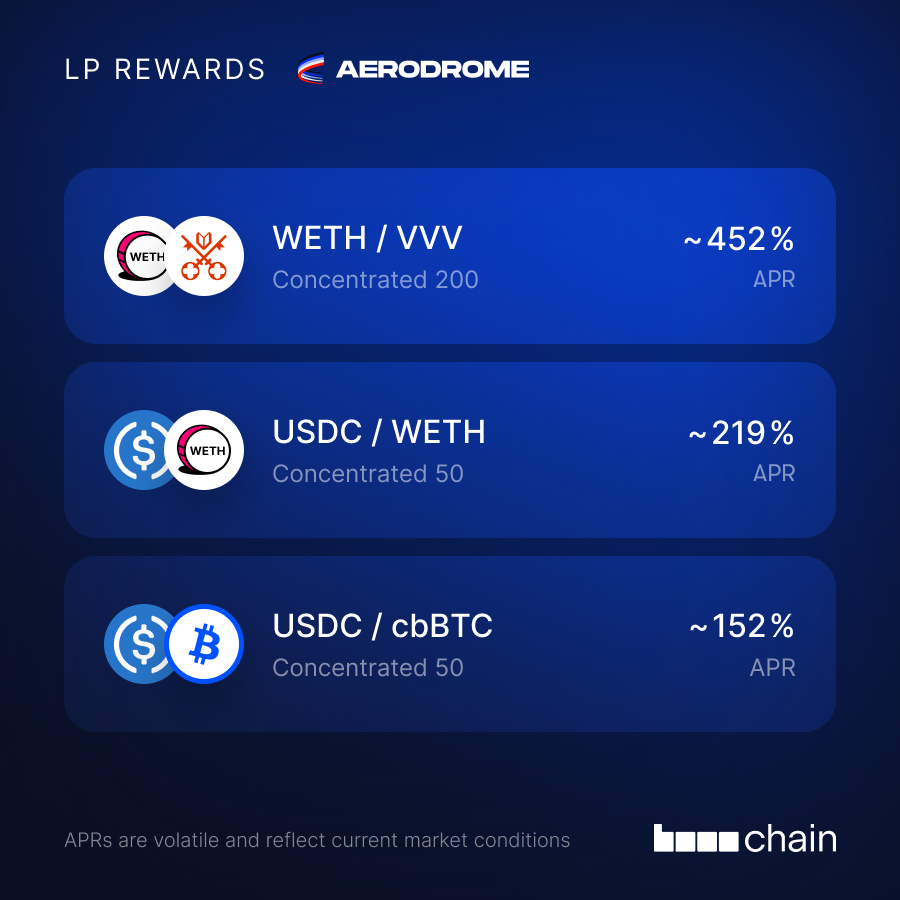
It's a great day to LP on Aerodrome 🛫


TIL that JP Morgan doesn't let individual accounts send ACH payments, only wire. This is the bank owned by the guy lobbying against stablecoins.

Today we're launching EthSystems. We build confidential systems for institutional Ethereum. Institutions want to use Ethereum, but one of the biggest problems is the lack of built-in, modular privacy tools. We were the Ethereum Foundation's Institutional Privacy Task Force (IPTF) for the past year. We had hundreds of conversations with central banks, regulators, tier-one banks, and asset managers, shipping open source work the whole time. Wall Street has found crypto as an asset class, but not yet as commercial infrastructure. Institutions want to run real flows on Ethereum: stablecoins, tokenized assets, settlement. These are businesses with billions of dollars on the line, and no bank will operate in full public view. On a public ledger, confidentiality is the hard part: each party to a transaction should see what it has a right to see, and nothing more. We have a year of proof of work: private bonds, confidential stablecoin transfers, private settlement across chains, the Ethereum Privacy Map, and more. All with protocol specs and security properties, at our website. We've spent a decade working on privacy in crypto. We know there's no silver bullet. Different use cases need different systems, each designed, specified, and hardened properly, and someone has to do that work. That's why EthSystems exists. We're an independent, for-profit company, backed by long-term Ethereum-aligned investors. This is a decade-long transition, and we aren't going anywhere. If you're an institution that wants to build on Ethereum, talk to us. We're hiring: BD in New York, protocol engineers, ops: join@ethsystems.org


The Robinhood Chain is the cleanest case study of what happened to ETH's economics over time. Since inception, @RobinhoodApp Chain has grossed ~$816K in revenue. @Arbitrum, the middleware provider, takes 10%: ~$80K. Arbitrum then pays Ethereum for settlement: $1,538. The margin profile roughly: Robinhood: 89% Arbitrum: 10% Ethereum: 0.15% If your thesis is "ETH is money," Robinhood building here is ultra bullish. More activity, more ETH collateral, more lindyness. If your thesis is "ETH is a revenue generating asset," this is the ultra-bear case. And here's the uncomfortable truth: Robinhood was never going to build on Solana, Sui or any monolithic L1. They want the stack customization. They want to be landlords, not renters. Ethereum won this deal on merit. It's just not pricing it right. A healthy split to me looks more like: Robinhood: 75% Arbitrum: 10% Ethereum: 15% Ethereum sells the most valuable settlement layer in crypto at marginal cost. Things need to change. @ethlabs_org


The Robinhood Chain is the cleanest case study of what happened to ETH's economics over time. Since inception, @RobinhoodApp Chain has grossed ~$816K in revenue. @Arbitrum, the middleware provider, takes 10%: ~$80K. Arbitrum then pays Ethereum for settlement: $1,538. The margin profile roughly: Robinhood: 89% Arbitrum: 10% Ethereum: 0.15% If your thesis is "ETH is money," Robinhood building here is ultra bullish. More activity, more ETH collateral, more lindyness. If your thesis is "ETH is a revenue generating asset," this is the ultra-bear case. And here's the uncomfortable truth: Robinhood was never going to build on Solana, Sui or any monolithic L1. They want the stack customization. They want to be landlords, not renters. Ethereum won this deal on merit. It's just not pricing it right. A healthy split to me looks more like: Robinhood: 75% Arbitrum: 10% Ethereum: 15% Ethereum sells the most valuable settlement layer in crypto at marginal cost. Things need to change. @ethlabs_org

The bear looks like it's ending. So why doesn't it feel like the bull is starting? @andyyy says the market is stuck in the gap between the bear ending and the bull beginning: what he calls the transitory phase. "It's this time-based capitulation where you get a lot of sideways action and a lot of chop."