Fabián Acuña H.

28.5K posts

Fabián Acuña H. banner
Fabián Acuña H.

Fabián Acuña H.

@fabianhtml

Community and product builder. Organizando la comunidad y conferencia @9punto5_

Katılım Mayıs 2009
625 Takip Edilen2.3K Takipçiler
Fabián Acuña H.
Fabián Acuña H.@fabianhtml·
Bro Un lado de esto se está volviendo insufrible
Zeb Evans@DJ_CURFEW

Today we reduced headcount by 22%. The business is the strongest it's ever been. So I think it's important to be direct about what I'm seeing and why. First, I made this decision and I own it. I did it because the way to operate at the highest level of productivity is changing, and to win the future, ClickUp needs to change with it. Second, this wasn't about cutting costs. Most savings from this change will flow directly back into the people who stay. We'll be introducing million-dollar salary bands. If you create outsized impact using AI, you'll be paid outside of traditional bands. Most importantly, I have the deepest gratitude for those affected. We're doing this from a position of strength specifically so we can take care of people properly. Everyone affected receives a package aimed at honoring their contributions and easing the transition. I only see two options: wait for this to play out gradually in the market or be honest about what I'm seeing and act proactively. THE 100X ORGANIZATION The primary change is that we're restructuring around what I call 100x org. The goal is 100x output. The roles required to build at the highest level are fundamentally different than they were a year ago. Incremental improvements to existing systems won't get us there. We need new ones. That means creating enough disruption to rebuild rather than iterate on what's already broken. The common narrative is that AI makes everyone more productive. It doesn't. Many of the workflows of today, if left unchanged, create bottlenecks in AI systems. These roles will evolve. But waiting for that to happen naturally means falling behind now. The 100x org is actually heavily dependent on people - infinitely more than today. This is only possible with 10x people that have embraced and adopted new ways of working. THE BUILDERS, AGENT MANAGERS, AND FRONT-LINERS — THE BUILDERS: 10X ENGINEERS I don't think most companies have internalized what's actually happening with AI in engineering. The common narrative is that AI makes all engineers more productive. That may be true in isolation, but at an organization level - that is the farthest thing from reality. Here's what we've validated recently at ClickUp: the great engineers, the ones who can orchestrate, architect, and review, are becoming 100x engineers. They're not writing code. They're directing agents that write code. The skill is judgment. AI makes the best engineers wildly more productive, and everyone else using AI slows these engineers down. Think about it - the bottlenecks are (1) orchestration - telling AI what to do, and (2) reviewing - what AI did. Everything is leapfrogged and no longer needed. So who do you want orchestrating and reviewing code? And how do you want your best engineers to spend their time? If your best engineers are spending time reviewing other people's code, then this is inherently an inefficient bottleneck. These engineers can review their agent's code much faster than reviewing human code. The new world is about enabling your 10x engineers to become 100x. The wrong strategy is to push every engineer to use infinite tokens. Companies doing this are celebrating 500% more pull requests. But customer outcomes don't match the volume of code being generated. I call this the great reckoning of AI coding, and every company will face this soon if not already. More code is just another bottleneck to the best engineers, and ultimately to your company's impact as well. — THE BUILDERS: 10X PRODUCT MANAGERS Product management and design roles are merging. Designers that have customer focus, become more like product managers. And product managers that have intuition for UX become more like designers. The bottleneck of user research is gone. It takes us just one mention of an agent to kickoff research and analyze results. The bottleneck of product <> design iteration is also gone. The product builder iterates on their own, along with agents and skills that ensure alignment with quality and strategy. Also controversial today - I believe that the wrong strategy is to have your PMs shipping code - that just introduces another bottleneck that the best engineers will waste their time on. To be clear, PMs should be coding but they should do this in a playground to iterate, validate, and scope. That code should not go to production. Everything outside of managing systems, orchestrating AI, and reviewing output becomes a bottleneck. That's why the other roles that are critical along with these are the systems managers (to reduce bottlenecks) along with a bottleneck you can't replace - customer meeting time. — THE SYSTEM MANAGERS Ironically, the people that automate their jobs with AI will always have a job. They become owners of the AI systems - agent managers. We have many examples of these people at ClickUp. The underlying systems in which we operate are absolutely critical to get right. I think most companies are delusional to think they can iterate on existing systems and compete in this new world. You must create enough disruption so that old systems are deprecated entirely. If there's any definition for 'AI native' that's what it is. — THE FRONT-LINERS In a world that will become saturated with AI communication, the human touch will matter more than anything to customers. This is a bottleneck that you shouldn't replace - even when agents are high enough quality to do video meetings. One-on-one meeting time with customers is something that shouldn't be automated. The systems around the meetings should be - so that front-liners spend nearly 100% of their time with customers. REWARDING 100X IMPACT In a world where companies are able to do so much more with less, where does that excess money go? In our case, much of the savings in this new operating model will flow directly back to those that enabled it. We must reward people that create productivity accordingly. This aligns incentives on both sides. Plus, in a world where your best people create 100x impact, you can't afford to lose them. You should aim to retain these employees for decades. The context they have and their ability to efficiently orchestrate and review will be nearly impossible to replace. Compensation bands of today should be thrown out the door. We're introducing $1 million cash/year salary bands with a path available to nearly everyone in the company if they produce 100x impact by creating or managing AI systems. THE FUTURE Nearly every company will make changes like these. The ones that do it proactively will define what comes next. The future is not fewer people. It's different work, new roles, and better rewards for those who embrace it. We're already seeing entirely new roles emerge, like Agent Managers, that didn't exist a year ago. ClickUp is positioning to lead this shift, not just internally, but for our customers too. I've never been more certain about where we're headed.

Español
0
0
0
120
Fabián Acuña H. retweetledi
dex
dex@dexhorthy·
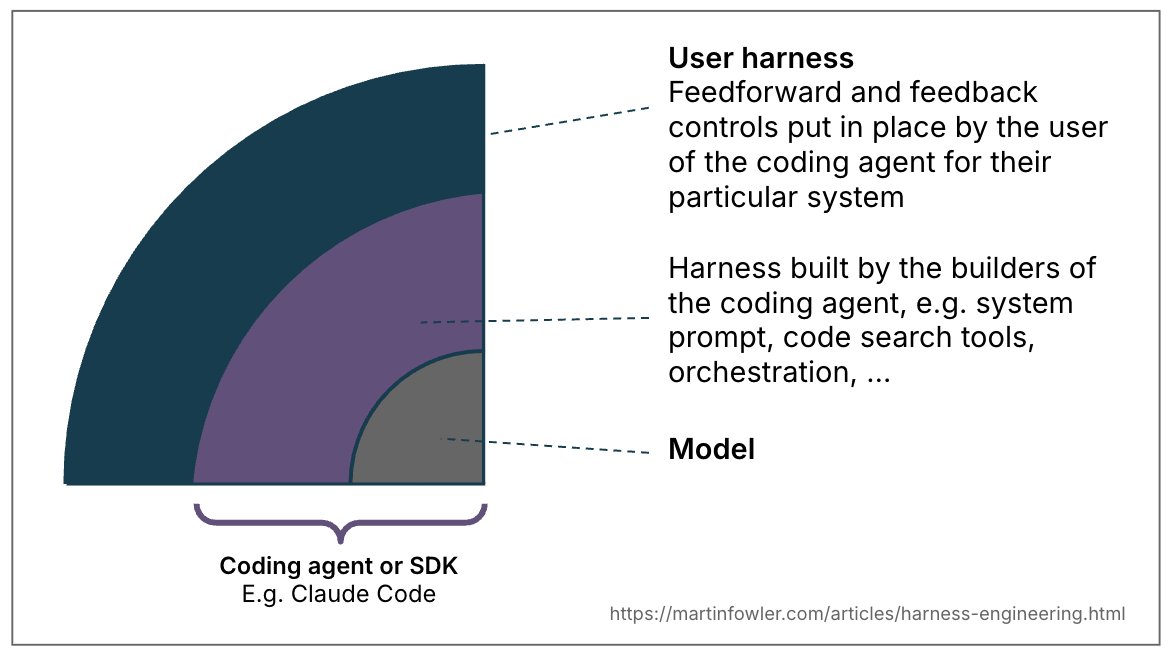
finally
dex tweet media
English
14
19
147
10.4K
Fabián Acuña H.
Fabián Acuña H.@fabianhtml·
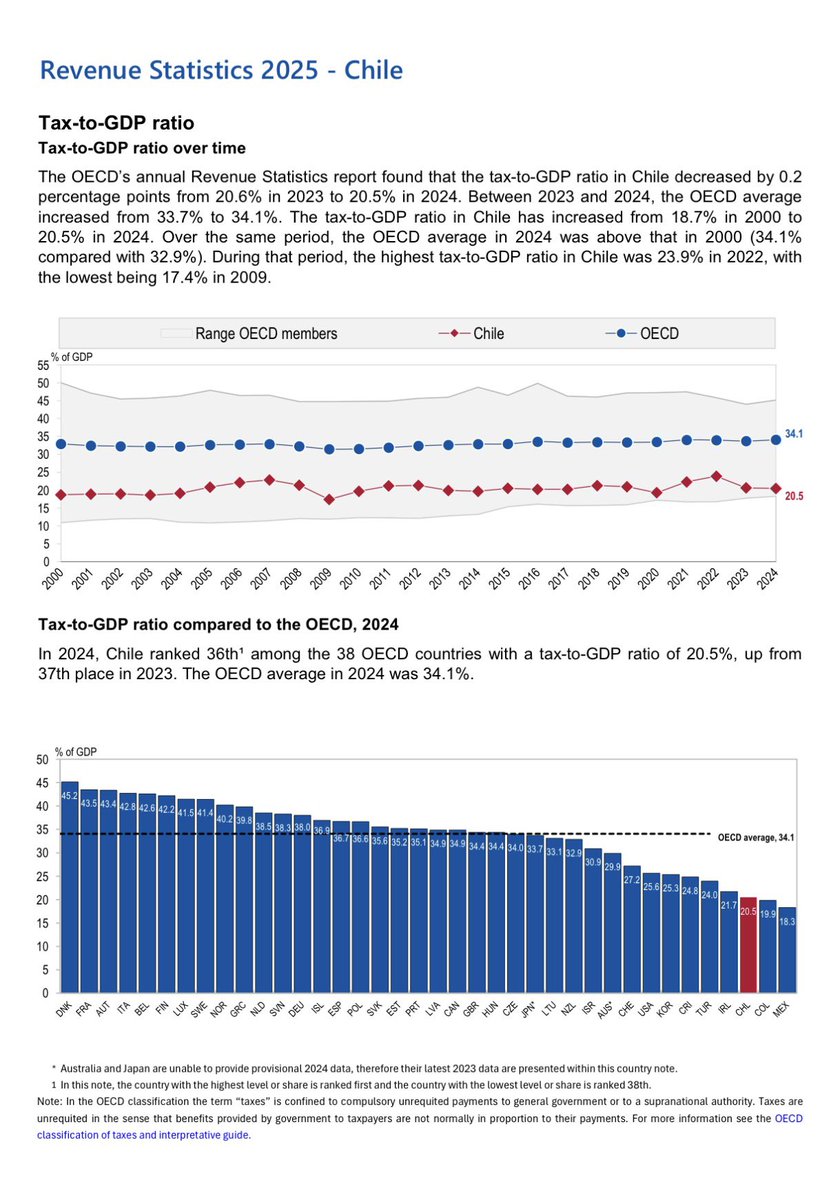
Chile recauda 20,5% del PIB en impuestos. El promedio OCDE es 34,1%. Es el 3er país con menor recaudación de la OCDE
Fabián Acuña H. tweet media
Español
1
2
3
96
Fabián Acuña H.
Fabián Acuña H.@fabianhtml·
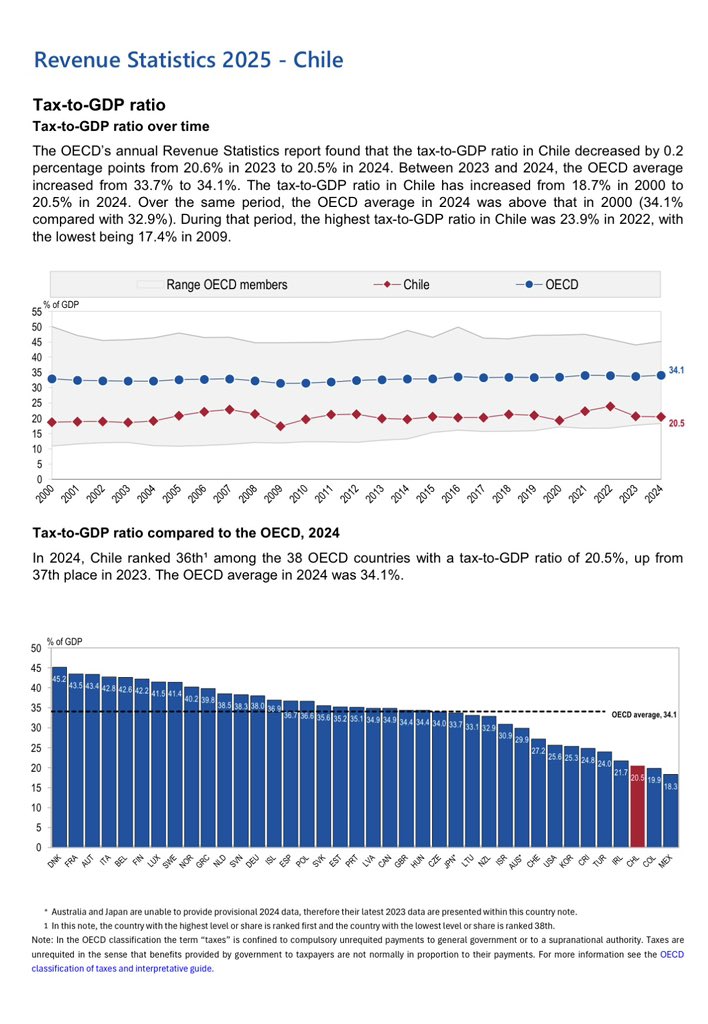
Chile recauda el 20,5% del PIB en impuestos. El promedio OCDE es 34,1%. Chile el 2° país con menor recaudación de la OCDE
Fabián Acuña H. tweet media
Español
1
0
1
53
Fabián Acuña H. retweetledi
César A. Hidalgo
César A. Hidalgo@cesifoti·
En lo que es ciencia: @KastPresidente se equivoca tres veces. Primero, veamos la arista fiscal. En Chile la ciencia representa 0.62% del gasto publico (de acuerdo al visualizador de presupuesto de la BCN). Incluso llevándo este gasto a cero, no ayuda a balancear las arcas fiscales. Si el objetivo es reducir el gasto, apuntar a una partida tan pequeña es absolutamente contraproducente: en el mejor de los casos, el ahorro es marginal. Segundo, veamos la dimension politica. A pesar de ser pequeño, el gasto en ciencia tiene un impacto político enorme. Afecta directamente a las universidades, que concentran una población políticamente activa y dispuesta a movilizarse. El incentivo para gobernar, y ocuparse de objetivos importantes, como la seguridad pública, que fue el eje de su campaña, es buscar la estabilidad política. Esto implica no enfadar a un sistema de educación superior donde los recursos son escasos y la población dispuesta a movilizarse es enorme. La estrategia debería ser una de generosidad con ese sector, para asegurar la estabilidad política que se necesita para ocuparse de otros objetivos. Pero más allá de lo fiscal y lo político, hay un tercer problema más profundo: que es apuntar al objetivo equivocado. En un mundo complejo como el nuestro, el objetivo no es la reducción de costos a corto plazo, sino la maximización de la opcionalidad a largo plazo. La evolución no premia a las especies, economías o sociedades que se especializan en las condiciones actuales, sino a las que desarrollan un conjunto diverso de capacidades que les permite seguir adaptándose en un mundo cambiante. El salto al desarrollo implica lograr una sociedad que genere esa opcionalidad de manera endógena. Una sociedad que pueda resistir un shock como el que podría venir en un mundo donde el cobre deje de ser esencial, o donde las baterías eléctricas ya no requieran litio. La ciencia, y más aun la formación de gente con curiosidad y vocación científica e innovadora, es parte esencial para generar una sociedad con opciones. No porque todas las opciones deban perseguirse, sino porque nunca sabremos con certeza cuáles necesitaremos en el futuro. Por eso, ponerse en contra del mundo académico es tres veces una mala idea. Es una estrategia que no reducirá el gasto, enemistará a un segmento políticamente muy activo, y reducirá la opcionalidad de la economía chilena a largo plazo.
Español
13
164
273
16.6K
Fabián Acuña H.
Fabián Acuña H.@fabianhtml·
Los nuevos roles van de entender y transformar procesos. Una mezcla de: - Entender el negocio - Detectar cómo mejorar el flujo de trabajo - Construir herramientas y automatizaciones - Acompañar la adopción del equipo - Convertir aprendizajes en sistemas stripe.com/jobs/listing/f…
Español
0
0
0
30
Fabián Acuña H.
Fabián Acuña H.@fabianhtml·
@fortelabs Of course you know about scripts. And they’re all you need to move from Obsidian to any other local-first, Markdown-based layer on top of your notes Every layer over your notes has an import/export feature. This one is no different
English
0
0
1
113
Tiago Forte
Tiago Forte@fortelabs·
I want to debunk the claim that I see a lot around here that Obsidian is "just plain text markdown files" which means "you can take them anywhere and open them with any app" That simply isn't true Yes, maybe the raw text of the notes is markdown, but many other parts cannot be moved elsewhere and opened by other apps: 1. The .obsidian/ directory contains your JSON config with plugins, settings, hotkeys, workspace state, link format, attachment paths – those can't be moved elsewhere 2. Plugin state files – Readwise's path-to-ID map, Templater's settings, Tasks plugin's database, Excalidraw's drawing data – even if plugins can be recreated, these settings cannot 3. .canvas files – JSON, not markdown. They reference notes by path and won't survive a move 4. .base files – JSON-based database/views over your notes. Same path-fragility 5. .excalidraw.md files – markdown wrapper around an Excalidraw JSON blob. Looks like markdown, isn't really 6. The link graph itself – backlinks, graph view, "linked mentions" – all computed from filenames and link references. They survive because the references are in the markdown, but they require Obsidian (or an Obsidian-aware tool) to materialize 7. Plugin-managed folders – Readwise output, Web Clipper output, Daily Notes location, Templates folder. Each is a folder whose contents are owned by an external system tracked in plugin state 8. Sync state – Obsidian Sync, iCloud, Dropbox, Google Drive each maintain their own state about what's where and what's been resolved. Move operations interfere with this state 9. Embedded query results – Dataview queries, Tasks queries, Bases queries. The query is in the markdown; the result is computed live and never persisted So technically you CAN move your files elsewhere, but you'd destroy most of what makes them valuable – the graph, the plugin state, the canvases, the embedded queries, the sync state, and any structural intent encoded in folder placement Which means you're just as locked in to Obsidian as any other "proprietary" app, it's just a hidden lock-in that's obscured by inaccurate marketing Saying "Obsidian is just markdown files" is like saying "your house is just bricks" The bricks are real and moveable – but the architecture, plumbing, and wiring aren't bricks, and those are most of what makes the house function
English
163
22
385
130.3K
Oscar_Contardo
Oscar_Contardo@oscar_contardo·
El señor Fabre es abogado y concejal de la ciudad de Córdoba. Ataca a Milo J y lo compara con Gabriela Mistral a quien según Borges, le dieron el Nobel solo por responder al estereotipo sudamericano. Le respondo educadamente, miren lo que responde él 👇🏾
Oscar_Contardo tweet media
Español
54
44
484
25.6K
Diego Basch
Diego Basch@dbasch·
El que dijo eso (Hinton), no tenía la mejor idea de cómo funciona la radiología. Es mucho más que un modelo de visión. Un radiólogo tiene acceso a una red de conocimiento y de contexto que por ahora no está al alcance de un modelo dedicado. Por ejemplo, si estás mirando imágenes de un soldado ucraniano no vas a estar buscando lo mismo que en un gordo de Texas. Y no es que tecnológicamente no se pueda, sino que se tendría que armar una iniciativa tipo OpenAI para radiología. Personas como él o como los AI doomers suelen no entender que hay cuellos de botella que están fuera del cómputo teórico: los mercados, las prioridades políticas, los incentivos humanos.
Español
1
0
1
59
Tiago Forte
Tiago Forte@fortelabs·
Is it true that Obsidian only has around 1.5 million users!? Compared to 225 million for Evernote at its peak? So Obsidian has only reached 0.7% the size of the Evernote user base. It's a niche of a niche of a niche.
Tiago Forte tweet mediaTiago Forte tweet media
English
103
7
376
77.4K