
Counter-Evidence Studies
• CTT Collaboration (2010): The Lancet (26 RCTs, 170,000 participants)
Key takeaway: More intensive statin therapy produces further proportional reductions in major vascular events (15% extra per 0.51 mmol/L additional LDL drop) and all-cause mortality (10% per 1 mmol/L LDL reduction), with a clear linear dose-response and no lower threshold. thelancet.com
• CTT Collaboration (2012): The Lancet (27 RCTs, ~174,000 participants)
Key takeaway: Statins reduce major vascular events by 21% per 1 mmol/L LDL-C drop even in low-risk people (<10% 5-year risk), yielding absolute benefits (11 fewer events per 1,000 over 5 years) that greatly exceed known harms—benefits consistent across age, sex, and baseline LDL. thelancet.com
• Silverman et al. (2016): JAMA (49 trials, 312,175 participants)
Key takeaway: Every 1 mmol/L LDL-C reduction (via statins or non-statins that upregulate LDL receptors) cuts major vascular events by 23% (RR 0.77); benefits are proportional to the LDL drop achieved, and lower attained LDL levels directly correlate with fewer coronary events. pubmed.ncbi.nlm.nih.gov
• Navarese et al. (2018): JAMA (34 trials, 270,288 participants)
Key takeaway: Intensive LDL-C lowering reduces all-cause mortality (RR 0.92) and CV mortality (RR 0.84), with progressively greater benefits at higher baseline LDL-C (>100 mg/dL); no mortality gain when baseline LDL is below 100 mg/dL. jamanetwork.com
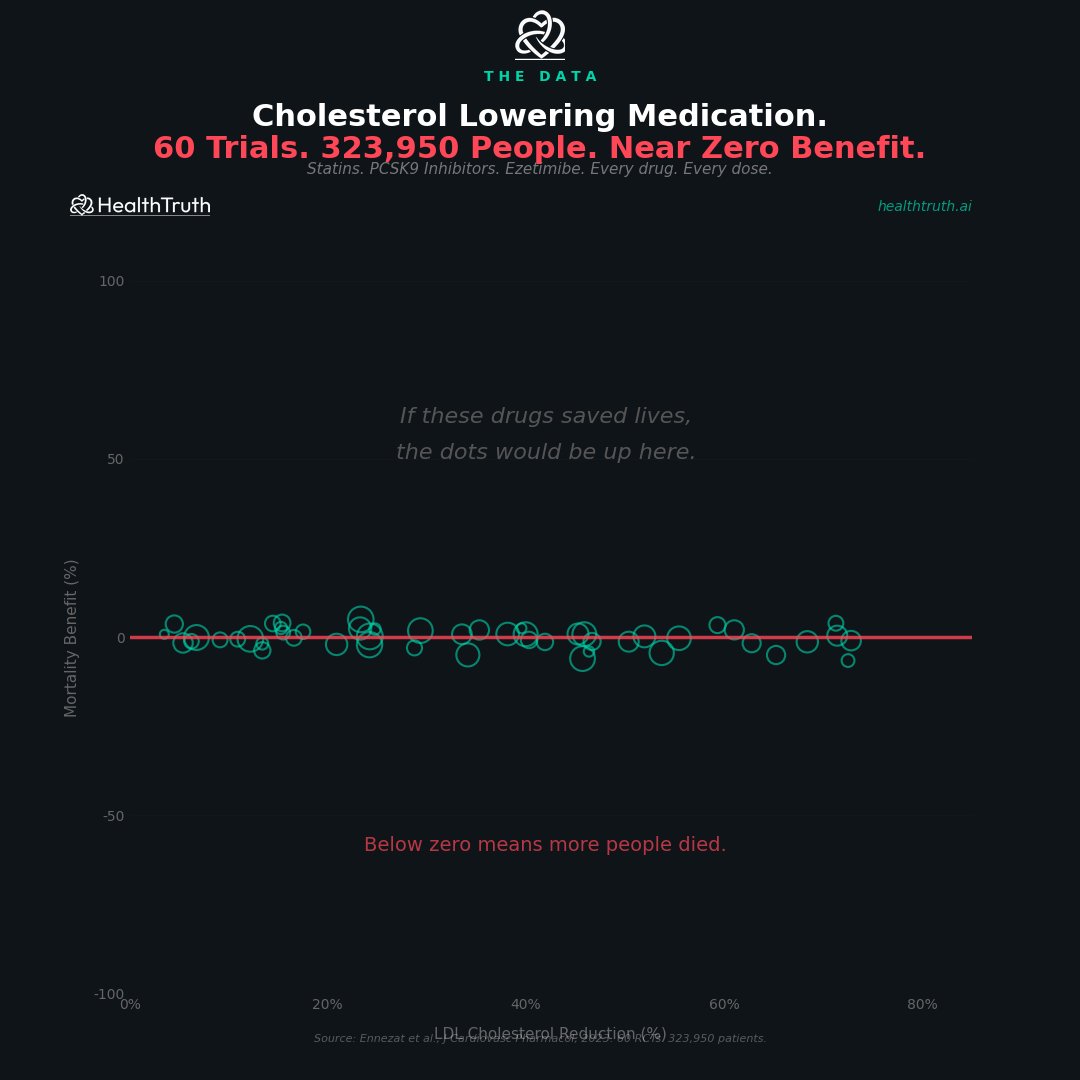
• Burger et al. (2024): Atherosclerosis (60 RCTs, 408,959 participants)
Key takeaway: LDL-C reduction yields a consistent HR of 0.78 for major vascular events per 1 mmol/L drop; benefits remain stable over time (up to ~10 years) in secondary prevention and do not meaningfully attenuate except slightly with older age in primary prevention. atherosclerosis-journal.com
• Peters et al. (2016): Atherosclerosis (97 cohorts, >1 million people)
Key takeaway: Raised total cholesterol is a strong independent risk factor for coronary heart disease in both sexes (RR 1.20 in women, 1.24 in men per 1 mmol/L increase), with only a tiny male advantage; it has essentially no effect on total stroke risk. pubmed.ncbi.nlm.nih.gov
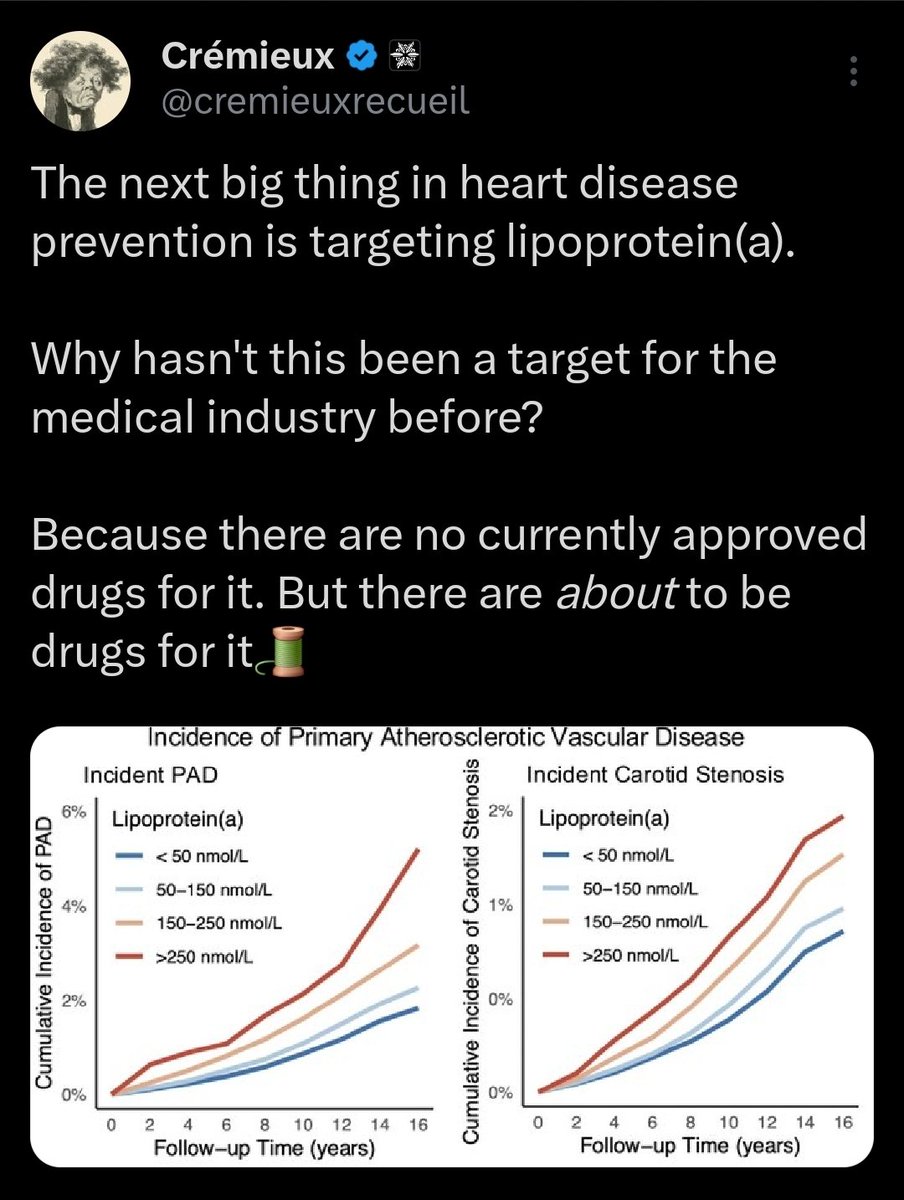
• Ridker et al. (2024): New England Journal of Medicine (Women’s Health Study, 27,939 women, 30-year follow-up)
Key takeaway: Higher baseline LDL-C strongly predicts 30-year major CV events in women (top vs. bottom quintile HR 1.36); LDL-C, hs-CRP, and Lp(a) each contribute independently, and combining all three biomarkers gives the strongest long-term risk prediction. pubmed.ncbi.nlm.nih.gov
English