fillippone

2.4K posts

fillippone banner
fillippone

fillippone

@fillippone1

Merit Rascal PlanB Zealot #npub13mg4p79p8r47ura000v9npr67z4uj7n5lpwx6zqanh3aevcsshyslv2xfz

Katılım Kasım 2020
375 Takip Edilen412 Takipçiler
Sabitlenmiş Tweet
fillippone
fillippone@fillippone1·
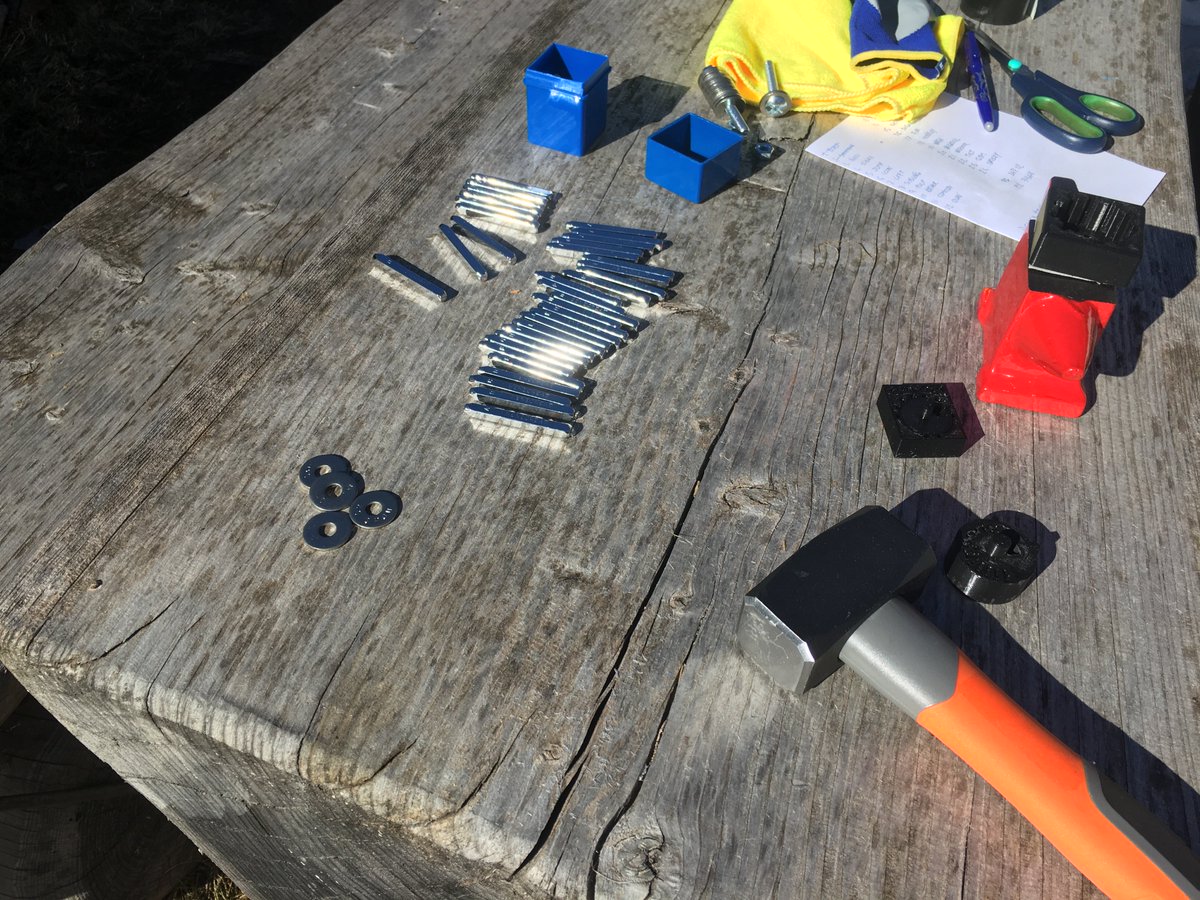
“…è stato esilarante il fatto di mettere al sicuro una ricchezza multigenerazionale con una mazza ed un'incudine.” La mia guida a come fare un backup fisico della propria seed phrase su con delle semplici rondelle. bitcointalk.org/index.php?topi…
fillippone tweet media
Italiano
4
3
38
0
fillippone retweetledi
Mario Nawfal
Mario Nawfal@MarioNawfal·
🇫🇷 A French tax official was arrested for selling crypto investors' home addresses and financial records to criminal networks. 41 kidnappings followed. One every 2.5 days since January 2026. The criminals didn't need to hack anything. They bought a list from someone inside the government. France is the most dangerous country in the world right now if you hold crypto and someone knows about it 💀 Source: Le Mond
Mario Nawfal tweet media
English
355
2.9K
9.9K
835.1K
fillippone
fillippone@fillippone1·
If I have to support a wallet, it going to be tether.wallet
Paolo Ardoino 🤖@paoloardoino

Tether Wallet, The People's Wallet Tether has achieved the widest financial inclusion success story in the history of humanity. For more than a decade, Tether has built its company on a simple mission: bringing financial inclusion to the billions of people, primarily living in developing countries, who were left behind by the traditional financial system, those who never had access to basic financial services, and those who live in high-inflation countries. This number is higher than most think, almost half of the population of the world. As of March 2026, Tether’s technology is used by more than 570 million people globally, with adoption continuing to accelerate across emerging and developed markets alike, at the pace of tens of millions of new wallets added per quarter. With tether.wallet, that entire infrastructure, the widest and most granular money distribution network built by humanity, becomes directly accessible to end users for the first time. Features: - 100% self-custodial with simple backup user experience (one click encrypted secret backup/restore with your cloud account or simply export the 12 words); only you are in control of your funds; no middleman or intermediaries. - Assets available: only people need; Bitcoin, Digital Dollars (USDT, USAT) and Gold (XAUT). - Bitcoin: on-chain, lightning network and spark support - USDT/USAT/XAUT: supported blockchain list will expand rapidly within next 30 days; USDT0 is already integrated; soon TW will implement seamless swaps across all chains -> insane user experience - Send transaction user experience perfected for the people; gasless send for USDT/USAT/XAUT, i.e you don't need to own/buy/deposit gas tokens (ETH, TRON, ...) etc to send assets; the Wallet solves all the complexity for you behind the scenes (via paymaster) - One address: generate your [at] tether.me address to receive/send assets to any other tethered wallet -> unparalleled user experience - 100% built on WDK by Tether, our open-source Wallet Development Kit Please share your feedback and thanks for all you support. We're unstoppable together ❤️

English
0
0
0
14
fillippone
fillippone@fillippone1·
Sounds familiar.
Brivael Le Pogam@brivael

Récemment j'étais à un dîner à Paris. Table mixte. Entrepreneurs, cadres, investisseurs, quelques profils tech. Des gens intelligents. Des gens qui ont réussi selon les standards français. Et j'ai eu une révélation assez violente. Personne dans cette pièce ne pratique le pay it forward. Le pay it forward, c'est un concept simple. Tu aides quelqu'un. Pas parce que tu attends un retour. Pas parce que tu calcules ce que ça va te rapporter. Tu aides parce que tu crois que la valeur que tu injectes dans le réseau finira par revenir, sous une forme ou une autre, à un moment ou un autre. C'est le fondement de l'écosystème de la Silicon Valley. C'est pour ça qu'un mec qui a vendu sa boîte 500 millions prend deux heures pour conseiller un fondateur de 22 ans qu'il ne reverra peut-être jamais. Pas par charité. Par conviction que le réseau est un jeu à somme infinie. À ce dîner, c'était l'inverse exact. Chaque conversation était un calcul. Chaque information partagée était dosée. Chaque contact donné était une monnaie d'échange. Tu sentais physiquement que chaque personne évaluait en temps réel ce qu'elle pouvait extraire de l'autre. Pas créer ensemble. Extraire. Et c'est là que j'ai compris quelque chose de profond sur la France. Ce n'est pas un problème de personnes. C'est un problème de système. Quand tu vis dans une économie où l'état capture 57% du PIB, où chaque euro de valeur créée est immédiatement ponctionné, redistribué, fléché, administré, tu crées mécaniquement un jeu à somme nulle. Le gâteau ne grandit plus. Ou si peu que ça revient au même. Et quand le gâteau ne grandit plus, les humains cessent de coopérer et commencent à se battre pour les parts. C'est Girard en version macroéconomique. La rivalité mimétique à l'échelle d'un pays entier. Quand il n'y a plus de croissance, quand il n'y a plus d'espoir que demain soit plus grand qu'aujourd'hui, chaque interaction sociale devient un combat de territoire. Mon bout de gâteau ou le tien. Mon poste ou le tien. Mon deal ou le tien. Hayek avait formalisé ça en 1945. L'information dans une économie est dispersée entre des millions d'individus. Personne, aucun planificateur central, ne peut l'agréger. Quand tu laisses les individus échanger librement, l'information circule, les prix se forment, les ressources s'allouent efficacement. Quand tu mets un état hypertrophié au milieu, tu bloques les signaux. Tu crées du bruit. Tu empêches les humains de se coordonner naturellement. Et le résultat, c'est ce dîner. Des gens brillants, capables, ambitieux, qui ne savent plus coopérer. Pas parce qu'ils sont mauvais. Parce que le système dans lequel ils évoluent a tué la possibilité même de la coopération généreuse. Quand chaque euro est une bataille, tu ne donnes plus rien gratuitement. Quand l'administration te prend la moitié de ce que tu crées, tu protèges le reste comme un territoire. Quand la croissance est à 0.7%, le pay it forward devient un luxe que personne ne peut se permettre. Mises appelait ça le problème du calcul économique. Dans un système centralisé, les signaux de prix sont détruits. Les individus ne peuvent plus évaluer la valeur réelle des choses. Ils ne peuvent plus faire de paris rationnels sur l'avenir. Alors ils se replient. Ils protègent. Ils accumulent. Ils cessent de prendre des risques. Résultat concret : la France n'a pas de Google. Pas de Apple. Pas de SpaceX. Pas de Stripe. Pas un seul géant technologique mondial. Pas parce qu'il manque du talent. Il y a plus de médaillés Fields par habitant en France que partout ailleurs. Les ingénieurs français sont recrutés par toute la Silicon Valley. Le talent est là. La créativité est là. L'intelligence est là. Ce qui manque, c'est l'oxygène. L'espace pour que le jeu à somme infinie puisse exister. À Y Combinator, la première chose qu'on apprend, c'est : aide les autres fondateurs du batch. Sans calculer. Sans compter. Parce que le réseau YC est un jeu à somme infinie. Chaque boîte qui réussit rend le réseau plus fort, ce qui rend ta boîte plus forte, ce qui rend le réseau encore plus fort. Boucle vertueuse. Feedback positif. Croissance composée de la confiance. À Paris, la première chose qu'on apprend, c'est : protège ton deal. Ne partage pas trop. Méfie-toi. L'autre fondateur est un concurrent potentiel. L'investisseur a un agenda caché. Le mentor veut quelque chose. Boucle négative. Feedback négatif. Érosion composée de la confiance. Ce n'est pas culturel. C'est structurel. Mettez les mêmes Français dans un écosystème où le gâteau grandit, où la fiscalité laisse respirer, où la croissance crée de l'espoir, et regardez ce qui se passe. Les Français de San Francisco pay it forward autant que les Américains. Parce que le système le permet. Parce que quand tu sais que le gâteau va grossir, donner un morceau aujourd'hui n'est pas une perte. C'est un investissement. Voilà pourquoi le débat n'est pas culturel. Il est économique. Il est systémique. Si vous voulez que la France produise des géants, ne changez pas les gens. Changez les règles du jeu. Créez des espaces où la croissance est possible. Où l'espoir est rationnel. Où donner sans compter n'est pas de la naïveté mais de la stratégie. Le pay it forward n'est pas une vertu morale. C'est un signal économique. Quand les gens le pratiquent, ça veut dire qu'ils croient au futur. Quand ils ne le pratiquent plus, c'est que le système a tué l'espoir. Ce dîner à Paris m'a appris une chose. Le problème de la France, ce n'est pas le talent. Ce n'est pas l'ambition. Ce n'est pas l'intelligence. C'est que le système a transformé 67 millions de joueurs d'un jeu à somme infinie en gladiateurs d'un jeu à somme nulle. Et le jeu à somme nulle finit toujours de la même manière. Tout le monde perd.

English
0
0
1
27
MC Geylor
MC Geylor@AAAdamKK·
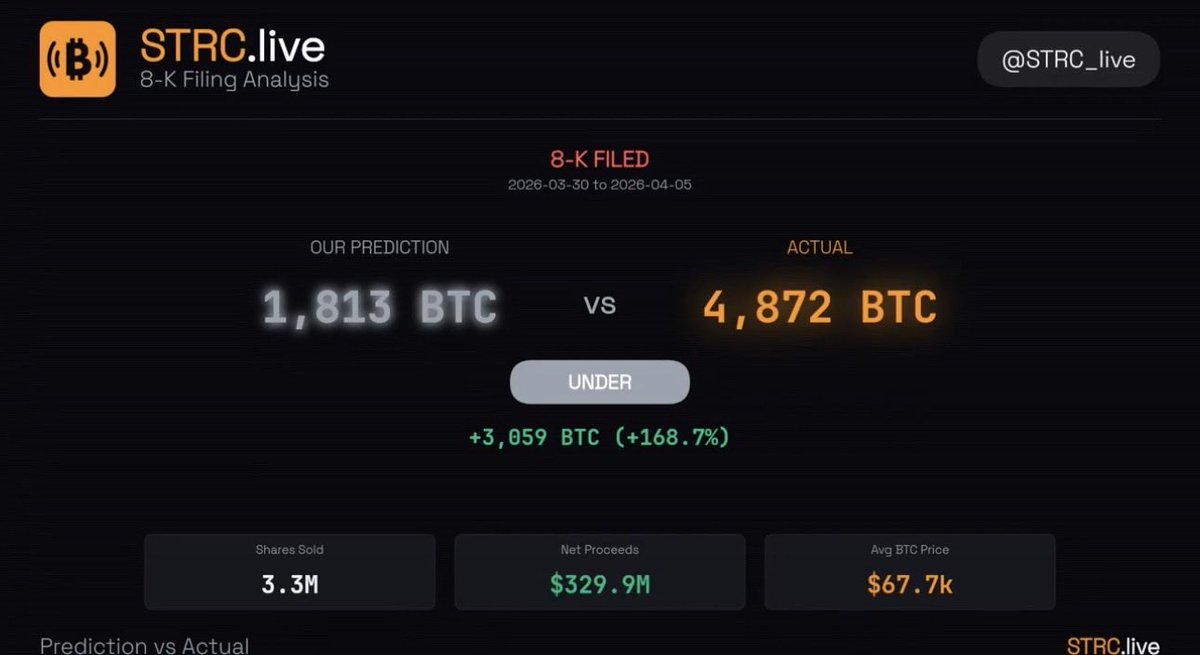
@fillippone1 @zaidlikesmstr strc.live by default assumes 50% of volume above par goes towards BTC purchases. You can change that value locally for your browser by clicking the settings icon on the top of the page.
English
1
0
2
60
Zaid 🟧
Zaid 🟧@zaidlikesmstr·
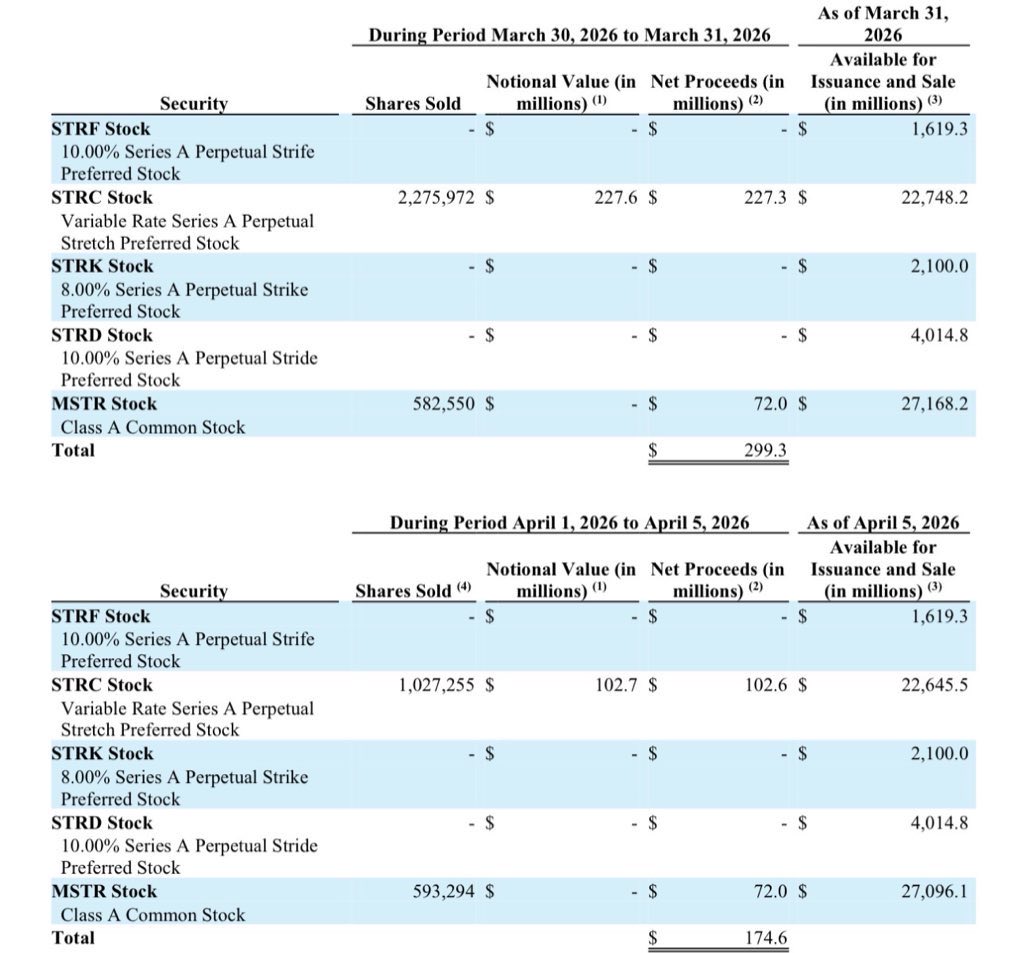
$MSTR I’m a bit surprised this morning by how many analysts around Strategy clearly misread the 8K filing. It’s surprising because it completely understates how significant the raise from $STRC was in funding 100% of the Bitcoin acquired over the past week. If you actually read the 8K, it’s evident that all $329.9 million that Strategy raised to buy btc came from $STRC. Incredible.
Zaid 🟧 tweet media
James Van Straten@btcjvs

3-1 ratio in terms of $STRC to $MSTR

English
14
15
253
31.4K
fillippone
fillippone@fillippone1·
@zaidlikesmstr I thought STRC live was some official source. I then assume it only tracks STRC volumes when above par, and consider that to be used to buy BTC? Still, as this prediction seems reasonable to me, it would be interesting to understand what happened. Maybe the hiatus is involved?
English
1
0
0
60
Zaid 🟧
Zaid 🟧@zaidlikesmstr·
@fillippone1 Unfortunately it wasn’t. STRC.live underestimated the buys by a large margin - 3059 btc short
Zaid 🟧 tweet media
English
1
0
1
229
j₿it
j₿it@_jBit·
@Strategy Another week of buying more bitcoin from $STRC than $MSTR 🔥
English
1
0
5
577
Strategy
Strategy@Strategy·
Strategy has acquired 4,871 BTC for ~$329.9 million at ~$67,718 per bitcoin. As of 4/5/2026, we hold 766,970 $BTC acquired for ~$58.02 billion at ~$75,644 per bitcoin. $MSTR $STRC strategy.com/press/strategy…
English
137
502
5.5K
176.7K
Alex Thorn
Alex Thorn@intangiblecoins·
SHORTS REMOVE THIS F’IN WALL YOU CRAZY BASTARDS OR YOU’LL BE LIVING IN HELL. PRAISE ALLAH!
Alex Thorn tweet media
English
28
24
470
43.1K
Michael Saylor
Michael Saylor@saylor·
Strategy has acquired 4,871 BTC for ~$329.9 million at ~$67,718 per bitcoin. As of 4/5/2026, we hold 766,970 $BTC acquired for ~$58.02 billion at ~$75,644 per bitcoin. $MSTR $STRC strategy.com/press/strategy…
English
1.2K
2.5K
19.5K
1.3M
TFTC
TFTC@TFTC21·
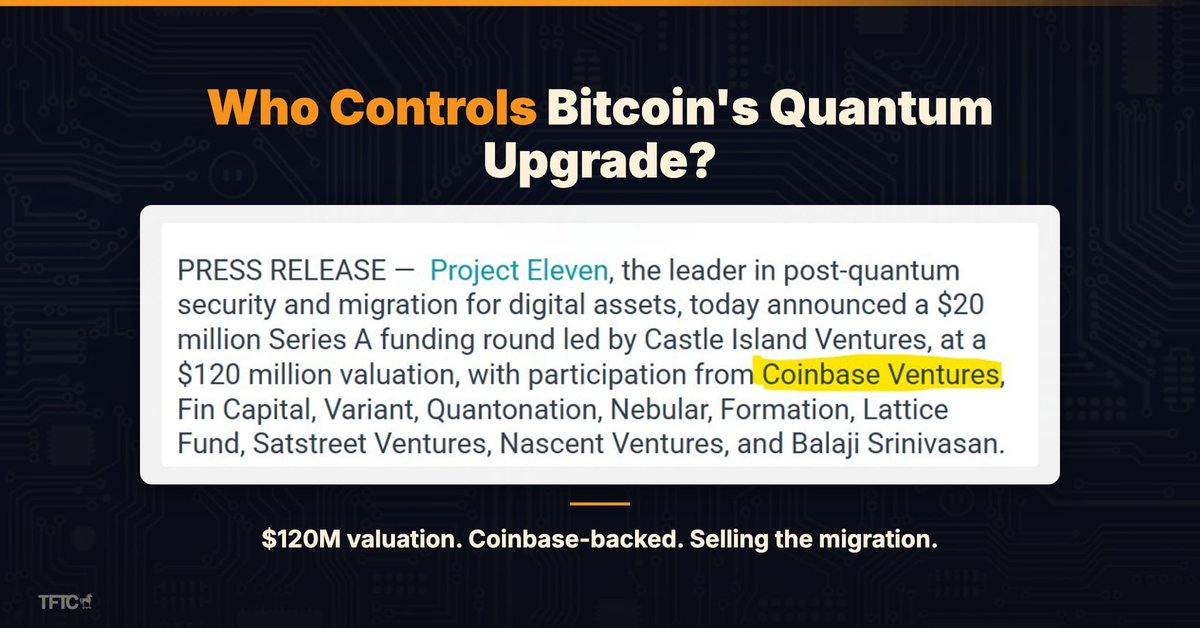
There's a company raising venture capital to "save" Bitcoin from quantum computing. It's called Project Eleven, backed by Coinbase Ventures and Castle Island Ventures with over $26 million in total funding. They sell post-quantum migration services, which means the scarier the quantum timeline sounds, the more their product is worth. Their research is technically sound. They published a prototype wallet demonstrating that BIP32 non-hardened key derivation, the mechanism every major exchange uses to generate deposit addresses, breaks under NIST's finalized post-quantum signature standard. The technical problem is real and eventually needs to be addressed. The quantum timeline is narrowing. Google Quantum AI cut the theoretical ECDSA attack down to 1,200 logical qubits in a paper published last month, a significant reduction from prior estimates. Google set an internal 2029 deadline for post-quantum readiness. These are real developments and we covered them when they dropped. But "the timeline is narrowing" and "this is an emergency" are two very different statements. The best entangled logical qubit count today is 96. Coherence time is measured in seconds. The attack requires days. The engineering gap between a theoretical paper and a working cryptographic attack remains enormous. Nobody has solved it. Nobody has announced a clear path to solving it. Bitcoin developers have known about this for years, and the response has been exactly what you'd expect from a community that doesn't rush. Jonas Nick and Mikhail Kudinov at Blockstream Research published SHRIMPS, a post-quantum signature scheme producing 2.5KB signatures, three times smaller than NIST standards, built specifically for Bitcoin's block space constraints. BIP-360, a quantum-resistant output type, is already live on a Bitcoin testnet with real transactions running through it. The estimated upgrade timeline is seven years, and the work is well underway. The question is not whether Bitcoin needs to prepare. It does, and it is. The question is who controls that preparation. When your lead investor is Coinbase, the company running one of the largest deposit address generation systems in the world, and your revenue model is selling the quantum migration itself, the incentive is to make the timeline feel shorter than it is. Urgency sells migration contracts. Methodical, open-source development does not. If this dynamic sounds familiar, it should. In 2017, a group of companies including Coinbase tried to force through SegWit2x via the New York Agreement, an institutional push that tried to bypass Bitcoin's governance process. The community rejected it. The risk here is not quantum computing breaking Bitcoin tomorrow. It's that manufactured urgency around quantum becomes the next lever institutions use to capture Bitcoin's upgrade path. If the migration ever does become genuinely time-sensitive, the pitch writes itself: "We don't have time for the community process. These tools already exist. Just use them." Bitcoin's open-source developers are building the defense on their own timeline, with no product to sell and no investors to return capital to. That's the upgrade path worth trusting.
TFTC tweet media
English
36
103
538
31.9K
fillippone
fillippone@fillippone1·
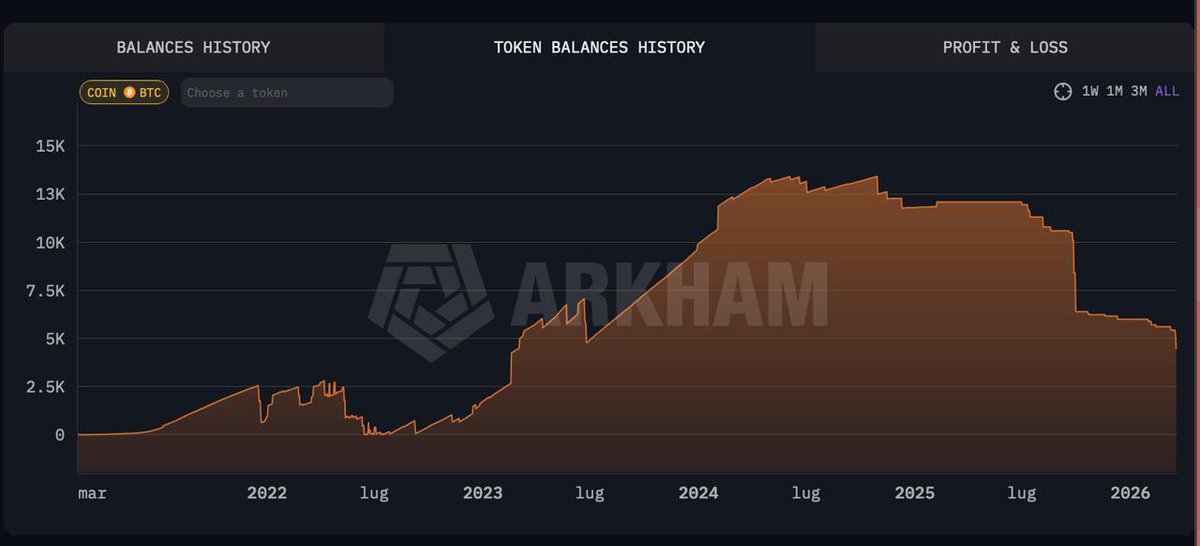
@guybrushino Vendere ci sta. Non è che debbano solo holdlare, magari li usano per progetti governativi. Ma la cosa preoccupante è che non stanno minando più secondo quel grafico sopra.
Italiano
0
0
0
19
Guybrush Threepwood
Guybrush Threepwood@guybrushino·
@fillippone1 Ho visto che hanno iniziato anche a vendere, ma non sono ancora emersi particolari interessanti, quindi stiamo ancora a vedere
Italiano
1
0
1
22
fillippone
fillippone@fillippone1·
@guybrushino, ma cosa succede in Bhutan? Hanno smesso di minare? È dal 2025 che i bitcoin non aumentano. C’è puzza di IMF?
fillippone tweet media
Italiano
1
0
0
42