Adam Fishman

3.6K posts

Adam Fishman banner
Adam Fishman

Adam Fishman

@fishmanaf

https://t.co/vQdb5zu485 | Podcast: https://t.co/6HzyaLqHEM | Advisor | Partner @Reforge. Prev: @resortpass @imperfectfoods @patreon @Lyft. @UMich. Dad.

SF Bay Area Katılım Şubat 2010
74 Takip Edilen4.1K Takipçiler
Sabitlenmiş Tweet
Adam Fishman
Adam Fishman@fishmanaf·
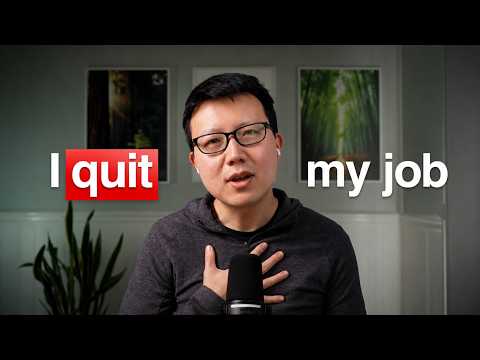
Should I leave my stable job to start a company? When Block lays off nearly half its workforce and the FAANGs are all doing rolling layoffs you might start wondering: is it possible that a 10-person, profitable startup could turn out to be *more* secure? On today’s Startup Dad I talked with @jebank about leaving Google when his daughter was 6 months old to start @relay. I thought that sounded risky; Jacob didn’t. After talking to him I’m inclined to agree. Ask yourself these three questions: -> Can you afford 2x the runway you think you need? -> Will this role actually grow your skills, or just your salary? -> Do you control your time, or does your calendar control you? For him the conclusion was: start a company. Then he learned through the process that small teams are actually *better* for parents than big companies. His 10-person team has zero standing meetings. Everyone's senior. Everyone's a parent. Work happens async (mostly). Our conversation was filled with other amazing nuggets: his concept of “double dipping” for turning chores into quality time with your kids, how to bring your kids into your work problems to show them your world, and his “imagine if I did that” framework for handling tantrums. Listen or watch our full conversation on Startup Dad; you’ll find it on Youtube and everywhere you get your podcasts.
English
0
2
4
434
Adam Fishman
Adam Fishman@fishmanaf·
Every work problem seems pretty trivial after you take your kids to a fancy restaurant and one of them projectile vomits everywhere at the end of the meal. On today's Startup Dad I talked to a founder who lasted 6 weeks at his "dream job" before realizing he'd made a terrible mistake. It was such a big mistake that he left to start a company with a newborn at home. Mike Rome is a dad of 3 boys (ages 7, 4, and ~3 months) and runs a growing performance marketing studio, moonwater. We talked about why building a business when you have a family is the better move, how he got into it and why it's *not* an automatic pathway to spending more time with your family. But the projectile vomit story alone is worth listening to the entire conversation. One thing Mike said I liked a lot "Expect each day to be hard and about solving problems. When you stop being surprised by it, everything gets a lot easier." He also turned me on to the Steve Albini letter to Nirvana (Google it) - how you can stay authentic to your values even when the easier path is telling people what they want to hear. Listen to our full conversation on Youtube and everywhere you listen to podcasts. Links below.
English
0
0
2
197
Sam Parr
Sam Parr@thesamparr·
Someone asked this question in Hampton’s slack (1000+ founders): “How do you build a business while raising kids?” Replies (anonymized): Member A (had his son at 22, now 44): "There was never anything in this world I wanted more than being a father. Business mattered, but my kids came first. I didn't miss their events. I coached their teams. I sat down for dinner with them. Did I exchange some financial upside and success for time with my kids? One hundred percent. And I would never change that for anything.” Member B (2 kids ages 1 and 5): "They are always the first place." Member C (3 kids and another on the way): "I feel the same way. Need to work on being at peace with my decision because comparisons still creep up." Member D: "You can't get the time back. You can always make more money. You'll be so happy you made this choice 10 years down the road." Member E (now an empty-nester:) "You only get 18 summers with your kids. Make the most of it. Time flies so fast." Member F: "I assumed an hour away from the business was an hour of lost productivity. In retrospect any hours I reallocated to family beyond 6.5 hours at work, the business cost was negligible. Compressing my time forced me to delegate things I had rationalized I couldn't delegate." ____ Anyone else raised kids while running a business? How’d it go?
English
36
1
107
18.1K
Adam Fishman
Adam Fishman@fishmanaf·
@anothercohen Hah! This is awesome. Just did the same thing with my Apple Health data and AppleKit.
English
0
0
1
97
Alex Cohen
Alex Cohen@anothercohen·
Finally finished vibe coding my personal health app built with Claude. Here's what it does: - Connects to the Oura API to sync sleep, recovery, steps, and exercise data - Tracks my monthly bloodwork via Rythm Health CSV uploads - Uses Playwright to scrape Chronometer daily nutrition and water intake - Uses Gemini to OCR Ladder workout screenshots and track my lifts - Full dashboard with weight trends, calorie balance charts, macro tracking, and a tabbed daily log It's completely interactive and honestly, pretty fucking cool. Blood markers even have visualizations based on what's in range and out of range.
English
118
26
1.1K
153.7K
Adam Fishman
Adam Fishman@fishmanaf·
Before they had kids, Amy Winther told her husband Chris she wanted to be a stay-at-home mom. That was the plan. His career would be the anchor. She'd step back. Then their first baby arrived. And Amy realized the depth of her passion for her career when someone was actually asking her to walk away from it. She grew up with a stay-at-home mom. Every family in her community had the same setup. She just assumed that's what she'd do too, because that's what she'd seen. I think a lot of parents carry invisible scripts about who they're "supposed" to be. Amy and Chris flipped it. Now he's the Stay at Home Dad and she's the Head of Product Design at Square.
English
0
0
1
212
Adam Fishman
Adam Fishman@fishmanaf·
The best weapon against a toddler tantrum is the "imagine if I did that" question. Here's how it works: Kid crying because they didn't get dessert - "Imagine if I was at Trader Joe's and they were out of the cheese I liked, and I fell on the floor screaming and crying? What would happen?" The kid stops, ponders, and answers: "They'd probably kick you out. You might get arrested. They might ban you from the store." Yep. Dad: "Our lives aren't so different. You wanting dessrt is like me wanting something at the store or a restaurant. How would it look if I did it that way?" According to @jebank, founder of @relay - this works! Listen and find out.
English
0
0
0
154
Adam Fishman
Adam Fishman@fishmanaf·
.@jebank has three young kids and he never does household chores alone. And it's not because he needs help. He's found a way to turn every chore into quality time with his kids. He calls it "double dipping." Cooking dinner? His daughter pulls up a chair and helps mix ingredients. She literally gets upset now if he cooks without her. Running to the store for a birthday gift? Throw a kid in the jogging stroller. Better workout, fun bonding time. Every Saturday at 9am? Costco run with both daughters. They've turned it into a game spotting items in the wrong place. Listen to our full conversation on Youtube and wherever you get your podcasts.
English
0
0
0
113
Brian Balfour
Brian Balfour@bbalfour·
Never thought that stint on the grounds crew at my local golf course in high school is going to save me from AI. Grounds maintenance FTW.
Brian Balfour tweet media
English
3
0
9
1.1K
Adam Fishman
Adam Fishman@fishmanaf·
Top takeaways from my conversation with @jebank the founder and CEO of @relay: 1/ The three-question framework: Before leaving Google, Jacob asked himself: Can we afford a period of lower income? Where will I learn and grow fastest? What work gives me daily flexibility? Once he could answer yes to the first question, the others pointed clearly toward starting his own company. 2/ Meetings are the enemy of flexibility: At Google, his calendar was packed 7am to 6pm with meetings he didn't schedule. Then he had to do his actual work on weekends. Now his 10-person team runs with almost no meetings. Everyone's senior, highly autonomous, and asynchronous. If a kid gets sick, he adapts without cascading chaos and scheduling overhead. 3/ The stability myth is backwards: People ask which is safer – a 10-person profitable startup with a committed founder, or a 200,000-person company doing rolling layoffs by unknown criteria? No job is safe unless you protect yourself by building versatile skills and a strong network. 4/ Intense doesn't mean 9-9-6: Jacob said he was way "smarter" at 23. He had more processing power and more raw hours available. But at 33 with three kids, he’s a far better founder. He can't brute force solutions by staying up all night anymore. Instead, he’s gotten disciplined, efficient, and strategic about every hour. 5/ "Imagine if I did that, what would happen." This is Jacob's go-to parenting framework. When his kid throws a tantrum, he asks her to picture him lying on the floor screaming at Trader Joe's because they're out of his favorite cheese. It forces kids to reason through consequences instead of just hearing "no." His whole parenting philosophy is about bridging the gap between the adult world and the kid world rather than treating them as separate. 6/ Design your family system for failure, not perfection. Jacob borrows the software engineering concept of "defense in depth." You need flexibility built into multiple layers of your system because kids will get sick, schedules will break, and plans will fall apart. When his wife was in residency working 80-hour weeks, they had zero give. Now they've deliberately architected redundancy: a nanny whose primary job is the baby but who can flex to a sick older kid; neighborhood carpooling; drop-off playdates as the oldest hits school age. 7/ Kids are natural first-principles thinkers. Jacob talks openly to his kids about work problems, and their questions are surprisingly valuable. His five-year-old overhears a sales call and asks why the customer didn't buy. Explaining IT restrictions to a kindergartner forces you to re-examine your own assumptions. He compares it to a management principle he used pre-kids: the best managers bring their teams into problems rather than insulating them. 8/ "Double dipping" over multitasking. Jacob draws a clear distinction between the two. Multitasking means doing everything poorly. Double dipping means achieving two goals in a way that's mutually beneficial. He never does chores without a kid helping. His Saturday Costco runs with his daughters have become a bonding ritual. He even shared a "triple dipping" example: volunteering in his daughter's jiu-jitsu class, then staying for the adult class while she watches and hangs with a friend. Exercise, bonding, and free childcare for another parent all at once. Listen to the full conversation on Startup Dad; you’ll find it on Youtube and everywhere you get your podcasts.
Adam Fishman tweet media
English
0
0
1
96
Adam Fishman
Adam Fishman@fishmanaf·
@clairevo When I start to feel like this I step away from the computer or glowing rectangle and go outside for some fresh air. Does wonders!
English
0
0
1
240
claire vo 🖤
claire vo 🖤@clairevo·
It’s times like these when it’s a good idea to keep your mouth shut and start quietly filing away judgements on the intellectual depth of folks on the timeline.
English
9
1
104
9.5K
Adam Fishman
Adam Fishman@fishmanaf·
Amit Shah's wife became CEO right after their second child was born. They were limping through with a setup that wasn't sustainable. While drowning at home, they made a decision to completely change their approach to childcare. On today's Startup Dad I talked with Amit, the COO of @virtahealth, about what it's like for two C-level executives raising two kids under 5. They prioritize a few principles above all else: -> The one calendar rule - if it's not on the calendar, it doesn't exist. -> Sunday night planning sessions to look ahead the next 2-3 weeks -> A "move the ball forward" philosophy; whoever is available does the next thing that needs doing -> Invest in support systems and structure (nanny, community, family) -> Hard boundaries around travel - only one parent can be gone at a time; someone is home every night Their social life took a hit. Networking dinners are out and happy hours rarely happen. But Amit was clear that modeling the right behavior is just as important as saying it: "I look back on my life and turns out I did what my dad said, but I'm more similar to what he did. Kids pick up what you do in equal parts with what you say." So instead of that other stuff he and his wife focus on demonstrating the values they want for their kids - kindness, curiosity, and persistence - rather than just talking about them. Listen and watch our full conversation on Startup Dad; you'll find it on Youtube, and everywhere you get your podcasts.
English
0
0
1
229
Adam Fishman
Adam Fishman@fishmanaf·
You’ll find our conversation here: youtube.com/watch?v=hJYQmp…
YouTube video
YouTube
Adam Fishman@fishmanaf

I talked with @leerob about what it's really like to become a dad while working at two of the fastest-growing startups in history - @cursor_ai and @vercel. Lee joined Cursor eight months ago as a new father. Before that, he spent five years at Vercel where he was working when his daughter was born. Both companies are unicorns known for their intensity and rapid growth. On today's Startup Dad we talked about the biggest surprise he experienced becoming a Dad while at Vercel and Cursor - not the chaos of it all, but how becoming a parent completely shifted his worldview. 1/ He now sees parents everywhere differently. He used to cringe at crying babies on the plane and now he gets it in a way that he never could before. 2/ His empathy expanded exponentially. He looks at his own parents with new admiration and understanding. 3/ He discovered that ambitious parents aren't succeeding despite having kids but they're often more effective because of clear boundaries and priorities. Lee's framework for managing it all is health first, then family, then friends, then work. This cascading priority system actually makes him better at his job because he's prioritizing getting the foundations of his life correct. And he echos this in his feedback for prospective parents: Get your house in order first. Work on your relationship. Make sure the other parts of your life are stable before adding the beautiful chaos of a child.

English
0
0
1
397
Adam Fishman
Adam Fishman@fishmanaf·
Listen and watch our conversation everywhere you get your podcasts:
English
0
0
1
30
Adam Fishman
Adam Fishman@fishmanaf·
@leerob's take on how the future of learning will change with AI...
English
1
0
1
41
Adam Fishman
Adam Fishman@fishmanaf·
I talked with @leerob about what it's really like to become a dad while working at two of the fastest-growing startups in history - @cursor_ai and @vercel. Lee joined Cursor eight months ago as a new father. Before that, he spent five years at Vercel where he was working when his daughter was born. Both companies are unicorns known for their intensity and rapid growth. On today's Startup Dad we talked about the biggest surprise he experienced becoming a Dad while at Vercel and Cursor - not the chaos of it all, but how becoming a parent completely shifted his worldview. 1/ He now sees parents everywhere differently. He used to cringe at crying babies on the plane and now he gets it in a way that he never could before. 2/ His empathy expanded exponentially. He looks at his own parents with new admiration and understanding. 3/ He discovered that ambitious parents aren't succeeding despite having kids but they're often more effective because of clear boundaries and priorities. Lee's framework for managing it all is health first, then family, then friends, then work. This cascading priority system actually makes him better at his job because he's prioritizing getting the foundations of his life correct. And he echos this in his feedback for prospective parents: Get your house in order first. Work on your relationship. Make sure the other parts of your life are stable before adding the beautiful chaos of a child.
English
1
0
4
569
Adam Fishman
Adam Fishman@fishmanaf·
On why his wife is the hero of their story...
English
1
0
1
32
Adam Fishman
Adam Fishman@fishmanaf·
He was deep in startup mode. Working constantly. Building a successful company. And then his kids told him they didn't want to hang out with him anymore. Whenever @pranavpiyush spent time with them they started referring to him as "boring Papa." So the co-founder and CEO of @paramark_hq, redefined 996 to fix it. Today on Startup Dad he talked about: → A new definition for 9-9-6 focused on his kids → Weekday dinners becoming protected time → Transforming weekends into memory-making machines → Leaning into his kids' activities; even if he was terrible at them → Embracing random dance parties in the kitchen → Fostering his daughters' curiosity and critical thinking through AI He's not perfect. He's the first to admit he still struggles with putting his phone down. It remains his family's #1 complaint. But he's no longer "boring Papa." And he hasn't missed a beat at work. Listen to our full conversation on Startup Dad to hear more about his approach to raising curious, resilient kids and coming back from the dreaded "boring Papa" label. You'll find us on Youtube and everywhere you get your podcasts.
Adam Fishman tweet media
English
1
0
3
68