bill fleckenstein

9.3K posts

bill fleckenstein banner
bill fleckenstein

bill fleckenstein

@fleckcap

https://t.co/2zVu2xILI2 my daily column (since 1996) plus Q&A. Author, "Greenspan's Bubbles: The Age of Ignorance at the Federal Reserve ".

Katılım Temmuz 2014
129 Takip Edilen51.4K Takipçiler
Sabitlenmiş Tweet
bill fleckenstein
bill fleckenstein@fleckcap·
@StuntPope @ttmygh how this period of govt interference in all aspects of daily life ends is such an important topic, that the blowback is worth it...big principles (like free speech) are in jeopardy these days and are vastly more important than any grief i get or how many followers i may have.
English
36
49
478
0
Michael Green
Michael Green@profplum99·
Having a good day… got to go to Alfred Mahan Hall to watch the math department hand out awards. So proud of him.
Michael Green tweet media
English
23
0
269
15.2K
Jim Parks
Jim Parks@JimPark55175291·
@fleckcap @private_dataguy Exactly, for years we wasted time with separate receptacles for recycled products, only to learn they all went to the same landfill as the garbage. $PCT produces real recycled PP, for the first time making it all worthwhile and we get *crickets* from the greenies.
English
1
0
8
781
bill fleckenstein retweetledi
Stan
Stan@private_dataguy·
I clearer image, liiiiive from the National Restaurant Association show this week $PCT 🤝 $KO
Stan tweet media
Stan@private_dataguy

$PCT $KO

English
10
17
142
30K
Jim Bianco
Jim Bianco@biancoresearch·
The chart below shows that passive mutual funds and ETFs now make up almost 62% of all equity funds’ assets. Has the adage "flows follow performance" now become "flows create performance"? @fleckcap @adamtaggart @profplum99
Jim Bianco tweet media
Thoughtful Money®@thoughtfulmoney

This Isn’t 1999 or 2007 — The Passive Bid Changed The Market Forever In this Short video, Bill Fleckenstein @fleckcap and @AdamTaggart discuss why the passive bid has become the dominant force in markets—and why today’s environment is nothing like 1999 or 2007. Most market participants are focusing on the wrong variables: macro data, geopolitics (war, tariffs), valuations, you name it. These matter far less than one dominant force: the “passive bid.” What is the passive bid? It is the continuous inflows into passive investing vehicles (index funds, ETFs, retirement accounts), which mechanically deploy capital that buys regardless of valuation or macro conditions. This creates a persistent upward force in markets, largely disconnected from fundamentals. On top of the passive bid, you have a Federal Reserve willing to inject liquidity and policies like QE (Quantitative Easing) — even if rebranded (e.g., “RMP” – Reserve Management Purchases). This results in cheap capital, liquidity flooding markets, and reinforcement of upward price trends. So, passive inflows + easy money = structurally bullish environment. Why is it so hard to fight/break? @fleckcap uses the following metaphor: the passive bid is like a supertanker moving through water. It’s slow, massive, and powerful – it creates waves behind it (secondary strategies).  What followed this trend: – Growth of algorithmic and systematic strategies – “Copycat” or momentum-following participants (“pilot fish”) – Factor investing built on past market behavior This ecosystem feeds on itself: passive flows → drive trends, algos detect trends → amplify them, and more capital follows → reinforces trend. Here is an example: the 2025 Tariffs shock happened when systematic strategies were heavily positioned. It triggered forced selling, momentum reversal, and psychological panic. As a result, the market decline fed on itself. But importantly, this wasn’t a fundamental repricing – it was a mechanical unwind. Labor market deterioration is what could actually break the system – not war or macro shocks, not even valuations. A shift from workers contributing to retirees withdrawing could reduce inflows into passive vehicles, and potentially reverse the bid. Today's market is driven by flows, not fundamentals. The behavior looks “crazy” (mania-like) – similar to what we have seen in 1999 and 2007. But there is a critical difference: back then, we had no QE, no dominant passive flows. Today, we have massive passive bid and central bank liquidity support. Therefore, historical analogies no longer work. Get access to my notes with the key takeaways from this interview with Bill Fleckenstein by visiting my Substack (link below) ⬇️


English
34
53
303
60K
Simon Phoenix
Simon Phoenix@PEAD_Trader·
@private_dataguy @fleckcap You’re probably right, they’ll finance it away rather than service it. That’s been the pattern so far - extending obligations primarily through new financing, preferred equity issuance, warrant structures. Convert debt + warrants indicates a fair amount of future dilution though
English
1
0
0
122
bill fleckenstein retweetledi
Stan
Stan@private_dataguy·
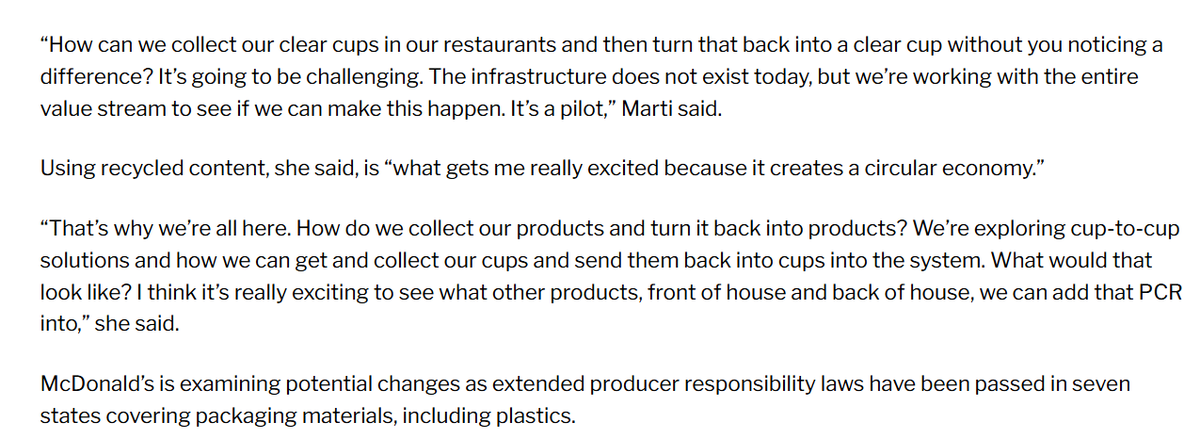
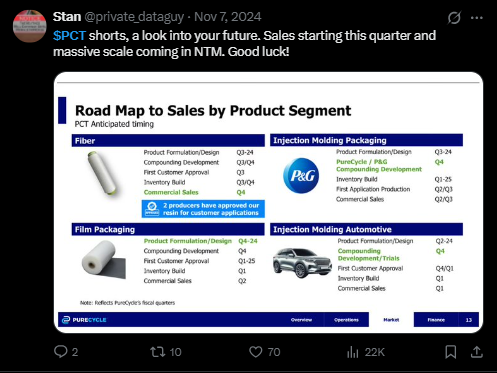
In a few months, when folks look back at $PCT and say "well where the signs they would have all these massive customers", the signs were here: $MCD #Echobox=1771952608" target="_blank" rel="nofollow noopener">plasticsnews.com/processors/rec… Focused on plastic to plastic solutions for a circular solution and examining how to address EPR laws covering packaging. I wonder who they could possibly get their CLEAR, FDA Approved rPP from for their coffee lids and cold beverage containers? Hint: There is literally only one provider, mechanical ain't clear and chemical is literally banned in New Jersey.
Stan tweet mediaStan tweet media
English
13
34
171
77.4K
Ian Bezek
Ian Bezek@irbezek·
@private_dataguy A few months? 18 months ago you predicted massive scaling, and instead nothing happened. Same as it's been ever since this science project went public. But maybe next time?
Ian Bezek tweet media
English
4
0
8
1.9K
🇺🇸 Kyle Bass 🇹🇼
@Saul_Sadka The cars are evil. Don’t mind the military-aged-man of Moroccan descent who jumps out of said evil car and starts stabbing anyone he could find. It’s crazy that there happens to be an evil car AND evil knife in the same place. The media continues to dig its own grave.
English
8
13
298
3.5K
bill fleckenstein
bill fleckenstein@fleckcap·
Another great post by stan the man.
Stan@private_dataguy

In a few months, when folks look back at $PCT and say "well where the signs they would have all these massive customers", the signs were here: $MCD #Echobox=1771952608" target="_blank" rel="nofollow noopener">plasticsnews.com/processors/rec… Focused on plastic to plastic solutions for a circular solution and examining how to address EPR laws covering packaging. I wonder who they could possibly get their CLEAR, FDA Approved rPP from for their coffee lids and cold beverage containers? Hint: There is literally only one provider, mechanical ain't clear and chemical is literally banned in New Jersey.

English
1
3
62
12.2K
bill fleckenstein
bill fleckenstein@fleckcap·
another great post by stan the man.
Stan@private_dataguy

In a few months, when folks look back at $PCT and say "well where the signs they would have all these massive customers", the signs were here: $MCD #Echobox=1771952608" target="_blank" rel="nofollow noopener">plasticsnews.com/processors/rec… Focused on plastic to plastic solutions for a circular solution and examining how to address EPR laws covering packaging. I wonder who they could possibly get their CLEAR, FDA Approved rPP from for their coffee lids and cold beverage containers? Hint: There is literally only one provider, mechanical ain't clear and chemical is literally banned in New Jersey.

English
1
6
99
22.9K
Thoughtful Money®
Thoughtful Money®@thoughtfulmoney·
This Isn’t 1999 or 2007 — The Passive Bid Changed The Market Forever In this Short video, Bill Fleckenstein @fleckcap and @AdamTaggart discuss why the passive bid has become the dominant force in markets—and why today’s environment is nothing like 1999 or 2007. Most market participants are focusing on the wrong variables: macro data, geopolitics (war, tariffs), valuations, you name it. These matter far less than one dominant force: the “passive bid.” What is the passive bid? It is the continuous inflows into passive investing vehicles (index funds, ETFs, retirement accounts), which mechanically deploy capital that buys regardless of valuation or macro conditions. This creates a persistent upward force in markets, largely disconnected from fundamentals. On top of the passive bid, you have a Federal Reserve willing to inject liquidity and policies like QE (Quantitative Easing) — even if rebranded (e.g., “RMP” – Reserve Management Purchases). This results in cheap capital, liquidity flooding markets, and reinforcement of upward price trends. So, passive inflows + easy money = structurally bullish environment. Why is it so hard to fight/break? @fleckcap uses the following metaphor: the passive bid is like a supertanker moving through water. It’s slow, massive, and powerful – it creates waves behind it (secondary strategies).  What followed this trend: – Growth of algorithmic and systematic strategies – “Copycat” or momentum-following participants (“pilot fish”) – Factor investing built on past market behavior This ecosystem feeds on itself: passive flows → drive trends, algos detect trends → amplify them, and more capital follows → reinforces trend. Here is an example: the 2025 Tariffs shock happened when systematic strategies were heavily positioned. It triggered forced selling, momentum reversal, and psychological panic. As a result, the market decline fed on itself. But importantly, this wasn’t a fundamental repricing – it was a mechanical unwind. Labor market deterioration is what could actually break the system – not war or macro shocks, not even valuations. A shift from workers contributing to retirees withdrawing could reduce inflows into passive vehicles, and potentially reverse the bid. Today's market is driven by flows, not fundamentals. The behavior looks “crazy” (mania-like) – similar to what we have seen in 1999 and 2007. But there is a critical difference: back then, we had no QE, no dominant passive flows. Today, we have massive passive bid and central bank liquidity support. Therefore, historical analogies no longer work. Get access to my notes with the key takeaways from this interview with Bill Fleckenstein by visiting my Substack (link below) ⬇️
English
28
24
296
93.8K
Gary Kaltbaum
Gary Kaltbaum@GaryKaltbaum·
This is a load. His legacy: Powell caused the inflation by taking rates to 0% and printing to $9T to buy up the whole freaking bond market taking the 10 year under 0.5%. He never saw inflation coming. Called it transitory & only when things got bad did he start to play catch up. Housing market is still feeling the effects of his distortions. He did not save the economy. Opening back up did that.
Sara Eisen@SaraEisen

Jay Powell’s last day as Chair is tomorrow, wrapping up 8 years of leading the Federal Reserve. His legacy: a champion for Fed independence, saving the world economy from a deep depression during the COVID shutdown, and fighting 41-year high inflation without wrecking the economy or jobs, achieving the rare soft landing.

English
40
145
770
23.2K