Vasili Shynkarenka
1.4K posts

Vasili Shynkarenka
@flreln
Founder @ AI Study Camp. YC alum. Writer. “I seek to understand.”
London, UK Katılım Şubat 2013
121 Takip Edilen1.2K Takipçiler


Kate and I spent the weekend forest bathing.
A cabin in deep woods, a river feeding the ocean, tides marking the day. We hiked, watched, listened, and smelled. We let the quiet settle.
By Sunday morning, my resting heart rate dropped by 10%. The storms of the modern world were shedding.
We were eating lunch inside while looking out onto the serene river, playing 20 questions. As we probed to discover what object the other had identified, we watched several flies struggle against the glass as they tried to get outside. It was beyond their intellectual capacity to understand the concept of glass and to improvise a plan to take an alternative route to get back where they belonged.
In our normal gaze we look past the flies to the trees and the river. Kate and I wondered what else we miss moment to moment. Most of it, probably.
We are powerful and weak, all-seeing and oblivious, free and trapped. The modern world is our glass.
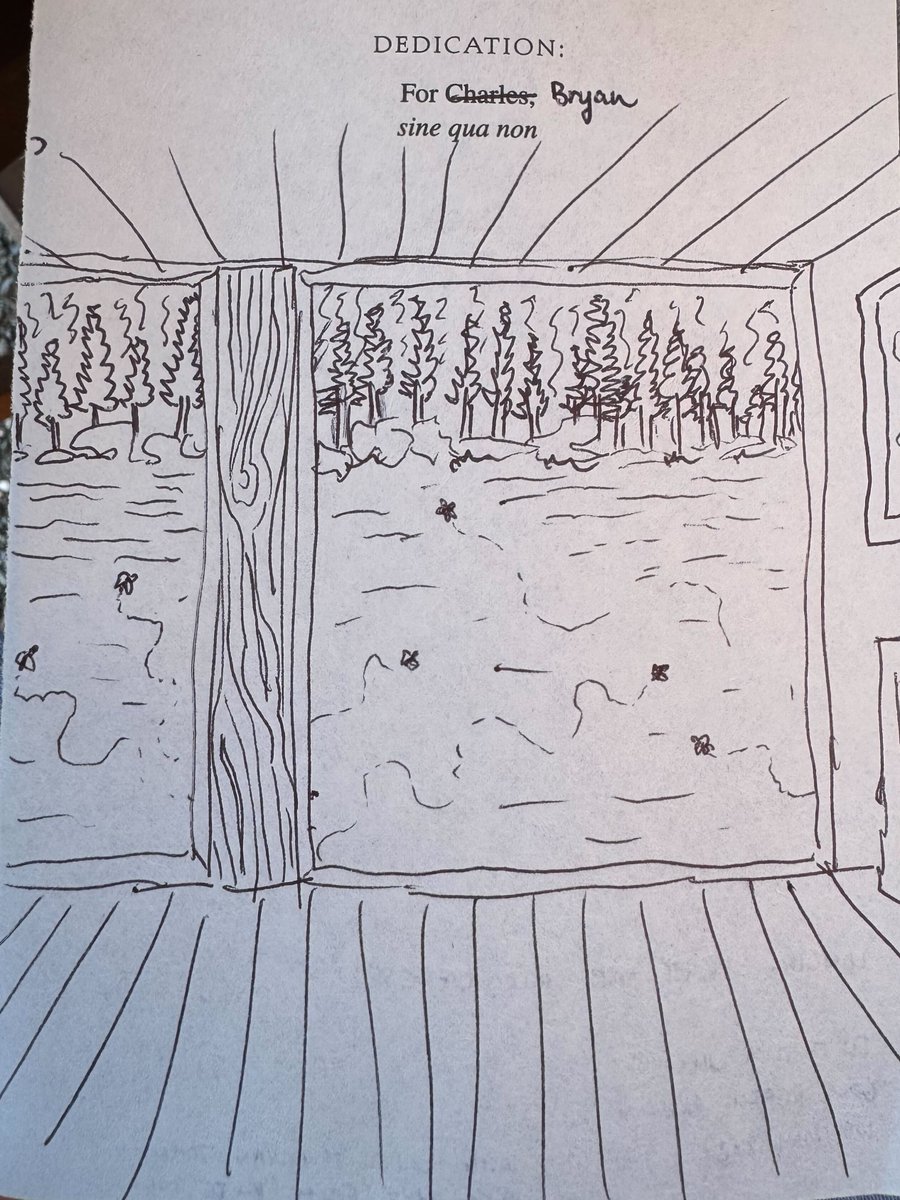
On Sunday morning I asked Kate to draw what she was feeling. She was reading a book and sketched onto the open page, which happened to be the dedication and read “sine qua non”, the one without whom, not.
The quiet of the forest sharpened what I could notice. The flies on the window. Kate across the table. A dedication in a borrowed book that became, by accident, hers to me.
Are all trapped behind glass we cannot see?

English

@patrickc Although it’s not an everyday phenomenon, apologies
English

@patrickc Spontaneous remission phenomenon (when people with terminal or incurable illnesses recover) - see the book Cured for a taster. Obviously related to the mind-body stuff in health in general.
English

Which are the most common everyday phenomena that we don't properly understand?
Off the top of my head:
• Lightning (how does it happen?)
• Sleep; dreams (why do they exist?)
• Glass (thermodynamics of formation)
• Turbulence (when does it start?)
• Morphogenesis (how does a creature know what should go where?)
• Rain (it seems to start faster than models would predict)
• Ice (dynamics of slipperiness)
• Static electricity (which material will donate electrons?)
• General anaesthetic. (And the mechanism of a lot of drugs, e.g. paracetamol.)
Patrick Collison@patrickc
Some progress in lightning: quantamagazine.org/what-causes-li….
English

@patrickc Made a typo, it’s Dr Alia Krum - mbl.stanford.edu/sites/g/files/…

Nutrition:
1) In relation to mindsets/placebo (Dr Annie Krum’s work, the milkshake study, etc.). What should we believe about the foods we are eating and why.
2) Viewed holistically, in the context of other health-promoting phenomena like socializing - e.g., why it’s better to go to a birthday party and eat a cake at 10pm rather than go to bed at 8 pm feeling lonely e.g., the Mediterranean lifestyle with late dinners.
English

@worrydream “Our brains haven’t changed in a hundred thousand years. But we’ve built this very complex society around ourselves, and we’ve decided that we want to collectively govern it. We can’t do that if we can’t see or understand how any of this works.”
English

Some quotes and notes:
“The people here and the people here might be very social people, but the technology is structured in such a way that it’s inherently isolating, that it inherently pulls them apart.”
“When you’re going to the city, what does the city want you to do?”
“You shop and you talk.” - the two things cities (and tech companies) want ppl to do
“People learn best by immersion. If you want to learn a language, you go to the country that speaks that language. You use it for everything, you rub up against it every day, it’s part of your surroundings. You don’t learn a language by studying it for a few hours, every once in a while.” - true for learning everything, AI, design, writing, etc.
English

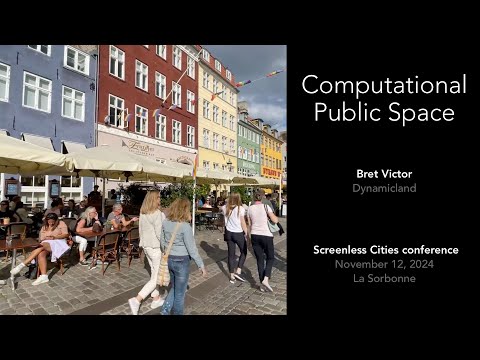
Fascinating talk by Bret Victor @worrydream on the future of computation: youtu.be/PixPSNRDNMU

YouTube
English

@iishaparekh The truth is that both are hard at their corresponding lvls.
It’s not hard to do what you’re told in either; it’s hard to get done in both something that hasn’t been done before.
English

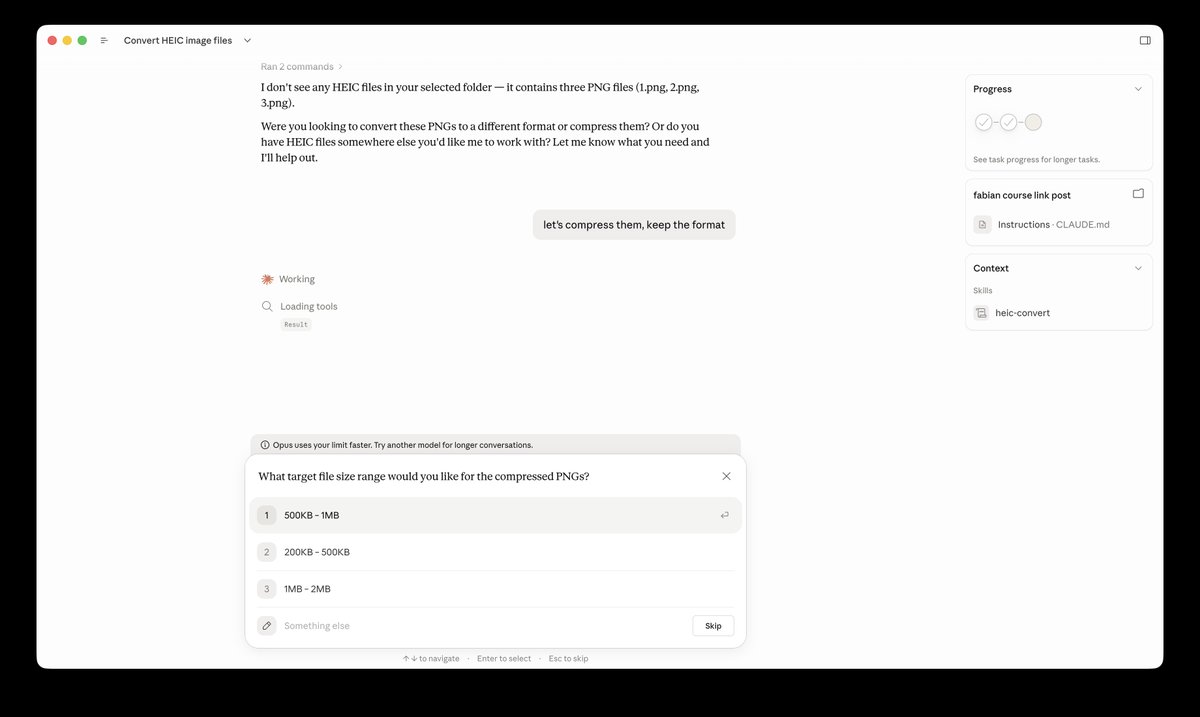
Doing some file compression with Claude Cowork today and noticing.. buttons. Good old buttons, just sittin' there, patiently waiting to be clicked.
I've seen this movie before. In 2015-2016, when Telegram/Facebook/etc. launched their chatbots platform, many people thought "UI is over." Text is the universal interface, blah blah blah.
But guess what - it wasn't. And it won't be this time around either. Humans *love* buttons. (And other UI components too, of course.) They're easy to perceive, process, understand, and act upon. In that sense, they're the exact opposite of text.
Can you imagine a jet fighter pilot controlling his plane through a chat box? Of course no. Our sensorimotor intelligence is very old and very powerful, and will eventually cut through the chat bubble like a hot knife through butter.
My prediction is that we'll still have UI in our models, no matter how intelligent they become. It will prob be dynamic and generated on the fly, like in this case, but it will still be there. Always.
UI > chatbot > UI in chatbot
Buttons for the win!

English

Launching a “train your own LLM” course next week with @fb_ldn! So excited about this one ☺️
One-liner: deeply understand how LLMs work by training one from scratch based on Karpathy’s nanochat, in a small group of technical founders/engineers, guided by an AI/ML expert — all in 3 weeks!
Basically we realized that Feynman was right and you can’t fully understand something until you create (or recreate) it; hence this course.
We will cover:
* what’s an LLM
* what are tokens, embeddings, activation functions
* what’s a transformer, what is attention, how it works
* what data an LLM is trained on, where this data comes from
* what training means (finding weights for neurons to activate)
* what is loss, why it improves with training
* what is fine-tuning
* what evals mean, how to evaluate an LLM after training
By the end of 3 weeks, you’ll have trained a gpt2-lvl LLM from scratch and acquired an intuitive + first-principles understanding of how these models are built & trained, and what their limitations are
Logistics: 3 live lectures (1hr each) + 3 office hours + async homework, small group of ~10 technical founders, myself and @fb_ldn as instructors (Fabian has an AI & ML background, co-founded Shipamax W17 and exited to WiseTech Global)
DM if interested!
English
Vasili Shynkarenka retweetledi

It amuses me that all modern health practices that are getting very popular (things like sauna, fasting, fermented foods like sauerkraut, strength training, cold exposure, etc.) is exactly what my grandfather did about 60 years ago in USSR.
He’s 86 right now and thriving.
Indeed nothing is new under the sun.
English