István Fodor

4.5K posts

István Fodor banner
István Fodor

István Fodor

@fodor_i

Senior research fellow in the Pirger Lab at the @BalatonScience. Molluscan neuroscience & neuroendocrinology 🧠🐌🧬🔬🧪 Views are my own.

Tihany, Hungary Katılım Eylül 2020
1.3K Takip Edilen544 Takipçiler
István Fodor retweetledi
Oded Rechavi
Oded Rechavi@OdedRechavi·
A new mechanism for “RNA memory”! 😱 Thrilled to share another crazy paper from the lab (can’t believe we posted 2 in 2 days!), summarizing >10 years of research: Work on transgenerational inheritance of small RNAs in the powerful model organism C. elegans changed how we think about what’s possible in inheritance and evolution, because it allows the most heretical thing: inheritance of parental responses to the environment! However, it’s still unclear whether RNAs are inherited across generations in other animals, largely because the RNA-dependent RNA polymerases that amplify heritable small RNAs and prevent their dilution in C. elegans are not conserved in mammals. In this new work, an amazing collaboration with the Rink and Wurtzel labs, we show that planarians establish long-lasting and heritable small RNA–based gene regulatory states despite lacking canonical RNA-dependent RNA polymerases and nuclear RNAi machinery (that are required in C. elegans). You might say “they are both worms…” BUT planarians are evolutionarily very distant from C. elegans (flatworms vs. roundworms, diverged more than 500 million years ago), making this particularly surprising. These are totally different animals. We find that ingestion of double-stranded RNA induces sequence-specific silencing that persists for months and survives repeated cycles of whole-body regeneration. Even more strikingly, RNAi can be transferred between animals, echoing James V. McConnell’s controversial “RNA memory” experiments from the 1970s (his lab was targeted by the Unabomber terrorist Ted Kaczynski, who sent McConnell a bomb. This and other controversies ended this line of experiments…) Mechanistically, we find that the response transitions from a transient systemic dsRNA-triggered phase to a stable, cell-autonomous post-transcriptional “memory phase” maintained by antisense small RNAs. Using a new luminescence reporter (transgenesis is currently impossible in planarians), we show that silencing spreads along the targeted gene and identify a weird type of planarian small RNAs with untemplated polyA tails. RNAi inheritance without canonical RdRPs establishes planarians as a powerful system for studying RNA-based regulatory inheritance beyond C. elegans and raises the possibility that RNA-mediated inheritance may be more broadly conserved in animals, potentially even in mammals. Here’s a video of a planarian that is treated by RNAi against β-catenin and develops multiple heads instead of just one. This is one of the phenotypes that is inherited. Another phenotype is “loss of eyes” (which we show is not only inherited across multiple regeneration cycles, but can also be transmitted between animals in transplantation experiments). Amazing work led by first authors Prakash Cherian and Idit Aviram (co-supervised by Omri and me). Please read the preprint, the link is in the next tweet, and share!
English
56
337
1.4K
190.8K
István Fodor retweetledi
Yehu Moran
Yehu Moran@YehuMoran·
1/3 🚨New paper from our lab!🔥 Most textbooks will tell you that invertebrates employ #RNAi as antiviral mechanism. Yet, do 🪸🪼 actually do it? Well, the answer is complicated. We show that in #Nematostella dsRNA induces RNAi 🧵 journals.plos.org/plosbiology/ar…
English
7
12
52
6.7K
István Fodor retweetledi
Oded Rechavi
Oded Rechavi@OdedRechavi·
Our🥶COOLNESS paper to date is finally published! Ice cold and lithium dramatically delay forgetting (extend memory) Why? read now in @NatureNeuro (as discussed first on the @hubermanlab podcast) rdcu.be/eVhn2
English
8
10
94
48.9K
István Fodor retweetledi
Luiz Pessoa
Luiz Pessoa@PessoaBrain·
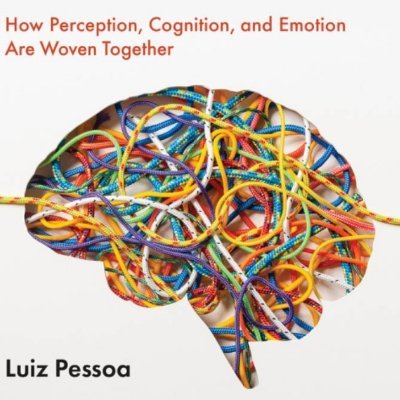
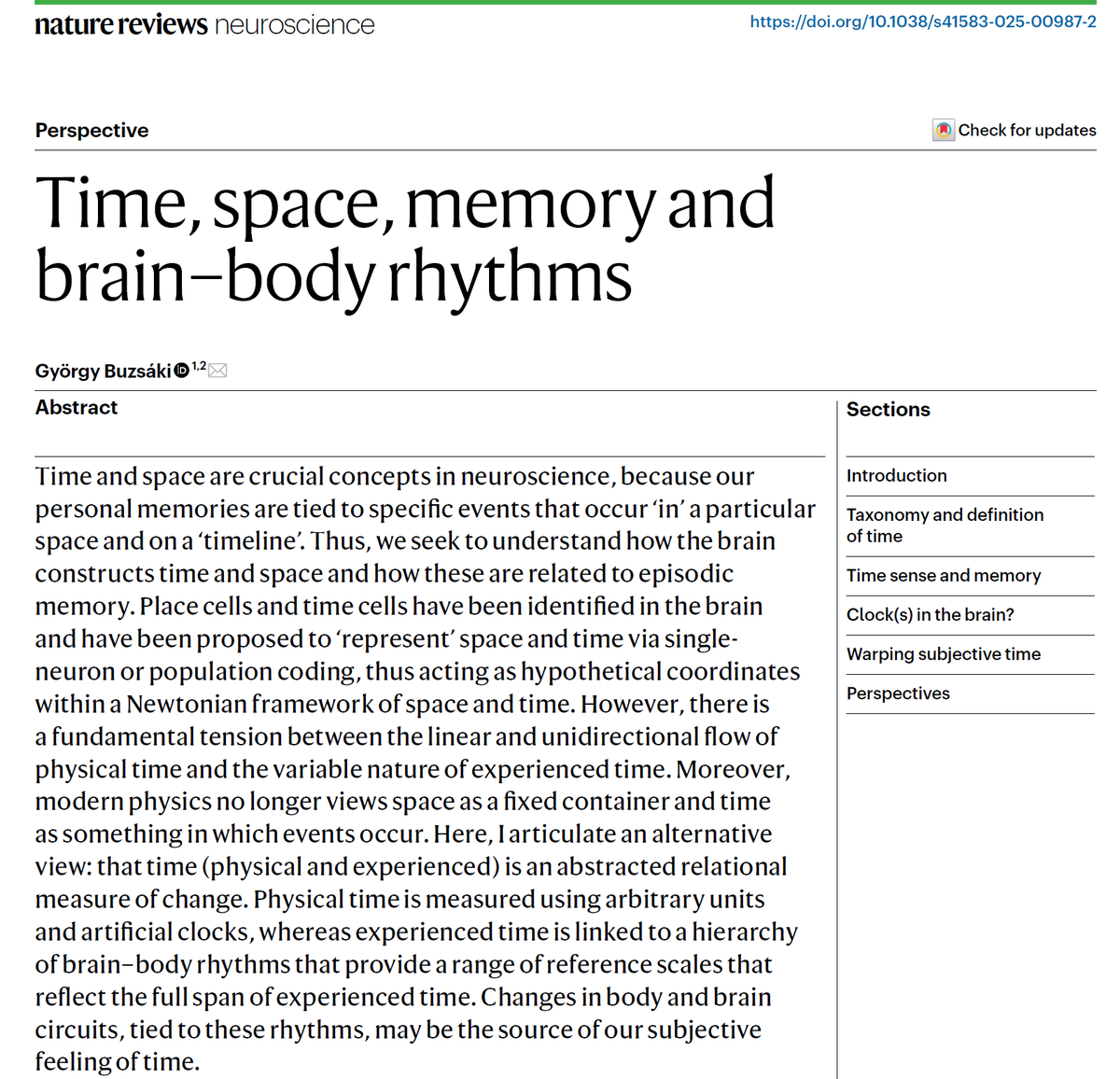
𝗧𝗶𝗺𝗲, 𝘀𝗽𝗮𝗰𝗲, 𝗺𝗲𝗺𝗼𝗿𝘆 𝗮𝗻𝗱 𝗯𝗿𝗮𝗶𝗻–𝗯𝗼𝗱𝘆 𝗿𝗵𝘆𝘁𝗵𝗺𝘀 This looks like a major one! doi.org/10.1038/s41583…
Luiz Pessoa tweet media
English
17
173
881
34.4K
István Fodor retweetledi
Oded Rechavi
Oded Rechavi@OdedRechavi·
BIG ANNOUNCEMENT📣: I haven’t been this excited to be part of something new in 15 years… Thrilled to reveal the passion project I’ve been working on for the past year and a half!🙀🥳 It started from my frustration with the depressing effect that the current publishing system has on the well-being of myself, my team, and pretty much every scientist I know (maybe you’ve noticed from my stupid jokes… :) I was exhausted of dealing with the huge delays, reviewers that can be abusive, and how arbitrary it all is. Unfortunately, the most important factors are often WHO your reviewers are and who YOU are... It’s clear we need alternatives or at least ways to improve the situation. So, together with a really special and talented team we worked to develop this idea into “qed” a platform where you can get CONSTRUCTIVE feedback on your own work or CRITICALLY assess other people’s papers. It can be a real difference maker if many of you join us (thousands have tried it already, but today we release a NEW and much stronger version ;) Let’s harness qed to put the power back in the scientists’ hands, to do, to read & to publish science on our own terms. I’m dying for you to TRY IT, and it’s very simple - just drop a paper (the link to the website is in the replies👇) - it’s completely secure, private, and free, and you get results fast. Please show your support, SHARE, tell your friends, and let’s be the revolution 🫵!
Oded Rechavi tweet media
English
109
487
1.9K
541K
István Fodor retweetledi
Luis Yanez-Guerra
Luis Yanez-Guerra@LuisAlfonsoYan2·
In the most recent work of my laboratory, we demonstrate that placozoans can respond to endogenous monoamines. Here you can look at the effects of tyramine, which increases the speed of placozoans. #Science #Placozoans #Neurotransmitters #Monoamines
Luis Yanez-Guerra tweet media
English
3
5
13
1.4K
István Fodor retweetledi
Luis Yanez-Guerra
Luis Yanez-Guerra@LuisAlfonsoYan2·
A recent publication claimed that the monoamine signalling system is a bilaterian innovation. This appears inconsistent with numerous earlier studies demonstrating that various non-bilaterian organisms exhibit responses to exogenously applied monoamines. shorturl.at/RSOBR
English
3
2
5
384
István Fodor
István Fodor@fodor_i·
@cicedli Esélyes :D Az a baj, hogy akik nálunk ezt nagyon nyomatni akarják, valahogy úgy nem idomulnak ahhoz, hogy mivel kellene/lehetne megszólítani az embereket. Főleg egy mai fiatalt, aki ofc nem fog egy fél oldalnyi fb posztot elolvasni.
Magyar
0
0
1
15
István Fodor
István Fodor@fodor_i·
@cicedli amúgy lennének tök jó ötleteim, csak sok energiát kellene beletennem normál munkaidőn felül és sorry de már én is unom, hogy ingyen csináljak mindenki helyett mindent..
Magyar
1
0
1
13
István Fodor
István Fodor@fodor_i·
@cicedli nálunk is nagyon akarják ezt nyomni, de szerintem nem csináljuk jól, nem adja a koncepció nekem.. meg csomószor olyan hosszú szövegek vannak, hogy én megunom 5-6 sor után... :D
Magyar
2
0
1
22
István Fodor
István Fodor@fodor_i·
@cicedli itt várjuk az áprilisban esedékes 50%-os béremelést :D
Magyar
0
0
1
8
b.
b.@Bogy_94·
Boldog Új Évet Kívánok Mindenkinek!🥂🎆🎇 Köszönöm szépen idén is a kedves és támogató üzeneteket!🤗 Nagyon sokat jelent, hogy ennyi embernek segítenek, okoznak örömet a posztjaim!❤️
b. tweet media
Magyar
94
3
696
58.8K
István Fodor retweetledi
Oded Rechavi
Oded Rechavi@OdedRechavi·
Epigenetics is amazing
Oded Rechavi tweet media
English
5
13
151
11.8K
✩₊˚.⋆☾⋆⁺₊✧
✩₊˚.⋆☾⋆⁺₊✧@lejtmenet·
olyan hányingerem-gyomorgörcsöm van attól, hogy durván két hét múlva le kell adnom a szakdolgozatomat, hogy az nem igaz
Magyar
2
0
15
1.3K