Fried Egg Pundit

1.2K posts

Fried Egg Pundit banner
Fried Egg Pundit

Fried Egg Pundit

@friedeggpundit

Fried egg pundit

Katılım Şubat 2016
673 Takip Edilen117 Takipçiler
Sabitlenmiş Tweet
Fried Egg Pundit
Fried Egg Pundit@friedeggpundit·
@IntrovertProbss Yep, it's called "Revenge Bedtime Procrastination" and I'm a multi-decade practitioner of this 😂😭
Fried Egg Pundit tweet media
English
52
274
3K
0
Fried Egg Pundit retweetledi
Dara in Chains
Dara in Chains@DarainChains·
Functions of Platelets Platelets, or thrombocytes, have several crucial functions in the body, primarily related to hemostasis and inflammation. I know it's a lot but here is the comprehensive overview of their roles in the body: 1. Hemostasis (Blood Clotting) -Primary Function: Platelets play an essential role in stopping bleeding by forming a platelet plug at sites of vascular injury. This is the first step in the clotting process. 2. Adhesion -Role: Upon vascular injury, platelets adhere to exposed collagen and other subendothelial components through specific receptors, such as glycoprotein Ib (GPIb) and integrins, initiating the clot formation. 3. Aggregation -Function: Platelets become activated and aggregate together, forming a stable plug. This process is facilitated by fibrinogen and von Willebrand factor (vWF), which links platelets to one another. 4. Secretion of Granules -Release of Factors: Activated platelets release contents from their granules, including: - Alpha Granules: Contain proteins like fibrinogen, vWF, and growth factors that promote healing. -Dense Granules: Release adenine nucleotides (ADP, ATP), calcium ions, and serotonin to amplify the platelet response and attract more platelets to the site of injury. 5. Coagulation Cascade Activation -Promotion of Clotting: Platelets provide a surface for the assembly of coagulation factors, facilitating the conversion of prothrombin to thrombin and the formation of fibrin, which solidifies the platelet plug. 6. Wound Healing -Growth Factor Release: Platelets release growth factors, such as platelet-derived growth factor (PDGF) and transforming growth factor-beta (TGF-β), which promote tissue repair and angiogenesis. 7. Inflammatory Response - Modulation of Inflammation: Platelets can release signaling molecules that modulate the inflammatory response and interact with leukocytes, influencing immune activity. 8. Defense Against Pathogens - Immune Functions: Platelets can help in defense against infections by directly interacting with pathogens, releasing antimicrobial substances, and activating immune cells. 9. Regulation of Vascular Integrity - Support for Blood Vessels: Platelets contribute to the maintenance of vascular endothelium and help in the repair of damaged blood vessels. 10. Participation in Thrombus Formation - Role in Thrombosis: Platelets can contribute to the formation of pathological blood clots (thrombi) in conditions such as atherosclerosis, leading to cardiovascular diseases. These multifaceted functions highlight the importance of platelets in not only hemostasis but also in the overall orchestration of immune responses and tissue healing processes. Obviously you are concerned now right? Why is medicine not paying attention to all of these other processes obviously causing all of the LC symptoms and related diseases? Maybe think about that. Maybe say something! This is all backed in LitHub. We know all of this is happening. There are no what ifs anymore. There is only what next? #LongCovidAwareness #IamNotSmartEnoughToSolveItAlone #LetSeriousVoicesSpeak
GIF
English
1
12
53
751
Fried Egg Pundit retweetledi
Dara in Chains
Dara in Chains@DarainChains·
## Functions of Megakaryocytes Megakaryocytes play several critical roles in the body beyond their known function in platelet production. Here's a breakdown of their key functions: 1. Platelet Production - Primary Function: Megakaryocytes are responsible for producing platelets (thrombocytes) through a process called thrombopoiesis. They undergo a process of maturation and fragmentation, releasing thousands of platelets into the bloodstream. 2. Regulation of Hemostasis - Role in Coagulation: By producing platelets, megakaryocytes are essential for hemostasis (the process that prevents and stops bleeding). Platelets help form blood clots at sites of vascular injury. 3. Interaction with the Immune System - Cytokine Production: Megakaryocytes can produce several cytokines and growth factors, such as interleukins and transforming growth factor-beta (TGF-β), which can modulate immune responses. - Engagement with Immune Cells: They interact with various immune cells, including leukocytes, playing a role in immune regulation. 4. Bone Marrow Microenvironment Maintenance - Support for Hematopoiesis: Megakaryocytes are involved in maintaining the bone marrow microenvironment. They help nurture hematopoietic stem cells, supporting the process of blood cell formation. 5. Contribution to Vascular Health - Endothelial Cell Support: They can release factors that influence endothelial cell function and vascular integrity, helping to maintain the health of blood vessels. 6. Participation in Inflammatory Responses - Release of Mediators: Megakaryocytes can release various mediators involved in inflammation, contributing to the body's response to injury and infection. 7. Formation of Procoagulant Microparticles - Microparticle Release: In addition to producing platelets, megakaryocytes can shed microparticles that carry procoagulant molecules, further contributing to hemostasis and potentially influencing thrombosis. These diverse functions illustrate the importance of megakaryocytes not just in coagulation and hemostasis but also in immune modulation, inflammation, and overall vascular health. Their complex roles make them integral to both the circulatory and immune systems. Your mind may be overwhelmed now so get a snack or close your eyes for a few minutes. It's a lot. I know the implications well. I am living it. Next let's dive into what platelets do. They are not just for clotting.
GIF
English
1
16
58
1.1K
Fried Egg Pundit retweetledi
Dara in Chains
Dara in Chains@DarainChains·
SC2 Receptors in Megakaryocytes Megakaryocytes, the precursor cells responsible for producing platelets, may express certain receptors that SC2 can utilize. Here are the key receptors relevant to megakaryocytes: 1. ACE2 (Angiotensin-Converting Enzyme 2) - Role in Megakaryocytes: ACE2 is known to be expressed in various hematopoietic cells, including megakaryocytes, which may play a role in the virus's entry. 2. TMPRSS2 (Transmembrane Protease, Serine 2) - Role in Megakaryocytes: While primarily expressed in epithelial cells, TMPRSS2 is also found in some hematopoietic cells, potentially including megakaryocytes. It is involved in cleaving the spike protein, facilitating viral entry. 3. CD147 (Basigin) - Role in Megakaryocytes: CD147 has been implicated in the entry of coronaviruses and is expressed in megakaryocytes and platelets, a pathway for SC2 infection. 4. Heparan Sulfate - Role in Megakaryocytes: Heparan sulfate is found on the surface of many cell types, including megakaryocytes. It may facilitate the initial binding of the virus. While ACE2 is the most critical receptor associated with SARS-CoV-2, the implications for megakaryocyte infections and the subsequent platelets carrying infectious SC2 through the vascular system to repeat the cycle seems like our crux. It keeps the cycle going on and on. Now that we got this far. Take a breather and a sip of salty water because next you will learn what megakaryocytes do.
GIF
English
1
21
70
1.5K
Fried Egg Pundit retweetledi
Dara in Chains
Dara in Chains@DarainChains·
Here is a big post about every cell SC2 infects in the body that we know of so far. ## Comprehensive Overview of SARS-CoV-2 Receptor Locations Why can't we just worry about the spike protein? SC2 binds to various receptors across multiple body regions, allowing for entry into diverse cell types. Here’s an expanded list of the receptors, their associated cell types, and specific anatomical locations throughout the body, including the brain and major organs. 1. ACE2 (Angiotensin-Converting Enzyme 2) - Cell Types: Epithelial cells, endothelial cells - Locations: - Lungs: Alveolar type II cells - Heart: Cardiomyocytes - Kidneys: Proximal tubular cells - Intestine: Enterocytes in the small intestine - Blood Vessels: Endothelial cells lined in arteries and veins - Testes: Leydig and Sertoli cells - Nasal Epithelium: Ciliated epithelial cells - Mouth and Throat: Oral epithelial cells 2. TMPRSS2 (Transmembrane Protease, Serine 2) - Cell Types: Epithelial cells - Locations: - Lungs: Respiratory epithelial cells - Prostate: Prostate glandular cells - Intestine: Enterocytes of the small intestine - Pancreas: Ductal cells 3. Dipeptidyl Peptidase 4 (DPP4) - Cell Types: Immune and epithelial cells - Locations: - Lungs: Epithelial cells - Pancreas: Islet cells (β-cells) - Kidneys: Renal tubular epithelial cells - Heart: Cardiac fibroblasts - Brain: Neuronal cells 4. Neuropilin-1 - Cell Types: Endothelial and neuronal cells - Locations: - Lungs: Vascular endothelial cells - Brain: Neurons and glial cells (including astrocytes and oligodendrocytes) - Heart: Cardiomyocytes - Intestine: Intestinal epithelial cells 5. Heparan Sulfate - Cell Types: Present on diverse cell types - Locations: - Lungs: Epithelial and endothelial cells - Blood Vessels: Endothelial cells throughout the circulatory system - Brain: Neurons and glial cells - Muscle: Skeletal muscle cells - Skin: Dermal fibroblasts 6. Furin - Cell Types: Various human tissue cells - Locations: - Lungs: Epithelial cells - Brain: Neuronal cells and glial cells - Heart: Cardiomyocytes - Pancreas: Exocrine pancreatic cells - Intestine: Enterocytes 7. CD147 (Basigin) - Cell Types: Various cell types - Locations: - Lungs: Epithelial cells - Brain: Neuronal cells - Heart: Myocardial cells - Immune System: T cells and macrophages throughout the body 8. KREMEN-1 - Cell Types: Developing tissues - Locations: - Embryonic tissues: The exact roles in adult tissues are still under investigation. These receptors and their distribution across various organs, including the lungs, heart, kidneys, intestines, brain, and skin, contribute to the wide-ranging effects of SC2 infection and its potential complications in multiple systems throughout the body. So while vaccine injury is happening, it's only to do with 1 type which is the Spike2. Next let's look at megakaryocytes and why that is important in LC.
GIF
English
22
154
290
25.5K
Fried Egg Pundit retweetledi
Ilkka Rauvola
Ilkka Rauvola@jukka235·
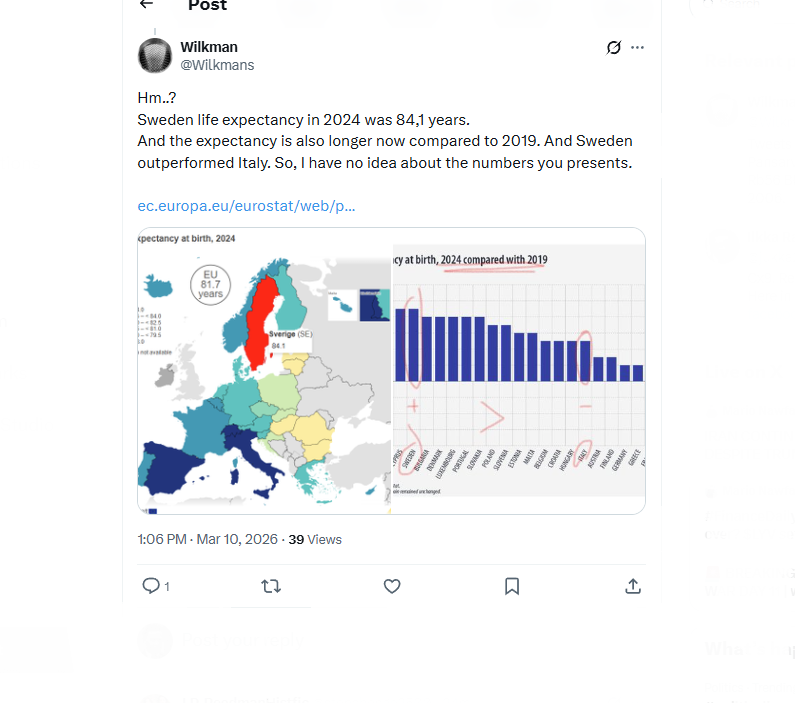
In Sweden, people are now ill for the last 84.1 − 66.2 = 17.9 years of their lives on average, according to Eurostat. That’s an 81% increase from 2019, when people were ill for 83.2 - 73.3 = 9.9 years on average at the end of life. 5/x
Ilkka Rauvola tweet media
English
6
87
255
26.1K
Fried Egg Pundit retweetledi
Tricia Dearborn
Tricia Dearborn@TriciaDearborn·
Sweden's response to Covid was pretty low-key, e.g. it kept primary schools open and did not recommend masks for the public. How's it working out for them? *Healthy life expectancy* drops from 73 years to 66
tern@1goodtern

👀 Absolutely staggering drop in Healthy Life Expectancy in Sweden according to Eurostat. From 73.3 years of healthy life expectancy down to 66.2. *Sweden*. Can no one understand how much trouble we're in?

English
135
2K
10.3K
353.7K
Fried Egg Pundit retweetledi
Yaneer Bar-Yam
Yaneer Bar-Yam@yaneerbaryam·
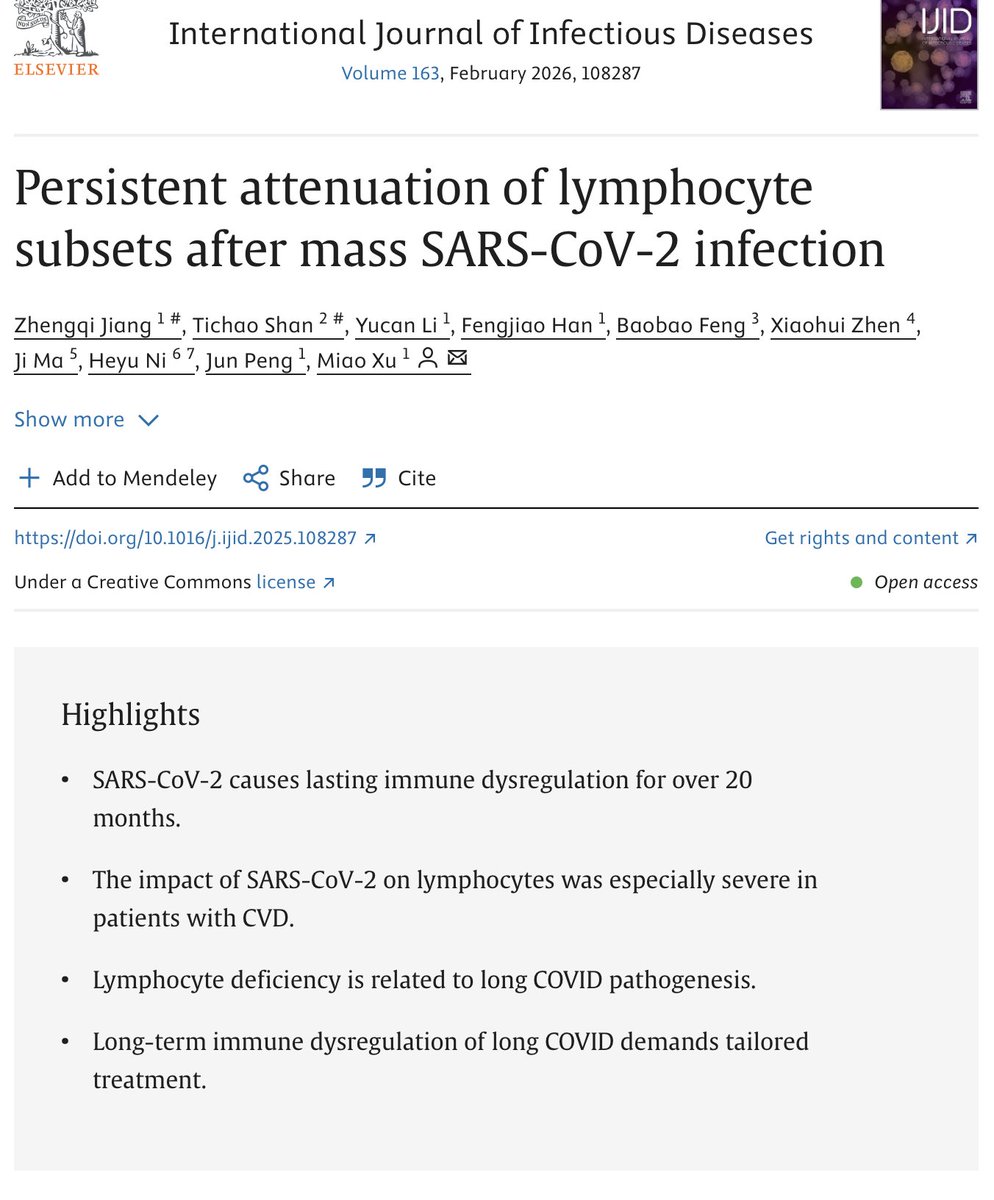
New study: New evidence for immune deficiency after COVID Infection even 20 months post-infection. Men affected more than women. "Our findings redefine SARS-CoV-2 infection as a condition of long-lasting immune compromise." sciencedirect.com/science/articl…
Yaneer Bar-Yam tweet media
English
56
771
1.7K
177.8K
Fried Egg Pundit retweetledi
SARS‑CoV‑2 (COVID-19)
SARS‑CoV‑2 (COVID-19)@COVID19_disease·
Just spoke with my CDC sources: a new COVID-19 variant, NB.1.8.1, is spreading across Louisiana, NYC, LA, DC, Colorado, and more. It's also fueling surges in China, Hong Kong, and other parts of Asia.
English
138
1.3K
3.7K
242.6K
Fried Egg Pundit retweetledi
Jammer
Jammer@acrossthemersey·
Razor blade throat sounds relatively mild. A Beijing resident, infected for nearly 10 days, experienced fever, sore throat, blood-streaked phlegm, nosebleeds, and extreme fatigue, calling this wave “terrifying.”
Jammer tweet media
English
52
929
2.8K
222.7K
Fried Egg Pundit retweetledi
Outbreak Updates
Outbreak Updates@outbreakupdates·
Thailand reports over 53,000 new Covid-19 cases in a week, school shifts to online learning
English
126
2.4K
7K
375.9K
Fried Egg Pundit retweetledi
Christophe Veltsos
Christophe Veltsos@DrInfoSec·
@drseanmullen Direct link to the article for those who can't see the subtweet: Cognitive Slowing, Dysfunction in Verbal Working Memory, Divided Attention and Response Inhibition in Post COVID-19 Condition in Young Adults (May 21, 2025) mdpi.com/2075-1729/15/5…
English
3
58
193
3.6K
Fried Egg Pundit retweetledi
Dr. Sean Mullen
Dr. Sean Mullen@drseanmullen·
I’ve spent two decades studying how brains age. And I’ve never seen anything quite like this. In normal aging, some neurons die—but it’s gradual, region-specific, and the brain compensates remarkably well. Most of what we see is driven by loss of synaptic connections, not widespread neuron death. Behavioral changes tend to be slow, subtle, and mostly involve executive function. In neurodegenerative diseases like Alzheimer’s and Parkinson’s, it’s different. These diseases kill neurons. The decline is faster, deeper, and more functionally disabling. What we’re seeing in young adults after SARS-CoV-2 infection doesn’t fit either pattern.
We’re seeing signs of early, widespread cognitive impairment—slowed thinking, weakened memory, executive dysfunction. Not just in one domain. Not just in one region. Almost every study that looks for brain damage post-infection finds it. This suggests accelerated neural de-differentiation—a breakdown in how specialized brain regions communicate and function. It's something we normally see decades later. Impairment doesn’t always mean permanent disability. But if neurons are dying, those cells aren’t coming back. And yes—cognitive disabilities have also spiked dramatically since 2020. There’s no other plausible explanation for the scale and timing of this trend. Meanwhile, self-styled truth-tellers with zero background in neuroscience or cognition keep minimizing the risks—spreading the idea that these impairments are rare, minor, or imagined. Speak up with evidence? You’re called an extremist.
Refuse to play along? You’re accused of fear-mongering. My biggest mistake? Thinking these folks were just misinformed.
They’re not. They’re propagandists. It’s 2025.
The damage is measurable.
The science is clear.
And the longer we pretend this is normal, the worse the outcomes will be.
Alba ࿐@AlbaDocherty

Significant, long-lasting cognitive impairments in young adults. Verbal working memory was significantly impaired + lower performance in divided attention & response inhibition. The observed increased reaction time in all cognitive tasks may demonstrate cognitive slowing.


English
68
1.4K
3.2K
161.5K
Fried Egg Pundit retweetledi
Arturo Portnoy
Arturo Portnoy@portna·
I mask inside 😷, wear shoes and clothes, use an umbrella when it rains, a hat for the sun, a seatbelt in the car, a helmet on the bike. I understand risk and take measures to minimize it. I use my brain to think. I cherish my health. I protect my family. I'm weird like that.
GIF
English
22
224
1.4K
14.7K
Fried Egg Pundit retweetledi
Dr. Lucky Tran
Dr. Lucky Tran@luckytran·
The Trump admin has terminated HICPAC, the CDC’s infection control committee. The committee sets national standards for hand-washing, mask-wearing & isolating sick patients. This reckless move will make patients at healthcare facilities much more vulnerable to deadly infections
English
1
114
282
5.1K
Fried Egg Pundit retweetledi
Dr. Lucky Tran
Dr. Lucky Tran@luckytran·
People are being fired for wearing a mask to work. This is horrible and against public health. We need to pass laws that explicitly protect the right to mask.
English
73
904
4.4K
81K
Fried Egg Pundit retweetledi
David It Up!
David It Up!@Dave_it_up·
The Impact of SARS-CoV-2 on T Cells: Unraveling the Immune Response Since the emergence of COVID-19, scientists have worked tirelessly to understand how SARS-CoV-2, the virus responsible for the disease, interacts with the human immune system. Among the most crucial components of this response are T cells-specialized white blood cells that play a central role in fighting viral infections. Recent research has revealed that SARS-CoV-2 profoundly affects T cell function, with implications for disease severity, recovery, and long-term health. T Cells: The Body’s Viral Defense T cells come in two main types: CD4+ “helper” T cells, which coordinate immune responses, and CD8+ “killer” T cells, which destroy infected cells. In a typical viral infection, these cells work together to eliminate the invader and establish lasting immunity. How SARS-CoV-2 Disrupts T Cell Responses 1. Lymphopenia: The Disappearance of T Cells One of the most striking features of severe COVID-19 is **lymphopenia**-a dramatic reduction in the number of circulating T cells. Studies have shown that patients with severe disease can lose up to 80% of their CD8+ T cells and a significant portion of their CD4+ T cells. This depletion is associated with worse outcomes and a higher risk of complications. 2. Direct Infection and Dysfunction Unlike many other viruses, SARS-CoV-2 can directly infect CD4+ T cells. The virus attaches to these cells using the CD4 molecule and enters via the ACE2 and TMPRSS2 proteins. Once inside, it can trigger cell death (apoptosis) and alter the production of key signaling molecules, such as increasing IL-10 (an anti-inflammatory cytokine) and reducing IFNγ and IL-17A (critical for antiviral defense). This weakens the immune response and contributes to the overall loss of T cells. 3. T Cell Exhaustion Even in cases where T cells are not directly infected, SARS-CoV-2 can induce a state known as **T cell exhaustion**. Here, T cells express high levels of inhibitory receptors like PD-1 and Tim-3, which dampen their activity. Exhausted T cells are less effective at clearing the virus, potentially allowing the infection to persist and worsen. 4. Impaired Coordination and Delayed Responses In mild COVID-19 cases, T cells rapidly activate and coordinate an effective response, leading to viral clearance. However, in severe cases, this response is delayed or uncoordinated. The result is an overactive, misdirected immune response that can damage lung tissue and other organs. Long-Term Effects: The Shadow of Long COVID For many COVID-19 survivors, immune dysfunction does not end with the acute infection. Persistent T cell abnormalities have been observed months after recovery, especially in those with “long COVID.” These individuals may experience ongoing inflammation, fatigue, and a weakened ability to respond to new infections or vaccines. Implications for Vaccination and Treatment The impact of SARS-CoV-2 on T cells has important consequences for vaccination strategies. People who have recovered from COVID-19 may have a blunted T cell response to vaccines, highlighting the need for booster doses and possibly new formulations that better stimulate cellular immunity. Therapeutically, targeting T cell exhaustion (for example, by blocking PD-1 or Tim-3) and restoring healthy T cell numbers and function are promising areas of research. Interventions that modulate IL-10 signaling or support early Th1 responses may also improve outcomes. References: - Chen, Z., & Wherry, E. J. (2020). T cell responses in patients with COVID-19. *Nature Reviews Immunology*, 20(9), 529-536. - Sattler, A. et al. (2020). SARS-CoV-2-specific T cell responses and correlations with COVID-19 patient predisposition. *Journal of Clinical Investigation*, 130(12), 6477-6489. - Sekine, T. et al. (2020). Robust T cell immunity in convalescent individuals with asymptomatic or mild COVID-19. *Cell*, 183(1), 158-168.e14.
David It Up! tweet media
English
8
115
285
9.3K
Fried Egg Pundit retweetledi
Jess
Jess@MeetJess·
You are not crazy for still masking.
You are not paranoid for demanding clean air.
You are not overreacting.
You are paying attention.
And you may be protecting your future self—the version of you that still knows your name.
English
1
66
438
4.3K