
Sabitlenmiş Tweet

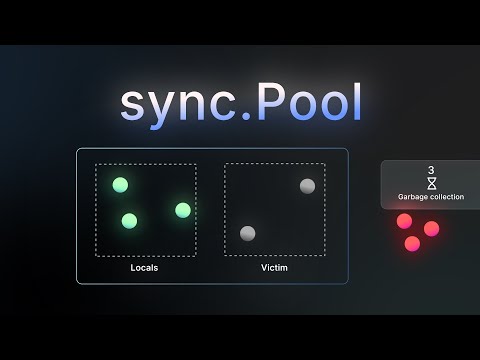
I have made thousands of static visualizations for Go, it's time to try something new:
youtube.com/watch?v=fwHok9…
YouTube
English
Phuong Le
1.1K posts
@func25
Software Engineer @VictoriaMetrics, building VictoriaLogs


victoriametrics.com/blog/victorial… Reading how a high-performance database lays its data out on disk in an optimal columnar layout, how bloom filters are used, how sharding columns helps with concurrency, etc, through visualization, is interesting. Written entirely for beginners, no complicated data structure knowledge required.









Today is my first day at @VictoriaMetrics ! 🎉 Back to working on Open Source, on exactly the kind of deep systems project I've wanted for ages, performance, and understanding hardware, OS fundamentals. Lots to learn, and that's the best part. I'll be writing about what I learn as I go.
hot take: Go would be the greatest programming language on earth if it had enums and union types. they simplified their way into having to do really weird stuff just to represent reality. you should still probably use it though.

The dedicated logger service inside every Zerops project is now using VictoriaLogs. - 100x more log retention - 3x faster queries - VictoriaLogs UI embedded into Zerops - Already rolled out to every existing project Full story below.



Go is not bad at concurrency. A more factual take is Go is excellent at making concurrency cheap, explicit, and approachable (and approachable, and approachable), especially for common backend patterns. But Go gives you relatively low-level primitives, a lot of correctness around cancellation, task lifetimes, cleanup, error propagation, and backpressure is left to us, the programmer. So the fair comparison is not "Go vs JVM, who wins?" It is: Go optimizes for simple pragmatic concurrency, the modern JVM ecosystem has stronger tools for structured and resource-safe concurrency. Which one is better depends on how complex the concurrency problem is. This is just a "depends on the problem" discussion.
