Plot protection

2.1K posts

Plot protection

Plot protection

@funnycarrot

Ghaiyabskkajqhsbakkqheusns

Katılım Ekim 2010
188 Takip Edilen47 Takipçiler
Plot protection
Plot protection@funnycarrot·
@Ye_Olde_Holborn You assume Nobless oblige and an attachemwnt of the ruling class to their people but time and again they show you their loyalty is to globalists and capital
English
0
0
0
56
Ye Olde Holborn☣️
Ye Olde Holborn☣️@Ye_Olde_Holborn·
>>>I’m (non~working) working class myself, but I’d much rather have posh aristocrats running the country that look & sound the part & who had access to an elite education. This guy is probably great for a fixing a boiler or having a pint down the pub, but I don’t want him making laws. I hate all this tedious common man shite ~ utter decline
Cllr Rob Kenyon@RobKenyonReform

The Makerfield constituency deserves a local champion. I can’t wait to get started. 🇬🇧

English
176
19
604
181K
Jane Caro
Jane Caro@JaneCaro·
Don’t be daft. The older I get the more self serving I realise the right is.
Ryan Dally@Ryandally08

#BREAKING Australian actress Holly Valance says that everyone “starts out as a lefty” But then you “wake up” when you try to “run a business or buy a home” “And then you realise how crap their ideas are” Hard to argue, Holly.

English
697
139
1.6K
162.4K
matt666
matt666@mattDCLXVI·
posts like this are so ridiculous. build a time machine and fuck off
matt666 tweet media
English
82
20
301
28.9K
Andy
Andy@PositivFuturist·
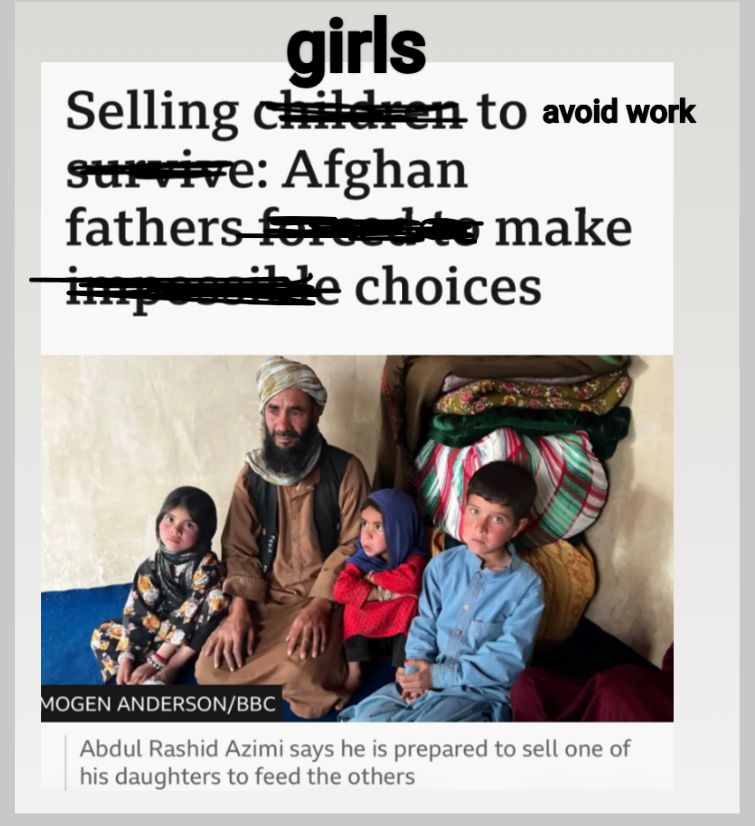
Fixed it for you BBC
Andy tweet media
English
268
8.6K
59.3K
467.1K
John Anderson AC
John Anderson AC@JohnAndersonAC·
The Giggle vs Tickle outcome marked a triumph of trans rights over women’s rights in this country. Many will find it surprising that it was Australia's only female Prime Minister that sent us down this devastating path. This descent began in 2013 when Julia Gillard infamously removed the definition of “woman” from the Sex Discrimination Act. Labor’s incoherent and baseless morality has reached its logical conclusion. Progressive politics has left women worse off. Article linked in comments
John Anderson AC tweet media
English
144
327
1.4K
19.6K
Plot protection
Plot protection@funnycarrot·
@DrewPavlou Need to discuss as well the amount of wage suppression this is causing also a sensible discussion would ask how much is totally self serving immigrants serving other immigrants
English
0
0
0
151
Drew Pavlou 🇦🇺🇺🇸🇺🇦🇹🇼
“Australia has built an economy that requires roughly 2 million more workers than our population of citizens and permanent residents can supply.” So Australia basically has a guest worker system, but unlike the Gulf States or Singapore we put guest workers on a path to citizenship where they can vote and eventually bring over their extended families. This does not strike me as an ideal political-economic model
Joseph Noel Walker@JosephNWalker

New episode! Learned a lot chatting with Martin Parkinson about the economics of migration policy. The issue that most people haven't properly understood: Australia has built an economy that requires roughly 2 million more workers than our population of citizens and permanent residents can supply. We've drifted into a guest-worker system that no government ever proposed. Is it possible to have an ethical temporary program for unskilled workers where there is no path to permanency? And what does that look like? We also discuss: - International student fees now fund close to 50% of the cost of all university research in Australia, which means a cap on student numbers trades off with research, R&D, and ultimately productivity. (Australian R&D spending already sits at 1.7% of GDP versus an OECD average of 2.7%.) - Australia has 250,000 skilled migrants -- including 50,000 engineers, 20,000 teachers, 16,000 nurses, and 1,300 electricians -- who were admitted because their qualifications were assessed as commensurate with Australian standards, but who cannot work in their fields because of state-government and professional-body licensing barriers. - The Australian skilled-occupation list is based on a 2001 taxonomy, which is why employers trying to bring in a global procurement manager were forced to map the role to "supermarket manager." - The Australian points test is "dumb": being 40 years and 1 month old gets you dramatically fewer points than being 39 years and 11 months -- Canada's system steps down gradually, ours falls off a cliff. - Indonesia's diaspora in Australia is 90,000 people -- the same size as Fiji's, and roughly 0.03% of Indonesia's population -- despite Indonesia being projected to become the world's fourth-largest economy by 2045. - And much more. Watch below - or on YouTube, Apple Podcasts or Spotify. Timestamps: (0:00:00) – Introduction. (0:02:37) – What surprised Parkinson about Australia's immigration system? (0:10:20) – How does migration affect Australians' living standards? (0:16:56) – The political equilibrium (0:19:23) – What are the objectives of the migration program? (0:24:01) – The drift into a guest-worker system (0:41:40) – How leveraged are universities to international students? (0:47:56) – Should we have an official low-skilled migration program? (0:51:32) – Using migration to slow population ageing (0:58:42) – What "skills shortage" actually means (1:08:17) – Problems with the points test (1:14:52) – Our Soviet-style occupation list (1:24:45) – We need to better utilise our skilled migrants (1:34:39) – What is the biggest problem with Australia's migration system? (1:42:01) – How can we attract true global talent? (1:45:58) – Is the migration system robust to AI disruption? (1:53:38) – What should the upper/lower bound for net migration be? (1:56:43) – The Indonesian question (2:06:53) – How much more strategic weight would a bigger population buy us?

English
76
78
890
49.9K
GemmaTognini
GemmaTognini@GemmaTognini·
This is the most excellent & savage response from predominantly, the generation @AlboMP @JEChalmers thought they “owned” More of this 👇🏼
English
65
175
1.1K
29.5K
BroBro🇦🇺🏇🏻
BroBro🇦🇺🏇🏻@realRick_AUS·
Australia would be such a better country if we could go back to the days where mums stayed home raising their kids and having dinner ready for when dad came home after working a 12 hour shift which was enough to support the whole family, buy a house, a car and go on holidays.
English
174
59
960
20.7K
Plot protection
Plot protection@funnycarrot·
@JosephNWalker @DrCameronMurray Yes but this might strike you as unkind but I don’t really care about the economy also we need to talk about the separate east coast parasite economy Melbourne sydney Canberra from the productive rest of the country
English
0
0
3
133
Joseph Noel Walker
Joseph Noel Walker@JosephNWalker·
New episode! Learned a lot chatting with Martin Parkinson about the economics of migration policy. The issue that most people haven't properly understood: Australia has built an economy that requires roughly 2 million more workers than our population of citizens and permanent residents can supply. We've drifted into a guest-worker system that no government ever proposed. Is it possible to have an ethical temporary program for unskilled workers where there is no path to permanency? And what does that look like? We also discuss: - International student fees now fund close to 50% of the cost of all university research in Australia, which means a cap on student numbers trades off with research, R&D, and ultimately productivity. (Australian R&D spending already sits at 1.7% of GDP versus an OECD average of 2.7%.) - Australia has 250,000 skilled migrants -- including 50,000 engineers, 20,000 teachers, 16,000 nurses, and 1,300 electricians -- who were admitted because their qualifications were assessed as commensurate with Australian standards, but who cannot work in their fields because of state-government and professional-body licensing barriers. - The Australian skilled-occupation list is based on a 2001 taxonomy, which is why employers trying to bring in a global procurement manager were forced to map the role to "supermarket manager." - The Australian points test is "dumb": being 40 years and 1 month old gets you dramatically fewer points than being 39 years and 11 months -- Canada's system steps down gradually, ours falls off a cliff. - Indonesia's diaspora in Australia is 90,000 people -- the same size as Fiji's, and roughly 0.03% of Indonesia's population -- despite Indonesia being projected to become the world's fourth-largest economy by 2045. - And much more. Watch below - or on YouTube, Apple Podcasts or Spotify. Timestamps: (0:00:00) – Introduction. (0:02:37) – What surprised Parkinson about Australia's immigration system? (0:10:20) – How does migration affect Australians' living standards? (0:16:56) – The political equilibrium (0:19:23) – What are the objectives of the migration program? (0:24:01) – The drift into a guest-worker system (0:41:40) – How leveraged are universities to international students? (0:47:56) – Should we have an official low-skilled migration program? (0:51:32) – Using migration to slow population ageing (0:58:42) – What "skills shortage" actually means (1:08:17) – Problems with the points test (1:14:52) – Our Soviet-style occupation list (1:24:45) – We need to better utilise our skilled migrants (1:34:39) – What is the biggest problem with Australia's migration system? (1:42:01) – How can we attract true global talent? (1:45:58) – Is the migration system robust to AI disruption? (1:53:38) – What should the upper/lower bound for net migration be? (1:56:43) – The Indonesian question (2:06:53) – How much more strategic weight would a bigger population buy us?

English
49
33
145
154.9K
Sparky777
Sparky777@Potstirrer111·
I want to meet the 3% that want a big increase lol
Sparky777 tweet media
English
6
1
14
757
Plot protection
Plot protection@funnycarrot·
@purplepingers Are you a fucking moron it’s the capitalists who love immigration because it suppresses wages and increases demand
English
0
0
3
25
Plot protection
Plot protection@funnycarrot·
@JosephNWalker Look at countries that report sexual assaults by ethnicity and life time contributions
English
1
0
3
97
Joseph Noel Walker
Joseph Noel Walker@JosephNWalker·
This week I'm running a series of three episodes on Australian immigration policy. Immigration is one of the most important yet poorly understood areas of Australian public policy. I learned this first-hand last year, after I did an interview with Abul Rizvi, a former Deputy Secretary of the Department of Immigration. The quality of responses to that interview by otherwise smart people showed me there's a real absence of knowledge about how the system actually works. People are starved of good information here in a way they aren't for other policy areas. Part of the reason for this is simply that most Australians don't have direct experience with the immigration system because they're not themselves immigrants. In contrast, people have more contact with, for example, the housing system, because they're either homeowners or renters, and so their opinions about housing are somewhat more informed than their opinions about immigration. But the other reason is that there seems to be a dearth of good intellectual content on immigration policy. In comparison, take defence and foreign policy: it feels like every couple of years in Australia we produce and then debate a really good new book in that field. Who is our Hugh White for immigration policy? There's been some excellent work on immigration policy over the last few decades, some of which we discuss in this series. But it feels less frequent or less prominent than in other fields. Recently I've been puzzling over why high-quality analysis on immigration seems relatively scarce. I don't have a complete answer, but I suspect at least part of it is that immigration policy feels intellectually low-status. Or to put it differently: it just doesn't excite people's intellectual curiosity (as distinct from their tribal passions) as much as topics like housing, AI, or foreign affairs. People who could write about it, and people who would read about it, don't fully realise how interesting it can be. (I was one of these people until a couple of years ago.) Immigration policy appears boring possibly because it feels like something that we have both no control over and complete control over -- like some combination of "the weather" and "accounting". On the one hand, it's always there in the background, and feels like it just happens to us. On the other hand, it's this clockwork system of categories and lists, points and quotas. Both framings lead to the same outcome: intellectually checking out. But checking out is a mistake because immigration is no longer (if it ever was) merely a task for technocrats. We've arrived at a moment, as we have at only a few other times in our history, where immigration policy requires momentous choices. Immigration literally built Australia. And whether we get it right or wrong over the next few years could shape our national fortune as powerfully as assisted passage did in the 19th century, or the postwar migration program in the 20th century. To provide people with as much high-quality information as possible, I decided to do a series on Australian immigration policy. In constructing the series, I wanted to boil immigration down to three (more or less) mutually exclusive, collectively exhaustive interviews: 1. The economics of immigration policy. 2. The history of immigration to Australia. 3. The social cohesion, cultural, and security dimensions of immigration policy. Then I went out to find the best guest to speak to each of those topics. As luck would have it, I was able to wrangle each guest. For economics, it was Martin Parkinson. Martin ran Treasury, then PM&C, then chaired the Australian government's 2023 Migration Review -- the most substantial review of our migration system in more than three decades. For history, it was Mark Cully. Mark was chief economist at the Department of Immigration from 2009 to 2012. He has just written what will really be the first general history of immigration to Australia, all the way from assisted passage in the 1830s to the present day. The book, Waves of Plenty, is out in September. (That Australia hasn't had a general history of its immigration until 2026 is further proof of the strange undersupply of immigration content.) And third was Mike Pezzullo. Mike ran Australia's immigration and border protection apparatus for almost a decade. He oversaw Operation Sovereign Borders, the policy that stopped the boats. Then he was appointed Secretary of the Department of Immigration and Border Protection from 2014, leading it through its transition into the mega-department of Home Affairs, until his departure in 2023. Few officials with his depth of recent experience are out of the department and able to share what they know about how the system actually works. Getting immigration policy right is more important now than at any point in my lifetime. And yet the quality of the debate seems to be as poor as it's ever been. We're not asking good questions, by which I mean we're not asking specific enough questions. The debate so far has occurred at a very low level of resolution. So I hope these interviews help people understand how the system actually works, the trade-offs involved, what we can reasonably expect of our immigration system in 2026 and beyond. And some questions we should be asking to improve it.
English
36
14
104
17.4K
Plot protection
Plot protection@funnycarrot·
@JosephNWalker How about you talk to someone who isn’t hopelessly interested in maxing immigration maybe someone who actually loves Australia
English
0
0
9
128
Kate🦋M©
Kate🦋M©@Kate3015·
The immigration ‘half pregnant’ dilemma. Angus Taylor’s no welfare for non-citizens policy would impact thousands of Chinese-Australian permanent residents, given that China does not permit dual citizenship according to Wanning Sun writing for Crikey. Taking Australian citizenship is not simply an “administrative step” for these people, it is a “severing, they write. Many countries don’t allow dual citizenship not just China and many people give up the citizenship of the birth country to become Australians. So the Chinese either decide they want to be Australians and live here and enjoy the benefits citizens enjoy. Or they stay here “half pregnant” and don’t enjoy the benefits or they return homes. They have choices. But if you’re not prepared to fully commitment to Australia I question why you are here. And, I support @AngusTaylorMP.
English
17
12
132
3.5K
Arctic
Arctic@neco_arctic·
Why doesn't the headline say "Cis male GP, who identifies with his biological sex, charged with sexually assaulting women and girls"
ABC News@abcnews

#Breaking: A former Brisbane doctor has been charged with 148 counts of rape and sexual assault following an extensive police investigation. ab.co/4wApBD4

English
45
639
12.8K
244.3K
christopher joye
Macquarie tightens lending policies to reflect negative gearing ban: Mortgage broker Alex Veljancevski estimated a borrower with an annual income of $100,000 and no existing debt could see their borrowing capacity for an investor loan fall from $750,000 to $600,000 – a 20 per cent reduction – with no change to their income or expenses, because of the negative gearing ban. afr.com/companies/fina…
English
24
17
167
15.8K
Plot protection
Plot protection@funnycarrot·
@crikey_news You’re not a citizen so you get nothing sounds great but we know Angus is a liar
English
0
0
0
492
Crikey
Crikey@crikey_news·
Chinese Australians are incensed about Angus Taylor's plan to rescind access to welfare benefits to non-citizens — for them, dual citizenship is not an option, writes Wanning Sun. crikey.com.au/2026/05/19/ang…
English
97
46
163
140K