sangmin.eth | 安全なう

90.5K posts

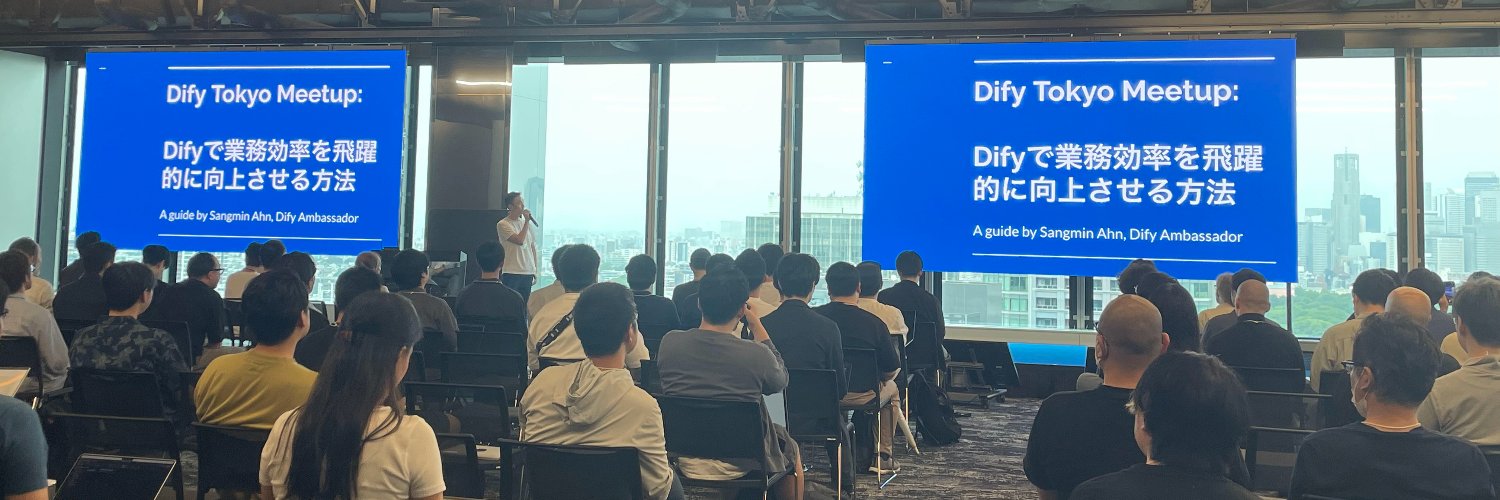
sangmin.eth | 安全なう banner
sangmin.eth | 安全なう

sangmin.eth | 安全なう

@gijigae

@ChoimiraiHQ 代表。 #ChoimiraiCompany

Yokohama, Japan Katılım Haziran 2008
11.3K Takip Edilen34K Takipçiler
Sabitlenmiş Tweet
sangmin.eth | 安全なう
理想はAIエンジニアとドメインの専門家がチームを組んで助け合いながら共に成長していく形🚀。前者は最新技術を学び、実践的なシステムを作る。一方で、後者はAI時代に合わせ、継続的なBPR改善を目指し、前者にフィードバックを与える。両方ともにフールタイムの仕事で、一人でやるには限界がある🤝。
sangmin.eth | 安全なう tweet media
新盛淳司/鍼灸師・スポーツトレーナー(メディカル)@irifuneshinmori

@gijigae つまり、ドメイン知識を持っている人が、プログラミングやAI知識を身につけると、強くなれる可能性あるかもですね

日本語

2
14
145
52.4K
sangmin.eth | 安全なう retweetledi
Julien Chaumond
Julien Chaumond@julien_c·
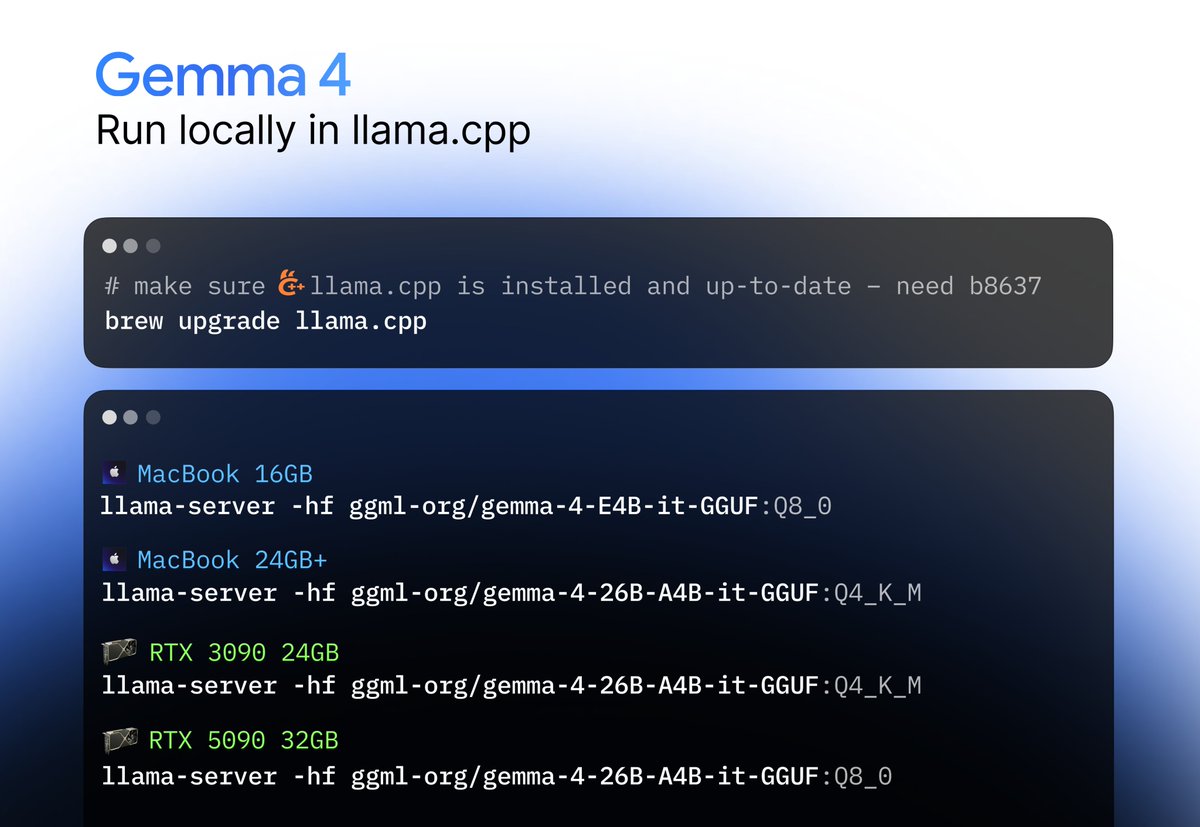
Just do this: brew install llama.cpp --HEAD Then; llama-server -hf ggml-org/gemma-4-26B-A4B-it-GGUF:Q4_K_M
Julien Chaumond tweet media
English
38
183
2K
141.1K
sangmin.eth | 安全なう retweetledi
Omar Sanseviero
Omar Sanseviero@osanseviero·
As part of the Gemma 4 release, we're launching Agent Skills: an Android app experience where you can import different skills and have Gemma 4 E2B reason and use the skills! Running entirely in the phone, available in the Google PlayStore. Try it now!
English
64
167
1.5K
176K
sangmin.eth | 安全なう retweetledi
NASA
NASA@NASA·
It’s not a straight shot to the far side of the Moon! 🌕 Over approximately 10 days, the Artemis II astronauts will orbit Earth twice before looping around the far side of the Moon in a figure eight and returning home.
English
3K
15.9K
100.5K
7.4M
sangmin.eth | 安全なう retweetledi
Satya Nadella
Satya Nadella@satyanadella·
We’re bringing our growing MAI model family to every developer in Foundry, including … · MAI-Transcribe-1, most accurate transcription model in world across 25 languages · MAI-Voice-1, natural, expressive speech generation · MAI-Image-2, our most capable image model yet Start building: microsoft.ai/news/today-wer…
GIF
English
174
254
1.6K
163.9K
sangmin.eth | 安全なう retweetledi
matt rothenberg
matt rothenberg@mattrothenberg·
ummm you can create some obnoxiously cool focus rings with the new HTML-in-Canvas API
English
42
67
1.6K
97.3K
sangmin.eth | 安全なう retweetledi
Erik Kuna 🚀
Erik Kuna 🚀@erikkuna·
This is the shot you can’t get from the press site. This camera was sitting a few football fields from the SLS rocket at Pad 39B for days before launch, baking in the Florida sun, surviving rain, humidity, and whatever else the Cape threw at it. No photographer behind the viewfinder. Just a camera, a sound trigger, and a bet. The way pad remotes work: you set your camera up days in advance, dial in your composition, lock everything down, and walk away. You don’t touch it again until after the launch. The shutter fires on sound activation with a @MiopsTrigger smart+ trigger. With SLS, the four RS-25 engines ignite six seconds before the solid rocket boosters, so the camera is already firing before the vehicle even leaves the pad. You get home, pull the card, and find out if you nailed it or if a bird landed on your lens two days ago and left your a present and you got 400 photos of soemthing crappy. There’s no formula for protecting your gear this close. Some photographers build wooden boxes with doors that pop open. Some use plastic bags and tape. Some do plastic or metal barn door rigs on hinges. I tend to leave mine open just in plastic rain covers because boxes limit my composition and setup time, but that means your cameras are more exposed to the elements and whatever energy and debris comes off the pad. You’re basically gambling a camera body every time you set one. That’s what I love about this genre. There’s no playbook. You make it up as you go. Every time is an adventure. 📸 credit: me for @SuperclusterHQ - Artemis II pad remote | ~1,000 ft from Pad 39B | Kennedy Space Center
Erik Kuna 🚀 tweet media
English
719
5.4K
45.5K
1.1M
sangmin.eth | 安全なう retweetledi
isabelle 🪐
isabelle 🪐@isabelleboemeke·
California’s only nuclear plant, Diablo Canyon, just won approval to stay open until 2045. It was scheduled to shut down in August 2025. Now it will keep delivering clean, reliable electricity for 4 million Californians for another 20 years. In 2022, I spoke at an American Nuclear Society event when Diablo Canyon’s closure seemed inevitable. The mood in the room was pure resignation. I asked the audience: “How did we convince ourselves it’s easier to shut down a safe, operating nuclear plant that employs thousands of people… and replace it with renewables plus batteries… than to simply keep it running?” Several people came up to me afterward and said they’d never thought about it that way. That’s what happens when a narrative takes over: we stop seeing the obvious truth right in front of us. But the days of insanity and delusion about the reality of our energy needs is over. Long live sanity! Long live Diablo Canyon!
isabelle 🪐 tweet media
English
90
435
3.7K
117.4K
sangmin.eth | 安全なう retweetledi
Howard Luks MD
Howard Luks MD@hjluks·
Sustained aerobic training — running, cycling, swimming at a conversational pace — generates rhythmic shear stress on vessel walls. That triggers nitric oxide release, improves endothelial function, and maintains vascular compliance. Capillary density increases. These adaptations reduce cardiovascular disease risk in ways that resistance training does not replicate.
English
2
10
209
69.7K
sangmin.eth | 安全なう retweetledi
Johan Christian Sollid
Johan Christian Sollid@sollidnuclear·
A Nordic Nuclear Renaissance is Underway 🇸🇪 Sweden targets 10 GW new nuclear by 2045 🇫🇮 Finland advances SMRs for district heat 🇳🇴 Norway has launched its first EIA 🇩🇰 Denmark has a governmental review ongoing Nuclear energy is so back in the Nordics
Johan Christian Sollid tweet media
English
75
391
1.6K
91.8K
sangmin.eth | 安全なう retweetledi
Google Maps Platform
Google Maps Platform@GMapsPlatform·
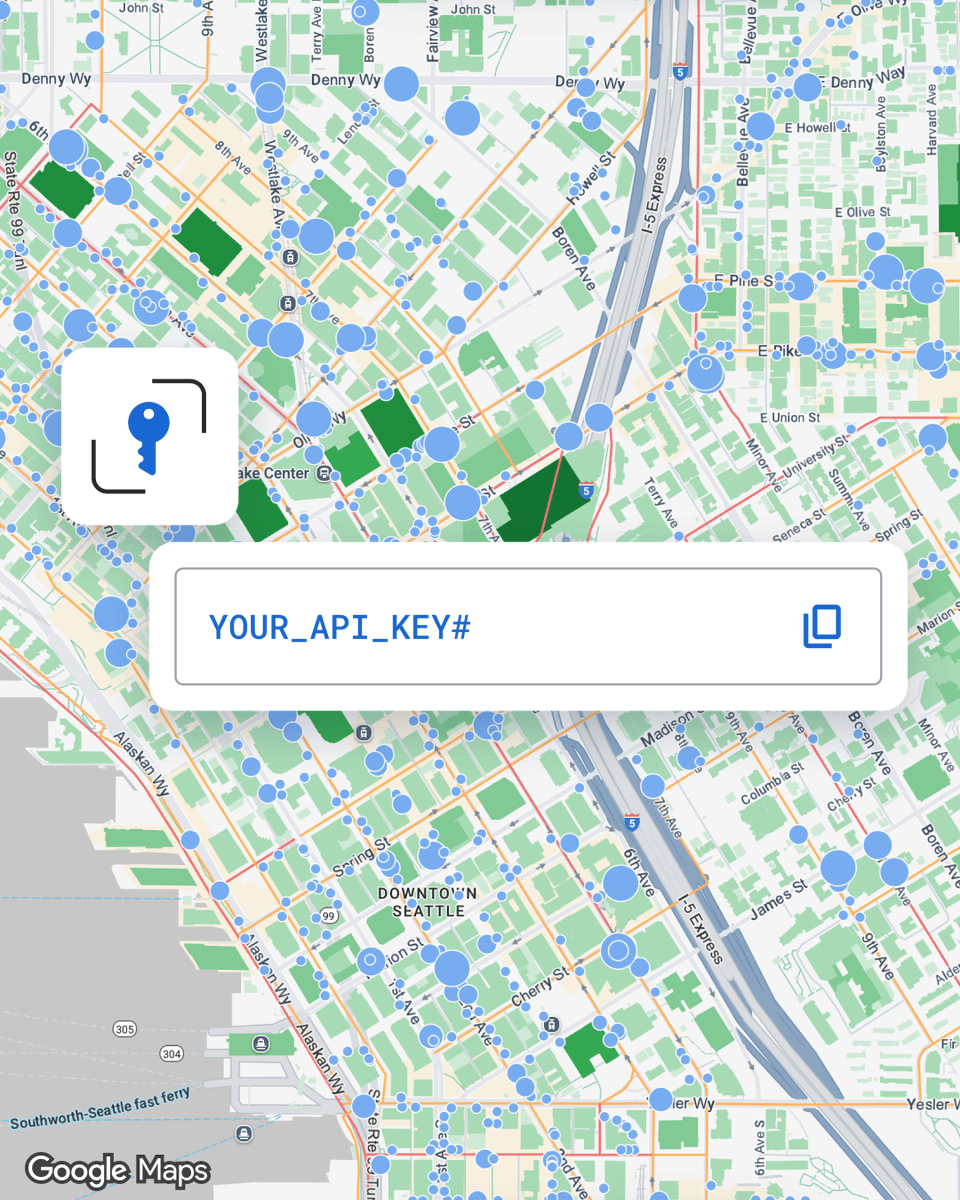
🔐 We're giving you the key to unlock geospatial development faster! Whether you’re testing a new product or just learning the platform, you can validate technical feasibility quickly, saving you days of approval time. Try the new Maps Demo Key now with popular products including Dynamic Maps, Photorealistic 3D Maps, Places UI Kit and Weather ➡️ goo.gle/3POKWrA 🗺️ Dynamic Maps: Customize and style interactive maps using Cloud-based maps styling for real time updates across all devices and platforms. 🌏 Photorealistic 3D Maps: Build richer 3D maps, powered by Google's trusted mapping infrastructure, integrated place information, and powerful visualization tools. 🏢 Places UI Kit: Bring the familiar Google Maps UI for Places to your front-end applications with just a few lines of code. 🌤️ Weather: Use advanced, trusted weather forecasts to help people plan and prepare. Get your Maps Demo Key at the link above.
Google Maps Platform tweet media
English
6
100
699
34.9K
sangmin.eth | 安全なう retweetledi
Jake Archibald
Jake Archibald@jaffathecake·
I've been playing around with Chrome's experimental HTML-in-Canvas API (I use it to create my videos), and I wanted to see if I could make text-selection work on a curved surface by moving the underlying element around on pointermove. It works pretty well!
English
24
90
1.4K
89.5K
sangmin.eth | 安全なう retweetledi
Ole Lehmann
Ole Lehmann@itsolelehmann·
this is insane AI design alpha from google: google's lead stitch designer just showed how he turns a 1-line prompt into a site that looks like an actual design agency built it. he walked through every decision, from the first vague prompt to a finished design with real content, real layout, real direction. here's his full process: the problem is most people open stitch and type something like "a road running race listing page." stitch gives them a generic dark layout. it works, but it doesn't feel like anything. it's effectively AI slop his approach starts somewhere most people skip entirely. 1. he starts with empathy. before touching any tool, he asks: > who is this site for? > how should they feel when they land on it? say he's building a community marathon site. these are historic races in world-class cities. the site should feel prestigious, like standing in the jefferson memorial. so now he knows the feeling he's going for. but stitch can't build from "prestigious." it needs design language. 2. he asks gemini to translate that feeling into words stitch can actually use. instead of vague words like "sporty" or "athletic," gemini comes back with phrases like "architectural limestone," "ink on paper," "clay on an old track." he feeds those into stitch and the output jumps immediately. real structure, real intent, something you could actually work with. so now the direction is set. but the default colors and fonts stitch picked don't match the feeling yet. 3. he dials in the design system (the set of colors, fonts, and components that keep every screen consistent). he doesn't think of colors as a matching palette. he thinks of them as a hierarchy. each one has a job: > neutral is the canvas. ~80-90% of the screen. he sets it to warm architectural limestone > primary is the ink. headings, body text. he drops it to dark asphalt > secondary is more subdued so primary text keeps focus > tertiary is the accent. loudest color, used least. he sets it to a clay red that pulls your eye straight to the call to action for fonts he picks public sans. official but friendly. like a prestigious journal you'd actually want to read. so now the colors and type feel right. but the layout is still generic. 4. he fixes layout by thinking about physical objects. "if my website was a book, what kind of book would it be?" his answer: a coffee table book. full-page imagery, dense info, editorial headings. he uses variants (a stitch feature that generates multiple layout directions at once) to explore editorial lookbook layouts with large typographic headings. like a luxury travel magazine. so now the layout, colors, and typography all feel dialed in. but scrolling through, something still feels off. 5. the content. the headings say things like "the elite calendar." the aesthetic is there but the words are generic. it doesn't feel like a real site yet. so he installs a copywriting skill (an agent instruction file with expertise in writing web copy) and feeds it all his context plus the design .md (the creative brief stitch auto-generated from his prompts). the skill drafts page copy, he reviews and edits, then pastes the final version back into stitch. now the site has real names, real tips, real ctas. it stopped feeling like a template. the whole process: empathy → design language → colors and type → layout → copy. if you've been getting generic output from stitch (and AI design tools in general), start with one question: how do you want the user to feel? everything else follows from that.
Stitch by Google@stitchbygoogle

We are completely humbled by the amazing response to our launch last week! 🫶 Now, we want to help you get the absolute best results from Stitch. In this new video, David East walks you through how to consistently get premium results. We also launched a new prompt enhancer (located under ‘+’ menu) to help you quickly collaborate on your vision before you submit your first prompt. Stitch doesn't replace the design process—it is a tool for fast exploration and refinement, which is most effective when you step into the role of Creative Director. Here are David's top strategies for taking your designs from generic to amazing: 🧠 Start with Intent: Define exactly who the design is for and how you want them to feel before you start building. 🎨 Enhance your prompt: You can use the new prompt enhancer (under the ‘+’ button’) to teach you design language and swap abstract words like "sporty" for tangible aesthetic descriptions like "high-end stationery" or "architectural limestone". 📐 Master Color Hierarchy: Treat colors as visual weight—Neutral for the canvas, Primary for ink, and Tertiary for your loudest accents. Watch the full breakdown and see the transformation here👇images in 🧵

English
40
125
1.9K
453.3K
sangmin.eth | 安全なう retweetledi
The Reverend Mister
The Reverend Mister@turtology·
My sons, watching Artemis II launch from their front yard in Orlando.
The Reverend Mister tweet media
English
890
8.7K
135.5K
5.8M
sangmin.eth | 安全なう retweetledi
rita kozlov 🐀
rita kozlov 🐀@ritakozlov·
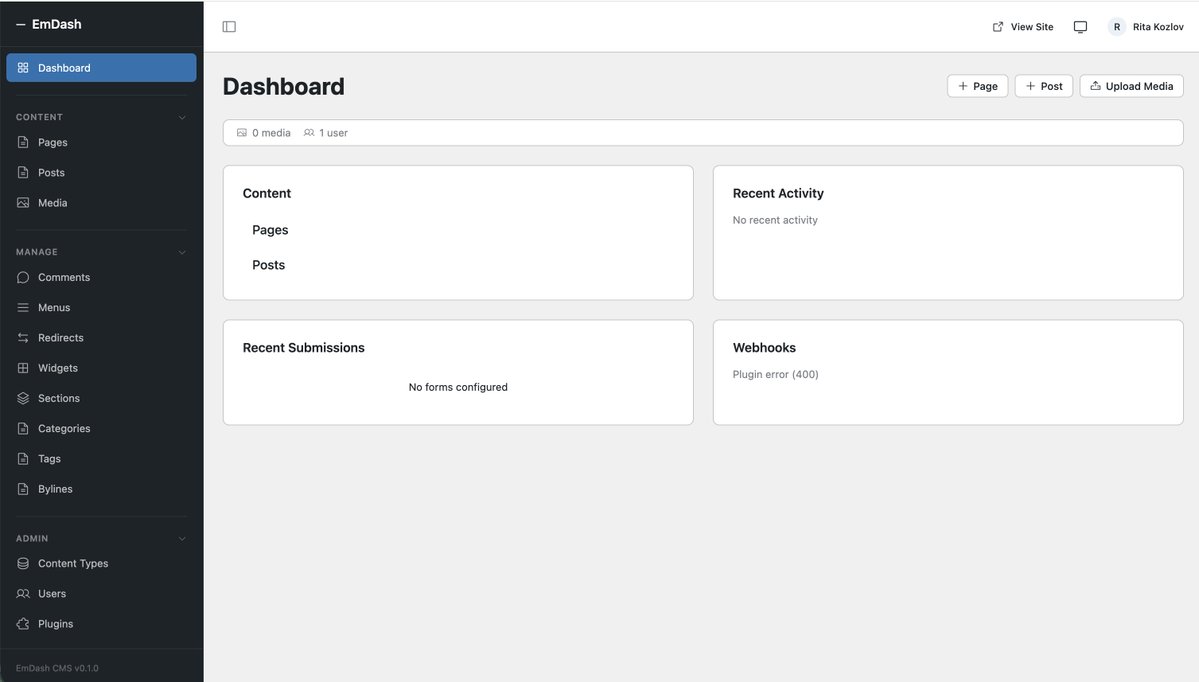
bet cloudflare launching a wordpress successor wasn't on your 2026 bingo card but! it's wild how much (40%!!!) of the web is still wordpress. we decided it was time for a makeover. so... enter emdash — familiar look and feel, open-source (MIT), built on typescript + astro
rita kozlov 🐀 tweet media
English
130
163
2.2K
197K
sangmin.eth | 安全なう retweetledi
Animesh Koratana
Animesh Koratana@akoratana·
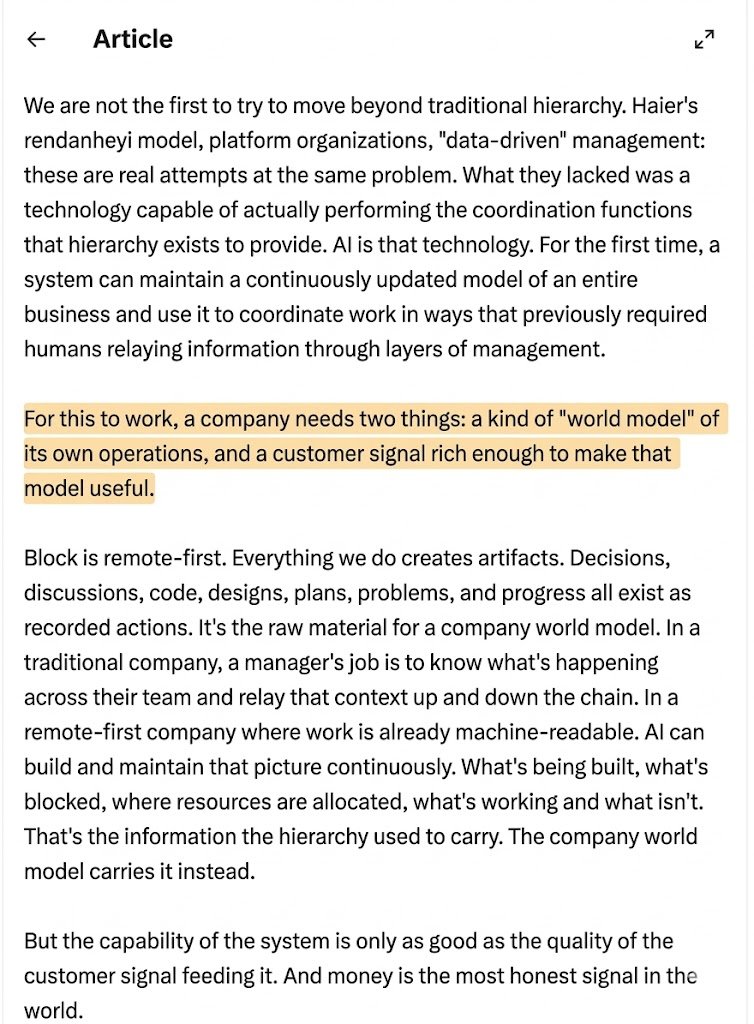
Context graphs will be to the 2030s what databases were to the 2000s. Within a year, every frontier lab will be building one and here's why: At 10 people, coordination is free. Everyone knows what everyone else is doing. You never hold a meeting to "align." At 100 people, you spend maybe 20% of your payroll on coordination. Managers, syncs, standups, planning sessions, status reports. At 10,000 people, that number approaches 60%. The majority of your headcount exists not to produce anything but to make sure the people who produce things are producing the right things in the right order. This is the dirty secret of large organizations: output scales linearly with headcount, but coordination cost scales exponentially. Every person you add creates new information pathways that must be maintained. The hierarchy is the protocol that manages this, and it's brutally expensive. Hierarchy is a compression algorithm for organizational knowledge. At every layer, a manager compresses the reality of their team into a summary that fits in a 30-minute meeting with their boss. Their boss compresses eight of those summaries into one for their boss. By the time information reaches the CEO, it's been lossy-compressed through five or six layers of human interpretation. This is why CEOs make bad decisions. The information they receive has been compressed, filtered, and distorted at every layer. The hierarchy is high-latency, low-bandwidth, and lossy. Jack didn't fire 4,000 producers but cut 4,000 compression nodes. Block's "world model" is a replacement algorithm. Zero latency, high bandwidth, lossless. Every person at the edge gets the full picture without waiting for information to travel through human relays. The infrastructure that makes this possible is the context graph. A living, continuously updated representation of how the organization actually works. Not just data, but decision traces: the reasoning connecting observations to actions. Not what's true now, but why it became true. The shift from "give agents memory" to "give agents organizational judgment" will define the next platform war
Animesh Koratana tweet media
jack@jack

x.com/i/article/2038…

English
94
214
1.7K
379.4K
sangmin.eth | 安全なう retweetledi
【公式】国土交通省地理空間情報課
\国土数値情報データ更新📌/ 本日、「道路」2024年度(令和6年度)版のデータを公開いたしました!また、公開した道路データを用いた分析例を、「QGISによる国土数値情報活用マニュアル」に追加しています! 道路データ nlftp.mlit.go.jp/ksj/gml/datali… マニュアル nlftp.mlit.go.jp/ksj/manual/QGI…
【公式】国土交通省地理空間情報課 tweet media
日本語
1
176
621
82.5K
sangmin.eth | 安全なう retweetledi
Tony Fadell
Tony Fadell@tfadell·
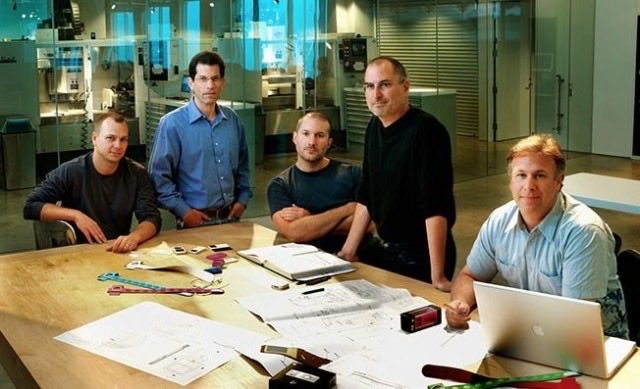
50 years of @Apple From the early days of the #iPod to bringing the #iPhone into the world, some of the most formative years of my career were spent there. The products and teams stay with you. But more importantly so does how Apple thinks. A few lessons that have held true for decades: 1) Start with the user, not the tech. The question isn’t “what can we build?” but “what problem actually matters?” 2) Focus is everything. Apple is defined as much by what it says no to as what it builds. 3) End-to-end matters. Hardware, software, services. It all has to work together. 4) Details are the product. What feels small is what users remember. 5) Debate hard. Commit fully. 6) Build for the long term. We’re in another moment of massive technological change. The fundamentals haven’t changed. The companies that win build things people actually use and can’t imagine living without. Congrats to everyone who has been part of Apple’s first 50 years! 🙌
Tony Fadell tweet media
English
80
572
4.4K
216.7K
sangmin.eth | 安全なう retweetledi
Engineering at Meta
Engineering at Meta@Meta_Engineers·
We're open-sourcing BOxCrete, a new AI model for the construction industry. Using Bayesian optimization, BOxCrete helps producers rapidly design concrete mixes with domestic materials, bypassing months of lab work. The results from our data center build in Rosemount, MN: 🚀 43% faster time to full structural strength 🛠️ 10% reduction in cracking risk 🇺🇸 100% domestic material usage We are open-sourcing the model and the foundational data to empower producers everywhere. Check out the full technical deep dive on our Engineering blog: go.meta.me/90538a
Engineering at Meta tweet media
English
30
123
1.2K
91.9K
sangmin.eth | 安全なう retweetledi
NASA Artemis
NASA Artemis@NASAArtemis·
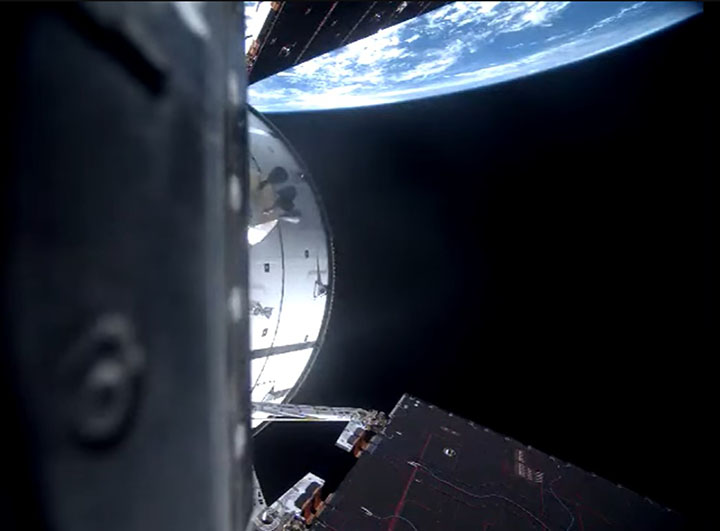
Signal acquired! 📡 Engineers at @NASAJPL have confirmed that the Orion spacecraft is communicating with the Deep Space Network. For the first time in over 50 years, we’re receiving a signal from a spacecraft carrying humans toward the Moon.
NASA Artemis tweet media
English
297
4.8K
39.1K
792.9K