

Barry Goldberg
7K posts
Barry Goldberg
@goldbrg
My tweets are my own and do not represent my employer (IBM)
Ossining, NY Katılım Kasım 2009
424 Takip Edilen344 Takipçiler


The #Padres are 2 for their last 32 with RISP
Is that good?
English
@DarrenJMeenan The team is not only bad but boring . A bad team losing 10 to 8 is better than scoring 2 runs in 3 games
English

Another thing that really sucks when the team is bad, most fans also check out on caring about special ceremonies. Zero buzz around the upcoming HOF inductions, 1986 anniversary, and Beltrans number retirement. Literally hearing nothing about it from fans I interact with.
English
@DarrenJMeenan You could also organize Knick trips to other arenas as their fans travel well
English
This isn’t sarcasm. If there is any extensive lockout next year I might be on the job hunt. Not even sure where I’d want to send a resume or what I’d be good at besides my current gig.
English
@DarrenJMeenan Go work for the Long Island ducks or westchester knicks
English
It's really bad when even I feel literally nothing after the Mets get swept. It's not even June yet.
English
Barry Goldberg retweetledi
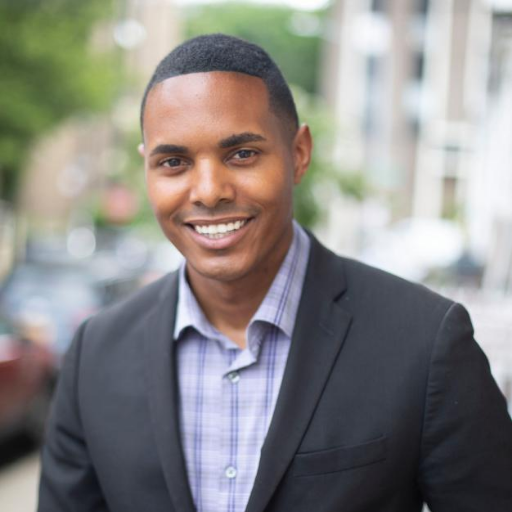
Calling for the internment of Americans — including Americans who identify with Israel — is as deeply un-American as Maureen Galindo herself.
Galindo is a moral disgrace who has no business running for—let alone holding—elected office. I hope the voters of TX-35 resoundingly reject the deep rot of antisemitism and anti-Americanism at the core of her candidacy.

English


Barry Goldberg retweetledi

Barry Goldberg retweetledi

The New York Times feeds anti-Jew hatred with a horrific lie. @nypost nypost.com/2026/05/14/opi…
English
Barry Goldberg retweetledi

WOW: Remember that time an Iranian diplomat had to lie to the French authorities to save the lives of thousands of Jews? ME NEITHER.
Abdol Hossein Sardari, later known as the “Iranian Schindler,” issued Iranian passports to Jews in Nazi-occupied France.
English

Comment KOHANIM Free ArtScroll Bircas Kohanim! Unlock the Brachah! With Shavuos approaching, learn how to tap into one of the biggest and most effective segulos! Marbitzei Torah (thanks to an anonymous donor) will be distributing, for free, the ArtScroll Birchas Kohanim Sefer
English
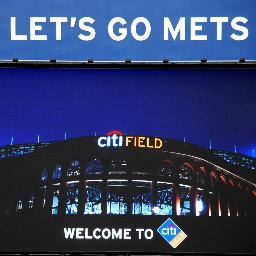
Two more on a Vientos single. 4-0 Mets in sixth. Should be enough.
English
Barry Goldberg retweetledi

WHCInsider Editor @haddadmedia identifies the man eating salad while people ducked for cover at Saturday night’s White House Correspondents’ Dinner: CAA’s Michael Glantz
English
@DarrenJMeenan Should be able to get good deals on seats though
English
I've had a season ticket package for as long as I can remember. Just finding out now that the Mets single game tickets didn't go on sale yet for any games past June. Holy moly.
English
@DarrenJMeenan I wonder if there is an issue with the analytics they are using
English
Steve Cohen is extremely patient. I’m not saying this is Mendy’s fault. He’s not perfect, but he also didn’t build the team. If I spent millions upon millions on this shit, I’d fire everyone. How could it get much worse? Losing 15 of 17 is unexplainable.
English

Barry Goldberg retweetledi

The Deir Yassin “Massacre” That Wasn’t — And How Arab Propaganda Created More Palestinian Refugees
On April 9, 1948, a fierce battle took place in the Arab village of Deir Yassin, just outside Jerusalem. For decades, it has been held up as proof of “Zionist barbarity” — the supposed deliberate massacre of 254 innocent villagers, including rapes and mutilations. The story is still repeated as gospel.
One big problem: the historical record tells a very different story.
Deir Yassin was not a peaceful village minding its own business. It sat on a strategic ridge overlooking the only road connecting Jerusalem to Tel Aviv. Arab irregulars used it as a base from which to ambush Jewish convoys trying to break the siege of Jerusalem — where Arabs were actively trying to starve the Jewish population into submission.
The Irgun and Lehi (two pre-state Jewish underground groups) decided to seize the village to relieve that pressure. The larger and far-better-organized Haganah (precursor to the IDF) knew of the operation but did not participate.
The attackers sent a truck with a loudspeaker to warn residents to leave or surrender. The truck got stuck and the warning was never properly delivered.
Communication between the two small, ragtag Jewish groups failed. What followed was a chaotic, house-to-house battle against far more resistance than expected. In the panic of combat, civilians were tragically killed.
There was no systematic massacre. No rapes. No mutilations.
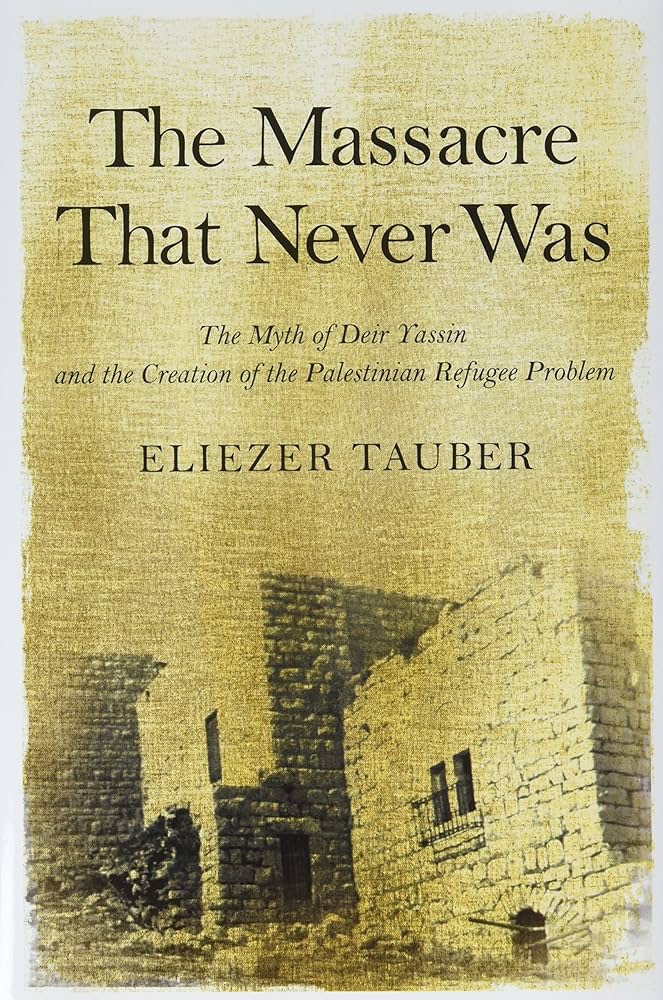
Professor Eliezer Tauber, one of Israel’s leading historians of Arab nationalism, reconstructed the battle using Arab and Jewish testimonies, British and Red Cross records, and previously unavailable archives. He accounted for the circumstances of nearly every death.
His conclusion: 101 Arabs were killed, most of them in combat conditions (many were armed combatants or positioned with fighters). Roughly 70% of the village’s 1,000 residents fled before or during the fighting. Another 20% were taken prisoner and later released.
The Jewish fighters suffered heavy casualties themselves — about 30% wounded or killed — which is not consistent with a one-sided slaughter.
The exaggerated version — 254 dead, rapes, pregnant women butchered — was deliberately manufactured by Arab leaders for propaganda. Hussein Khalidi, the senior Arab official in Jerusalem, instructed his staff: “We must make the most of this.”
Hazim Nusayba, the Arabic news editor of the Palestine Broadcasting Service, later admitted they were told to exaggerate so Arab countries would intervene. The fabricated stories of rape and massacre were broadcast widely.
It worked — but not the way they intended.
The lies triggered panic across Mandate Palestine’s Arabs. As one mukhtar said, “We are not afraid of death, but we will not accept that our women be raped.”
Whole villages began to flee. The exodus that had already begun accelerated dramatically after Deir Yassin.
Arab leaders themselves later acknowledged the catastrophic mistake. Nusayba reflected: “This turned out to be the highest, most expensive mistake that we made.”
Even Palestinian Arab historians have confirmed the lower death toll and the absence of rapes. The propaganda that was meant to save them instead helped create the refugee crisis that still defines their narrative today.
Deir Yassin was a tragedy of war — a hard-fought battle in a war the Arabs launched to prevent any Jewish state from existing anywhere in the Land. It was not the deliberate ethnic cleansing or massacre of legend.
The real lesson is darker: Arab leaders’ own fabricated atrocity stories caused far more Palestinian suffering than the battle itself — and they have spent decades blaming the Jews for the consequences.
English