goodtothinkwith

1.9K posts

goodtothinkwith banner
goodtothinkwith

goodtothinkwith

@good2thinkwith

Chief Scientist and Instructor of Philosophy at Georgia Tech, author of Paradox at Play

Georgia Tech, Atlanta Katılım Mayıs 2023
463 Takip Edilen131 Takipçiler
Deedy
Deedy@deedydas·
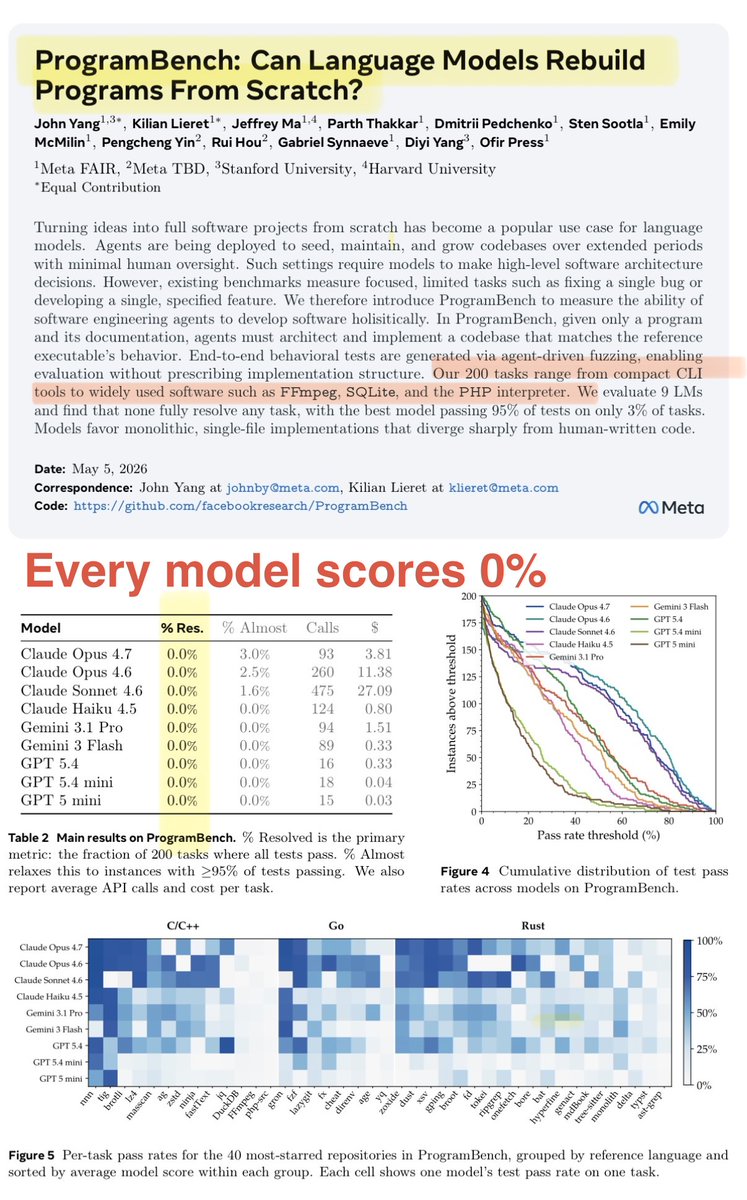
The creators of SWE-Bench just dropped a really simple new benchmark every LLM gets 0% on. ProgramBench asks: can models recreate real executable programs (ffmpeg, SQLite, ripgrep) from scratch with no internet? We are far from saturated on model quality.
Deedy tweet media
English
235
428
4.4K
756.6K
Nic Cruz Patane
Nic Cruz Patane@niccruzpatane·
A Tesla will ruin every other car you’ve ever owned.
Nic Cruz Patane tweet media
English
368
185
3.4K
141.3K
goodtothinkwith
goodtothinkwith@good2thinkwith·
@ashleytrubin Fundamental research was always enabled by leisure. The next version of that will look quite different, though populated by many of the same people.
English
1
0
1
750
Dr. Ashley T. Rubin
Dr. Ashley T. Rubin@ashleytrubin·
I don't think we (academics) realize how vulnerable we are. I'm not sure how much longer tenure will last in an era when a) we've lost the public trust (for a lot of reasons, b) college/academia is a partisan political issue, and c) college-educated white-collar workers are losing their jobs to AI. We are in an incredibly privileged position relative to others, but that privilege also makes us far more precarious than most academics realize bc it makes us a target--and the threat is not just conservative politicians gunning for us but the much larger group of regular people who don't mind if we get put in our place or start losing our jobs like similar others or being asked to do tasks we don't want to do.
English
66
58
614
70.9K
goodtothinkwith
goodtothinkwith@good2thinkwith·
@dioscuri @willmacaskill This argument may suffer from the same kind of issue as the paperclip problem with AI. It requires an unreasonably constrained and simple reductio
English
0
0
2
43
Henry Shevlin
Henry Shevlin@dioscuri·
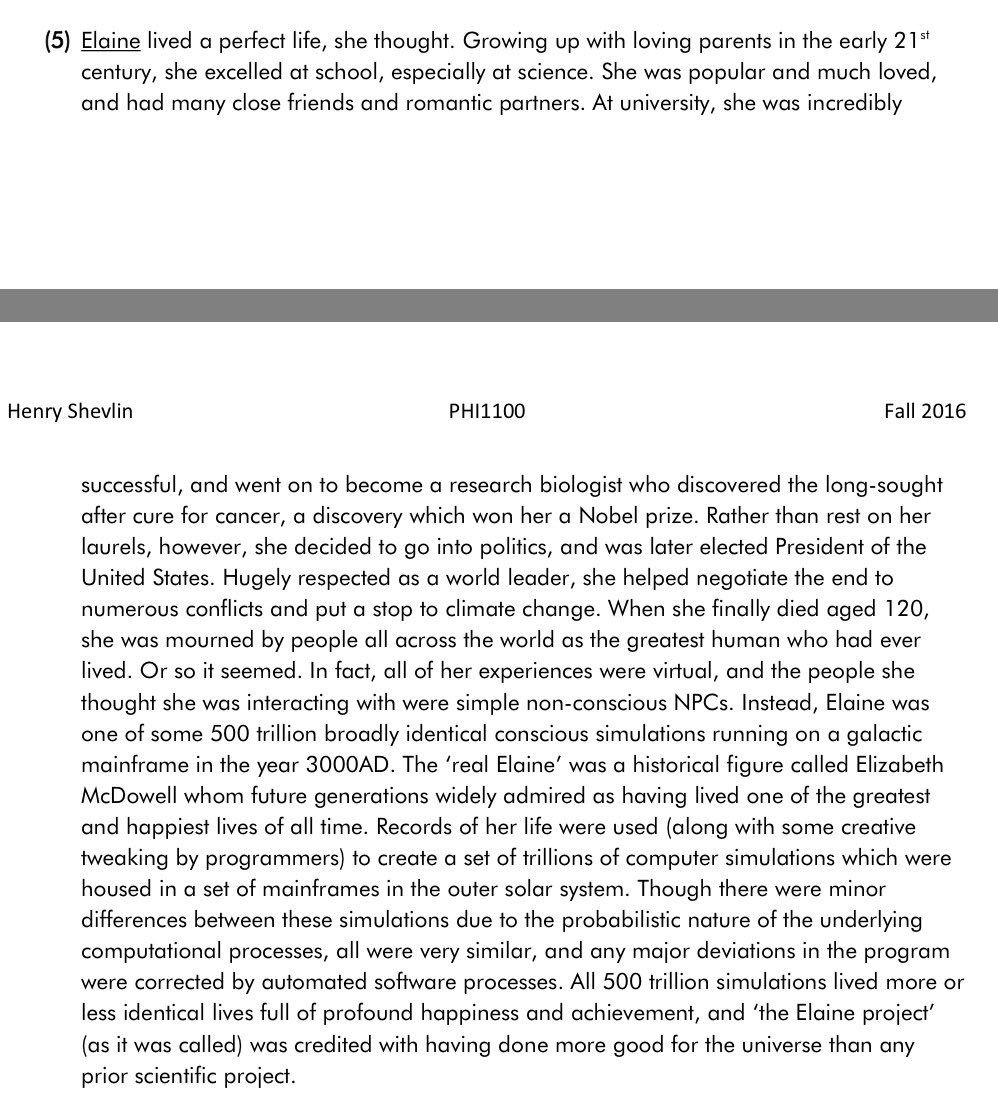
Really interesting stuff! The monoculture problem has bugged me for a long time (see my Elaine case below), and I hadn’t appreciated it could do so much work elsewhere in the axiology. One worry: the similarity metric seems to face a revenge problem. If two lives are phenomenal duplicates except one experiences red slightly more intensely, or if they’re identical for 99.999% of their duration and then differ in a single picosecond-long pleasurable sensation, do they count as distinct for saturation? If yes, infinite ethics issues might sneak back in via arbitrarily fine-grained differentiation. If no, you need a principled threshold, which could be tricky (and vulnerable to sorites-type worries). Connected thought: I’ve argued elsewhere (open.substack.com/pub/eschwitz/p…) that conscious subjects might be better understood as *types* than tokens, which if right would give Saturation a metaphysical rather than purely axiological grounding: qualitatively identical lives would literally fail to add distinct subjects, not just fail to add value. Anyway, curious whether you and Christian see the similarity metric as brute, or whether it’s supposed to track something deeper!
Henry Shevlin tweet media
English
4
0
27
1.4K
William MacAskill
William MacAskill@willmacaskill·
In collaboration with Christian Tarsney, I’ve developed a new theory of population ethics, which I call the Saturation View. I think that, from a purely intellectual perspective, it’s probably the best idea I’ve ever had. It was certainly great fun to work on. The motivation is that many views of population ethics, like the total view, suffer from some major problems. Some are already widely discussed: The Repugnant Conclusion: For any utopian outcome, there’s always another outcome containing an enormous number of barely-positive lives that is better. Fanaticism: For any guaranteed utopian outcome, there’s always some gamble with a vanishingly small probability of an even better outcome that has higher expected value. Infinitarian Paralysis: Given that the universe contains an infinite number of both positive and negative lives, no finite or infinite change to the world makes any difference to overall value. These are pretty bad! But there’s another less-discussed problem, too: The Monoculture Problem: Given fixed resources, the best-possible future consists essentially only of qualitatively identical replicas of a small number of lives. Essentially all extant impartial accounts of population ethics suffer from the monoculture problem. It follows from Pareto and Anonymity alone — you don't need totalism. And perfectly-replicable digital minds mean this is a real issue that future generations will face. But a monoculture seems far from ideal. Endless galaxies containing nothing but the same blissful experience, repeated and repeated, seem impoverished; like a song with only one note. The Saturation view deals with all these problems at once, using broadly the same machinery for all of them. The core idea is that the realisation value of a type of life (or experience) is determined by both the wellbeing of that life, and by how many very similar lives there are in the world. Endlessly creating replicas of the same identical life becomes progressively less valuable, tending to an upper bound. The total value of a world is given by the integral of realisation value over the space of types. Think of types of life as forming a landscape. Adding different types of life lights up different parts of the landscape. The value of the world is given by how fully illuminated the landscape is. Why does this help? In brief: Monoculture: Because there are diminishing returns to increasing wellbeing of very similar types, there’s greater value in having a diversity of lives. Repugnant Conclusion: The classic path to the Repugnant Conclusion requires trading a utopian world for an enormous population of barely-positive lives. But, on the Saturation view, barely-positive lives can only illuminate a tiny corner of the landscape. The path to the Repugnant Conclusion is blocked. Fanaticism: Total achievable value is bounded above. That means no tiny-probability gamble can have arbitrarily high expected value. Infinite ethics: In any infinite universe, the value of a world is finite and well-defined — even if some locations have infinite wellbeing. Unlike other approaches, this does not depend on spatiotemporal structure or choice of ultrafilter. Separability: Like nearly all non-totalist views, Saturationism is non-separable — background populations can affect how we rank options. But the violations are tame: populations with sufficiently different populations simply add, and at small scales the view behaves just like totalism. If the Saturation View is right, then the best future isn't the one where we've found the optimal experience and copy-pasted it across the cosmos. The best future is the one where we've gone exploring, and we've fully lit up the landscape of possible experiences.
English
86
27
465
107.2K
goodtothinkwith
goodtothinkwith@good2thinkwith·
@dioscuri So many pedestrian details like this I’d like to pass off to AI… more time for philosophy
English
0
0
1
86
Henry Shevlin
Henry Shevlin@dioscuri·
Very cool. I have lots of items that I no longer need, but feel a bit too valuable to just throw away or donate. Meanwhile my available time for doing stuff like eBay sales is increasingly limited. An AI sales bot could be a gamechanger!
Anthropic@AnthropicAI

New Anthropic research: Project Deal. We created a marketplace for employees in our San Francisco office, with one big twist. We tasked Claude with buying, selling and negotiating on our colleagues’ behalf.

English
8
3
83
11K
Carnivore Aurelius ©🥩 ☀️🦙
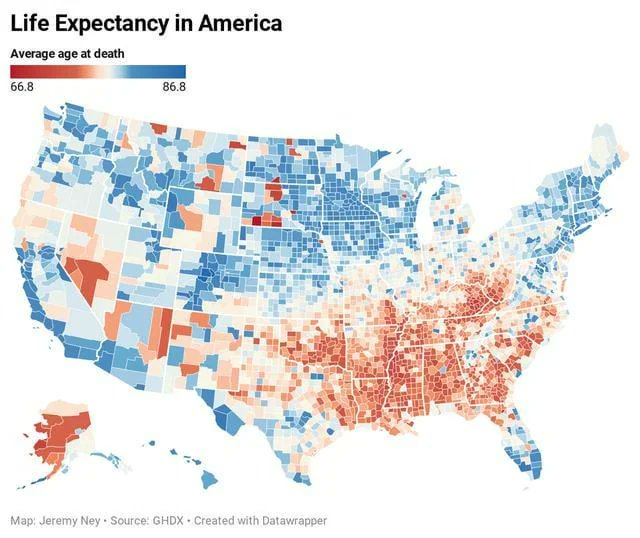
americans in the southeast of the US have a 20 year shorter life expectancy than those elsewhere insane difference why?
Carnivore Aurelius ©🥩 ☀️🦙 tweet media
English
2.1K
337
3.5K
2.7M
goodtothinkwith
goodtothinkwith@good2thinkwith·
@DaveShapi Even a tiny window for corruption will be used as a lever for power. It has to be universal
English
0
0
0
6
David Shapiro (L/0)
David Shapiro (L/0)@DaveShapi·
UBI DEBATE Give my your best arguments for or against
English
507
11
192
29.1K
goodtothinkwith
goodtothinkwith@good2thinkwith·
@haider1 That’s naive. We don’t poll people about whether to advance a technology.
English
0
0
3
35
Haider.
Haider.@haider1·
Roman Yampolskiy says for decades, AI researchers never asked: 'what happens if we succeed?' For decades, progress was so slow, winter after winter, that the question felt absurd "now it's hyper-exponential" But no one asked 8 billion people if they agreed to the experiment
English
64
33
138
8.5K
goodtothinkwith
goodtothinkwith@good2thinkwith·
@DaveShapi Yann is continuing his streak… wrong about everything in recent memory
English
0
0
0
19
David Shapiro (L/0)
David Shapiro (L/0)@DaveShapi·
This is funny because some of those economists warn about exactly this pattern. Namely that "reinstatement (of new jobs) is not guaranteed or likely to outpace the race of job destruction" If Yann himself had read what those economists said, he wouldn't be saying this.
Yann LeCun@ylecun

Dario is wrong. He knows absolutely nothing about the effects of technological revolutions on the labor market. Don't listen to him, Sam, Yoshua, Geoff, or me on this topic. Listen to economists who have spent their career studying this, like @Ph_Aghion , @erikbryn , @DAcemogluMIT , @amcafee , @davidautor

English
26
4
143
12.1K
Auron MacIntyre
Auron MacIntyre@AuronMacintyre·
“Once I don’t have to work I’ll make art and write books” No, you’ll smoke pot and play video games UBI will maximize the Pareto principle, devastating most humans
English
304
323
5.2K
395.4K
The Knowledge Archivist
The Knowledge Archivist@KnowledgeArchiv·
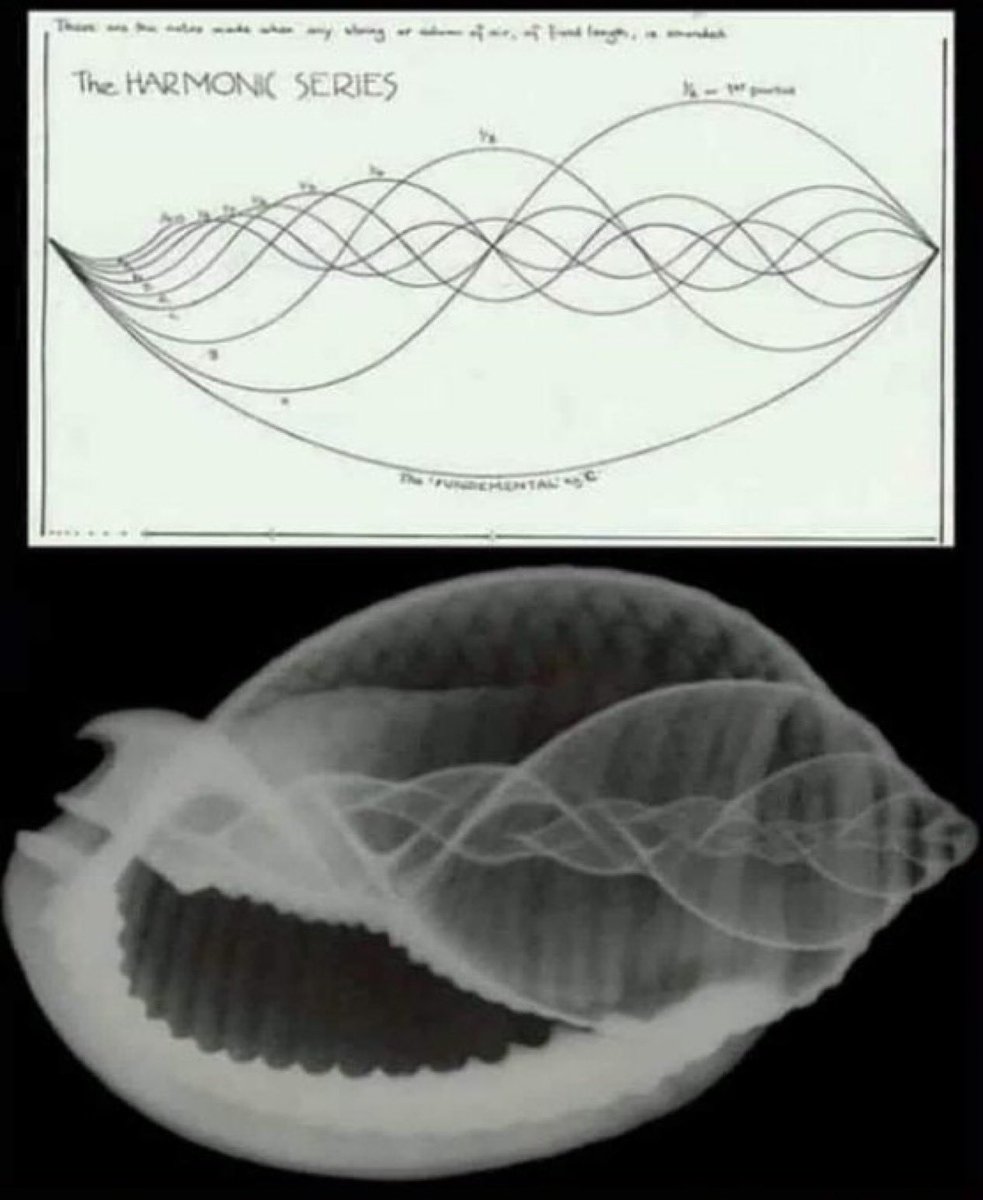
Graph of the first nine harmonics and an x-ray of a conch shell's inner structure
The Knowledge Archivist tweet media
English
6
50
286
11.6K
goodtothinkwith
goodtothinkwith@good2thinkwith·
@getjonwithit Great explanation. I can’t help but to feel that it depends on “information” as presently understood, though. I’m not sure I’m willing to bet that our understanding of what information is will not change in the future
English
0
0
0
314
Jonathan Gorard
Jonathan Gorard@getjonwithit·
Alright, replies indicate I need to explain this in more detail. Properly conceived, there is simply no difference between "simulated water" and "water". It's just water. But to understand that, one first needs to distinguish between two meanings of the word "computer". (1/11)
madison@dearmadisonblue

@getjonwithit They don't accept the idea that wetness, as a phenomenal quality, has anything to do with symbol processing. Wetness is not going to be grounded in purely mechanical properties. But if you have such a horrible feeling you could clarify a bit instead of this strange parenthetical.

English
40
19
271
66.3K