Göran Henriks

3.7K posts

Göran Henriks banner
Göran Henriks

Göran Henriks

@goranhenriks

Chief Executive of Learning and Innovation at Qulturum, Region Jönköping County. Interested in colearning and multitalking for better innovations

qulturun Katılım Eylül 2011
1.7K Takip Edilen3K Takipçiler
Göran Henriks retweetledi

Helen Bevan
Helen Bevan@HelenBevan·
Reciprocity: part two In my last post, I wrote about why reciprocity is one of the most important principles for leaders of change. Reciprocal relationships are ones built on mutual giving & receiving, with an expectation that everyone benefits, rather than one-way transactions. The post got many reactions so I’ve decided to respond to some of them. It’s great that we can have a healthy debate. I’ve summarised some of the challenges/criticisms/questions below: 1. Reciprocity creates a sense of obligation which is burdensome for people Reciprocity DOES create a sense of obligation—but the nature of that obligation matters massively. The key question is whether that obligation emerges from healthy reciprocity or from manipulative exchange. From my experience, the obligation created by authentic reciprocity is not burdensome or manipulative; people choose to reciprocate because they value the relationship & recognise mutual benefit. 2. Reciprocity should not be about “winning” (the graphic I used talked about “why giving first wins”) Reciprocity helps teams & leaders win, but it changes what winning looks like. Team members help each other more often without being asked. People stay longer because they feel valued. Problems get solved faster because everyone is invested in collective success more than protecting their own interests. 3. If you give to receive, that is generally considered to be manipulation It depends on intent. Authentic reciprocity involves offering assistance with sincerity & the best interests of both parties in mind (without expecting immediate returns), not just extracting value for yourself. Effective leaders of change practice reciprocity authentically to build genuine relationships, collective capability & success. They don’t use it manipulatively to extract value while pretending otherwise - or, as happens more often, intend to build reciprocal relationships but don’t get around to following up. 4. Reciprocity should be about an act of care, rather than aimed at triggering a response “Giving first” isn't about triggering a response - it's about demonstrating genuine care & understanding that strengthens relationships over time (so I agree about reciprocity being an act of care). At the same time, reciprocal relationships don't typically emerge spontaneously in big hierarchical systems. Someone has to “give first” - take the first step, accept the vulnerability & model the behaviour we want to see. 5. Giving first to resistant stakeholders wastes political capital versus concentrating resources where reciprocity already exists. I’d say that greater waste of political capital often comes not from engaging with “resistors”, but from ignoring them so that resistance hardens & spreads. Giving first to “resistors” surfaces important insights & risks & can create the first steps towards long term reciprocal engagement in change. Of course, there’s always a balance as to where to put our energy but I wouldn’t write “resistors” off at the beginning of a change initiative. 6. Can you demonstrate the difference between “reciprocity” & “brokering”? One of the best examples is from research at @WarwickBSchool led by @DrNicolaBurgess. It contrasts two hospital systems; one where relationships are based on “simple brokering” & one with strong reciprocal relationships. Reciprocity is associated with much stronger mechanisms for sharing & learning & better overall performance. The research report: warwick.ac.uk/fac/soc/wbs/re…
Helen Bevan tweet media
English
3
32
93
6.7K
Göran Henriks retweetledi
Helen Bevan
Helen Bevan@HelenBevan·
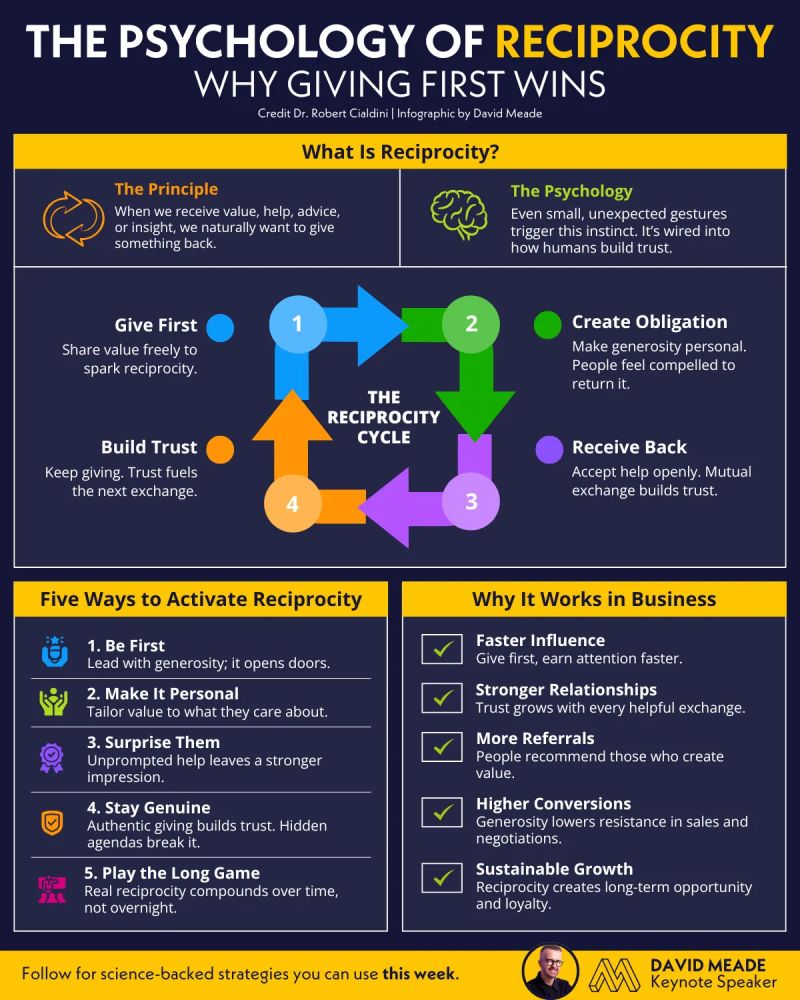
Reciprocity is one of the most important principles for leaders of change. At a simple level, reciprocity means a mutual exchange between people where each party gives & receives value, creating a balance that benefits everyone involved. But it's deeper than that. It's about mutual benefit & collective growth. Reciprocal relationships are built on mutual giving, receiving and creating community, rather than one-way transactions. Increasing numbers of organisations are investing in “social network analysis” (SNA) to understand their internal relationships & the extent to which these relationships enable or block change. SNA shows that reciprocity creates the best kind of sustainable, trust-based relationships that support long-term change. By contrast, many organisations exhibit “simple brokering” rather than reciprocity. That means that individuals (“brokers”) fill gaps between disconnected groups or individuals in an organisation. Brokering can be fragile & psychologically costly/exhausting if you’re in this role. In change leadership, reciprocity succeeds where brokering alone may struggle because it builds the relational infrastructure that makes information sharing, collaboration & sustained commitment possible. By contrast, brokering often means transactional approaches focused on short-term exchanges; less sharing & less learning. As change leaders, we have to be role models of reciprocity. That means being the people who create the conditions for reciprocal relationships by being the ones who give first. If we want cooperation, support &/or engagement from others, we need to offer cooperation, support &/or engagement first. Even when we are working with people & teams who are challenging, resistant &/or “don’t get us”, we have to give first. A beautiful blog on reciprocity from @SisDrSandra: linkedin.com/pulse/reciproc…. Graphic from David Meade on the power of "giving first" taken from: linkedin.com/posts/davidmea…. I also want to acknowledge @DrNicolaBurgess who has helped me more fully appreciate the power & importance of reciprocity through her excellent research studies.
Helen Bevan tweet media
English
7
51
142
7.9K
Göran Henriks retweetledi
Helen Bevan
Helen Bevan@HelenBevan·
Question: How can we build a link to purpose that improves performance for all employees? Answer: Activate the power of frontline (team) leaders in making purpose meaningful in daily work. A study of 57,000 employees across 469 organisations showed that when team leaders have regular conversations with their teams about organisational purpose ("purpose dialogue") it has a significant impact on performance. Commitment grows when people feel the organisation’s wider goals are meaningful, relevant & openly discussed. A 1 point increase (on a 6 point scale) in team-level purpose dialogue boosted team commitment scores by 10%, which in turn led to improvements in team performance, lower turnover & more innovation. Two other factors amplified the impact of purpose dialogue: -Relationship quality: where every team member experienced respect, trust, & fair access to support & opportunities -A sense of agency & control: where teams were felt they were granted real autonomy to act on organisational purpose. Three ways to “operationalise purpose”: 1. Build purpose dialogue into the operational fabric: Make deliberate, two-way conversations about purpose a standard part of organisational routines, role modelled by leaders at every level. 2. Ensure balanced relationships: Support all team members to experience purpose-driven leadership & receive equitable support and recognition. 3. Encourage ownership and initiative: Seek to give teams autonomy in how they achieve strategic objectives, reinforcing accountability and engagement. Sustaining organisational performance is not about grand purpose statements but the everyday work of connecting, engaging & enabling teams around shared goals. Team leaders are critical agents for achieving this: sloanreview.mit.edu/article/the-mi…. By @rudyOrg & colleagues @mitsmr
Helen Bevan tweet media
English
4
32
101
7.7K
Göran Henriks retweetledi
Helen Bevan
Helen Bevan@HelenBevan·
For many years, I have collaborated with (& learnt greatly from) leaders from Jönköping Region in Sweden & with Jönköping Academy. Jönköping has so much to teach the world about building integrated leadership development for a high-performing system. A key aspect of the Jönköping approach has been continuity of leadership approach & leadership purpose over decades. We can follow their journey which has seen: 1) A shift from siloed to system-wide leadership development: moving away from unit or area-specific interventions toward approaches that foster learning & leadership growth across the whole system. 2) Reframing the purpose of leadership development: from traditional personal leader development to anchoring development in real improvements for the people that the system serves. 3) Integrating leadership development into daily work: from a reliance on separate or targeted leadership programs to integrating leadership principles (using “simple rules”) into the daily work of leaders. The Jönköping experience demonstrates that effective system leadership emerges when development is integrated, adaptive & continuously aligned with both user/citizen needs & organisational needs. A big lesson from Jönköping is that we need to normalise leadership development as an everyday, lived, system-wide practice, not a sporadic activity: journals.sagepub.com/doi/full/10.11…. Via @goranhenriks. See this in the context of “the Nordic way of leadership”: bradenkelley.com/2025/08/the-no… Via @SteLindegaard @innovate.
Helen Bevan tweet media
Svenska
2
38
148
10.9K
Göran Henriks retweetledi
Helen Bevan
Helen Bevan@HelenBevan·
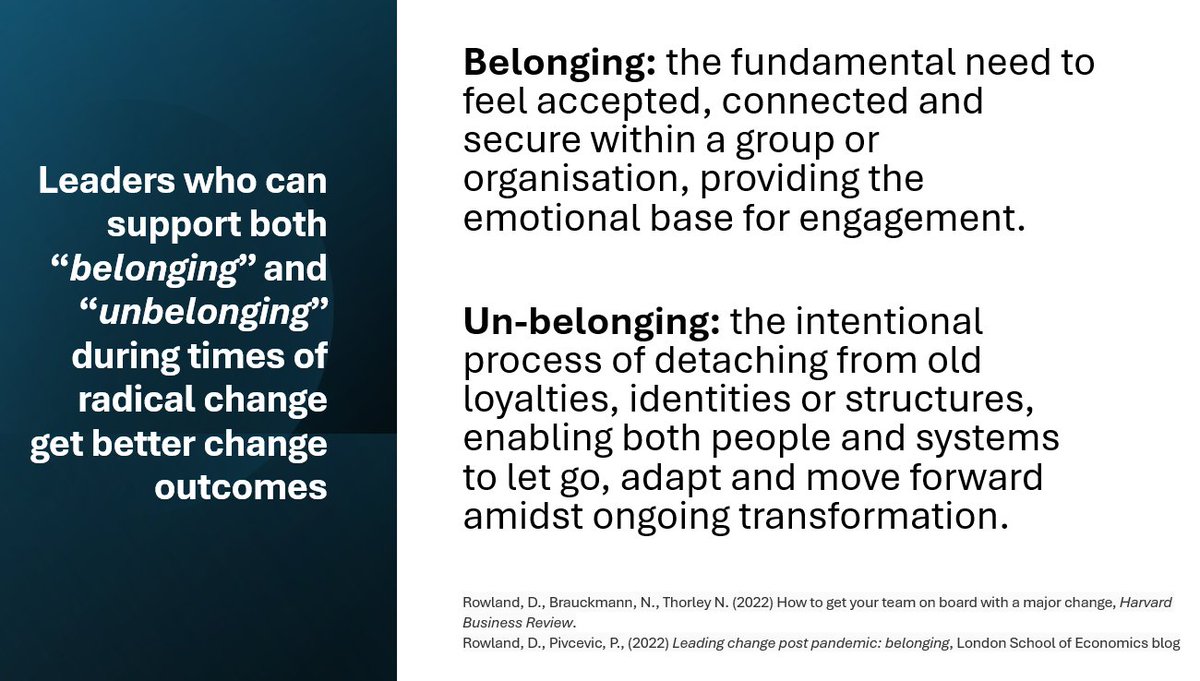
I’m continuing with the theme of not just managing new structures & processes in big system change but the need to work with deeper systemic forces at play. These are often emotionally driven. We ignore them at our peril. Some of the most interesting work in this field comes from Deborah Rowland & colleagues. Their research shows that a key differentiating factor in the leaders who succeed at guiding organisations through large-scale, uncertain change is their ability to create both a sense of “belonging” & “unbelonging”. We want people to feel belonging at work: a sense of being included, appreciated for their unique contributions, connected to their co-workers & supported in their daily work . However, in any major change, this sense of belonging is threatened, as group identities, loyalties & structures are disrupted. So “un-belonging” becomes a necessary & generative force during transformation. Un-belonging is the capacity to step back from established group loyalties & identities, allowing both individuals & teams to let go of attachments that may inhibit innovation or new ways of working. Effective change leadership involves recognising, naming & navigating both the pull of belonging & the necessity of un-belonging, rather than denying or minimising the discomfort of transition. Rowland & colleagues say that leaders who can name & work with both the pain of loss (un-belonging) AND the creation of new forms of connection (belonging) are the leaders who will foster genuine engagement & build sustainability through transitions. See: hbr.org/2022/08/how-to…& eprints.lse.ac.uk/116742/1/busin…
Helen Bevan tweet media
English
7
34
125
9.7K
Göran Henriks
Göran Henriks@goranhenriks·
@HelenBevan It’s time to enquire/investigate and highlight how a learning governance group accelerates change!!!
English
0
0
2
66
Helen Bevan
Helen Bevan@HelenBevan·
I typically do not use the term “change management” (unless I’m working with a partner who wants or needs to use it). “Managing” change implies order, planning & stability; the ability to forecast, direct & deliver outcomes. Yet very few change or transformation plans deliver what they set out to deliver, in the predicted timescales. We no longer operate in a stable world where we undertake a change project and move back to equilibrium. Our environment moves faster, acts in more interconnected ways & is full of ambiguity. Change is relentless & continuous. We need to focus on building adaptive capacity & creating a collective process, not on "managing" change as a discrete, manageable task. Michael Hudson talks about shifting from “change management” to “change fitness”. He sets out three core leadership practices for enabling change: 1. Continuous sensemaking: This involves incorporating five minutes of sensemaking into existing team routines, understanding what is different or changing. Over time, this practice builds "complexity capacity" & the ability to hold onto multiple, often contradictory realities without becoming overwhelmed. 2. Strategic energy management: Treating people’s energy as a finite resource that needs to be deliberately managed, like any other resource. 3. Learning from navigation, not just success: Shifting from an outcome-focus to process-focus builds the ability to prevail in situations where the path forward is unclear. forbes.com/sites/michaelh… Via @Forbes. Graphic from @corp_rebels.
Helen Bevan tweet media
English
6
39
160
12.3K
Göran Henriks retweetledi
Helen Bevan
Helen Bevan@HelenBevan·
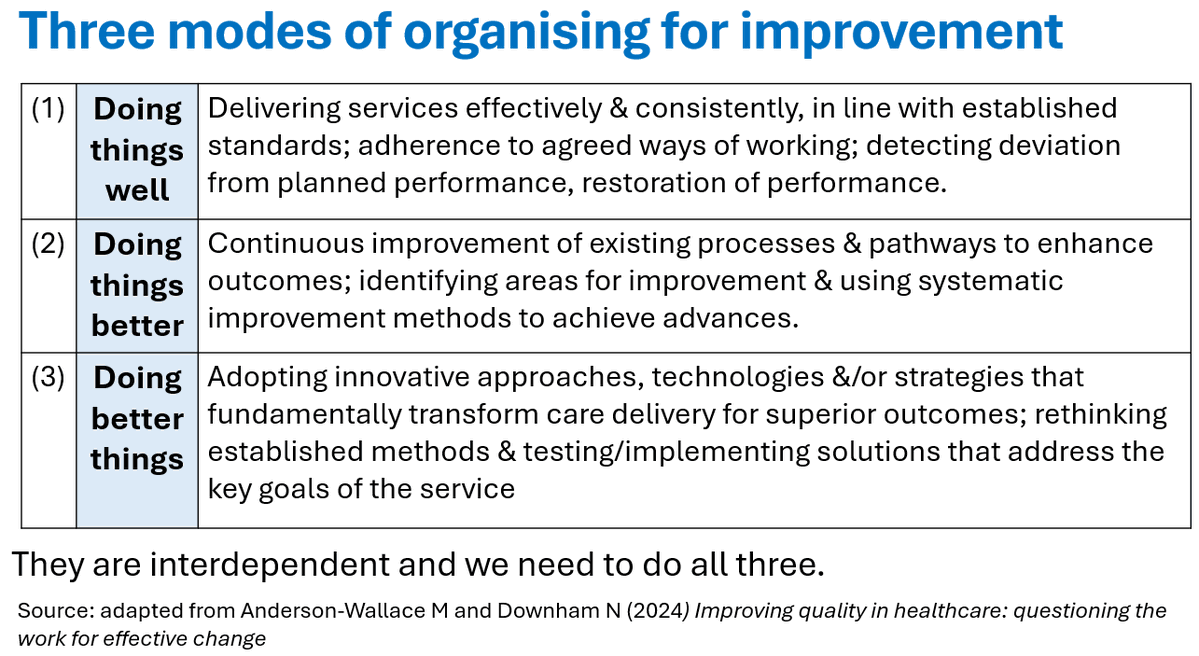
Three modes of organising for improvement: (1) Doing things well (2) Doing things better (3) Doing better things An organisational improvement strategy should focus on all three. Many organisations currently are overfocussed on (1) & (2) and under focussed on (3). This is risky because we can end up focused on improving the "wrong" or suboptimal things. The environment of change that we find ourselves in means that we have to focus increasingly on (3). It won't happen unless we build in the time & space for connection, collaboration, experimentation & learning into daily work. I adapted this table from content in "Improving quality in healthcare: questioning the work for effective change" by Murray Anderson-Wallace & Nick Downham. I really like this book, written by highly experienced practitioners: us.sagepub.com/en-us/nam/impr….
Helen Bevan tweet media
English
6
108
282
28.3K
Göran Henriks retweetledi
Helen Bevan
Helen Bevan@HelenBevan·
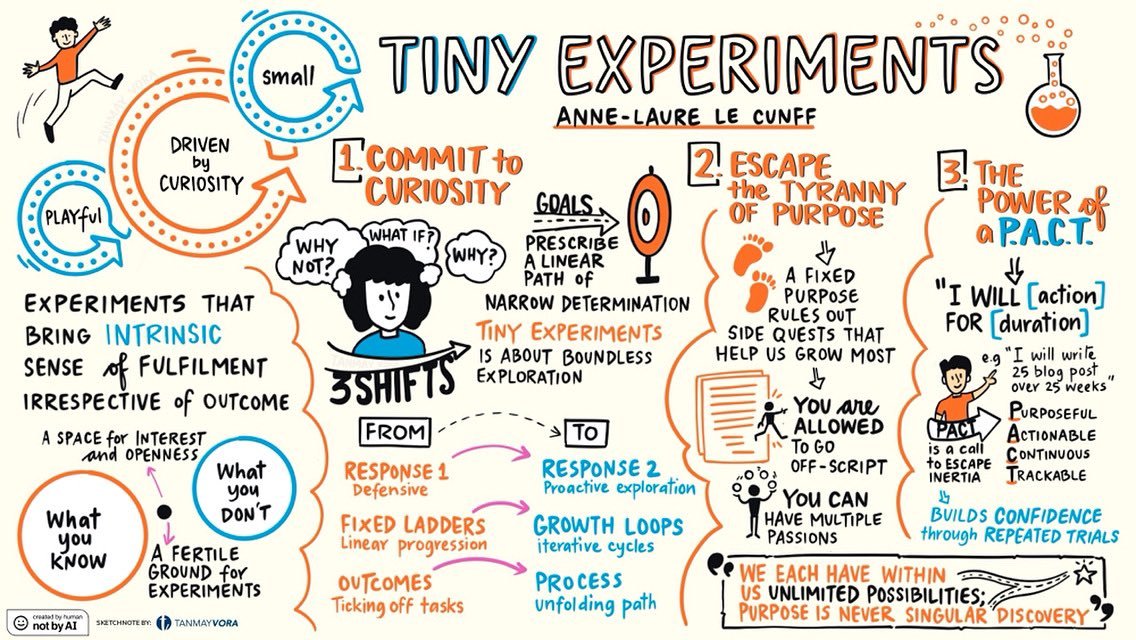
I have long been an advocate of the power of small tests of change, so I am reading "Tiny Experiments", a new book by @neuranne. Some of the key ideas: 1) Systematic curiosity over linear goals: We always have the potential for growth & learning even in uncertain situations. This approach contrasts with traditional goal-setting, which can be rigid & limiting. 2) Unlearning "cognitive scripts" (internalised patterns). By questioning these scripts, we can discover new possibilities & paths. 3) Designing tiny experiments: Small, manageable experiments that allow for flexibility and adaptation. This encourages continuous learning & improvement without the pressure of fitting into predefined notions of success. Book review by Matt Rutherford: mattrutherford.co.uk/book-tiny-expe… Summary by @sobrief_ : sobrief.com/books/tiny-exp… Sketchnote of key concepts by the brilliant @tnvora.
Helen Bevan tweet media
English
5
56
191
18.1K
Göran Henriks retweetledi
Helen Bevan
Helen Bevan@HelenBevan·
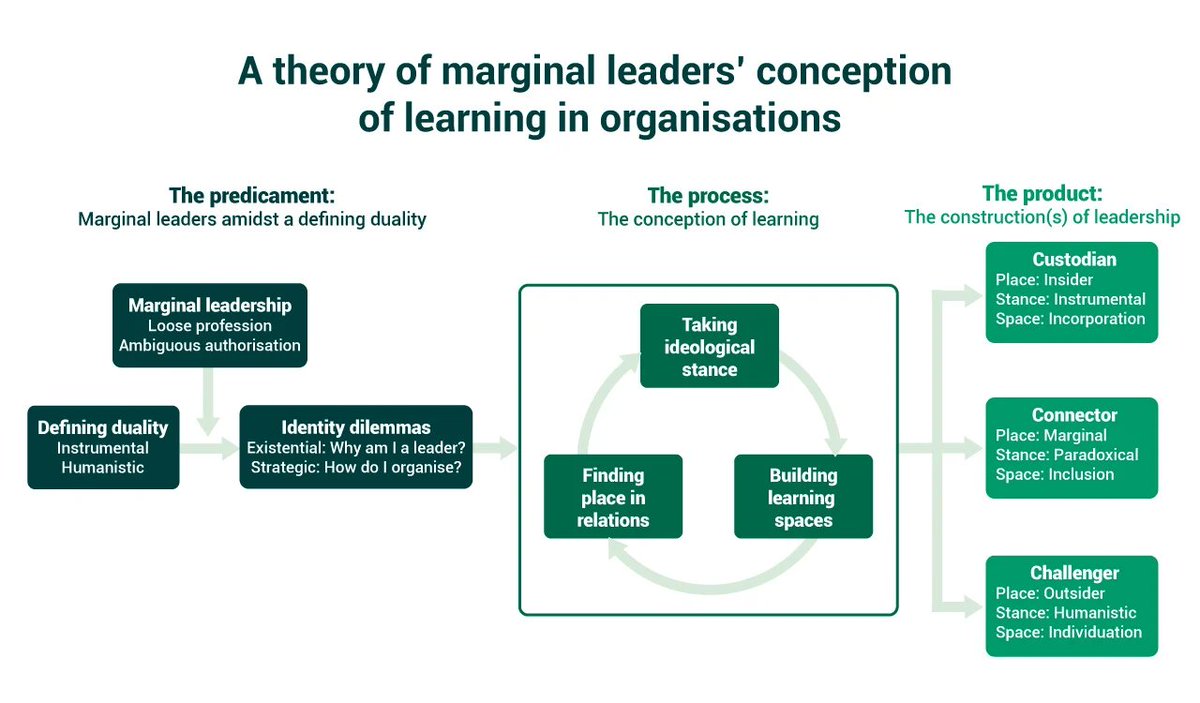
What does it take to "break the mould" of traditional leadership & become a new kind of leader in an organisation? Researchers studied senior leaders who were determined to lead in a different way. These leaders often found themselves “marginalised" by their peers. They had to define their place & purpose in novel ways to work alongside conventional leaders. In general, these marginal leaders adopted one of three identities: 1) Custodians - adapted to mainstream demands to secure a place near the centre of the organisation, aligning with established leaders & demonstrating measurable impact to build credibility. 2) Challengers - cast themselves as valuable outsiders needed to disrupt the status quo, content with (& effective at) leading from the margins 3) Connectors - served as bridges between different groups, building resources & maintaining connections with different groups within & outside the organisation. This is a message of hope for the "mould breaking" leaders who are trying to do things better & do better things, & who often feel marginalised as a result. You can be just as effective operating from the margins as you can from the centre: knowledge.insead.edu/leadership-org… Via @INSEADKnowledge @gpetriglieri @APeshkam
Helen Bevan tweet media
English
6
50
153
13.8K
Göran Henriks retweetledi
Helen Bevan
Helen Bevan@HelenBevan·
Yesterday I led a session on "building a sense of belonging" as a key capability for leaders of change. Psychologists say people have a fundamental need to belong - on a par with our need to feel loved. A sense of belonging makes us more likely to collaborate, share ideas, innovate & support change at work. A sense of belonging isn't just a feeling of "fitting in". It's also about being recognised for the unique things that each of us brings. Here's a piece I wrote with @goranhenriks for @BMJLeader: blogs.bmj.com/bmjleader/2021… Here are some recent practical resources to build belonging from @CCLdotORG: ccl.org/articles/leadi… Plus a graphic that describes how people often feel when they don't belong.
Helen Bevan tweet media
English
7
66
220
16.6K
Göran Henriks retweetledi
Christian Farman
Christian Farman@Gripenfighter·
"Always invite Esther in the room" Säger Nicoline Vackerberg Utvecklingsledare på Qultuerum och doktorand på sitt licentiatseminarium med sin avhandling "What is best for Esther"! @qulturum @regionjkpg @goranhenriks
Christian Farman tweet media
Svenska
0
1
1
86