Göran Halvarsson

9.2K posts

Göran Halvarsson banner
Göran Halvarsson

Göran Halvarsson

@gorhal

I'm a happy Swede who loves the web and .Net. My passion is and will always be #Sitecore and #blazor. #Sitecore MVP


Katılım Mart 2009
1.1K Takip Edilen842 Takipçiler
Andrej Karpathy
Andrej Karpathy@karpathy·
Personal update: I've joined Anthropic. I think the next few years at the frontier of LLMs will be especially formative. I am very excited to join the team here and get back to R&D. I remain deeply passionate about education and plan to resume my work on it in time.
English
7.8K
11.1K
148K
26.6M
Darshak Rana ⚡️
Darshak Rana ⚡️@thedarshakrana·
Tibetan monks sit upright in meditation for days even after clinical death. And their dead bodies refuse to decay which breaks every rule of medicine. How? Thukdam It completely breaks the medical model of death. Tibetan monks enter this meditative state during the dying process. Their bodies remain fresh, upright, warm to the touch. No rigor mortis. No decomposition. No putrid smell. For up to 17 days after every cardiac monitor, EEG, and respiratory sensor confirms they are clinically dead. Western medicine defines death as the irreversible cessation of brain and cardiovascular function. The moment electrical activity in the brain stops, consciousness is gone. The body begins immediate decay. Cells start breaking down within minutes. The temperature drops. Muscles stiffen. Thukdam monks violate every part of that sequence. Richard Davidson at the University of Wisconsin has been documenting these cases for over a decade. Brain scans of Thukdam practitioners show organized neural activity continuing long after clinical death. Organized. Coordinated. Purposeful electrical patterns that correlate with deep meditative states. The implications shatter how we understand the relationship between mind and brain. If consciousness can persist and even direct bodily processes after clinical death, the brain cannot be the generator of consciousness. At minimum, consciousness operates through biological systems in ways that transcend current neurological models. At maximum, consciousness exists independently of the brain and uses the nervous system as an interface, a control panel, rather than its source. This connects to something neuroscientists have been quietly discovering for years: the hard problem of consciousness remains completely unsolved. We can map every neuron, track every chemical signal, stimulate every brain region with electromagnetic pulses. We still cannot explain how subjective experience arises from neural activity. Why there is an inner observer behind your eyes reading these words. Why you experience the color red as "redness" rather than just processing wavelengths of light. Thukdam suggests the hard problem is unsolvable because we have the relationship backwards. Instead of brain creating consciousness, consciousness might be using brain as a temporary biological vehicle. Death removes the vehicle but the consciousness that was operating it continues in a transition state. The monks who achieve Thukdam spend decades training their awareness through specific meditative practices. Shamatha, vipassana, and particularly the Tibetan practice of death meditation where practitioners repeatedly simulate the dying process to maintain conscious control as biological functions shut down. They are training to remain aware during the transition most humans experience as unconscious dissolution. What makes this especially disturbing for materialist neuroscience is that Thukdam practitioners can be predicted. Teachers who spend 40+ years in intensive meditation often enter this state. Novices almost never do. This suggests conscious control over the death process is a learnable skill that develops with practice. The same way you can train your body to run marathons or perform complex physical skills, you can apparently train your consciousness to maintain coherence after biological death. The preservation of the physical body during Thukdam implies consciousness was actively maintaining cellular integrity before death and continues to influence biological processes afterward. Decay is an active process involving bacterial growth, chemical breakdown, and loss of cellular organization. Something is preventing that cascade from beginning. Something operating outside normal biological control systems. Traditional Tibetan Buddhism describes Thukdam as the consciousness slowly withdrawing from the body in stages rather than departing instantly at clinical death. The practitioner remains in meditation within the corpse, gradually releasing attachment to the physical form. This matches what researchers observe: bodies that look alive but show no vital signs, maintained in meditative postures for days. Modern medicine treats death as a binary switch. Alive, then dead. Thukdam reveals death as a gradual process that consciousness can navigate deliberately. This opens therapeutic possibilities for end of life care that Western palliative medicine never considers. If consciousness persists during clinical death, dying patients might benefit from meditative guidance rather than just pain management. The deeper implications reach into fundamental questions about the nature of reality itself. If individual consciousness can persist independently of biological function, the materialist assumption that mind emerges from brain becomes untenable. Something non physical is operating through physical systems and can continue operating after those systems shut down. Thukdam forces us to consider that consciousness might be the fundamental substrate of reality, not an emergent property of complex matter arrangements. That every living being is consciousness temporarily expressing through biological form. That death is return to original nature rather than extinction of individual existence. Most people encounter this possibility as religious speculation or metaphysical wishful thinking. Thukdam provides measurable, documented evidence that challenges every assumption about consciousness, death, and the relationship between mind and matter. The monks sitting in meditation after clinical death are quietly conducting the most important consciousness research on Earth.
English
79
367
1.3K
208.5K
OpenAI Developers
OpenAI Developers@OpenAIDevs·
Step away from your laptop. Keep building with Codex on your phone. Codex keeps working on your computer, with your files and project context still in place. Pocket-sized access. Full Codex working state. x.com/OpenAI/status/…
OpenAI@OpenAI

You've been asking for this one... Now in preview: Codex in the ChatGPT mobile app. Start new work, review outputs, steer execution, and approve next steps, all from the ChatGPT mobile app. Codex will keep running on your laptop, Mac mini, or devbox.

English
269
257
3K
441.2K
GitHub
GitHub@github·
Cooking up something new 🧑‍🍳 Join the waitlist for early access to technical preview of the GitHub Copilot app 👇 gh.io/github-copilot…
English
197
356
5.2K
2.9M
Göran Halvarsson
Göran Halvarsson@gorhal·
@davemccollough Great stuff, used this when deploying container apps, creating cosmos db, setting up managed identities…
English
0
0
1
192
Dave McCollough
Dave McCollough@davemccollough·
Azure Skills looks like Microsoft’s capability layer for coding agents in Azure. 25 skills across deploy, diagnostics, cost, RBAC, AI, AKS, etc. — paired with MCP tooling for live Azure context/actions. github.com/microsoft/azur…
English
3
36
292
22.3K
Göran Halvarsson retweetledi
OpenAI
OpenAI@OpenAI·
Introducing GPT-Realtime-2 in the API: our most intelligent voice model yet, bringing GPT-5-class reasoning to voice agents. Voice agents are now real-time collaborators that can listen, reason, and solve complex problems as conversations unfold. Now available in the API alongside streaming models GPT-Realtime-Translate and GPT-Realtime-Whisper — a new set of audio capabilities for the next generation of voice interfaces.
English
694
1.4K
14.8K
3.6M
Tom Jøran Sønstebyseter Rønning
Tom Jøran Sønstebyseter Rønning@L1v1ng0ffTh3L4N·
Microsoft Edge loads all your saved passwords into memory in cleartext — even when you’re not using them.
English
251
1.4K
8.9K
1.5M
Burke Holland
Burke Holland@burkeholland·
OpenAI once again feels like the most open, friendly and responsible of all the big AI labs.
English
15
4
132
8.1K
Göran Halvarsson
Göran Halvarsson@gorhal·
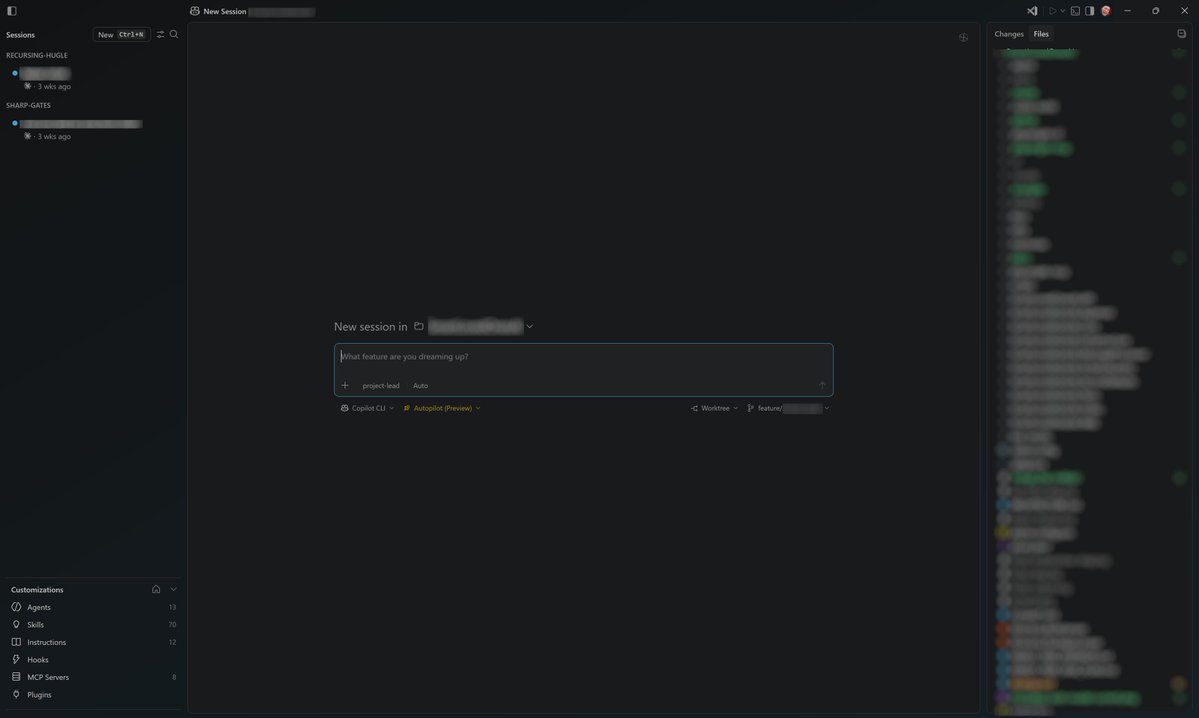
The boring Copilot CLI finally has a proper UI. 🥳 Sessions, worktrees, file changes, agents, skills, hooks, MCP servers... All visible in one place. The CLI was powerful, but hard to follow. Now it feels much more like a real agent workspace Get #VSCodeInsiders and take a look
Göran Halvarsson tweet media
English
2
0
4
533
Göran Halvarsson
Göran Halvarsson@gorhal·
@kevincodex @gitlawb Something like BitTorrent for distributing repositories, combined with Git and a federation layer for collaboration.
English
0
0
0
78
Kevin
Kevin@kevincodex·
What if GitHub was open source and decentralized, where anyone could deploy their own nodes and participate in the network? That would be a huge win for humanity
English
17
29
187
15.4K
Göran Halvarsson
Göran Halvarsson@gorhal·
@davidfowl Great, please make a github copilot app(not vscode) How to do it? Look at the codex app and all will be well 😎
English
0
0
0
113
David Fowler
David Fowler@davidfowl·
Native apps are BACK!
English
59
23
470
82.5K
0xMarioNawfal
0xMarioNawfal@RoundtableSpace·
Which one are you more impressed with, GPT-5.5 or Opus 4.7?
English
138
5
404
171.2K
Floro S.
Floro S.@sflorimm·
What will come after AI?
English
2.4K
82
1.3K
253.9K
Star Wars Daily
Star Wars Daily@StarWarsDaily_·
On a scale from 1-10, how would you rate Rogue One?
Star Wars Daily tweet media
English
2.9K
179
4.7K
299.2K
Göran Halvarsson
Göran Halvarsson@gorhal·
@RodmanAi I disagree with Boris’s prediction that everything will become terminal-based. In fact, I think the opposite is happening.
English
1
0
0
301
Leonard Rodman
Leonard Rodman@RodmanAi·
This 30-min workshop from the creator of Claude Code will teach you more about vibe-coding than 100+ YouTube videos. No fluff. Just pure signal. Watch it before everyone else does.
English
5
83
573
70.8K
Vivo
Vivo@vivoplt·
Developers, you have $20. What are you buying ? -Claude -Codex
Vivo tweet mediaVivo tweet media
English
480
15
1K
215K