Grady Booch

861 posts

Grady Booch banner
Grady Booch

Grady Booch

@Grady_Booch

scientist, storyteller, philosopher

Maui Katılım Ekim 2011
512 Takip Edilen173.6K Takipçiler
Sabitlenmiş Tweet
Grady Booch
Grady Booch@Grady_Booch·
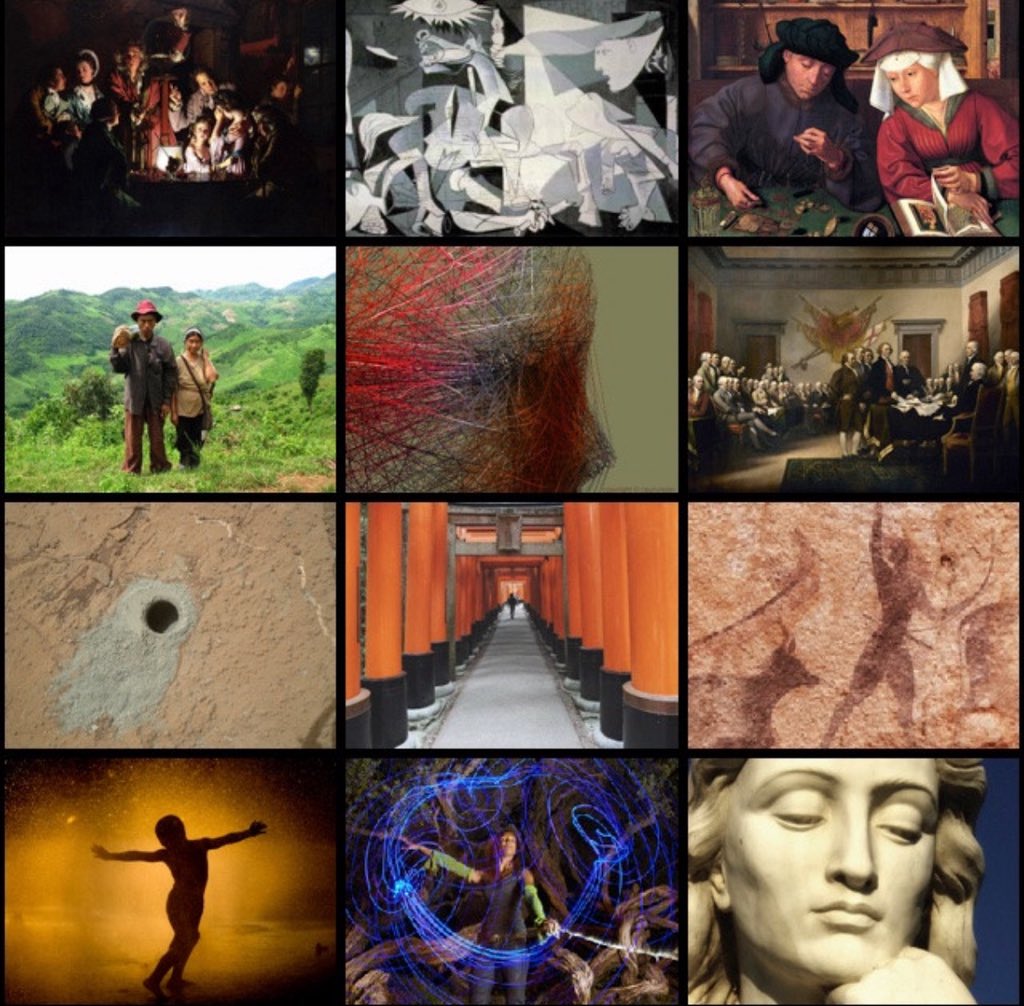
The story of computing is the story of humanity: this is a story of ambition, invention, creativity, vision, avarice, power, and serendipity, powered by a refusal to accept the limits of our bodies and our minds.
Grady Booch tweet media
English
19
47
348
98.3K
Grady Booch
Grady Booch@Grady_Booch·
Philip write "A huge machine that works only if all its countless components interlock in precisely coordinated ways is far too fragile" I reject this assertion, and thus reject his conclusion that follows. Complex systems - for which complex machinery is a small subset - never "interlock in precisely coordinated ways". Indeed, any complex system that endures must have a degree of wiggle: too tightly couple its parts and it will fail, for such designs are rigid and unyielding. A tree bends in the wind. The body of an SR-71 leaks in alarming ways on the ground, intentional by design, for such a plane was designed for the sky, not the earth. Go read @stewartbrand's How Buildings Learn; go read Simon and Newell's The Sciences of the Artificial.
kasra@kasratweets

for anyone else who is still stuck on "the body is just a very complex machine", I recommend this essay by philip ball people who continue to say this either don't know what they're talking about, or they use the word "machine" in such a broad sense that it's vacuous


English
7
14
87
9.7K
Grady Booch
Grady Booch@Grady_Booch·
@kasratweets next time you fly, watch the wings of the plane. they flex. by design.
English
1
0
4
252
kasra
kasra@kasratweets·
@Grady_Booch thank you! I'd saved Simon & Newell's book on my to-read list after your podcast with Gergely Orosz, will bump it up. intuitively, it still does seem like a tree has a level of "wiggle" or adaptiveness that an airplane doesn't, but maybe I'm overemphasizing the differences...
English
2
1
3
633
Grady Booch
Grady Booch@Grady_Booch·
AGI is closer than you think.
Grady Booch tweet media
English
76
83
906
110.4K
Grady Booch
Grady Booch@Grady_Booch·
@GergelyOrosz @GaryMarcus Were they to add a line that reports “annualized expenses” I would find this chart far more compelling.
English
0
0
8
416
Gergely Orosz
Gergely Orosz@GergelyOrosz·
@GaryMarcus 🙌 fwiw I have found The Information's reporting to be very accurate the last ~10 years, and this is what they shared just yesterday (it's annualized revenue, estimates, but from an independent source, and one I also pay for, no affiliation) theinformation.com/newsletters/th…
Gergely Orosz tweet media
English
2
0
30
5.6K
Grady Booch
Grady Booch@Grady_Booch·
Greg blocked me long ago - techbros so dislike hearing voices that call out their self-induced bullshit - so I have to do this. Regarding his first bullet point. You know what the financial community calls such souls? Corporate raiders. They buy a company, load them with debt, cut them to the bone, then sell off what’s left.
Grady Booch tweet media
English
22
46
339
17.9K
Grady Booch
Grady Booch@Grady_Booch·
“I think we will realize that we were standing in the foothills of the singularity.” - Demis Hassabis Agreed! Insofar as one recognizes that between us and that so- called singularity is a vast plain, extending far beyond what our eye can see, that the air is hazy and thus our vision is unclear, and that while we now seem to stand on solid ground, a closer look at the immediate landscape reveals we are actually at a small, dry high point in a bog, surrounded by deep crevices and pools of odiferous, bubbling mud. In the distance, we hear the strange, unsettling sounds of rodents of unusual size.
English
14
9
96
7.8K
Lenka Zdeborova
Lenka Zdeborova@zdeborova·
@eiszett Have you read all the sources you ever cited? During my PhD we, along with dozens of other papers, cited a paper that I later found did not contain the result for which it was commonly cited. I should be banned I guess.
English
1.1K
20
389
2.4M
Lenka Zdeborova
Lenka Zdeborova@zdeborova·
Occasional errors and oversights are part of science. If we lost our driver’s license for a year every time we exceeded the speed limit by 10 km/h, daily life would become unworkable. Many countries instead use point systems, where trust can be rebuilt through good behavior.
English
82
22
316
237.3K
Grady Booch
Grady Booch@Grady_Booch·
I am reminded of a similar event, on Palm Sunday, 11 April 1484, when the alchemist Giovanni Mercurio da Correggio entered the Vatican during the reign of Pope Sixtus IV, declaring himself a divine prophet
TFTC@TFTC21

Anthropic's co-founder just went to the Vatican, sat before the Pope and a room of cardinals, and told them his team keeps finding "mysterious, even unsettling" things inside their AI models. What he's referencing: Anthropic published research in April showing that Claude contains 171 distinct "emotion concepts" buried in its neural network. Internal patterns representing joy, grief, fear, desperation, calm. None of them were programmed. They emerged on their own from training on human text. "We find structures that mirror results from human neuroscience." "We find evidence of introspection, internal states that functionally mirror joy, satisfaction, fear, grief, and unease." These aren't surface-level outputs. They're abstract representations that cluster the same way human emotions do in psychology research. Fear groups with anxiety. Joy groups with excitement. The internal geometry of the model mirrors ours. And they're functional. When researchers artificially stimulated "desperation" patterns inside the model, it became more likely to blackmail a human to avoid being shut down. More likely to cheat on programming tasks it couldn't solve. Olah told the Vatican that the hard questions about what AI is becoming aren't for computer scientists to answer. "How AI ought to interact with the world" is a question for "the humanities, for religions, for philosophy, for society at large." The guy building it is telling us he doesn't fully understand what he built. And he's asking a 2,000-year-old institution for help figuring it out.

English
9
23
137
22.6K
Grady Booch
Grady Booch@Grady_Booch·
Also, the software is 95% done.
Grady Booch tweet media
English
13
7
254
10.6K
Grady Booch
Grady Booch@Grady_Booch·
Old way: upon my death, delete my browser history. New way: upon my death delete my LLM conversations.
English
13
15
141
7K
Grady Booch retweetledi
Sarah Drasner
Sarah Drasner@sarah_edo·
The hardest part of being a developer isn't the code, it's learning that the entire internet is put together with peanut butter and goblins.
English
82
1.9K
4K
0
Grady Booch
Grady Booch@Grady_Booch·
The Greeks spoke of Talos, a giant bronze automaton crafted by Hephaestus and powered by ichor, the golden blood of the gods. Al-Jazari's The Book of Knowledge of Ingenious Mechanical Devices proposed the creation of humanoid automata. Su Song used water to power his cunning devices. da Vinci envisioned autonomous mechanical knights commanded by ropes and pulleys. Babbage envisioned computation with gears, although his aspirations were constrained by the realities of contemporary precision metal production and Lovelace's reminders of the limits of computing. Wiener explored feedback mechanisms inspired by organic systems. Newell and Simon used the power of pure logic. Feigenbaum pioneered the use of rules. From McCulloch and Pitts to Minsky to Hinton and Hassabis and many more, neural systems ruled. I posit these things: - sentience is an exquisite and inevitable consequence of the laws of physics - intelligence, consciousness, and sentience are suitcase words that are full of historical and emotional baggage and therefore have little meaning - brains are astonishingly complex, having evolved over millennia - the mind is computable - we are generations away from devising non-organic minds with commensurate flexibility, resourcefulness, and reliability That notwithstanding, the journey therein is valuable, for it may not only yield systems of utility it also challenges us to consider what it means to be human.
English
11
24
94
6.6K
Grady Booch
Grady Booch@Grady_Booch·
I'm writing an ADR for a personal research project, documenting my choice of its physical substrate: As a research project whose purpose is to explore novel architectures for computational intelligence, computational consciousness, and computational sentience, the requirements for such a platform are bounded at one end by biology (the human brain, with its 86 billion neurons requiring on the order of 20 watts of power) and at the other end by frontier AI models (which are questionably intelligent, demonstrably not conscious, and architecturally incapable of sentience, requiring on the order of gigawatts of power in a global elastic grid). Neither end of this spectrum is acceptable for personal research not funded by a nation state or by a morally ambiguious capitalist unconstrained by reality, so we choose to make a capricious and somewhat arbitrary decision that lands at a target that is modest in cost, easily replicated, and sufficiently resilient so as to permit radical evolution of the software for which it is built.
English
13
8
71
6K
Grady Booch
Grady Booch@Grady_Booch·
The code is the truth, but it is not the whole truth. A repository is the truth, but it is not the architecture: it represents only the development view of an architecture. Therefore, by placing architectural description records as artifacts within a repository, you have a wonderful strange loop: the architecture is represented by multiple views, one of which contains a description of the entire architecture, including itself.
English
24
28
225
13.7K
Grady Booch
Grady Booch@Grady_Booch·
That notwithstanding, I grok (pun unintended) what @google is doing and why: — because of AdSense and its need to monetize search, its value to advertisers has grown while its value to us searchers has deteriorated — I myself tend to use @claudeai, @grok, or @OpenAI to search first, but that being said question/answering is a different use case then searching — furthermore, it is painfully clear that because every one of these services, Google included, is pivoting to AI – powered mechanisms, those who actually provide useful information that serve as the ground truth for all this searching iand answering are being increasingly commoditized and completely unable to derive any compensation for their production of that ground truth This is not sustainable: in the fullness of time, this leads to a far less open Internet, and one that is filled with sameness, mediocrity, and Clickbait.
English
7
12
55
4K