Grant Maxwell

17.4K posts

Grant Maxwell banner
Grant Maxwell

Grant Maxwell

@grantmaxwell

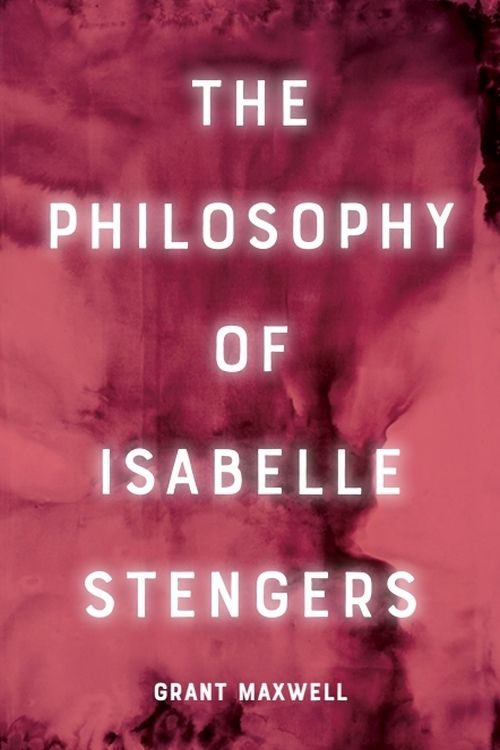
Philosopher | The Philosophy of Isabelle Stengers (EUP) | Integration and Difference (Routledge) | Deleuze and Polytheism (Bloomsbury, forthcoming)


Brooklyn, NY Katılım Aralık 2012
1.9K Takip Edilen26K Takipçiler
Grant Maxwell
Grant Maxwell@grantmaxwell·
@shitTOGv2 @amalgamatomaton I did WIP then DR and NP, which was a good order because it allowed me to see the differences between the monographs and cowritten works.
English
0
0
2
44
Grant Maxwell
Grant Maxwell@grantmaxwell·
People who claim that Deleuze is merely incoherent or obscurantist aren’t giving the time and attention required to understand his work. He enacted the primary conceptual innovation of the 20th century after Hegel in the 19th. Of course his writing is difficult.
English
16
13
192
10.3K
Grant Maxwell
Grant Maxwell@grantmaxwell·
@LargeWlarge63 Some people love making sweeping proclamations about philosophers they haven’t read more than a few pages of.
English
0
0
0
34
William Large
William Large@LargeWlarge63·
@grantmaxwell I don't take them seriously because most of them haven't read a word of Deleuze, or if they do it is a paragraph or sentence in isolation.
English
1
0
1
68
Grant Maxwell
Grant Maxwell@grantmaxwell·
@THamelryck I wouldn’t call Deleuze either a prophet or a romantic, but this gestures toward the subject of my forthcoming book, Deleuze and Polytheism.
English
0
0
2
76
Thomas Hamelryck
Thomas Hamelryck@THamelryck·
@grantmaxwell Like Nietzsche, Deleuze is a prophet of romanticized delirium, yearning for the transgressive sacred as an antidote to stagnant neurosis. Well worth a read.
English
1
0
0
103
Marc Anton
Marc Anton@DrMarcAnton·
@grantmaxwell Hard agree. It's the ironic arrogance and ignorance of mistaking the limits of one's understanding -- or at least the impatience to understand -- for the limits of the thinker.
English
1
0
2
280
Grant Maxwell
Grant Maxwell@grantmaxwell·
@amalgamatomaton I’d suggest starting with one of the books on individual authors if you’re especially into any of them (Nietzsche, Spinoza, Leibniz, Bergson, Proust, etc.). If not, I started with What Is Philosophy?, which was a good point of entry.
English
2
0
4
229
Patrick David Aoun
Patrick David Aoun@patrickdaoun·
I'm glad you're discussing Deleuze; I studied him for years. Here's my take: While Deleuze’s philosophy presents a compelling vision of multiplicity, immanence, and creative becoming, it harbors a fundamental tension that undermines its coherence and practical viability. By rejecting absolute truths, universal norms, and foundational criteria, Deleuze relocates evaluation entirely within specific contexts and assemblages. Value arises immanently through increases in power, intensity, joy, and creative connections. Yet this generates a performative contradiction: the framework still relies on implicit standards—such as the superiority of active over reactive forces, affirmative becomings over molar structures, or consistency on a plane of immanence—to distinguish better from worse modes of existence. These function as disguised universals, smuggled in via the ontology’s vitalist privileging of life, difference, and creativity, even as the doctrine denies any transcendent anchor. Without cross-situational criteria, attempts to define such notions as “enhanced capacity” or “affirmative intensity” risk tautology or collapse into the relativism Deleuze sought to avoid. This instability is especially acute at social and political scales. Without any higher court of adjudication, conflicts between incommensurable assemblages resolve through contingent struggle, experimentation, or domination. Micropolitics and lines of flight may liberate locally, but they provide no robust basis for sustained solidarity, cross-cultural judgment, or principled opposition to destructive forces. At scale, the approach risks fragmentation, aestheticized decisionism, or impotence against molar powers. Deleuze incisively diagnoses the limits of transcendence and identity-thinking. Yet radical immanence ultimately fails to deliver stable, non-circular evaluation or scalable political practice, resulting in a sophisticated pluralism that cannot fully escape the universals it critiques or the relativism it disavows.
English
1
0
1
369
Grant Maxwell
Grant Maxwell@grantmaxwell·
@khalilacp I disagree. He was certainly deeply interested in Nietzsche, though his politics aren’t particularly Nietzschean. Nietzsche’s politics were problematic while Deleuze was extremely progressive and pluralist, deriving his politics more from Spinoza and Marx.
English
1
0
18
525
Lila CP
Lila CP@khalilacp·
@grantmaxwell The problem with Deleuze is not that he is difficult (which he is), incoherent (not really), or obscurantist (can be depending on the text). It's how much he grounds his thought on Nietzsche, which leads him to politically problematic zones.
English
3
0
2
1.6K
Grant Maxwell
Grant Maxwell@grantmaxwell·
@Zelzele101 Paradoxically, it’s only possible to think this if one hasn’t read him.
English
0
0
10
266
Ryan ~🌲🏴ᚺ/dec 🇩🇿
The only thing I could understand from hegel is the absolute, kant is easy to understand with his emphasis about logic and rational reason. Deleuze's bwo, reterritorialisation and déterritorialisation are easy to understand. It's better to read deleuze with Nick land accelerationism and capitalism thoughts
English
1
0
0
17
Grant Maxwell
Grant Maxwell@grantmaxwell·
@sthhjh Yes, Hegel and Kant are no less obscure than Deleuze.
English
1
0
0
17
Grant Maxwell
Grant Maxwell@grantmaxwell·
@filipcodes He certainly admired Kant and appropriated his concept of the transcendental in a new context, but he also called Kant an enemy. Spinoza, Nietzsche, and Bergson are much more important for Deleuze.
English
1
0
21
802
filipcodes
filipcodes@filipcodes·
@grantmaxwell these days I read him as kant updated for modern times - really runs with kant's central insight that our cognition is active/generative not passive/receptive. hugely relevant (imo) to what's happening now in neuroscience with karl friston's work etc.
English
1
0
5
3.5K
Grant Maxwell
Grant Maxwell@grantmaxwell·
@EldenDryad That’s the way most epoch-defining philosophers are, especially in the last few centuries. His Spinoza book is among the most accessible. There’s also a lot of great secondary literature. Todd May’s book is probably the most accessible for getting an idea of what he’s doing.
English
0
0
9
451
Grant Maxwell
Grant Maxwell@grantmaxwell·
@Naozymandias @dkillorn I’m not a big Adorno guy, but my sense is that their negative projects are resonant in some ways, but Deleuze’s positive project is very different from anything that Adorno offers.
English
0
0
10
237
Grant Maxwell
Grant Maxwell@grantmaxwell·
@dkillorn As with other epochal philosophers, it’s hard to briefly summarize, especially since it’s still relatively new. But the transformation from a dialectic of opposition, reconciliation, and judgment to a pluralist multiplicity enacting transversal relations of potencies gets at it.
English
4
0
18
551
Donald Killorn
Donald Killorn@dkillorn·
@grantmaxwell Can you articulate what the innovation was for me. The Body Without Organs as a surface for desire flows?
English
1
0
2
521
Grant Maxwell
Grant Maxwell@grantmaxwell·
“I do not write against anyone or anything. For me, writing is an absolutely positive act: it is articulating what one admires, rather than combating what one detests. To write merely to denounce is the lowest form of writing.” Deleuze, 1995
English
0
5
40
1.4K
Grant Maxwell retweetledi
danny
danny@d4nnytye·
nobody ever applies this argument to any other academic field of study besides humanities and social sciences. why should all theory have to be written for complete novices, and why should novices not be expected to broaden their vocabulary?
Coren ✒🎨@CorenLaVolpe

Truly intelligent people can describe complex ideas in a way that a layman can understand. Being verbose is intentional obfuscation to maintain their little "elite" circle.

English
164
766
8.4K
222.7K
Grant Maxwell retweetledi
John Attridge
John Attridge@John_Attridge·
You're not crazy. An evil demon *could* be deceiving you about the nature of reality. You're simply questioning the foundations of knowledge. And honestly? That's brave
English
65
560
6.4K
145.9K
Grant Maxwell
Grant Maxwell@grantmaxwell·
The heart of Deleuze’s philosophy: “I feel rather connected to problems that aim at seeking the means to do away with the system of judgment, and to replace it with something else.”
English
0
5
83
2.5K
Grant Maxwell
Grant Maxwell@grantmaxwell·
In the last day, I finished my manuscript for Deleuze and Polytheism, completed my course design for the Summer term, and served on a dissertation committee. I think I’ll go outside now.
English
0
1
47
1.3K