
Grassroots Economics

897 posts

Grassroots Economics banner
Grassroots Economics

Grassroots Economics

@grassEcon

Empowerment through Community Inclusion Currencies

Kenya Katılım Şubat 2015
183 Takip Edilen3.1K Takipçiler
Grassroots Economics retweetledi
Crypto Altruists
Crypto Altruists@Crypto_Altruism·
Throughout history, ruling powers sought to enclose & control community networks 👑🛑 @wor of @grassEcon believes blockchain is a missing piece that can help communities coordinate across networks & break free of central control 💪🌐 Full chat ft. Will & co-host @ColeenChase👇
Crypto Altruists@Crypto_Altruism

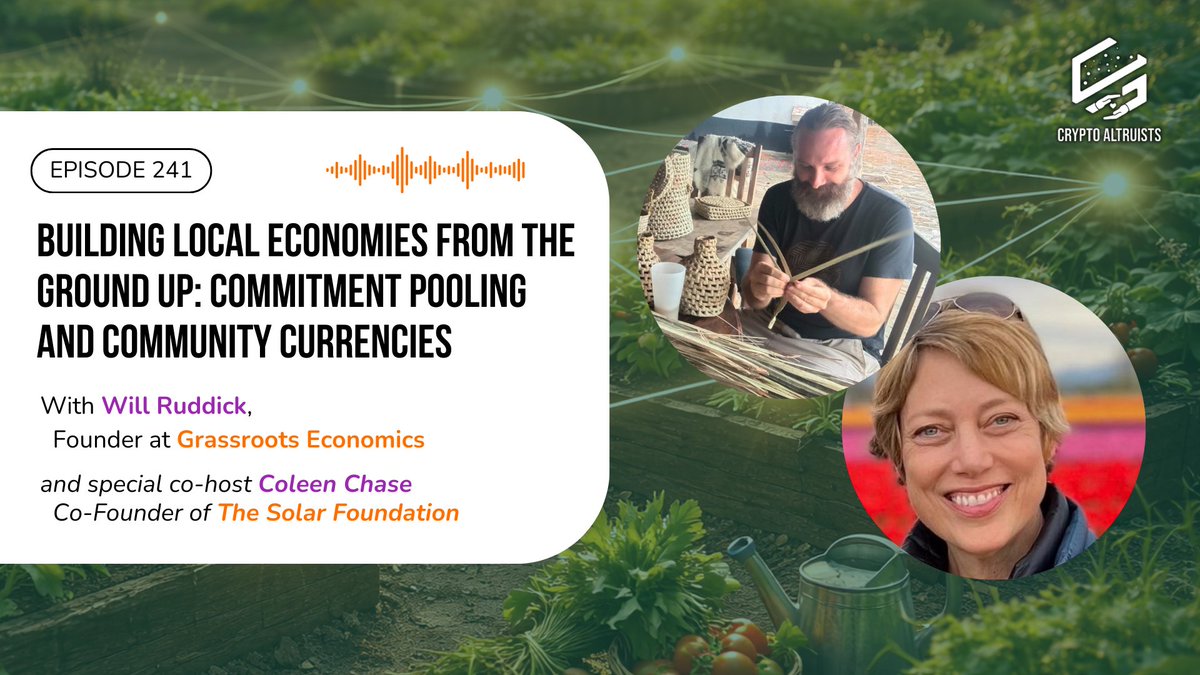
What if the future of money was powered by communities, not banks? We sat down with @wor of @grassEcon & @ColeenChase of @Solar_FND to explore how commitment pooling & mutual aid models can help communities build resilient local economies 🌱🌍 🎧Listen: cryptoaltruists.com/blog/crypto-al… We discuss: 💸 What commitment pooling is, and why it's a powerful tool for economic & community development in underserved regions ⛓️ How blockchain enhances these community-driven models by enabling trust, coordination, and scale ☀️ How The Solar Foundation is leveraging blockchain-powered savings circles in Tanzania 💡 Wisdom from the legendary Will Ruddick, and some of his key writings that you need to check out!

English

0
2
15
843
Grassroots Economics retweetledi
Michel Bauwens
Michel Bauwens@mbauwens·
Once more on that radical innovation that is in the works: * Cosmo-Local Credit, wiki.p2pfoundation.net/Cosmo-Local_Cr… Will Ruddick: "A global network that routes credit across every wallet of every agent on the planet. Not just banks. Farmers. Cities. Co-ops. Energy pools. Mutual aid groups. Diasporas. Small businesses. Households. Not one currency. Not one issuer. A web of commitments. States already do this at scale (money is a state issued commitment by another name, as empires understood long before modern finance). States will still assert constraints (tax, consumer protection, capital controls, sanctions, and anti money laundering rules). A cosmo-local network survives this by staying modular. Pools can choose compliance regimes, publish them clearly, and route accordingly. The network does not require one global compliance court. It requires clear labels and the ability to route around incompatible regimes. This is what Cosmo-Local Credit DAO is pointing toward. A coordination layer where local pools remain sovereign while routing across each other through shared registries and settlement logic. The goal is not one global network with one center. The goal is a plural fabric of networks that can interoperate without surrendering sovereignty. The moment any single atlas, interface, or registry becomes mandatory, the gravity problem returns. In a sense, this is chaordic design at planetary scale. Sovereignty at the edge. Shared standards at the core. The difference is that the participants are no longer just regulated banks. They are communities, cities, cooperatives, and individuals. The gravitational forces are stronger. The constitutional layer must be stronger too." (willruddick.substack.com/p/the-constitu…
English
0
2
12
339
Grassroots Economics retweetledi
Will Ruddick
Will Ruddick@wor·
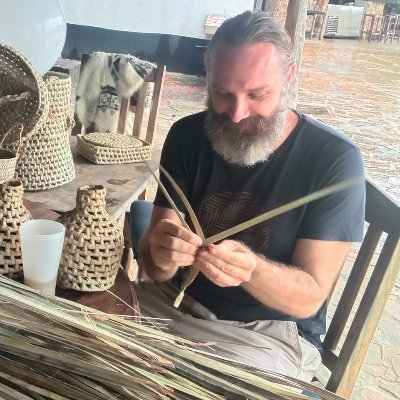
Alex (Yeshey) Cahana, MD and I just finished John Fullerton’s new book on Regenerative Economics and it gave us something rare (a “shape” for noticing when an economy is behaving like a living system vs. a machine). From Kenya and Bhutan, we have been asking a practical follow-on question: how do regenerative principles become daily practice (credit, exchange, repair) without commodifying relationship? This essay is a humble field response from two places that have become home in our hearts. It explores living reciprocity, Gross National Happiness, and why “commitment pooling” may be a missing coordination layer for regenerative economics (grounded in real provisioning, governed as a commons, and protected against extraction and runs). If you care about the commons, wellbeing, and the plumbing of trust, we would love your thoughts. - link in comments -
Will Ruddick tweet media
English
2
11
17
414
Grassroots Economics retweetledi
Crypto Altruists
Crypto Altruists@Crypto_Altruism·
What if the future of money was powered by communities, not banks? We sat down with @wor of @grassEcon & @ColeenChase of @Solar_FND to explore how commitment pooling & mutual aid models can help communities build resilient local economies 🌱🌍 🎧Listen: cryptoaltruists.com/blog/crypto-al… We discuss: 💸 What commitment pooling is, and why it's a powerful tool for economic & community development in underserved regions ⛓️ How blockchain enhances these community-driven models by enabling trust, coordination, and scale ☀️ How The Solar Foundation is leveraging blockchain-powered savings circles in Tanzania 💡 Wisdom from the legendary Will Ruddick, and some of his key writings that you need to check out!
Crypto Altruists tweet media
English
0
4
20
1.2K
Grassroots Economics retweetledi
Relay Funder
Relay Funder@RelayFunder·
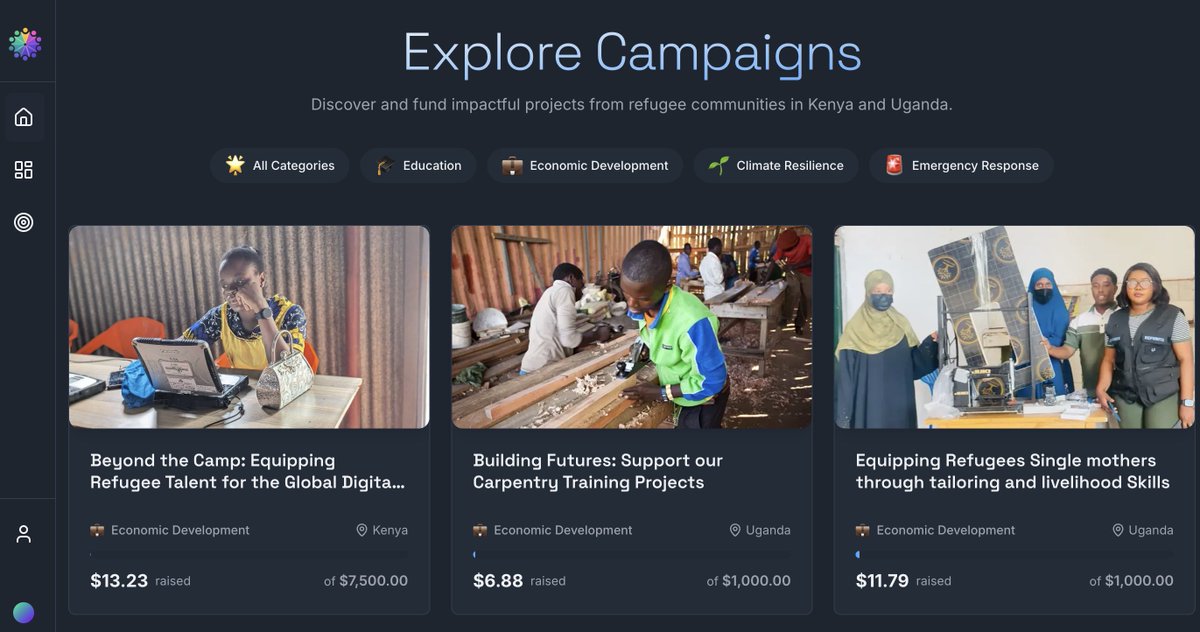
We’re halfway through the round. ⏳ Closes Feb 26. The next 2 weeks determine which refugee-led projects unlock the most match funding. @refunite @grassEcon @Save_Vuc Even $5 changes the outcome. Explore the campaigns → app.relayfunder.com
Relay Funder tweet media
English
1
7
14
332
Grassroots Economics retweetledi
Taylor Lahey
Taylor Lahey@taylahey2·
Once upon a time, I wrote a children's book about what I learned from working in crypto. Then I applied what I learned in crypto to my solving real problems in my community. @Celo @grassEcon
English
0
1
3
104
Grassroots Economics retweetledi
GEN Ukraine Ecovillage #Octant #GG23
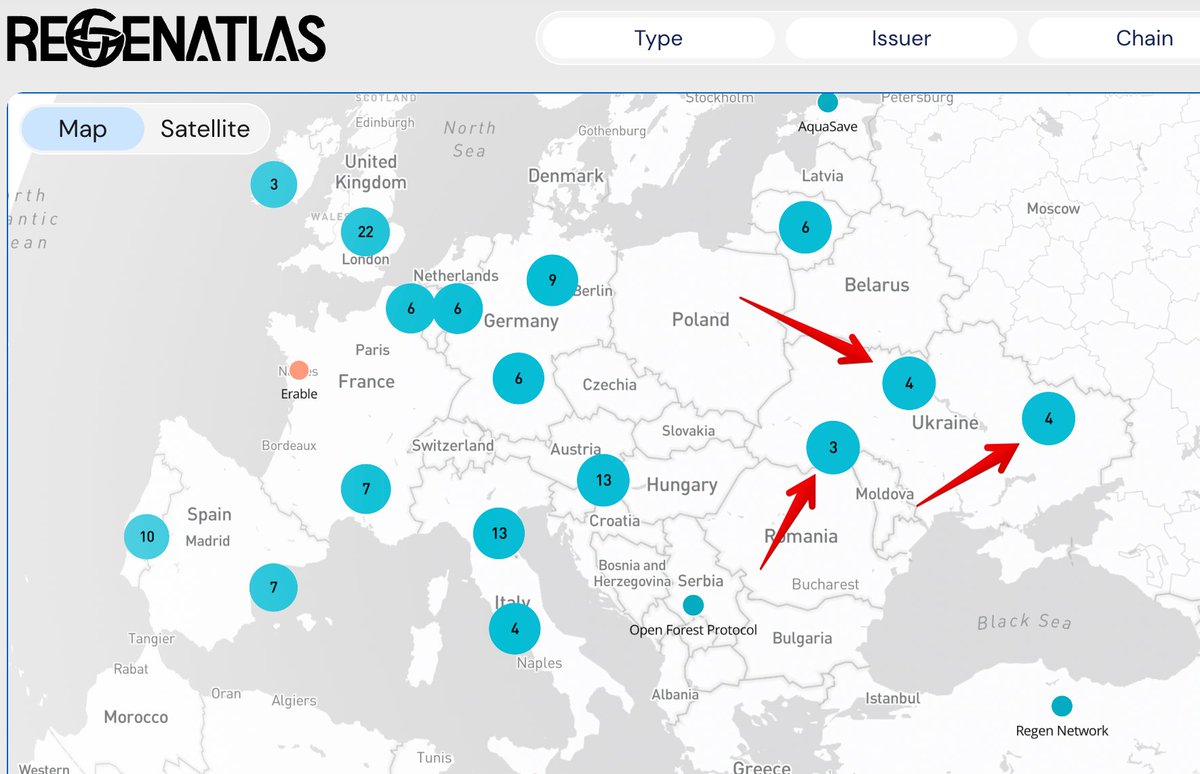
ReFi Integration Map: How Ukrainian Ecovillages Enter the ReFi Economy We often speak about bridging local communities with global climate finance. For us, this is no longer a concept — it is becoming an infrastructure. Over the last years we have been building an integration map of Ukrainian ecovillages into ReFi platforms. Stage 1 — Community Economy (Sarafu Network) @grassEcon Local pools and community vouchers allow groups to exchange value without waiting for external funding. This stabilizes daily life: food, services, mobility, mutual aid. The economy starts circulating inside the community before grants arrive. Stage 2 — Ecological Value (Regen Network) @RegenNetworkDev Biodiversity monitoring and regenerative land practices become measurable assets. Bio-carbon and ecological indicators connect local land stewardship with global climate markets. Stage 3 — Energy Layer (Arkreen) @arkreen The next step is energy. Smart meters for our first 5 pilot solar stations are already on the way to Ukraine. Small distributed solar installations will produce not only electricity — but verifiable energy data and tokenized environmental impact. Together these layers form a stack: community trust → ecological verification → energy production → programmable climate finance What is interesting — most of Eastern Europe and the Balkans are still empty on the regenerative infrastructure map. Except Lithuania and Estonia. In Ukraine, almost every point on this map represents our community network: lnkd.in/dQQ8MzFd We are not building projects. We are building a bioregional operating system for resilience during instability — and for the post-war future.
GEN Ukraine Ecovillage #Octant #GG23 tweet mediaGEN Ukraine Ecovillage #Octant #GG23 tweet media
English
2
2
8
124
Grassroots Economics retweetledi
Relay Funder
Relay Funder@RelayFunder·
48 hours left in this matching round ⏳ More donors = more matching funds unlocked. Even small contributions make a real difference. Support refugee-led solutions before it ends 👇 app.relayfunder.com
Relay Funder tweet media
English
0
6
11
360
Grassroots Economics retweetledi
✨🌿cyber plantae🌿✨ ∿
✨🌿cyber plantae🌿✨ ∿@cyber_plantae·
Not kidding, we need to all start learning how to grow food forests, like, five years ago. Don’t even get me started on the fact that most farmers are retiring with no family legacy in the next 5 years or less.
Laura Miers@LauraMiers

The screwworm is returning to the U.S., decades after it was eradicated, & it’s going to destroy our food supply. In July 2025, the current administration admitted they’re not going to stop it. There is no plan to speak of. People have no idea how bad this is going to be. The End

English
1
0
7
252
✨🌿cyber plantae🌿✨ ∿
✨🌿cyber plantae🌿✨ ∿@cyber_plantae·
@regenavocado @grassEcon @Commonland I mean I’d like to, but free public commercially-free data is my main throttle point. There are certain features I’m developing in some of her other form factors that could possibly help with this, but not quite there yet.
English
1
0
1
13
Grassroots Economics
Grassroots Economics@grassEcon·
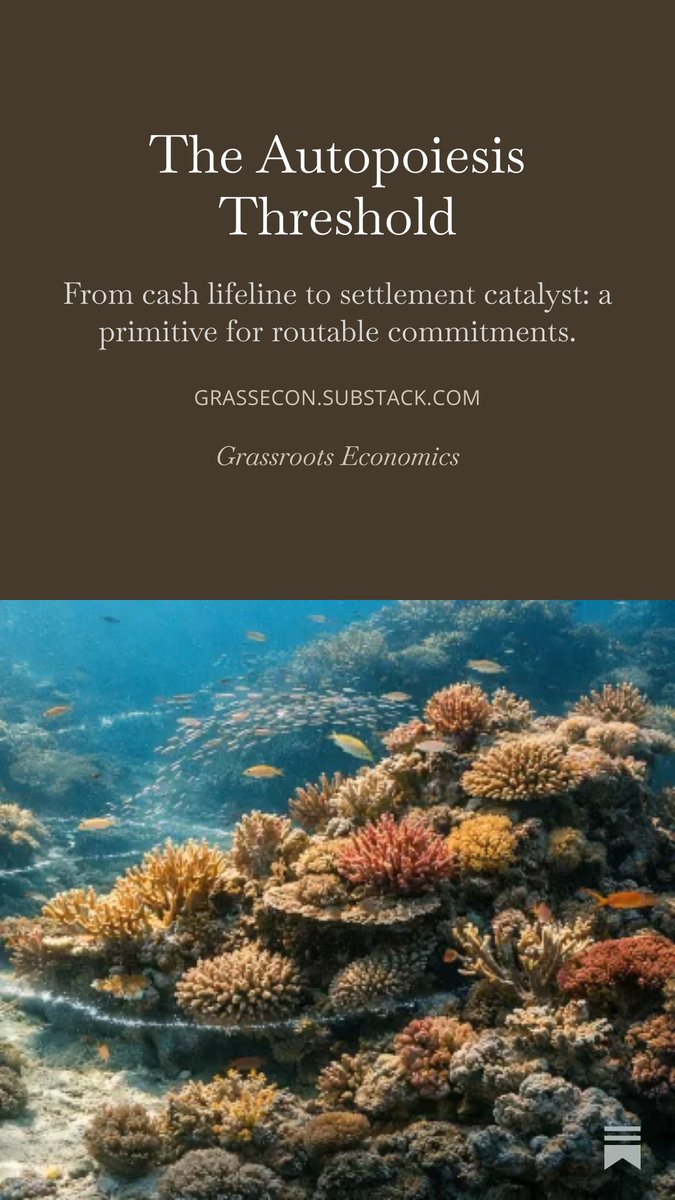
The autopoiesis threshold: the point where outside liquidity stops being a lifeline and becomes a catalyst ... where real-world commitments start clearing themselves, and cash becomes a bridge instead of a choke point. grassecon.substack.com/p/the-autopoie…
Grassroots Economics tweet media
English
0
2
4
717
Grassroots Economics
Grassroots Economics@grassEcon·
🚀 Big news: Grassroots Economics is launching the Cosmo-Local Credit (CLC) DAO on @Celo 🌍 A settlement layer for the long tail of real-world commitments-vouchers, invoices, service credits, mutual aid & public-good work. Not speculation-first. Commitment-first clearing. 🤝
English
1
4
19
1.1K
Grassroots Economics retweetledi
Launchnodes
Launchnodes@launchnodes·
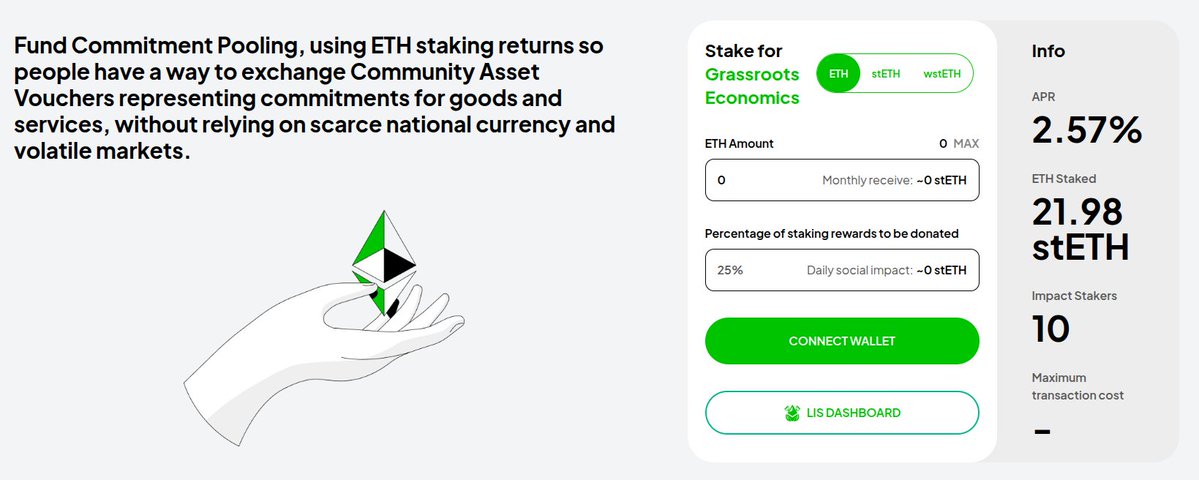
With @impactstake, staking rewards are funding real mutual-aid economies - turning a small ETH allocation into thousands of hours of community work on the ground. Check out @grassEcon for more!
English
0
3
4
201
Grassroots Economics retweetledi
Grassroots Economics
Grassroots Economics@grassEcon·
To drink water is to enter into relationship. Our commitment is simple - and demanding: We will return what we take - more slowly, more cleanly, and more abundantly than we received it. Read about how we can return the water: grassecon.substack.com/p/returning-th…
Grassroots Economics tweet media
English
1
2
8
348
Grassroots Economics
Grassroots Economics@grassEcon·
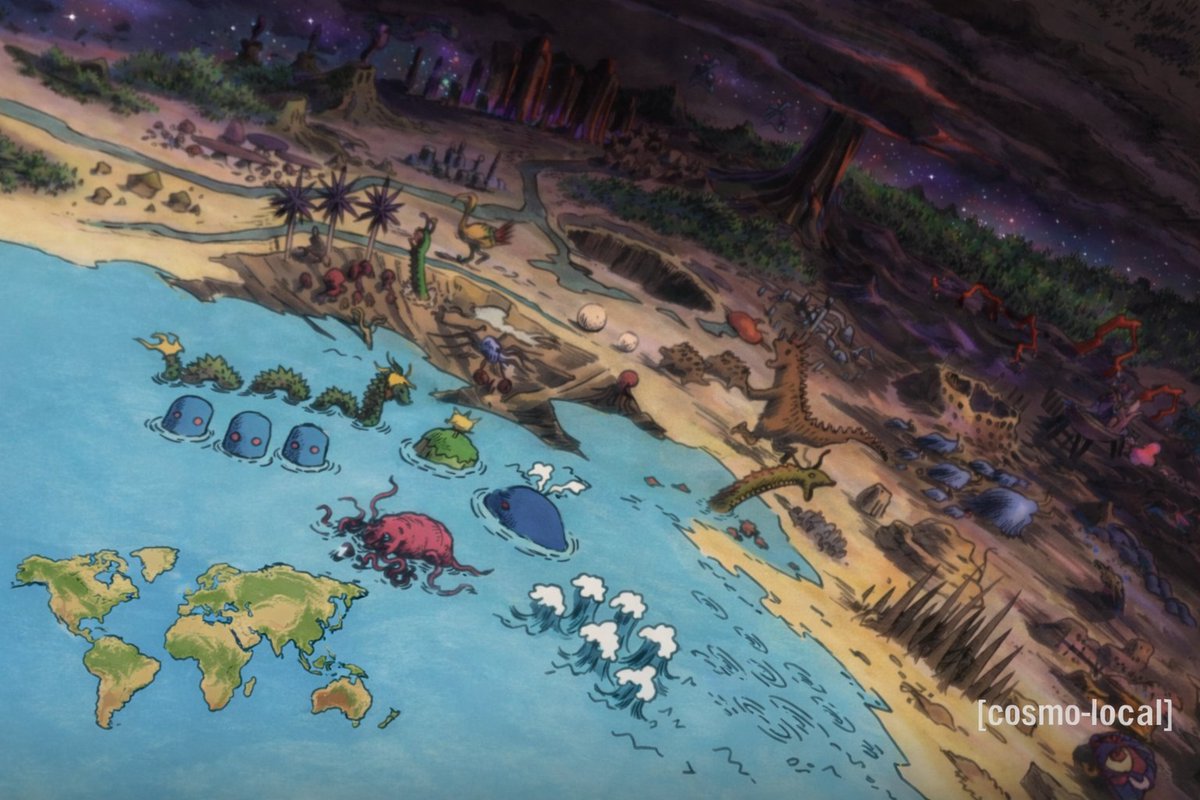
You don’t realize you’re inside a system until you see its shape.
Will Ruddick@wor

Seeing Ourselves for the First Time - There’s a moment that feels like climbing a tree as a child and suddenly seeing your whole neighborhood at once. You knew every house already. You’d been inside many of them. But you’d never seen the landscape they all shared. That’s what this work has been doing to me with economics. Not teaching me something entirely new ... but helping me see the shape of what I’ve been living inside all along: mutual aid and markets, welfare states and platforms, ancient rotating labor groups and Visa, Roman moneta and BlackRock. Different forms, same underlying coordination. At the most basic level, economies aren’t about money. They’re about commitments .. who promises what to whom, how those promises are pooled, valued, limited, and fulfilled. Every system has these functions. What differs is who controls them, how visible they are, and how easily they can be changed. What’s surprised me most is how much clarity comes from naming this simply ... and how often learning happens between systems, not within them. Overlapping pools, mutuals, networks, cultures. No single authority gets it “right.” The system learns at the edges, where different values and limits meet. This isn’t about replacing welfare states or romanticizing bottom-up systems. It’s about having a shared way to describe value coordination across scales—so large systems don’t lose coherence, and small ones don’t stay isolated. If we are going to move together ... then before strategy, we need orientation. We already act from theories, whether we name them or not. Having a clearer model of where we are (and where we came from) changes how we move. I’m still learning this, and it keeps rearranging how I see things. Once you notice the landscape, it’s hard to go back to seeing only the houses. If this resonates, I’d love to keep the conversation going.

English
0
1
3
188